



Sharon has 21+ years of experience as a qualified Emergency Care Nurse registered with the Australian Health Practitioner Regulation Agency (APHRA) and 12+ years as a First Aid Trainer.
She takes pride in FirstAidPro making first aid training available, comprehensive and affordable to everybody.
Getting CPR certified used to mean blocking out half a day for a classroom session. Now you can complete the same nationally recognised qualification from your living room, a regional town, or even a mine site between shifts.
Remote CPR training pairs online theory with a live practical assessment, either via Zoom with equipment mailed to your door or through a short face-to-face session at a nearby venue. This guide covers how remote CPR training works, what delivery formats are available, and whether the certification is accepted by Australian employers and regulators.
Key Takeaways
- Remote CPR training combines self-paced online theory with a hands-on practical assessment completed via live video or a short face-to-face session.
- Courses delivered by a Registered Training Organisation (RTO) result in the same nationally recognised HLTAID009 Statement of Attainment as traditional classroom training.
- Delivery formats include fully online Zoom sessions with mailed equipment, blended learning with condensed practicals, and express refresher assessments.
- Remote CPR training works well for shift workers, parents, regional residents, and anyone with limited access to training venues.
- The Australian Resuscitation Council recommends annual CPR refresher training to maintain skills — research shows CPR skills decay within weeks of initial certification.
- FirstAidPro offers flexible CPR courses with same-day certification across multiple delivery formats.
What is Remote CPR Training
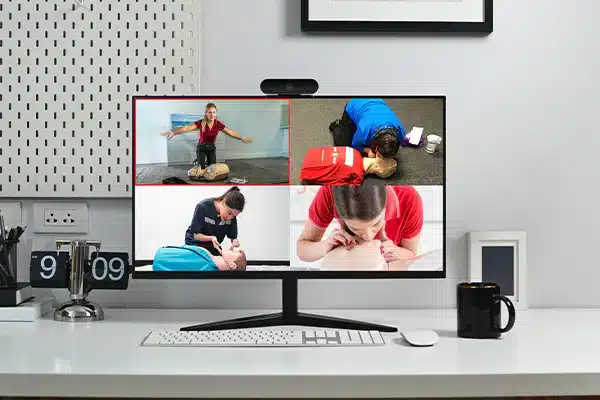
Remote CPR training combines self-paced online coursework with a trainer-led practical assessment, either via live video or a short in-person session. You complete the theory component from home, covering CPR techniques, the DRSABCD action plan, and AED operation. Then you demonstrate your skills to a qualified trainer who assesses your competency in real time.
It’s worth clarifying something here: “remote training” refers to how you learn, not where you work. There’s a separate qualification called HLTAID013 for people who work in geographically isolated locations. Remote CPR training simply means you’re completing your certification through online or blended delivery rather than spending a full day in a classroom.
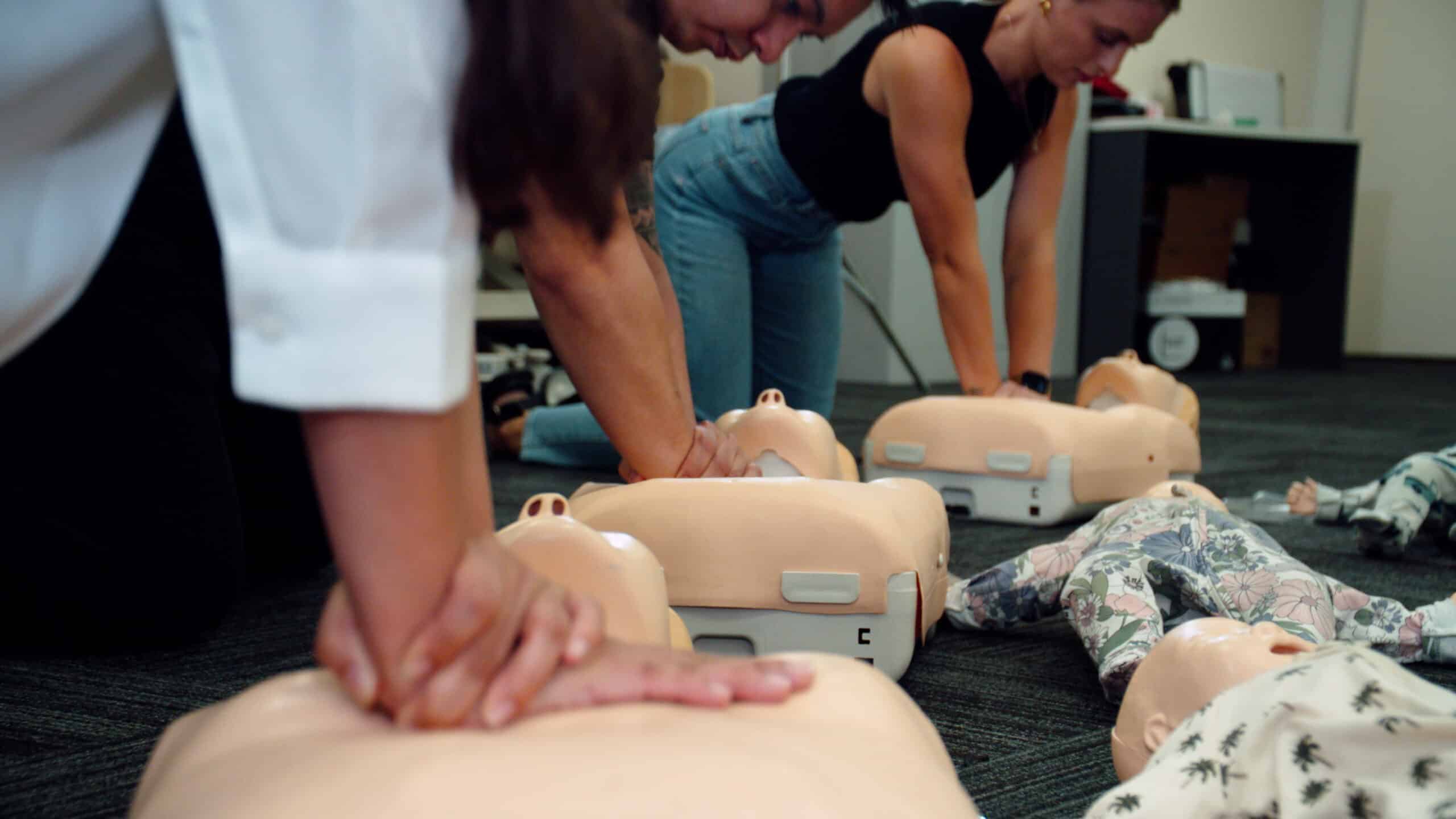
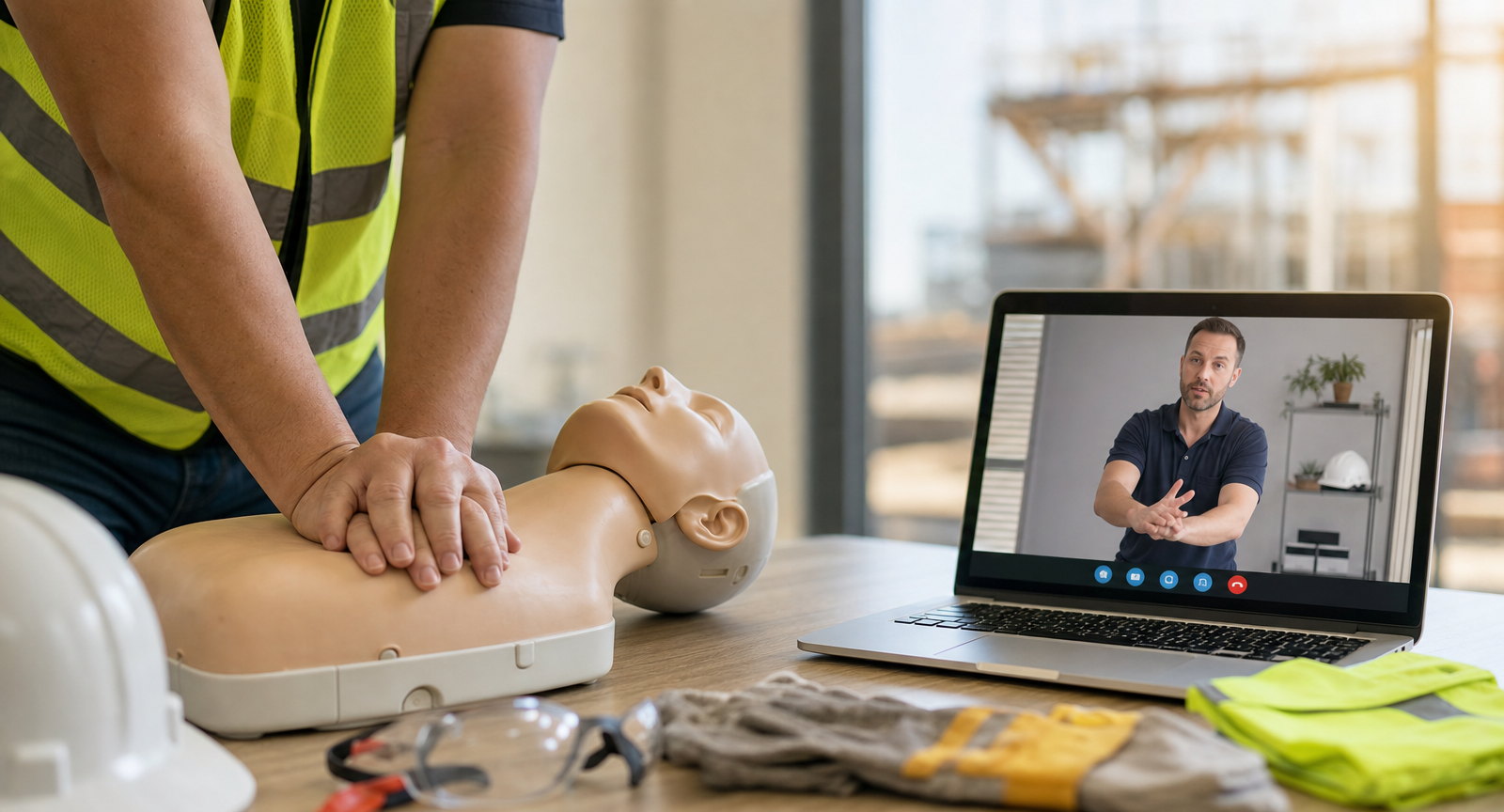
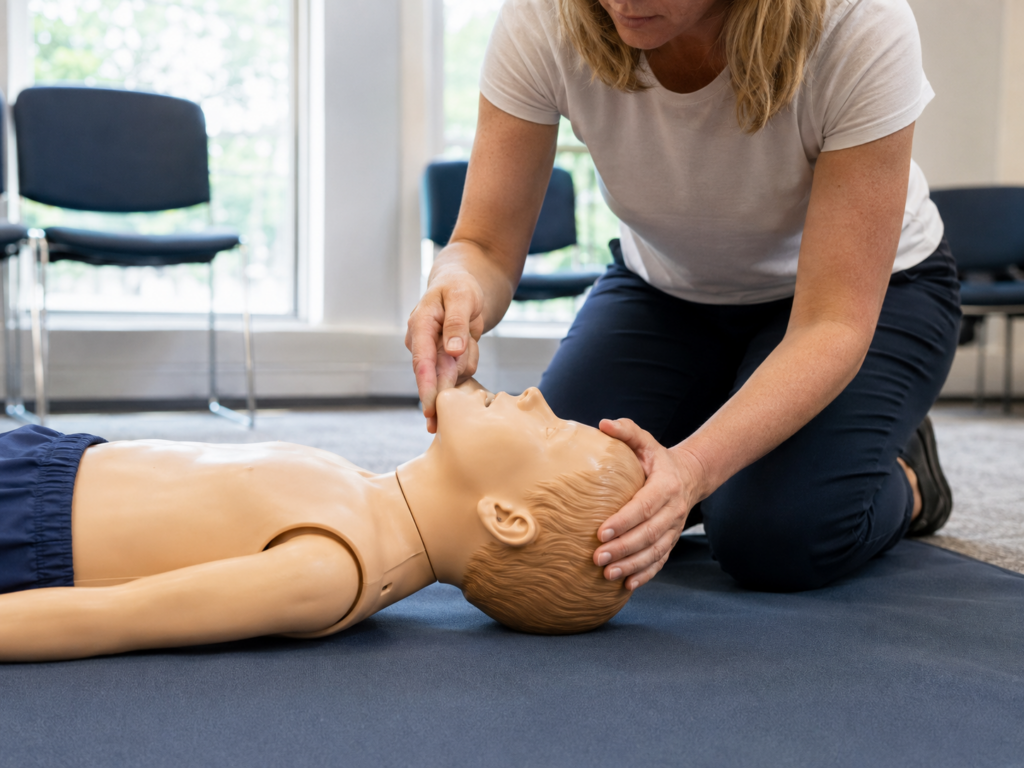
The practical component is what makes remote CPR training legitimate. You can’t just watch videos and click through a quiz. A trainer observes you performing compressions, rescue breaths, and defibrillator use, either through a live Zoom session with equipment mailed to your home, or during a condensed face-to-face practical at a nearby venue.
How Remote CPR Training Works
The process from enrolment to certification follows four steps. Knowing what to expect helps you plan your time and choose the right format.
1. Enrol and complete your online theory
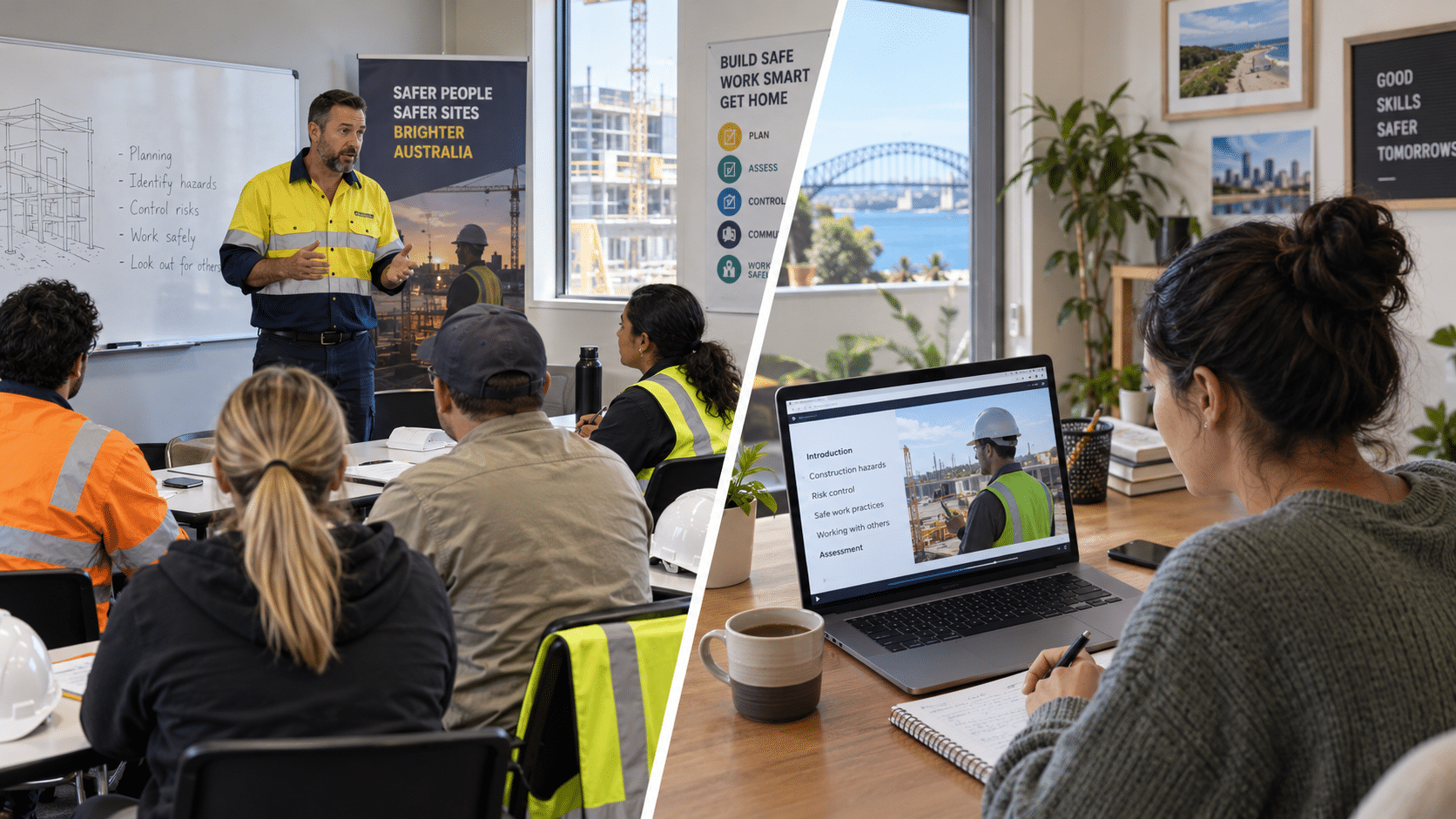
After enrolling, you access self-paced e-learning modules covering the DRSABCD action plan, CPR theory for adults, children, and infants, AED operation, and infection control. You can work through the content from home, a workplace, or anywhere with internet access. Most people complete the theory in one to two hours.
2. Receive your practical equipment or join the live Zoom session
For fully online Zoom courses, a training kit containing a manikin and other equipment arrives at your address before the scheduled session. For blended courses, you simply attend a short in-person practical at one of the available training venues. Either way, you’ll have everything you need to demonstrate your skills.
3. Complete the trainer-led practical assessment
Here’s where you show you can actually perform CPR. Whether via live video or face-to-face, a qualified trainer watches you demonstrate compressions, rescue breathing, and AED use. The trainer provides real-time feedback and confirms you meet competency standards. This hands-on assessment is required for nationally recognised certification.
4. Receive your same-day statement of attainment
Once you pass, you receive a digital Statement of Attainment for HLTAID009 on the same day (conditions apply). No waiting for postal delivery. The certificate is issued electronically and accepted by employers across Australia.

Delivery Options for Remote CPR Training
Not all remote CPR training looks the same. The right choice depends on your location, schedule, and whether you’re completing CPR training for the first time or renewing an existing qualification.
Delivery Format | Theory Component | Practical Component | Best Suited For |
Fully online Zoom | Self-paced e-learning | Live video with mailed equipment | Those who cannot attend in person |
Blended | Self-paced e-learning | Short face-to-face session | Reducing classroom time |
Express refresher | Self-paced e-learning | Assessment-only practical | Experienced participants renewing |
Onsite workplace | Trainer-delivered or e-learning | On-location practical | Teams and group bookings |
Fully online Zoom CPR training
With this format, you complete your practical assessment via live video. Equipment is mailed to your home beforehand, so you can demonstrate compressions and AED use while the trainer watches through your camera. This option works well if you live in a regional area or simply cannot travel to a training venue.
Blended CPR training with online theory and short practical
Blended learning lets you complete theory online at your own pace, then attend a condensed face-to-face practical session. This significantly reduces classroom time, often to around one hour for the practical portion. You still get hands-on assessment, just without sitting through theory you’ve already completed.
Express CPR refresher assessment
If you already hold a CPR qualification and feel confident in your skills, the express pathway involves online theory followed by a short assessment-only practical. This is designed for people renewing their certification, not first-time learners. It’s an efficient option when you want to minimise time away from work.
Onsite workplace CPR training
For businesses with multiple staff requiring certification, trainers can travel to your workplace to deliver group CPR training. This keeps your team together, reduces travel costs, and allows scheduling that fits around operational demands. It’s particularly useful for remote offices or field-based teams.
Tip: If you’re completing CPR training for the first time, blended or Zoom formats give you the full learning experience. If you’re renewing and confident in your skills, the express refresher is faster.

Is Remote CPR Certification Nationally Recognised in Australia
Yes. Remote or online CPR courses delivered by a Registered Training Organisation (RTO) result in the same HLTAID009 Statement of Attainment as traditional face-to-face courses. The certificate itself doesn’t indicate the delivery method. It simply confirms you’ve met the competency requirements.
This nationally recognised qualification is accepted by:
- Employers and HR departments across all industries
- Safe Work Australia and WHS regulators for workplace compliance
- RACGP and ACN for continuing professional development points
- Industry bodies in healthcare, childcare, aged care, construction, and fitness
The key factor is that your training provider holds RTO status and delivers the course according to national training package requirements. FirstAidPro is a Registered Training Organisation (RTO Code: 31124), so all CPR certifications issued meet national standards.
What HLTAID009 Remote CPR Courses Cover
Regardless of delivery format, HLTAID009 courses cover the same core competencies aligned with Australian Resuscitation Council (ANZCOR) guidelines. Here’s what you’ll learn:
- DRSABCD action plan: The emergency response sequence for assessing danger, checking responsiveness, sending for help, and managing airways, breathing, CPR, and defibrillation.
- Adult, child, and infant CPR: Correct compression depths (at least 5cm for adults), rates (100–120 compressions per minute), and rescue breathing techniques for different age groups.
- AED operation: How to safely attach pads, follow voice prompts, and deliver a shock using an Automated External Defibrillator.
- Choking management: Clearing airway obstructions in conscious and unconscious casualties using back blows and chest thrusts.
- Infection control: Using PPE such as gloves and face shields during resuscitation.
- Legal considerations: Understanding duty of care and Good Samaritan protections in Australia.
- Handover and reporting: Communicating with emergency services and documenting incidents.
Who Benefits Most from Remote CPR Training
Remote CPR training suits a wide range of learners. Just over half of Australian adults have received basic life support training, with time and cost among the most common barriers. You might find it particularly useful if you:
- Work in a location with limited access to training venues
- Have shift patterns that make attending scheduled classes difficult
- Live in a regional or rural area where travel to a training centre is impractical — Monash University identified 60 high-risk local government areas for cardiac arrest predominantly in regional and remote communities
- Are a parent or carer who prefers flexible learning around family commitments
- Are renewing your CPR certification and want to minimise time away from work
Both first-time learners and those renewing existing qualifications can complete remote CPR training. The format you choose simply depends on your experience level and scheduling constraints.

Remote CPR Training for Isolated Sites and Field-Based Workforces
There’s another meaning of “remote” worth addressing: training for people who work in geographically isolated locations where emergency services may be hours away. If you work in mining, agriculture, offshore operations, or wilderness settings, your CPR training requirements may extend beyond the standard HLTAID009 qualification.
HLTAID009 Provide CPR for remote workers
Standard CPR certification meets baseline workplace requirements and is often sufficient for compliance purposes. For FIFO and DIDO workers, Zoom or blended delivery options make it easier to maintain currency without travelling to urban training centres during limited time off.
HLTAID013 Provide First Aid in a remote or isolated site
For genuinely isolated worksites, HLTAID013 extends beyond standard CPR to cover prolonged casualty care, improvisation with limited resources, and evacuation coordination. This qualification is designed for situations where professional medical help may be delayed by hours or even days.
Onsite group CPR training for remote teams
Trainers can travel to remote worksites, mine camps, or regional offices to deliver group training. This minimises travel for workers, ensures teams are trained together using consistent methods, and allows scheduling that fits around operational rosters.
How Much Remote CPR Training Costs and How Long It Takes
Course duration and pricing vary depending on the delivery format and whether you’re a first-time learner or renewing an existing qualification.
- Course duration: Express refresher sessions can be completed in around one hour of practical time, while standard blended formats involve approximately 1.5 hours of face-to-face assessment after completing online theory.
- Pricing: Fully online Zoom, blended, and express options each have different price points. FirstAidPro offers CPR courses from $45 with frequent scheduling.
- Certificate validity: HLTAID009 CPR certification is valid for 12 months, with annual renewal recommended by Australian Resuscitation Council guidelines.
Book Your Remote CPR Training with FirstAidPro
FirstAidPro delivers nationally accredited CPR training across multiple formats: fully online Zoom sessions, blended learning with short practicals, express refresher assessments, and onsite workplace training for groups. As a Registered Training Organisation (RTO Code: 31124), all certifications meet national standards and are accepted by employers and regulators throughout Australia.
With same-day digital certification, 170+ training locations, and courses available seven days a week, you can complete your CPR training in a format that fits your schedule.
Related Reading
National Training Register – HLTAID011 Provide First Aid
National Training Register – HLTAID009 Provide cardiopulmonary resuscitation
National Training Register – HLTAID013 – Provide First Aid in remote or isolated site
FAQs About Remote CPR Training
Can you get a CPR certification fully online in Australia?
Yes. You can complete CPR certification via a fully online Zoom session with a Registered Training Organisation. A training kit is mailed to you beforehand, and you complete the practical assessment live with a trainer via video link. This results in a nationally recognised HLTAID009 Statement of Attainment.
Is an online CPR certification legitimate for Australian workplaces?
Online CPR certification from an accredited RTO is legitimate and results in the same nationally recognised Statement of Attainment as face-to-face training. Employers, WHS regulators, and industry bodies accept HLTAID009 regardless of the delivery format.
What is the most accredited CPR certification in Australia?
HLTAID009 Provide Cardiopulmonary Resuscitation is the nationally recognised CPR unit of competency in Australia. Any Registered Training Organisation delivering this unit issues the same accredited Statement of Attainment, regardless of whether training is delivered face-to-face, online, or via blended learning.
How long does a remote CPR certificate last?
An HLTAID009 CPR certificate is valid for 12 months. The Australian Resuscitation Council recommends annual refresher training to maintain skills and stay current with guideline updates.
Can I complete CPR training from a remote work site like a mine or farm?
Yes. You can complete CPR training from a remote location via fully online Zoom sessions, or your employer can arrange onsite group training where a qualified trainer travels to the worksite.
Do I need a USI for remote CPR training?
Yes. A valid Unique Student Identifier (USI) is required to receive a nationally recognised Statement of Attainment. You can create a USI online for free at usi.gov.au before enrolling.