




Sharon has 21+ years of experience as a qualified Emergency Care Nurse registered with the Australian Health Practitioner Regulation Agency (APHRA) and 12+ years as a First Aid Trainer.
She takes pride in FirstAidPro making first aid training available, comprehensive and affordable to everybody.
Dehydration occurs when the body loses more fluids than you take in, leading to an imbalance that affects every system in the body. Recognising the early dehydration symptoms and responding quickly is vital, especially in Australia’s hot climate where the risk of dehydration is high. This guide will help you learn about dehydration, find out what the dehydration symptoms are, understand the causes, and know when to seek medical help.
Ready to gain life-saving skills? Enrol in a nationally recognised First Aid course with First Aid Pro and learn how to identify and manage dehydration and other emergencies.

Key Takeaways
- Dehydration happens when the body loses more fluid than it replaces, affecting normal function.
- Early dehydration symptoms include thirst, dark urine, fatigue, and dizziness.
- Severe dehydration can be life-threatening and requires immediate medical attention.
- Babies, young children, older adults, and outdoor workers are at higher risk.
- Prevention is key: drink enough water, especially in hot weather, during exercise, and when unwell.

What Is Dehydration?
Dehydration occurs when the body loses more fluids than it takes in. Water makes up about 50–60% of an adult’s body weight, according to Healthdirect Australia, and it is essential for regulating body temperature, transporting nutrients, and flushing waste. Even mild dehydration can impact mood, concentration, and physical performance.
In Australia’s harsh climate — where summer temperatures regularly exceed 40°C in many regions — understanding dehydration is critical for everyone from office workers to outdoor labourers.
How Does the Body Lose Fluids?
Common Cause | How Fluid Is Lost |
Sweating | Regulates body temperature but can lead to significant fluid loss, especially in hot weather or during exercise. |
Breathing | Small amounts of fluid are lost through each breath. |
Urination | Removes waste and balances electrolytes. |
Vomiting and diarrhoea | Can cause rapid fluid and electrolyte loss. |
Fever | Increases fluid loss through sweat and respiration. |
When fluid loss is not replaced, the body’s electrolyte balance (including sodium and potassium) becomes disrupted, affecting nerve and muscle function. This is why dehydration is more than just feeling thirsty — it involves a chemical imbalance that can impair how your body works at every level.
Dehydration Symptoms
The signs of dehydration vary depending on age, health status, and severity. Recognising these symptoms early is the key to preventing a minor issue from becoming a medical emergency. Below are the 10 signs of dehydration in adults grouped by severity.
Early (Mild) Signs — Monitor Closely
If you notice any of the following, you are likely in the early stages of dehydration and should begin replacing fluids immediately:
- Thirst or dry mouth — your body’s earliest warning signal
- Slightly darker urine — healthy urine is pale straw-coloured; anything darker suggests you need more fluids
- Fatigue or reduced concentration — even a 1–2% loss in body water can affect cognitive function
- Mild headache — reduced blood flow and oxygen delivery to the brain can trigger pain
- Feeling light-headed — often noticeable when standing up quickly
Mild dehydration may seem harmless, but it can progress quickly — especially in hot weather or during illness. If these symptoms are present, drink fluids immediately, preferably water or an oral rehydration solution (ORS) if vomiting or diarrhoea is involved.

The Skin Turgor Test — A Simple Self-Check
You can do a quick skin turgor test to assess hydration. Pinch the skin on the back of your hand and hold for a few seconds, then release. In a well-hydrated person, the skin snaps back immediately. If the skin stays “tented” or returns slowly, this may indicate moderate to severe dehydration. While not perfectly accurate in older adults (whose skin loses elasticity with age), it is a useful first indicator that the body needs more fluid.
Moderate Signs — Urgent Action Needed
- Very dark urine and reduced urination — a sign that the kidneys are conserving water
- Muscle cramps — loss of electrolytes disrupts muscle contractions
- Irritability or mood changes — the brain is highly sensitive to fluid balance
- Rapid heartbeat — as blood volume drops, the heart works harder to circulate blood
Severe Dehydration — Medical Emergency
- Extreme thirst or inability to drink
- Very little or no urine output
- Rapid breathing and heartbeat
- Confusion, drowsiness, or fainting
- Cold hands and feet
Severe dehydration is a medical emergency. Call Triple Zero (000) immediately if you or someone you are caring for shows these signs.
Recognising Dehydration Symptoms
Know the warning signs and act quickly
- Thirsty or dry mouth
- Slightly darker urine
- Fatigue or reduced concentration
- Mild headache
- Feeling light-headed
- Very dark urine and reduced urination
- Muscle cramps
- Irritability or mood changes
- Rapid heartbeat
- Extreme thirst or inability to drink
- Very little or no urine
- Rapid breathing and heartbeat
- Confusion, drowsiness, or fainting
- Cold hands and feet
How Does Dehydration Affect Your Vital Signs?
Dehydration has a direct and measurable effect on your body’s vital signs — the key indicators first aiders and paramedics check during an assessment:
- Heart rate increases. As blood volume drops, the heart compensates by beating faster to maintain circulation. A resting heart rate above 100 beats per minute in an adult can indicate significant fluid loss.
- Blood pressure drops. Less fluid in the bloodstream means lower blood pressure, which can cause dizziness, fainting, and in severe cases, shock.
- Breathing rate rises. The body may increase its respiratory rate to help compensate for reduced oxygen delivery.
If you are trained in first aid, monitoring these vital signs can help you determine how severe the dehydration is and whether the person needs emergency medical care. Understanding the connection between vital signs and dehydration is a core component of workplace and community first aid training.
Causes of Dehydration
Dehydration happens when the body loses more fluids than it takes in. Common factors that cause dehydration include:
- Hot weather — Heatwaves increase sweat loss. In Australia, where summer temperatures regularly exceed 40°C in many regions, heat-related dehydration is a significant and preventable health risk. Learn more about managing heat-related risks including hyperthermia.
- Exercise — Intense activity without rehydration, particularly in warm or humid conditions.
- Vomiting and diarrhoea — Especially dangerous in children and older adults, as fluid loss can be rapid and severe.
- Fever — Higher body temperature increases the body’s fluid needs.
- Certain medications — Diuretics cause you to urinate more frequently, increasing fluid loss.
- Medical conditions — Diabetes, kidney disease, or infections can increase fluid loss.
Not drinking enough — Sometimes the simplest cause — forgetting to drink water during a busy day, or not recognising early thirst signals.

Risk of Dehydration in Vulnerable Groups
Certain groups face a much higher risk of dehydration and need extra vigilance. If you care for someone in these categories, understanding the warning signs can help you act before the situation becomes serious.
Babies and Young Children (Highest Risk)
Why: Higher water content in their bodies means they can become severely dehydrated quickly. They also cannot tell you they are thirsty.
Warning Signs: Fewer wet nappies, sunken soft spots (fontanelle), no tears when crying, unusual drowsiness.
Critical Action: Keeping your child hydrated during illness is critical. Offer small, frequent sips of fluid and seek medical help early if they refuse to drink.
Older Adults (High Risk)
Reduced Thirst Response: Older adults may not feel thirsty until significantly dehydrated. This makes it easy to miss the early signs.
Additional Risk Factors: Chronic health conditions and medications (particularly diuretics) increase the risk.
Key Warning Signs: Confusion, dizziness, and dark urine. These can sometimes be mistaken for other age-related conditions, so hydration should always be checked.
Outdoor Workers and Athletes (Activity Risk)
If you work outdoors or train in the heat, you lose large amounts of fluid through sweating — particularly in Australia’s extreme summer conditions.
Your risk rises significantly in hot weather and humid environments. According to SafeWork NSW, heat-related illness is a serious workplace hazard, and you should be aware of your employer’s heat management plan.
What you can do: Replace fluids regularly before, during, and after activity. If you are an employer, ensure you provide access to water, shade, and rest breaks for your team during hot conditions.

High-Risk Groups for Dehydration
Special considerations for vulnerable populations
Hydration and Prevention
Preventing dehydration is often as simple as ensuring you drink enough water throughout the day. However, many Australians underestimate how much fluid they actually need — especially during summer, illness, or physical activity.
How Much Water Should You Drink Each Day?
According to the Australian Dietary Guidelines, the recommended daily fluid intake is:
- Men: approximately 2.6 litres (about 10 cups) per day
- Women: approximately 2.1 litres (about 8 cups) per day
- Children: Adjust for age and activity level — younger children need less, but they also dehydrate faster
These are baseline figures. You will need more fluid in hot weather, during exercise, when unwell, or if you are pregnant or breastfeeding.
What Is the Best Drink for Dehydration?
Not all drinks are equally effective at replacing lost fluids:
- Water is the best choice for everyday hydration and mild dehydration.
- Oral rehydration solutions (ORS) are ideal when dehydration is caused by vomiting, diarrhoea, or illness, as they replace both fluids and electrolytes.
- Diluted fruit juice (mixed 50/50 with water) can also help, particularly for children who refuse plain water.
- Milk is surprisingly effective at hydration due to its electrolyte and protein content.
Drinks to avoid when you are dehydrated:
- Sugary soft drinks and energy drinks — high sugar content can slow absorption and worsen symptoms
- Alcohol — acts as a diuretic, increasing fluid loss
- Excess caffeine — can increase urination, though moderate amounts (1–2 cups of tea or coffee) are unlikely to cause dehydration on their own
Food-Based Hydration
You do not get all your fluids from drinks alone. Many foods have high water content and contribute to your daily intake:
- Fruit: Watermelon, strawberries, oranges, and grapes (80–95% water)
- Vegetables: Cucumber, celery, lettuce, and tomatoes (90–96% water)
- Soups and broths — particularly helpful when you are unwell
- Yoghurt — provides fluid along with electrolytes
Including water-rich foods in your diet is a practical way to support hydration, especially for older adults who may not feel thirsty.
General Prevention Tips
- Drink before you feel thirsty — by the time thirst kicks in, you may already be mildly dehydrated.
- Carry a water bottle and sip regularly throughout the day.
- Drink before, during, and after exercise — do not wait until your workout is over.
- Set reminders if you tend to forget — there are free hydration apps available.
- Monitor urine colour — aim for pale straw. Anything darker means you need more fluid.
For more practical guidance on staying hydrated in the Australian climate, read our guide on dehydration and staying hydrated.
How to Treat Dehydration
Treatment depends on severity. Knowing the right response can prevent a mild case from escalating into a medical emergency.
Mild to Moderate Dehydration — First Aid Response
If you suspect someone is mildly or moderately dehydrated, follow these first aid steps:
- Move the person to a cool, shaded area — remove them from direct sun or hot environments.
- Loosen any tight clothing to help the body cool down.
- Encourage small, frequent sips of water — do not let the person gulp large amounts at once, as this can cause nausea.
- Use an oral rehydration solution (ORS) if the dehydration is caused by vomiting or diarrhoea. ORS sachets are available from pharmacies without a prescription.
- Rest — avoid further physical activity until symptoms improve.
- Monitor the person closely — if symptoms worsen or do not improve within 30 minutes, seek medical advice.
Avoid sugary and heavily caffeinated drinks, as these can worsen dehydration.
Homemade Oral Rehydration Solution
If you do not have access to commercial ORS sachets, you can make a simple solution at home using a recipe recommended by Healthdirect Australia:
- 6 level teaspoons of sugar
- ½ level teaspoon of salt
- ½ level teaspoon of bicarbonate of soda (bicarb soda)
- Dissolved in 1 litre of clean drinking water
Sip this solution slowly over several hours. This is particularly useful during gastro outbreaks or when caring for someone in a remote area. Do not use this as a long-term replacement for medical-grade ORS — see a doctor if symptoms persist.
Severe Dehydration — Medical Emergency
Call Triple Zero (000) immediately if symptoms include:
- Confusion, drowsiness, or fainting
- Rapid heartbeat or breathing
- Very little or no urine output
- Inability to keep fluids down
- Cold, clammy skin
- Signs of shock
Hospital treatment may include: Intravenous (IV) fluids and electrolyte replacement to rapidly restore the body’s fluid balance.
While waiting for emergency services, keep the person cool, lying down with legs elevated if they show signs of hypovolaemic shock, and continue offering small sips of water if they are conscious and able to swallow.
Treatment at a Glance
Severity | Action |
Mild | Move to shade, drink water, rest, avoid heat |
Moderate | Use ORS, loosen clothing, monitor closely, seek advice if no improvement |
Severe | Call Triple Zero (000) immediately, keep person cool, do not force fluids if unconscious |
Dehydration Treatment Guide
Know when to treat at home and when to seek emergency help
Drink water or diluted fruit juice.
Use oral rehydration solutions (ORS) for dehydration from vomiting or diarrhoea.
Severe dehydration can be life-threatening and requires immediate professional medical intervention.
Complications of Dehydration
If left untreated, dehydration can lead to serious and potentially life-threatening complications:
- Heat exhaustion or heatstroke — the body loses its ability to regulate temperature. Learn to recognise the signs in our guide to heat stroke first aid.
- Kidney stones or kidney failure — prolonged dehydration forces the kidneys to concentrate waste, increasing the risk of stones and long-term damage.
- Seizures — caused by dangerous imbalances in electrolytes such as sodium and potassium.
Low blood volume shock (hypovolaemic shock) — a life-threatening drop in blood volume that prevents the heart from pumping enough blood. This is the most serious complication of severe dehydration.

Symptoms and Causes in Children
Children are more susceptible to rapid fluid loss due to:
- Higher metabolic rate — they burn energy and lose fluid faster than adults
- Smaller fluid reserves — there is less margin for error
- Illness-related vomiting and diarrhoea — gastro is one of the most common causes of dehydration in Australian children
Tips for Keeping Your Child Hydrated
- Offer small, frequent sips of water or ORS — do not wait for them to ask for a drink.
- Encourage fluids during play and sports — children often forget to drink when they are active.
- Monitor nappy output and alertness — fewer wet nappies, dry lips, or unusual drowsiness are warning signs.
- Avoid sugary drinks — these are not effective for rehydration and can worsen diarrhoea.
Seek medical help early — if your child refuses to drink, has sunken eyes, or shows no tears when crying, see a doctor or call Healthdirect on 1800 022 222 for advice.
When to Get Medical Help
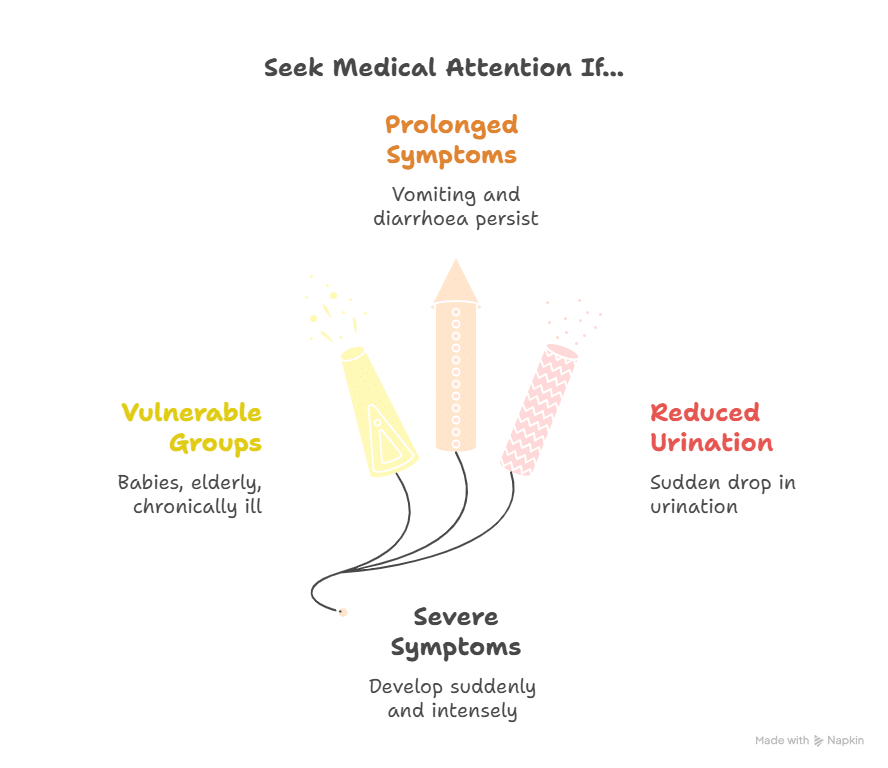
Knowing when to escalate from home care to professional medical help can be the difference between a quick recovery and a life-threatening emergency.
See a Doctor or Visit Your GP If:
- Dehydration symptoms have not improved after several hours of fluid replacement
- You or the person in your care has been vomiting for more than 24 hours
- Diarrhoea has lasted more than 2 days in an adult or 24 hours in a child
- You notice signs of moderate dehydration (dark urine, muscle cramps, rapid heartbeat) that are not resolving
Call Triple Zero (000) Immediately If You Notice:
- Confusion, drowsiness, or fainting
- Rapid heartbeat or rapid breathing
- Very little or no urine output for more than 8 hours
- Inability to keep fluids down despite repeated attempts
- Cold, clammy skin or a greyish appearance
- Signs of shock — pale, sweaty, rapid pulse, unresponsive
If you notice these signs, call Triple Zero (000) immediately. Do not wait to see if things improve. Severe dehydration can progress to organ failure rapidly, especially in children, older adults, and people with chronic illness.
While waiting for paramedics:
- Keep the person lying down with legs slightly elevated (unless they are vomiting).
- Loosen tight clothing.
- Keep them cool — use a damp cloth on the forehead and neck.
- Offer small sips of water only if they are fully conscious and able to swallow.
- Do not leave them alone.
References
References
- Healthdirect Australia — Dehydration
- Better Health Channel (Victorian Government) — Water – A Vital Nutrient
- SafeWork NSW — Working in Extreme Heat
- SafeWork Australia — Guide for Managing the Risks of Working in Heat (PDF)
- Royal Children’s Hospital Melbourne — Dehydration – Clinical Practice Guidelines
- Mayo Clinic — Dehydration: Diagnosis and Treatment
- Eat for Health (Australian Dietary Guidelines) — Fluid Intake Recommendations
Recent Posts
Frequently Asked Questions
Often, the first sign is dark urine or a dry mouth, but thirst may also appear early. Many people overlook mild thirst as a signal — by the time you feel noticeably thirsty, you may already be 1–2% dehydrated, which is enough to affect concentration and energy levels. The most reliable early indicator is urine colour: pale straw means you are well hydrated, while anything darker suggests you need more fluid.
The fastest self-check involves three things: check your urine colour (dark yellow or amber indicates dehydration), notice if you feel light-headed when standing, and assess whether your mouth feels dry. You can also perform the skin turgor test — pinch the skin on the back of your hand, and if it does not snap back quickly, you may be dehydrated.
Yes, dehydration can reduce blood flow and oxygen to the brain, triggering headaches.
The Australian Dietary Guidelines recommend approximately 2.6 litres (10 cups) for men and 2.1 litres (8 cups) for women per day. You will need more in hot weather, during exercise, or when unwell. Children’s needs vary by age and activity level. The best way to monitor your hydration is by urine colour — aim for pale straw throughout the day.
Yes. Babies can become seriously ill quickly if dehydrated because they have smaller fluid reserves and a higher metabolic rate than adults. Warning signs in babies include fewer wet nappies, sunken fontanelle (the soft spot on top of the head), no tears when crying, and unusual drowsiness. Seek immediate medical help if you are concerned about dehydration in an infant.
Severe dehydration symptoms include extreme thirst, very little or no urine output, rapid heartbeat and breathing, confusion, drowsiness or fainting, and cold, clammy skin. In some cases, the person may lose consciousness or show signs of shock. Severe dehydration is a medical emergency — call Triple Zero (000) immediately. Hospital treatment usually involves intravenous (IV) fluids to restore the body’s fluid balance.
If severe dehydration is suspected, the priority is to call Triple Zero (000) for emergency medical assistance. While waiting for paramedics, keep the person lying down in a cool area, loosen clothing, and offer small sips of water only if they are conscious and able to swallow. Do not force fluids if the person is confused or unresponsive. Hospital treatment typically includes IV fluids and electrolyte replacement administered directly into the bloodstream for rapid rehydration.
The key signs that indicate someone needs urgent IV fluid replacement include: inability to keep any fluids down, no urine output for more than 8 hours, confusion or altered consciousness, rapid and weak pulse, blood pressure drop when standing, and cold or mottled skin. These signs suggest the body can no longer rehydrate through oral intake alone and needs direct intravenous support.
Water is the best choice for everyday hydration and mild dehydration. If dehydration is caused by illness (vomiting or diarrhoea), an oral rehydration solution (ORS) is more effective because it replaces both fluids and electrolytes. Diluted fruit juice and milk are also reasonable options. Avoid sugary soft drinks, energy drinks, alcohol, and excessive caffeine when dehydrated, as these can worsen fluid loss.
Yes. Although rare, drinking excessive amounts of water in a short period can cause a condition called hyponatraemia (water intoxication). This happens when the sodium levels in your blood become dangerously diluted. Symptoms include nausea, headache, confusion, and in severe cases, seizures. To avoid this, drink small amounts regularly throughout the day rather than consuming large volumes all at once. This is particularly important during endurance exercise or extreme heat events.
Unlike acute dehydration, chronic dehydration develops gradually over weeks or months and can be easy to miss. Long-term signs include:
- Persistent headaches that occur regularly without another clear cause
- Ongoing fatigue and low energy despite adequate sleep
- Dry, flaky skin that does not improve with moisturiser
- Chronic constipation
- Recurring urinary tract infections (UTIs)
- Difficulty concentrating or persistent brain fog
If you experience these symptoms regularly, increasing your daily fluid intake and monitoring your urine colour over several weeks is a good first step. See your GP if symptoms persist, as chronic dehydration can sometimes indicate an underlying health condition.
Dehydration is a common but preventable condition that can escalate quickly — especially in Australia’s hot climate. By learning to recognise the early dehydration symptoms, understanding who is most at risk, and knowing how to respond with simple first aid steps, you can protect yourself, your family, and the people around you. Stay hydrated, monitor your urine colour, and never hesitate to call Triple Zero (000) if you suspect severe dehydration. Remember that prevention is always easier than treatment — carry water with you, drink before you feel thirsty, and pay extra attention to vulnerable groups like young children and older adults. The most important step you can take is to be prepared before an emergency happens.
Book a First Aid Course
Understanding dehydration is just one part of being prepared for a medical emergency. A nationally accredited First Aid course with FirstAidPro teaches you how to recognise and respond to dehydration, heat-related illness, shock, and dozens of other emergency scenarios — with hands-on practice and same-day certification.
- Courses from $97 (First Aid) and $45 (CPR)
- 170+ locations across Australia, 7 days a week
- Certificates issued same day (T&Cs apply)
- RACGP and ACN endorsed