



Sharon has 21+ years of experience as a qualified Emergency Care Nurse registered with the Australian Health Practitioner Regulation Agency (APHRA) and 12+ years as a First Aid Trainer.
She takes pride in FirstAidPro making first aid training available, comprehensive and affordable to everybody.
Key Takeaways
- CPR (cardiopulmonary resuscitation) is a life-saving emergency technique used when someone’s heart stops beating or they stop breathing normally.
- The 7 steps of CPR follow the DRSABCD action plan, the framework endorsed by the Australian Resuscitation Council (ARC).
- Performing CPR immediately after cardiac arrest dramatically improves a person’s chance of survival before the ambulance arrives.
- Effective CPR combines 30 chest compressions with 2 rescue breaths, repeated at a rate of 100 to 120 compressions per minute.
- The best way to learn CPR with confidence is through a nationally accredited HLTAID009 course — enrol with First Aid Pro today.
Why CPR Is One of the Most Critical Life-Saving Techniques You Can Learn
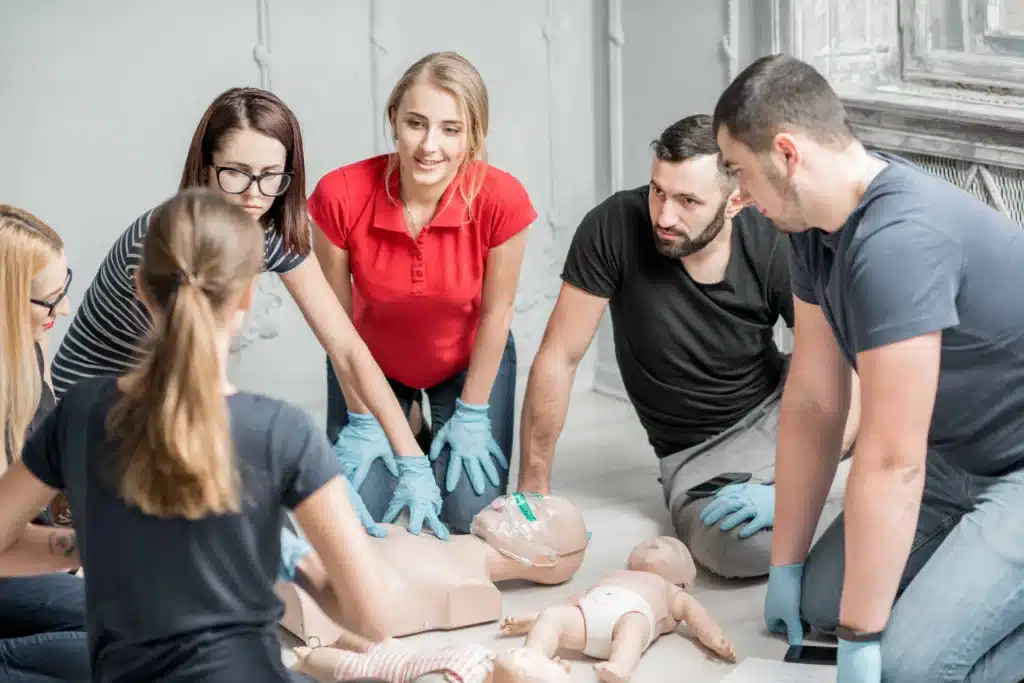
Cardiopulmonary resuscitation (CPR) is an emergency first aid procedure performed when a person’s heart stops beating or they stop breathing normally. It is one of the most important skills any person can possess — and one of the simplest to learn.
Every minute without CPR after cardiac arrest reduces a person’s chance of survival by approximately 10 per cent. Without CPR, the brain and other organs are rapidly deprived of oxygenated blood, causing irreversible damage within minutes. Bystander CPR — performed by an ordinary person before emergency help arrives — is one of the most powerful interventions in modern emergency medicine.
In Australia, sudden cardiac arrest strikes around 26,000 people outside hospital each year, yet only about 1 in 10 survive. Survival is often low because CPR and defibrillation do not start quickly enough, but when a bystander begins CPR immediately and continues until paramedics arrive, a person’s chance of survival can be two to three times higher than if no CPR is given.
Ready to learn the skill that saves lives? Enrol in First Aid Pro’s nationally recognised HLTAID009 CPR course today — available face-to-face, blended, or online via Zoom. Book your spot now.
How CPR Dramatically Improves Survival During Cardiac Emergencies
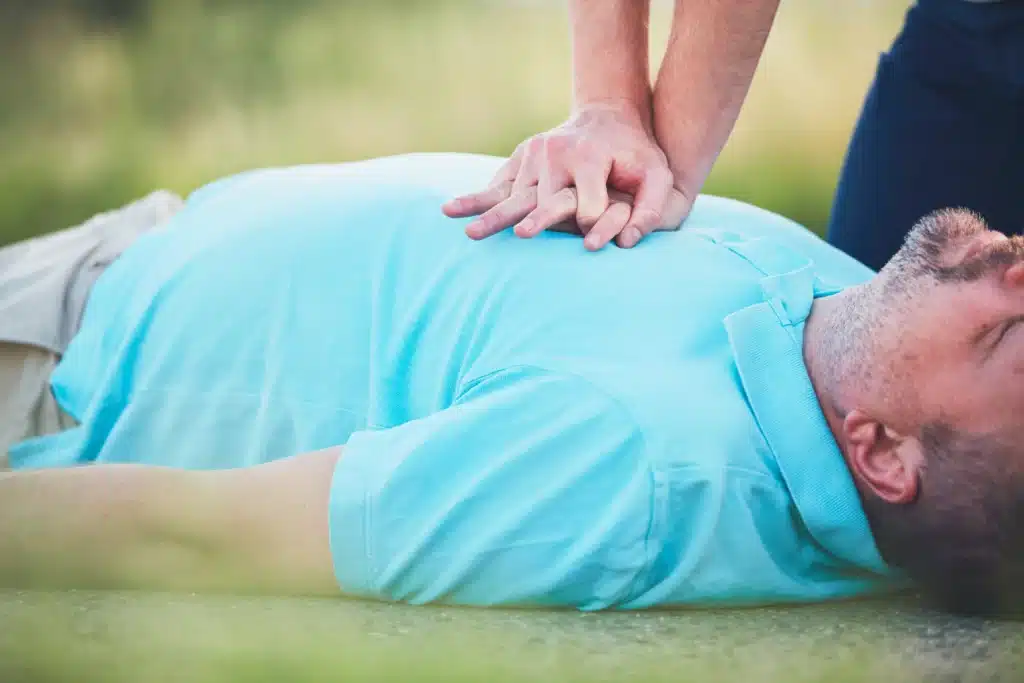
When the heart stops, oxygenated blood stops circulating. The brain begins to suffer damage after just four to six minutes without oxygen. CPR works by manually circulating blood through chest compressions and restoring some oxygen to the lungs through rescue breaths (or ventilations). This buys critical time until specialised treatment is available — such as defibrillation or advanced cardiac care from paramedics.
CPR can save lives precisely because it bridges the gap between collapse and professional medical intervention. Even hands-only CPR — compressions without rescue breathing — significantly improves outcomes, particularly in the first few minutes of cardiac arrest in adults.
How Well Do You Know CPR?
Test your understanding of the 7 steps of CPR with this short quiz.
Why Every Australian Should Know How to Perform Effective CPR
Most cardiac arrests happen at home, in the presence of family members or friends. The person most likely to perform CPR on a loved one is not a paramedic — it is you. Being trained in CPR means that when seconds count, you are not frozen by uncertainty. You act.
Australia’s nationally accredited CPR training framework, aligned with Australian Resuscitation Council (ARC) guidelines, ensures that anyone who completes a recognised course is equipped with the practical skills and confidence to respond effectively in a real emergency.
Still not sure if CPR is that important? Listen to Rhy’s survival story in his own words in the video below . . .
What Is Cardiopulmonary Resuscitation and How Does It Work?
Cardiopulmonary resuscitation is a combination of chest compressions and rescue breaths designed to maintain circulation and oxygenation when the heart has stopped. The term itself tells the story: cardio refers to the heart, pulmonary to the lungs, and resuscitation to the act of reviving someone.
CPR is a core component of adult basic life support and is governed in Australia by the ANZCOR (Australian and New Zealand Committee on Resuscitation) guidelines, which are reviewed and updated regularly to reflect current evidence.
The Role of Compressions and Ventilations in Keeping the Body Alive
Chest compressions manually pump the heart, pushing blood to the brain and other vital organs. Each compression should press the chest down approximately 5–6 cm and be delivered at a rate of 100 to 120 compressions per minute — roughly the tempo of the song Stayin’ Alive.
Rescue breaths (ventilations) deliver air into the lungs, maintaining some level of oxygenation in the blood being circulated. The standard ratio in CPR is 30 chest compressions followed by 2 rescue breaths, repeated continuously until help arrives or the person begins breathing normally.
Adult, Child and Infant CPR — What Are the Key Differences?
Patient Type | Compression Depth | Compression Ratio | Technique |
Adult | 5–6 cm | 30:2 | Two hands (heel of one hand, other hand on top) |
Child (1–8 yrs) | 5 cm | 30:2 | One or two hands |
Infant (under 1 yr) | 4 cm | 30:2 | Two fingers |
CPR on adults differs from CPR on children and babies in technique and force, though the ratio of 30 compressions and 2 breaths remains consistent. Understanding these differences is a core part of the HLTAID009 curriculum.
The DRSABCD Action Plan — The Foundation of Emergency Response in Australia
What Does DRSABCD Stand For?
The DRSABCD action plan is the step-by-step framework used by Australian first aiders, paramedics, and emergency responders. It stands for:
The DRSABCD steps
Why it matters in Australia
Why Australian Resuscitation Council Guidelines Use DRSABCD as the CPR Framework
DRSABCD provides a logical, memorable sequence that helps any responder — trained or untrained — take the right actions in the right order during a high-stress emergency. It reduces hesitation, minimises errors, and ensures critical steps are not skipped.
The 7 Steps of CPR — A Complete Step-by-Step Guide
The following CPR steps walk through each stage of the DRSABCD action plan in practical detail. This is your complete CPR guide.
Step 1 — D for Danger: How to Assess the Scene Safely
Before approaching a collapsed person, assess the environment for hazards. This includes traffic, electricity, fire, unstable structures, or any other risk that could endanger you or the casualty.
Do not become a second victim. If the scene is unsafe, do not enter. Call 000 and ask for an ambulance. Only proceed when it is safe to do so. Safe manual handling also begins here — consider how you will approach and position the casualty without injuring yourself.
Step 2 — R for Response: Recognising and Managing an Unconscious Casualty
Once the scene is safe, check whether the person is conscious. Tap their shoulders firmly and call out loudly: “Can you hear me? Open your eyes.”
If there is no response, the person is unresponsive. Lay them on their back on a flat surface. This is the point at which you begin managing an unconscious casualty. Note the time — this information will be valuable for paramedics when the ambulance arrives.

Step 3 — S for Send for Help: Why Calling 000 When Seconds Count Is Critical
Immediately call 000 — or ask bystanders for help to make the call — so that an ambulance is dispatched without delay. Do not leave the person alone to make the call if avoidable. If others are present, point to one person specifically and instruct them: “You — call 000 now and ask for an ambulance.”
Ask bystanders to locate the nearest automated external defibrillator (AED). Many public spaces, workplaces, and sports facilities have AED units on site.
While waiting for emergency help, proceed immediately to the next steps. Do not wait for the ambulance before starting CPR.
Don’t wait for an emergency to find out you don’t know what to do. Get trained with First Aid Pro’s HLTAID009 CPR course — nationally recognised and valid for 12 months Australia-wide. Enrol now.
Step 5 — B for Breathing: How to Check for Normal Breathing in an Emergency
With the airway open, look, listen, and feel for normal breathing for no more than 10 seconds:
- Look — watch for the chest to rise and fall
- Listen — place your ear near the mouth and listen for breath sounds
- Feel — feel for air being expelled against your cheek
Breathing Status | Action Required |
Breathing normally | Place in recovery position, monitor, await ambulance |
Not breathing normally | Start CPR immediately |
Occasional gasping (agonal breathing) | Treat as not breathing — start CPR immediately |
Agonal breathing — irregular, gasping breaths — is not normal breathing. It is a reflex and does not indicate the airway is functioning. If in doubt, start CPR.
Step 6 — C for CPR: How to Perform Effective Chest Compressions and Ventilations
This is the core of the CPR guide. To perform CPR correctly on an adult:
Chest Compressions:
- Kneel beside the person at shoulder level.
- Place the heel of one hand on the centre of their chest — on the lower half of the breastbone (sternum).
- Place your other hand on top and interlock your fingers, keeping them raised off the chest.
- Keep your arms straight and press straight down, compressing the chest 5–6 cm.
- Release fully between compressions — allow the chest to rise completely.
- Perform 30 compressions at a rate of 100 to 120 compressions per minute.
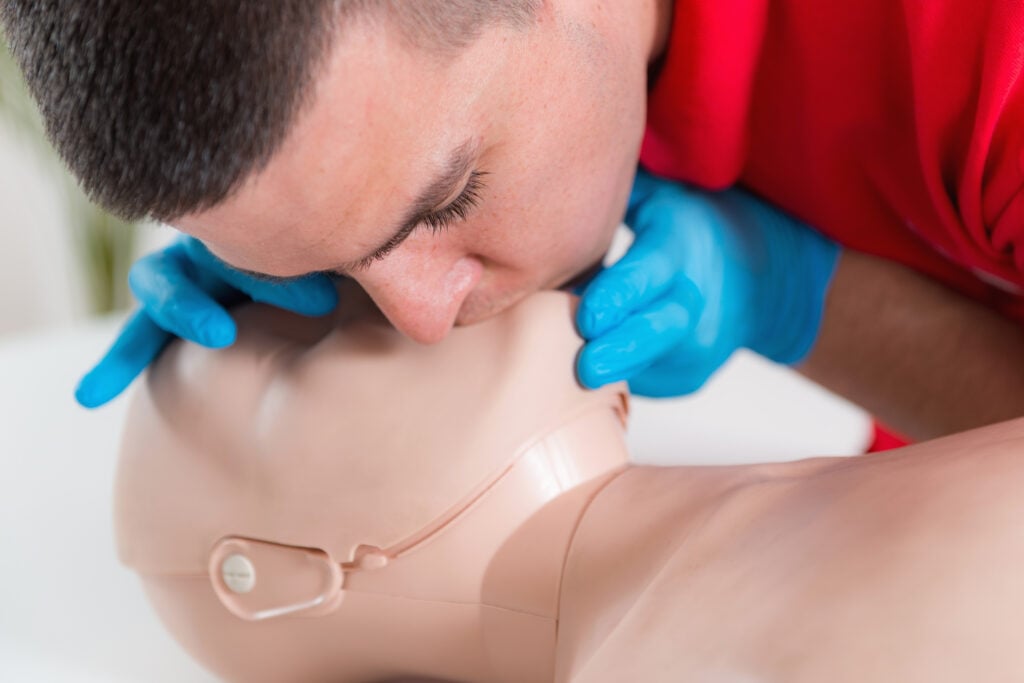
Rescue Breaths (Mouth-to-Mouth):
- After 30 compressions, tilt the head back and lift the chin.
- Pinch the nose closed with one hand on their forehead.
- Seal your mouth over theirs and give a steady breath for about 1 second — just enough to see the chest rise.
- Allow the chest to fall as air is being expelled.
- Repeat for a second rescue breath.
- If the chest does not rise on the first breath, recheck the head position and try once more before returning to compressions.
Return immediately to 30 chest compressions. This 30:2 cycle — 30 compressions and 2 rescue breaths — constitutes one cycle of CPR. Performing CPR compressions continuously for 2 minutes equals approximately 5 cycles.
Hands-Only CPR: If you are unwilling or unable to give rescue breaths, hands-only CPR (compressions only) is acceptable and still significantly beneficial, particularly in adults in the first minutes of cardiac arrest.
Continue CPR until: the person begins breathing normally, a trained responder takes over, an AED is ready to use, or you are physically unable to continue.
Step 7 — D for Defibrillation: How to Operate an Automated External Defibrillator (AED)
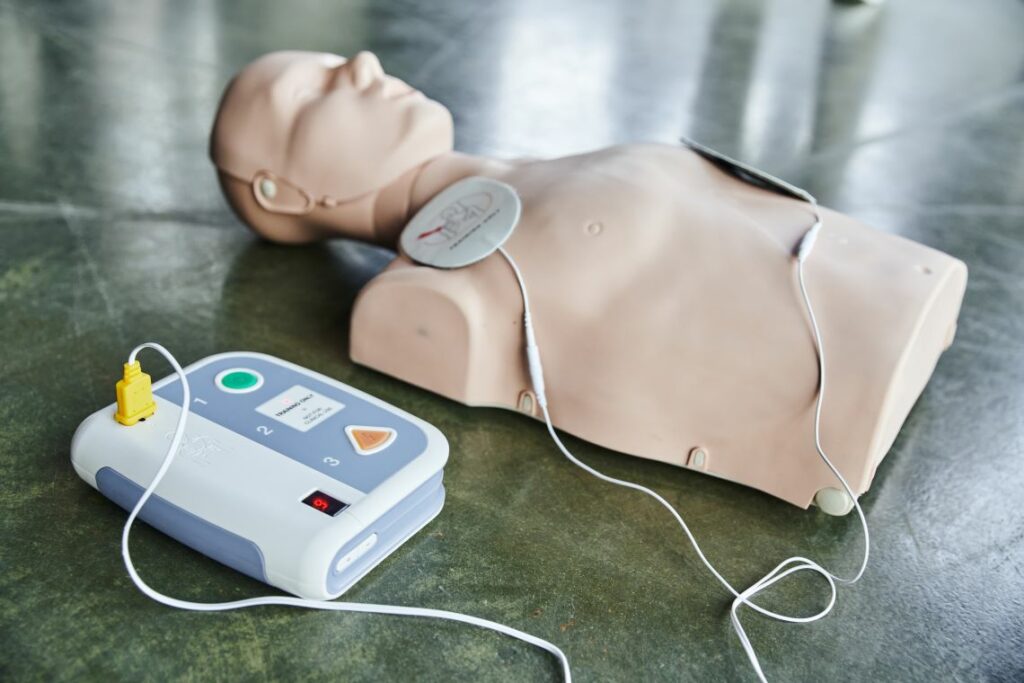
An automated external defibrillator (AED) delivers a controlled electrical shock to the heart to restore a normal rhythm. When used in combination with CPR, the AED dramatically increases survival rates from cardiac arrest.
How to use an AED
At a glance
AEDs are designed to be used by anyone. The voice prompts walk the rescuer through every step clearly. You do not need to be a medical professional to use one — but practising with an AED training device, as part of the HLTAID009 course, builds confidence and reduces hesitation when it matters most.
How Many Cycles of CPR Should You Perform? Understanding the 2-Minute Rule
The national assessment requirement for CPR certification in Australia is a minimum of 2 minutes of uninterrupted single rescuer CPR, which equates to 5 full cycles of 30 compressions and 2 rescue breaths.
In practice, you should continue performing CPR until the ambulance arrives and paramedics take over, or until the person begins breathing normally. Do not stop to check for signs of life during CPR unless the person clearly begins to respond.
Legal Considerations and Infection Control When Providing First Aid in Australia
Your Rights and Responsibilities as a First Aider Under Australian Law
In Australia, Good Samaritan legislation exists in every state and territory to protect people who provide emergency first aid in good faith. Provided you act reasonably and within your level of training, you are protected from civil liability. Being trained in CPR through a nationally accredited course further supports your legal standing as a competent responder.
Infection Control Techniques to Keep Everyone Safe During Emergency Response
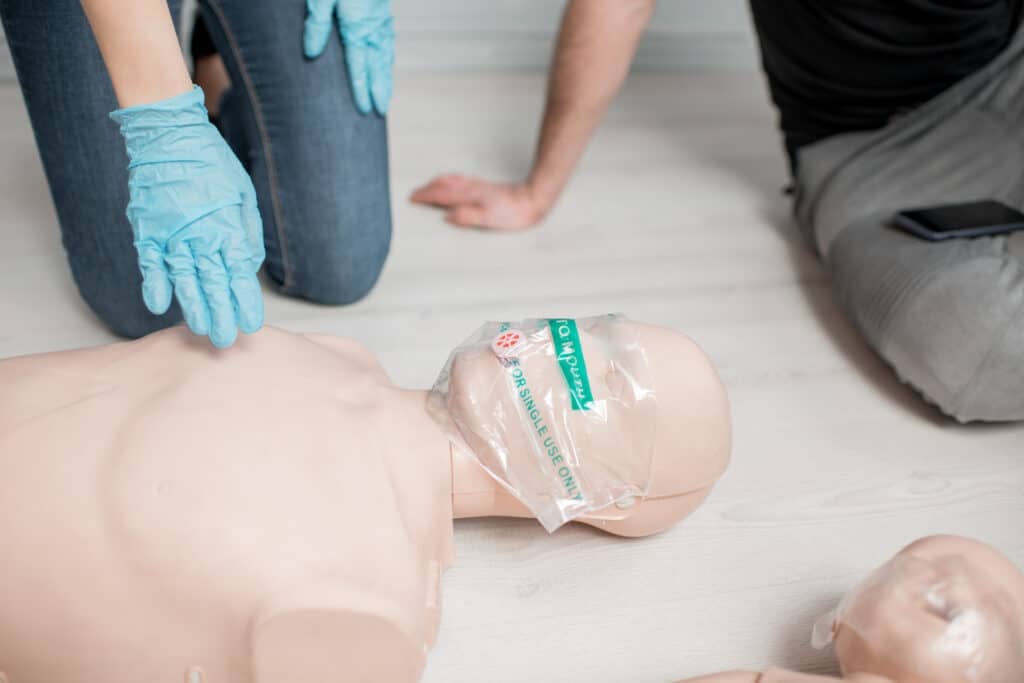
Where available, use personal protective equipment (PPE) including gloves and a face shield or CPR mask when providing rescue breaths. If PPE is unavailable and you are unwilling to perform mouth-to-mouth, deliver hands-only CPR. Infection control is a core component of the HLTAID009 course.
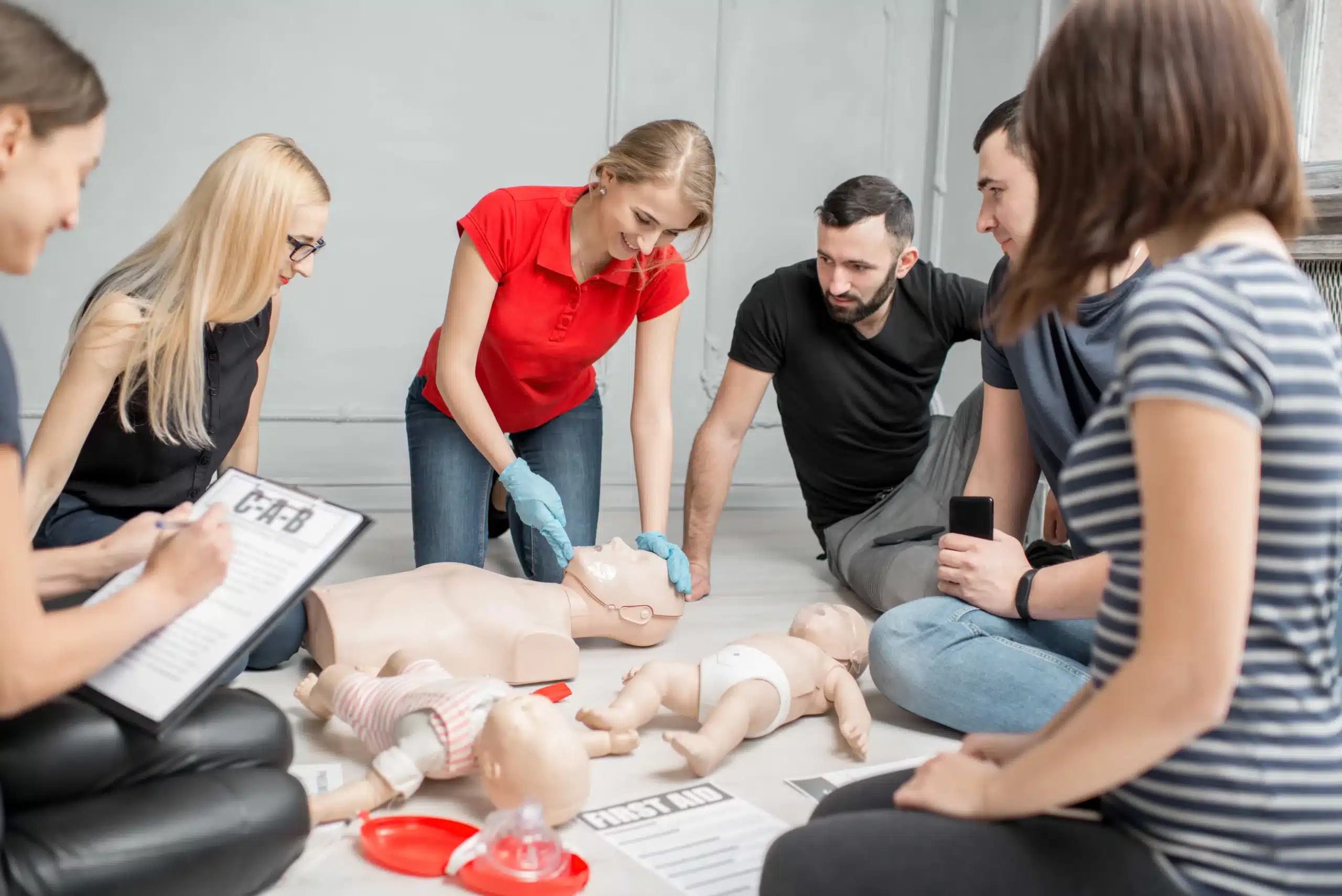
What You'll Learn in the HLTAID009 Provide Cardiopulmonary Resuscitation Course
A practical, ARC-aligned course designed to build real confidence in CPR and emergency response.
Core skills covered
At a glance
Workplace CPR certification is valid for 12 months — when did you last renew yours? Book your HLTAID009 CPR course with First Aid Pro and leave with the practical skills and confidence to save a life. Find a course near you.
References
- Australian and New Zealand Committee on Resuscitation (ANZCOR). Guideline 8 — Cardiopulmonary Resuscitation. Updated 2021.
- Heart Foundation (Australia): What Is a Cardiac Arrest?
- health direct: How to perform CPR
- Better Health Channel: Cardiopulmonary resuscitation (CPR)
- First Aid Pro. HLTAID009 Provide Cardiopulmonary Resuscitation — Course Overview.
Frequently Asked Questions
What are the 7 steps of CPR in Australia?
The 7 steps of CPR in Australia follow the DRSABCD action plan: Danger, Response, Send for Help, Airway, Breathing, CPR, and Defibrillation. Each step follows a logical sequence to maximise the person’s chance of survival before the ambulance arrives.
What is the correct compression depth for adult CPR?
For CPR on adults, compress the chest to a depth of 5–6 cm. Place the heel of one hand on the lower half of the breastbone, place your other hand on top, interlock your fingers, keep your arms straight, and press straight down at a rate of 100 to 120 compressions per minute.
How long should you perform CPR before stopping?
Continue performing CPR until the person begins breathing normally, a trained responder takes over, the AED is ready to deliver a shock, or you are physically unable to continue. Do not stop CPR to check for signs of life unless there is an obvious change in the person’s condition.
Can you perform CPR without giving rescue breaths?
Yes. Hands-only CPR — chest compressions without mouth-to-mouth — is recommended when you are unwilling or unable to give rescue breaths. It is still significantly effective, particularly in adults in the first few minutes of cardiac arrest. Rescue breaths become critically important when CPR is needed for longer periods, drowning victims or for children and babies.
How often should I renew my CPR certification in Australia?
CPR certification through a nationally accredited course such as HLTAID009 is valid for 12 months in Australia. Annual renewal is strongly recommended by the Australian Resuscitation Council to ensure your skills remain current and aligned with the latest guidelines.