



Sharon has 21+ years of experience as a qualified Emergency Care Nurse registered with the Australian Health Practitioner Regulation Agency (APHRA) and 12+ years as a First Aid Trainer.
She takes pride in FirstAidPro making first aid training available, comprehensive and affordable to everybody.
- CPR Course Content: What You Will Learn and Cover - 12/11/2026
- DRSABCD Explained: The Action Plan Step-by-Step - 11/11/2026
- Remote CPR Training and Certification - 10/11/2026
Bystander CPR can double or even triple a person’s chance of survival after cardiac arrest. Yet many people hesitate to enrol in a course because they are unsure what it actually involves.
CPR course content covers the DRSABCD action plan, chest compressions and rescue breaths for adults, children, and infants, AED operation, and the legal responsibilities that come with providing emergency care. This guide walks you through exactly what you will learn and practise during your training.
Key takeaways
- DRSABCD framework: Every Australian CPR course teaches the nationally recognised emergency action plan covering Danger, Response, Send for help, Airway, Breathing, CPR, and Defibrillation.
- Hands-on practice: You will perform chest compressions, rescue breaths, and AED operation on manikins for adults, children, and infants.
- Certificate validity: HLTAID009 certification lasts 12 months, with the Australian Resuscitation Council recommending annual renewal.
- Flexible formats: Courses are available face-to-face, blended, express refresher, or 100% online via Zoom.
- No experience required: CPR courses are designed for complete beginners.
Ready to get started? Book a CPR course with FirstAidPro.
What a CPR course is and why it matters
A CPR course teaches you to recognise and respond to cardiac arrest and breathing emergencies. In Australia, approximately 26,000 out-of-hospital cardiac arrests occur each year with only 12% survival, making these skills essential. Content varies by the level and depth of the class, but most standard courses cover the Chain of Survival steps, chest compressions, rescue breaths, AED use, and choking relief.
In Australia, the nationally accredited CPR unit is HLTAID009 Provide Cardiopulmonary Resuscitation. The qualification aligns with Australian Resuscitation Council (ARC) guidelines and is recognised by employers and regulators across the country.
Core topics covered in CPR course content
So what exactly will you learn? A CPR course covers both the theory behind emergency response and the practical skills you will use if someone collapses.
Recognising cardiac and breathing emergencies
You will learn to spot the signs of cardiac arrest: sudden collapse, unresponsiveness, and absent or abnormal breathing. One term you will encounter is agonal breathing, which refers to gasping, irregular breaths that can look like normal breathing but actually indicate the heart has stopped.
Adult child and infant resuscitation differences
CPR techniques differ depending on the casualty’s age. Compression depth, hand placement, and breath delivery all change for adults, children (roughly 1–8 years), and infants (under 12 months). You will practise each variation during the course.
Safe AED operation
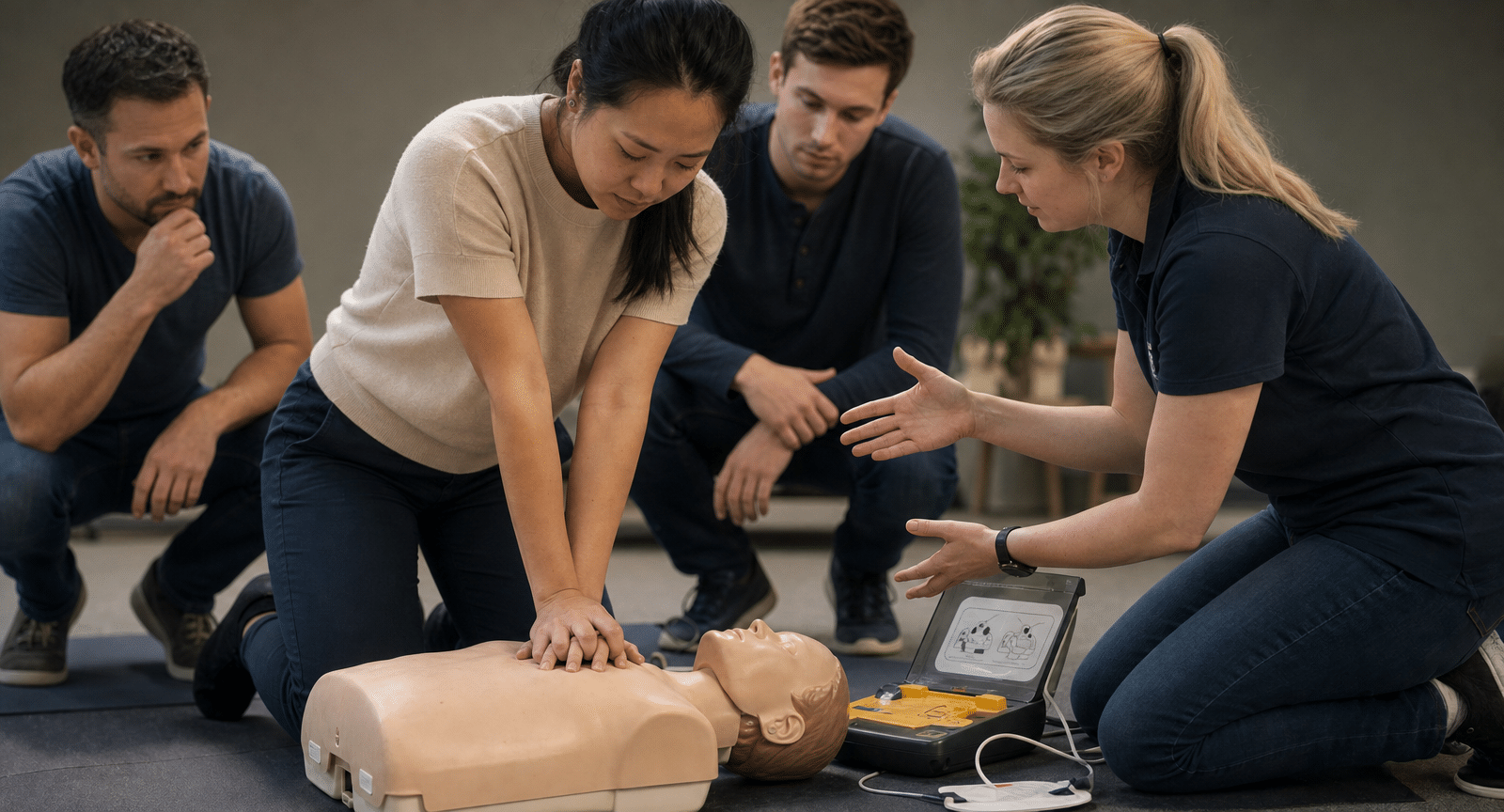
An AED (automated external defibrillator) is a portable device that delivers an electric shock to restore a normal heart rhythm. You will learn when to use an AED, how to attach the pads correctly, and how to follow the device’s voice prompts. AEDs are designed for untrained users, but training builds confidence to act without hesitation.
Infection control and PPE use
Protecting yourself and the casualty is part of every CPR course. You will learn to use face shields, gloves, and barrier devices during resuscitation to reduce infection risk.
Legal responsibilities and incident reporting
Australian Good Samaritan legislation protects people who provide reasonable assistance in an emergency. Your course will cover duty of care basics, consent, and how to complete written incident documentation after an event.
The DRSABCD action plan you will learn
Every Australian CPR course teaches DRSABCD, the nationally recognised emergency response framework. Think of it as a checklist that guides you from the moment you notice something is wrong until professional help arrives.
Step | Meaning | What you do |
D | Danger | Check for hazards to yourself, bystanders, and the casualty before approaching |
R | Response | Check if the person responds to voice and touch |
S | Send for help | Call Triple Zero (000) and request an AED if available |
A | Airway | Open the airway using head tilt, chin lift |
B | Breathing | Look, listen, and feel for normal breathing for up to 10 seconds |
C | CPR | Begin chest compressions and rescue breaths if not breathing normally |
D | Defibrillation | Attach and use an AED as soon as one arrives |
Danger
Before you rush in, scan the scene. Are there hazards like traffic, fire, or electrical wires? You cannot help anyone if you become a casualty yourself.
Response
Gently tap the person's shoulders and speak loudly: "Can you hear me?" If there is no response, the person is unconscious and you move to the next step.
Send for Help
Call Triple Zero (000) immediately, or ask someone nearby to call while you stay with the casualty. Put the phone on speaker so you can follow the operator's instructions.
Airway
Place one hand on the forehead and gently tilt the head back while lifting the chin. This opens the airway and allows you to check for obstructions.
Breathing
With the airway open, look for chest movement, listen for breath sounds, and feel for air on your cheek. Normal breathing means you can place the person in the recovery position. Absent or abnormal breathing means you start CPR.
CPR
Begin chest compressions and rescue breaths using the 30:2 ratio: 30 compressions followed by 2 breaths. Continue until help arrives or the person starts breathing normally.
Defibrillation
When an AED arrives, turn it on and follow the voice prompts. The device will analyse the heart rhythm and advise whether a shock is needed. Stand clear before delivering the shock, then resume CPR immediately.
Practical CPR skills you will practise
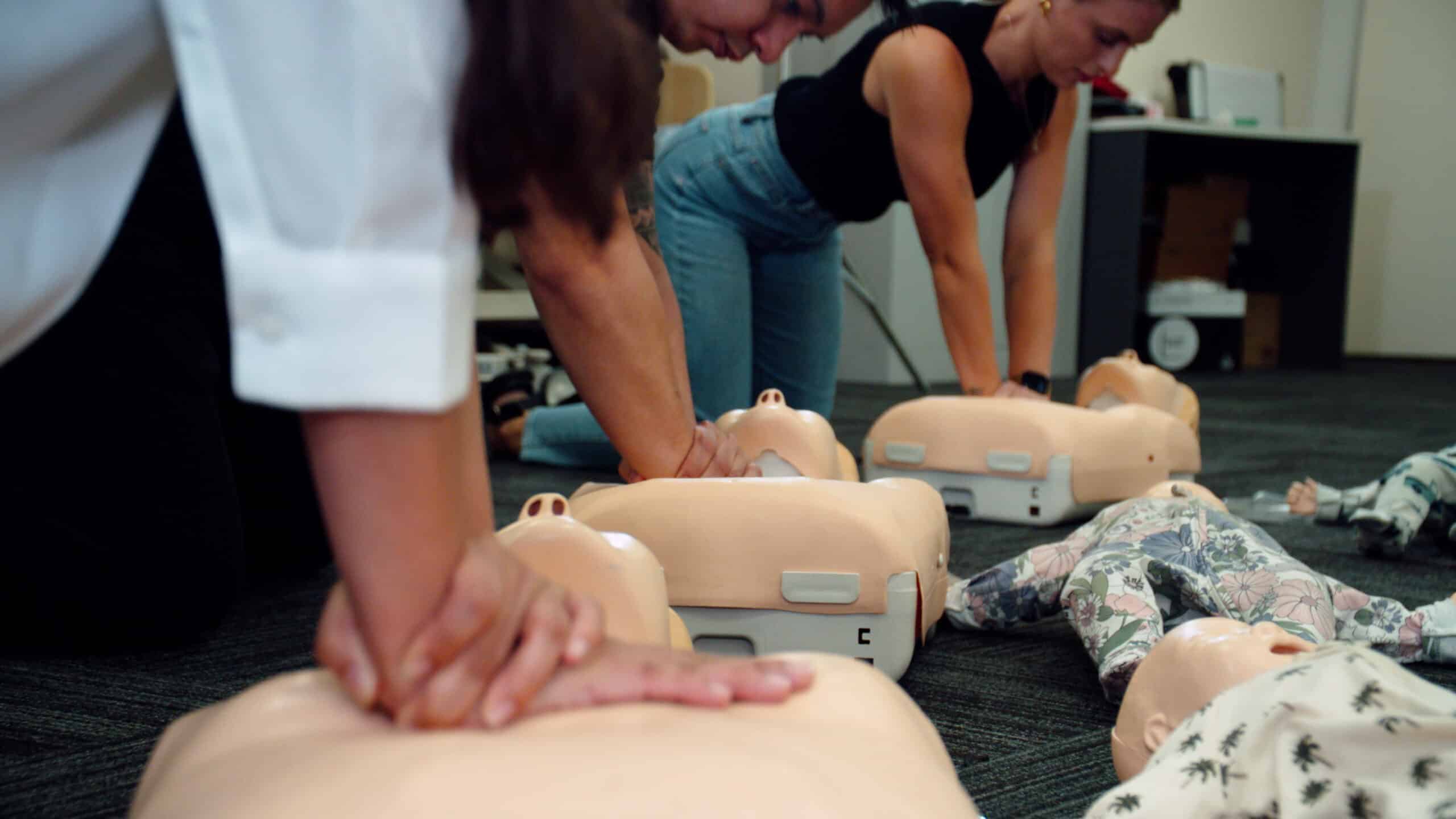
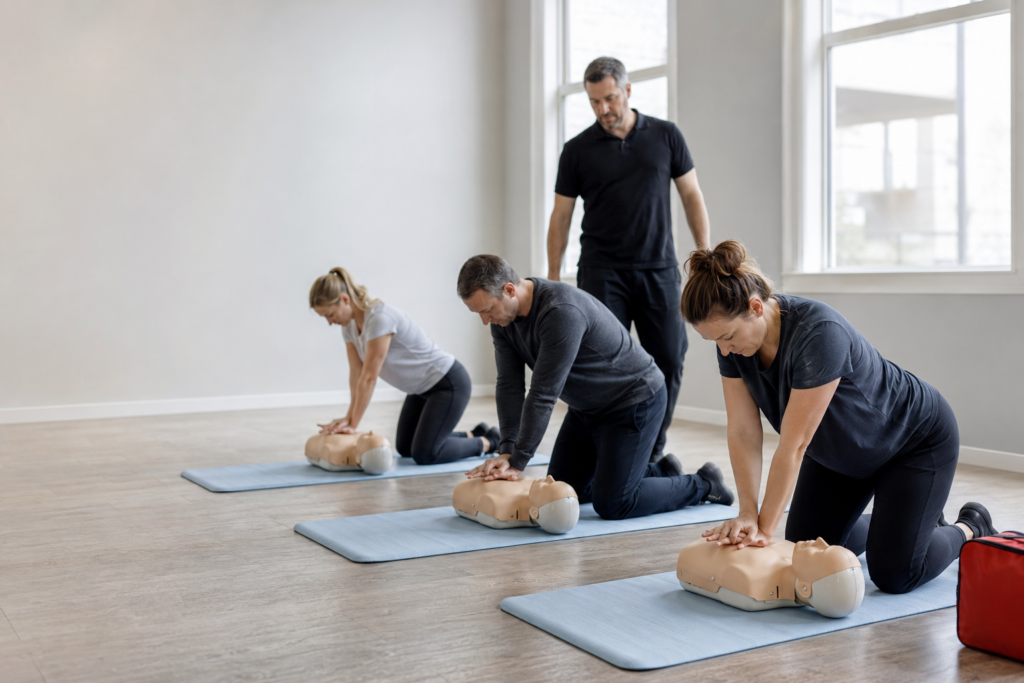
Theory is important, but CPR is a physical skill. During your course, you will practise on manikins until the movements feel natural.
Chest compression depth and rate
Effective compressions push blood to the brain and vital organs. The recommended rate is 100–120 compressions per minute, roughly the tempo of the song Stayin’ Alive.
- Adults: Push down at least 5 cm using two hands on the centre of the chest
- Children: Push down approximately one-third of chest depth using one or two hands
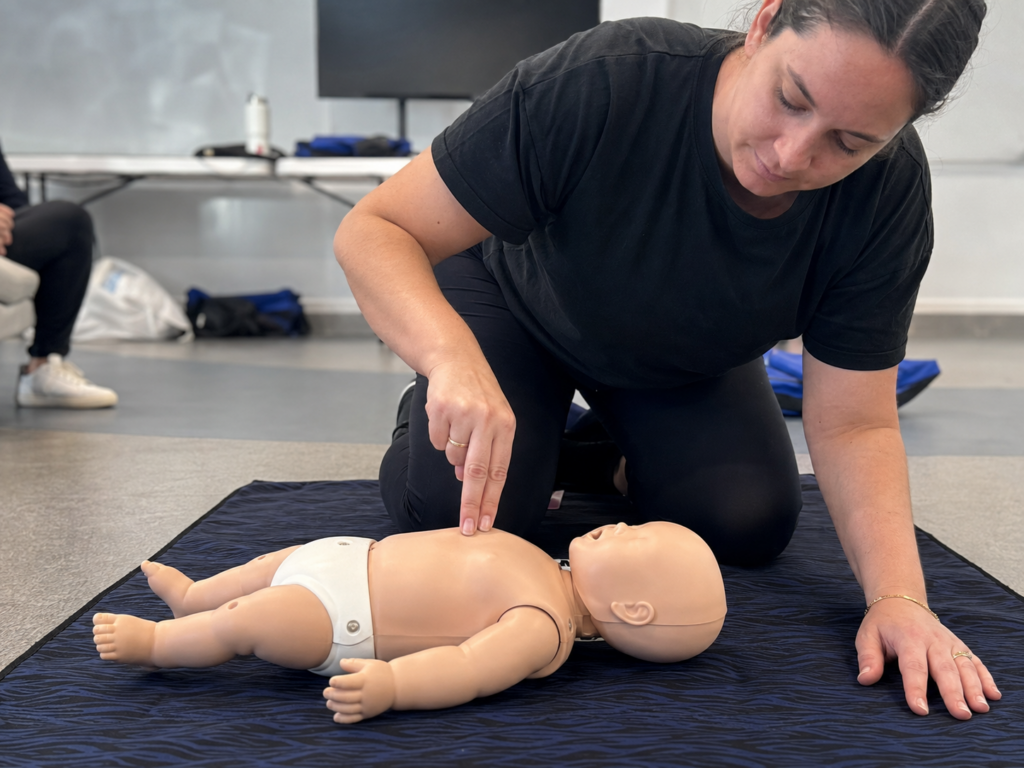
- Infants: Push down approximately one-third of chest depth using two fingers on the lower half of the breastbone
Rescue breaths and the 30 to 2 ratio
After every 30 compressions, you deliver 2 rescue breaths. Tilt the head back, lift the chin, pinch the nose, and blow steadily until you see the chest rise. Each breath takes about one second.
Recovery position for an unconscious casualty
If the person is unconscious but breathing normally, you will roll them onto their side into the recovery position. This keeps the airway clear and prevents choking if they vomit.
Verbal handover to paramedics
When emergency services arrive, you will provide a clear verbal report: what happened, what you observed, and what actions you took. Practising this handover helps you stay calm under pressure.
How to perform CPR on adults children and infants
The basic principle—push hard, push fast, allow full chest recoil—applies to all age groups. However, the technique changes depending on the casualty’s size.
Age group | Hand placement | Compression depth | Compression method |
Adult | Centre of chest | At least 5 cm | Two hands, interlocked fingers |
Child (1–8 years) | Centre of chest | One-third of chest depth | One or two hands |
Infant (under 12 months) | Lower half of breastbone | One-third of chest depth | Two fingers |
Adult CPR technique
Place the heel of one hand on the centre of the chest, interlock your fingers, and keep your arms straight. Push hard and fast, allowing the chest to fully recoil between compressions.
Child CPR technique
Use one or two hands depending on the child’s size. Compress to about one-third of the chest depth. The 30:2 ratio remains the same.
Infant CPR technique
Use two fingers on the lower half of the breastbone. Compressions are gentler but still firm. For rescue breaths, cover both the mouth and nose with your mouth and deliver small puffs of air.
How to use an AED during CPR
AEDs are designed to be user-friendly, but knowing the steps in advance removes hesitation.
- Turn on the AED and follow the voice prompts
- Expose the chest and attach the pads—one below the right collarbone, one on the left side below the armpit
- Stand clear while the device analyses the heart rhythm
- Deliver a shock if advised, ensuring no one is touching the casualty
- Resume CPR immediately after the shock and continue until prompted to stop
Tip: AEDs will not deliver a shock unless one is needed. You cannot accidentally harm someone by using the device.

Workplace compliance and HLTAID009 legal knowledge
Many Australian workplaces require designated first aiders to hold current CPR certification, with annual CPR refresher training recommended by SafeWork NSW. Safe Work Australia recommends that workplaces conduct a risk assessment to determine how many trained first aiders they require and what qualifications are appropriate.
Your CPR course covers Work Health and Safety (WHS) obligations, including your duty of care when providing assistance and the importance of documenting incidents.
CPR course duration and delivery formats
CPR courses come in several formats to suit different schedules and learning preferences.
Traditional face-to-face CPR training
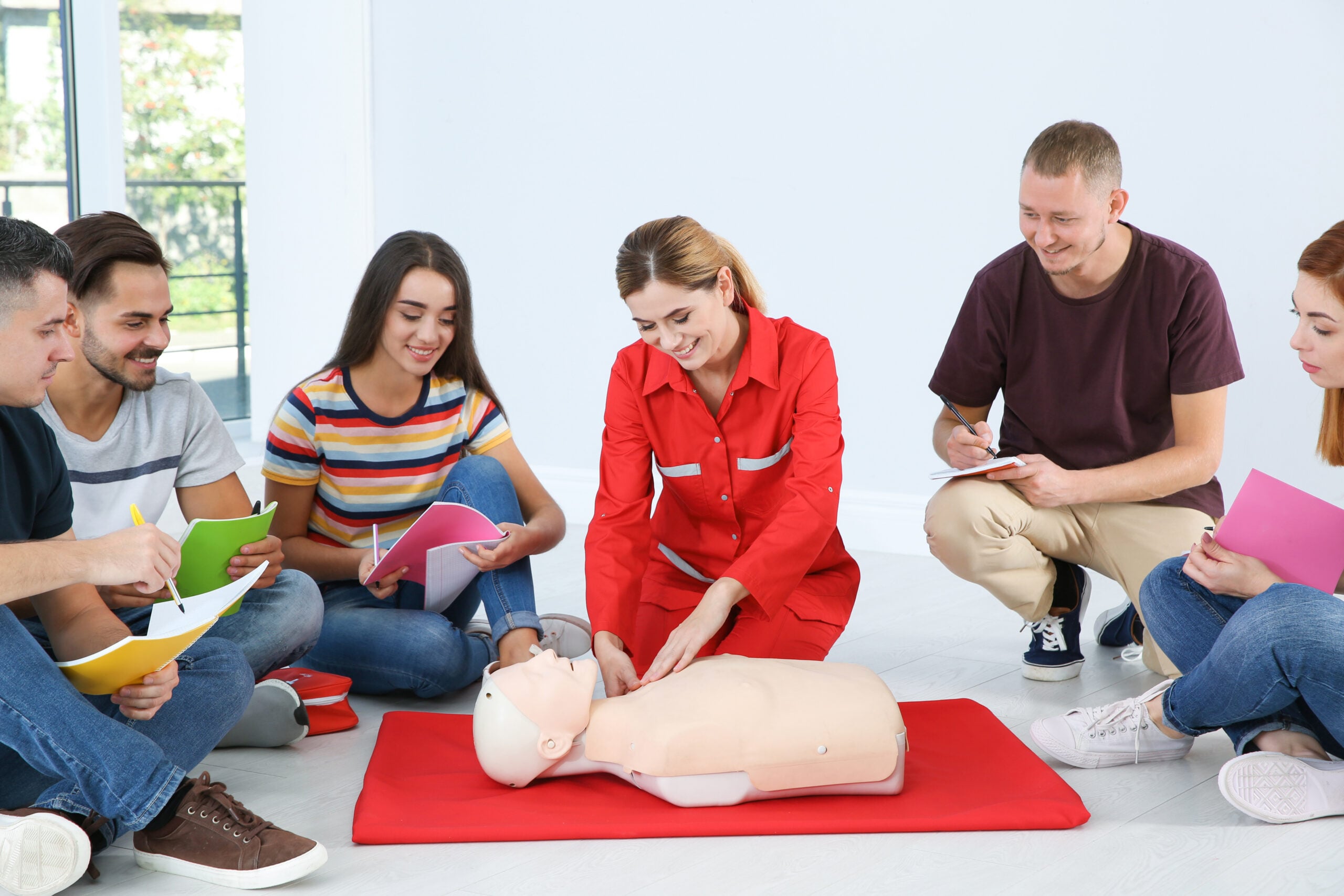
A fully in-person session (approximately 2 hours) with no online component. This format works well if you prefer classroom learning with direct trainer interaction.
Blended online theory plus practical session
Complete theory online at your own pace, then attend a shorter practical session (approximately 1.5 hours). This option reduces time away from work or other commitments.
Express refresher assessment
For those renewing certification, this format combines online theory with a brief practical assessment only (approximately 1 hour).
Live online Zoom CPR training
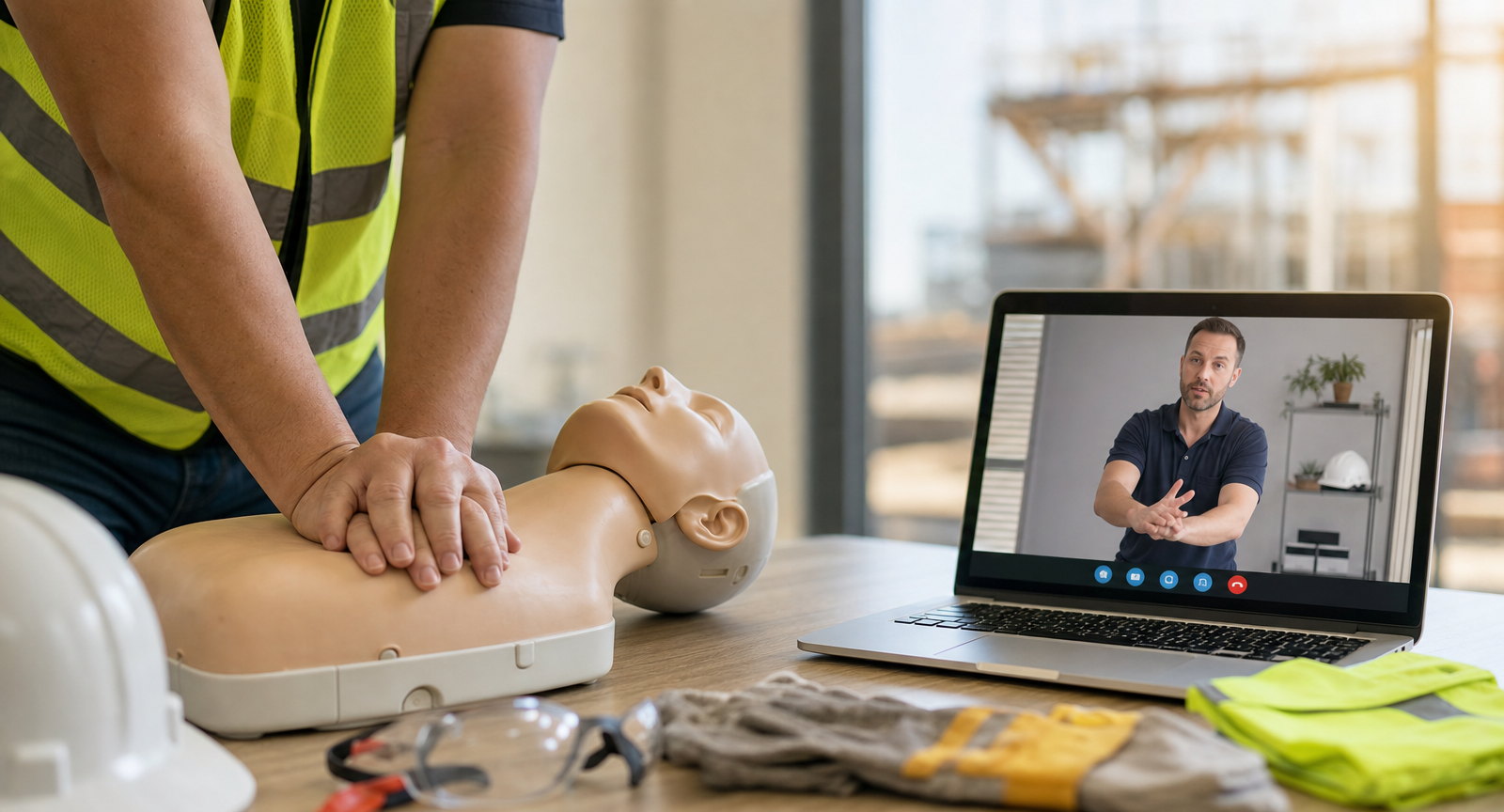
Equipment is mailed to you, and a trainer leads a virtual session with practical demonstration. FirstAidPro offers this option for learners who cannot attend in person.
How a CPR course is assessed
Assessment is competency-based, not a pass/fail exam. You will demonstrate CPR on a manikin, show you can operate an AED, and answer knowledge questions either verbally or in writing.
Trainers guide you through each step. If you do not demonstrate a skill correctly the first time, you will receive additional practice and be reassessed. The goal is to ensure you leave confident and capable.
Who should take a CPR course
Monash University research found that regions with higher CPR training rates have higher bystander CPR rates and better outcomes, making CPR training valuable for almost everyone. Common participants include:
- Workplace first aid officers and safety coordinators
- Construction, mining, and industrial workers
- Healthcare and aged care staff
- Childcare educators and teachers
- Fitness professionals and sports coaches
- Parents, grandparents, and community members
No prior experience is required. Courses are designed for complete beginners, and trainers guide you through every step.
Workplace and onsite CPR training options
If you manage a team, booking group training at your premises can minimise disruption and ensure everyone is certified on the same day.
- Flexible scheduling: Sessions can be arranged during work hours, after hours, or on weekends
- Same-day certification: Participants receive their Statement of Attainment immediately upon successful completion
- All equipment supplied: Manikins, AEDs, and training materials are provided by the trainer
FirstAidPro offers onsite corporate training with no upfront fees and coverage across Australia.
Book your nationally accredited CPR course with FirstAidPro
FirstAidPro is a Registered Training Organisation (RTO 31124) delivering nationally accredited CPR courses in multiple formats. With 170+ training locations, seven-day availability, and same-day certification, getting qualified is straightforward.
Related Reading
Safe Work NSW – First aid in the workplace
National Training Register – HLTAID009 Provide cardiopulmonary resuscitation
Better Health Channel – Cardiopulmonary resuscitation (CPR)
Directhealth – How to perform CPR – on adults, children and babies
FAQs about CPR course content
What are the 3 C's of CPR?
The 3 C’s stand for Check, Call, and Care—a simplified framework for remembering emergency response steps before and during CPR.
What are the 5 P's of CPR?
The 5 P’s refer to Position, Pulse, Pressure, Push, and Provide breaths—memory aids used in some CPR training programs to recall technique steps.
What are the 7 components of CPR?
The 6 components typically include scene safety, checking responsiveness, calling for help, chest compressions, airway management, rescue breathing and defibrillation.
Do you need prior first aid experience to enrol in a CPR course?
No prior experience is required. CPR courses are designed for complete beginners, and trainers guide you through every step.
Is a Unique Student Identifier required for CPR certification in Australia?
Yes, a 10-digit USI is required to receive your nationally recognised Statement of Attainment. You can create one free online at usi.gov.au.
Can you fail a CPR course assessment?
Assessments are competency-based. If you do not demonstrate skills correctly the first time, your trainer will provide additional practice and reassess you.