





Sharon has 21+ years of experience as a qualified Emergency Care Nurse registered with the Australian Health Practitioner Regulation Agency (APHRA) and 12+ years as a First Aid Trainer.
She takes pride in FirstAidPro making first aid training available, comprehensive and affordable to everybody.
Key Takeaways
- The CPCWHS1001 White Card Course is a legal requirement for anyone working on a construction site in Australia — no exceptions.
- The formal qualification code is CPCWHS1001 Prepare to Work Safely in the Construction Industry.
- White cards are nationally recognised and valid across all Australian states and territories.
- First Aid Pro delivers fully face-to-face CPCWHS1001 white card training in SA and NT — same-day certificate issued.
- The course takes six hours and covers WHS legislation, hazard identification, PPE, and emergency response.
- A white card does not expire and remains valid indefinitely, provided you remain active in the industry.
ENROL NOW — First Aid Pro’s nationally recognised CPCWHS1001 White Card Course in SA and NT. Same-day certificate. From just $99. Book your place today.
What Is the CPCWHS1001 White Card Course?
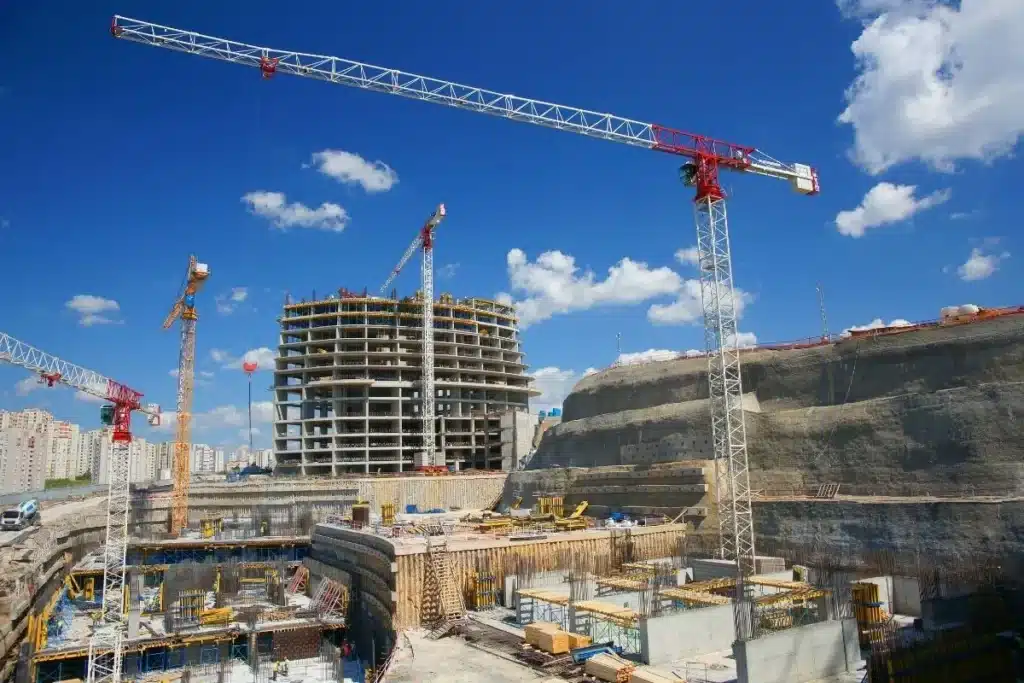
The CPCWHS1001 White Card Course — formally titled CPCWHS1001 Prepare to Work Safely in the Construction Industry — is the nationally mandated qualification that every person must hold before they are permitted to work on a construction site in Australia. Whether you are a first-year apprentice or an experienced tradesperson moving between states, the white card is a legal requirement that cannot be bypassed. It is recognised across all Australian states and territories and does not expire, making it one of the most valuable single qualifications available to anyone building a career in construction.
First Aid Pro (RTO: 31124) is a SafeWork-approved registered training organisation delivering face-to-face CPCWHS1001 white card training in South Australia and the Northern Territory. Our trainers are experienced construction industry professionals who guide participants through every element of the course using practical demonstrations and real-world scenarios — no online pre-learning required.
What Does CPCWHS1001 Mean and Why Does It Matter?
CPCWHS1001 is the nationally accredited unit of competency that underpins general construction induction training across Australia. The code sits within the Certificate I framework of the vocational education and training (VET) system and is governed by the Australian Skills Quality Authority (ASQA) and state SafeWork authorities. When a worker successfully completes the course, they receive a Statement of Attainment for CPCWHS1001 Prepare to Work Safely in the Construction Industry — the formal document that accompanies their white card.
The qualification exists because construction is consistently ranked among Australia’s most hazardous industries. The white card course ensures that every person who enters a construction site in Australia — regardless of their role — has a baseline understanding of workplace health and safety obligations, hazard recognition, risk control, and emergency procedures. This baseline knowledge directly reduces the likelihood of preventable accidents, injuries, and fatalities on worksites across the country.

Is the White Card the Same as a General Construction Induction Card?
Yes. The white card, the general construction induction card, and the CPCWHS1001 certification all refer to the same qualification. The physical card itself is commonly called the white card because of the colour of the original card format issued in most states, and this name has become standard industry shorthand. Some older documentation may also refer to it as the blue card or the red card, depending on the state and the era in which it was issued. However, any valid general construction induction card issued by a registered training organisation after the national standardisation of the CPCWHS1001 unit will be accepted on construction sites throughout Australia.

Who Needs a White Card in Australia?
The white card is a mandatory requirement for anyone working on a construction site in Australia. This applies regardless of how brief the visit (if it is regular), what role the person performs, or whether they are employed directly or as a subcontractor. A site supervisor, a labourer, a carpenter, and a surveyor all need the same white card before they can legally access any construction zone.
Construction Roles That Require a White Card
The range of roles requiring a white card is broad. The following table summarises the most common positions across the building and construction industry in Australia that require workers to hold a current CPCWHS1001 certification.
Trade / Role | Why a White Card Is Required |
Labourer / Trades Assistant | Direct site access is required for all site-based work |
Carpenter / Joiner | Works with tools and materials on active construction sites |
Plumber / Gas Fitter | Undertakes work in and around live construction environments |
Electrician | Performs electrical installation in buildings under construction |
Scaffolder | Works at heights in high-risk construction zones |
Crane Operator | Operates plant and equipment on construction sites |
Concretor / Form Worker | Handles heavy materials and machinery on site |
Bricklayer / Plasterer | Performs structural and finishing work on construction sites |
Site Supervisor / Foreman | Manages workers and safety compliance across the site |
Demolition Worker | Operates in high-risk environments requiring strict WHS compliance |
Apprentice (all trades) | Required from day one of any site-based training |
Site Visitor / Inspector | Any person entering a construction site routinely. entering operational construction zones, or is otherwise exposed to construction hazards must hold a White Card |

White Card Requirements Beyond the Construction Industry
While the White Card is most closely associated with building sites, general construction induction is required in many other workplaces where construction or civil work is taking place.
What Does the CPCWHS1001 White Card Course Cover?
The CPCWHS1001 White Card Training Course is designed to provide essential safety knowledge across all key risk areas that workers will encounter on construction sites in Australia. The course covers both the legal framework governing construction work and the practical skills needed to identify and respond to hazards safely.
Construction Hazard Identification and Risk Assessment Training
One of the most critical components of the white card course is learning how to identify and manage the hazards that are common on Australian construction sites. Participants learn to recognise physical, chemical, and environmental hazards and understand the risk assessment process that underpins safe work practices in the construction industry.
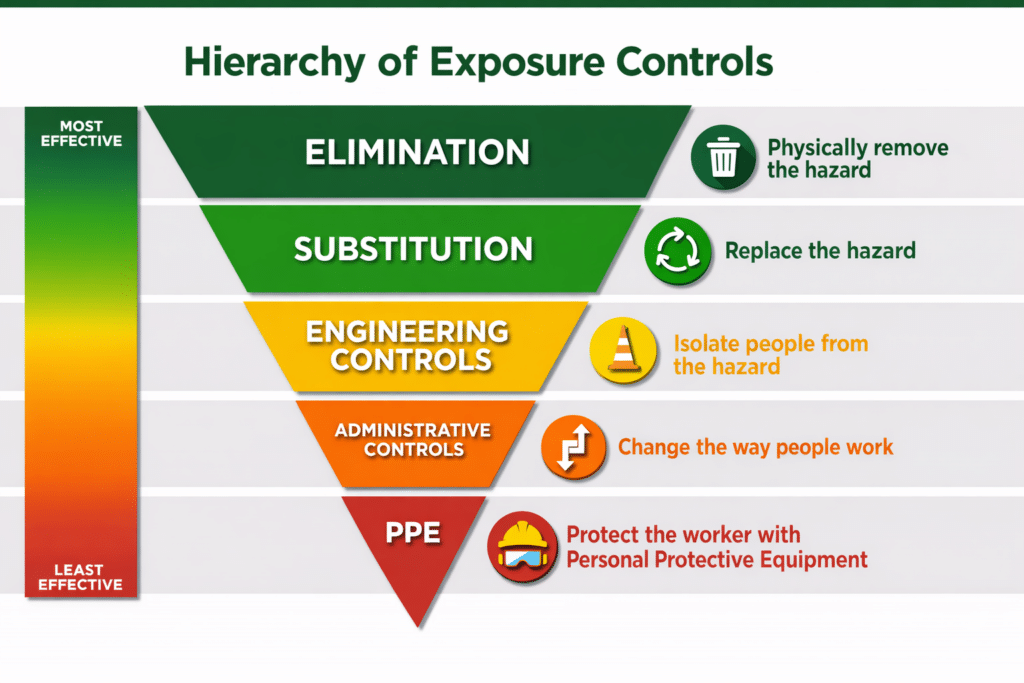
The course specifically addresses the hierarchy of hazard controls — a structured approach to managing risk that prioritises eliminating a hazard at the source before moving through engineering controls, administrative controls, and finally the use of personal protective equipment. Workers are also taught to recognise and report unsafe conditions and near misses, fostering a culture of proactive safety communication on site. Specific hazard types covered include falls from height, electrical risks, manual handling injuries, exposure to hazardous substances, and risks associated with mobile plant and equipment.
WHS Legislation and Your Duty of Care as a Construction Worker
The white card course provides a solid grounding in the legal framework that governs workplace health and safety in Australia. Participants learn about the Work Health and Safety Act and its implications for everyone on a construction site — from the principal contractor to the newest apprentice. This includes understanding the concept of duty of care, which requires every person on site to take reasonable steps to protect the health and safety of themselves and others.
The course also explains the responsibilities of a Person Conducting a Business or Undertaking (PCBU), the consultation processes that must take place between employers and workers, and the specific SafeWork requirements that apply to construction sites in South Australia and the Northern Territory. Understanding these obligations is essential for anyone entering the construction workforce, as non-compliance with WHS legislation can result in significant legal consequences.

Personal Protective Equipment and Construction Site Safety Practices
The correct selection, use, and maintenance of personal protective equipment (PPE) is a core component of the CPCWHS1001 white card course. Participants learn which types of PPE are appropriate for different construction tasks, how to inspect equipment before use, and the limitations of PPE as a control measure. Site-specific requirements are also covered, including hard hats, safety boots, high-visibility clothing, eye protection, and respiratory protection where relevant.
Beyond PPE, the course covers manual handling techniques designed to prevent musculoskeletal injuries — one of the most common causes of lost time in the construction industry — as well as safe work practices for tasks involving tools, equipment, and materials on site.
Specific Construction Hazards Covered in the Course
The white card training course dedicates significant attention to hazard categories that carry the highest risk of serious injury or death on Australian construction sites.
Hazard Category | Key Topics Covered in the Course |
Working at Heights | Fall prevention, edge protection, use of fall arrest systems |
Electrical Safety | Isolation procedures, overhead line awareness, electrical PPE |
Confined Spaces | Entry permit systems, atmospheric testing, emergency procedures |
Excavation and Trenching | Soil collapse risks, overhead services, exclusion zones |
Mobile Plant and Equipment | Exclusion zones, spotters, proximity to moving machinery |
Hazardous Substances | Asbestos awareness, SDS documents, chemical handling procedures |
Manual Handling | Safe lift techniques, team handling, use of mechanical aids |

How Is the CPCWHS1001 White Card Course Delivered in SA and NT?
Face-to-Face White Card Training — No Online Learning Required
First Aid Pro’s CPCWHS1001 white card training course is delivered entirely in person across our venues in South Australia and the Northern Territory. There is no online pre-learning component, and no self-directed e-learning module to complete before attending. The entire six-hour course is conducted face-to-face, guided by an experienced trainer with a background in the construction industry.
This approach reflects the requirements of SafeWork SA and NT WorkSafe, which mandate that general construction induction training be delivered face-to-face to ensure the best possible learning outcomes. In-person delivery allows trainers to assess verbal communication skills and practical understanding in real time, rather than relying solely on written responses. It also gives participants the opportunity to ask questions, engage with real-world scenarios, and build confidence before they set foot on a construction site in Australia.
White Card Course Assessment Requirements
To achieve white card certification at the end of the course, participants must successfully complete a series of assessment activities that test both knowledge and practical understanding. These include:
- A written knowledge assessment covering WHS legislation, hazard identification, and safety procedures
- Verbal questioning to demonstrate understanding of key concepts and legal responsibilities
- Practical exercises in hazard identification, conducted in a simulated or real-world context
- Demonstration of safety communication skills, including how to report hazards and near misses
- Scenario-based problem-solving activities that require participants to apply their learning to realistic situations
Participants who do not achieve competency on their first attempt will be given the opportunity to be re-assessed. First Aid Pro trainers provide clear feedback to help every participant understand what they need to demonstrate to meet the required standard.

Same-Day White Card Certificate — What to Expect on Course Day
On successful completion of the CPCWHS1001 course, participants receive their Statement of Attainment for CPCWHS1001 Prepare to Work Safely in the Construction Industry on the same day. This document, combined with the physical white card, confirms that the holder has completed general construction induction training and is legally permitted to access construction sites in Australia.
The white card itself is issued on the day and is valid nationwide — meaning a card obtained through First Aid Pro in South Australia or the Northern Territory will be accepted on construction sites across all Australian states and territories. A photograph is taken on course day for the card, so participants should ensure they are dressed professionally and bring the required identification documents.
ENROL NOW — Start working on construction sites sooner. Enrol in First Aid Pro’s CPCWHS1001 White Card Course today. Face-to-face training in SA and NT. Same-day certificate. From $99. Secure your spot at firstaidpro.com.au
CPCWHS1001 White Card Course Eligibility and Enrolment Requirements
General Eligibility Requirements for All States
There are no formal academic prerequisites for the CPCWHS1001 white card course. However, all participants must meet the following baseline requirements before they can enrol and sit the course:
Requirement | Details |
Unique Student Identifier (USI) | A valid USI number must be provided prior to enrolment. Apply free at usi.gov.au |
Basic Literacy | Ability to read safety signs, written instructions, and course material in English |
Numeracy Skills | Basic numeracy sufficient to understand measurements and safety data relevant to construction work |
Verbal Communication | Ability to understand and respond to verbal safety instructions and hazard reporting |
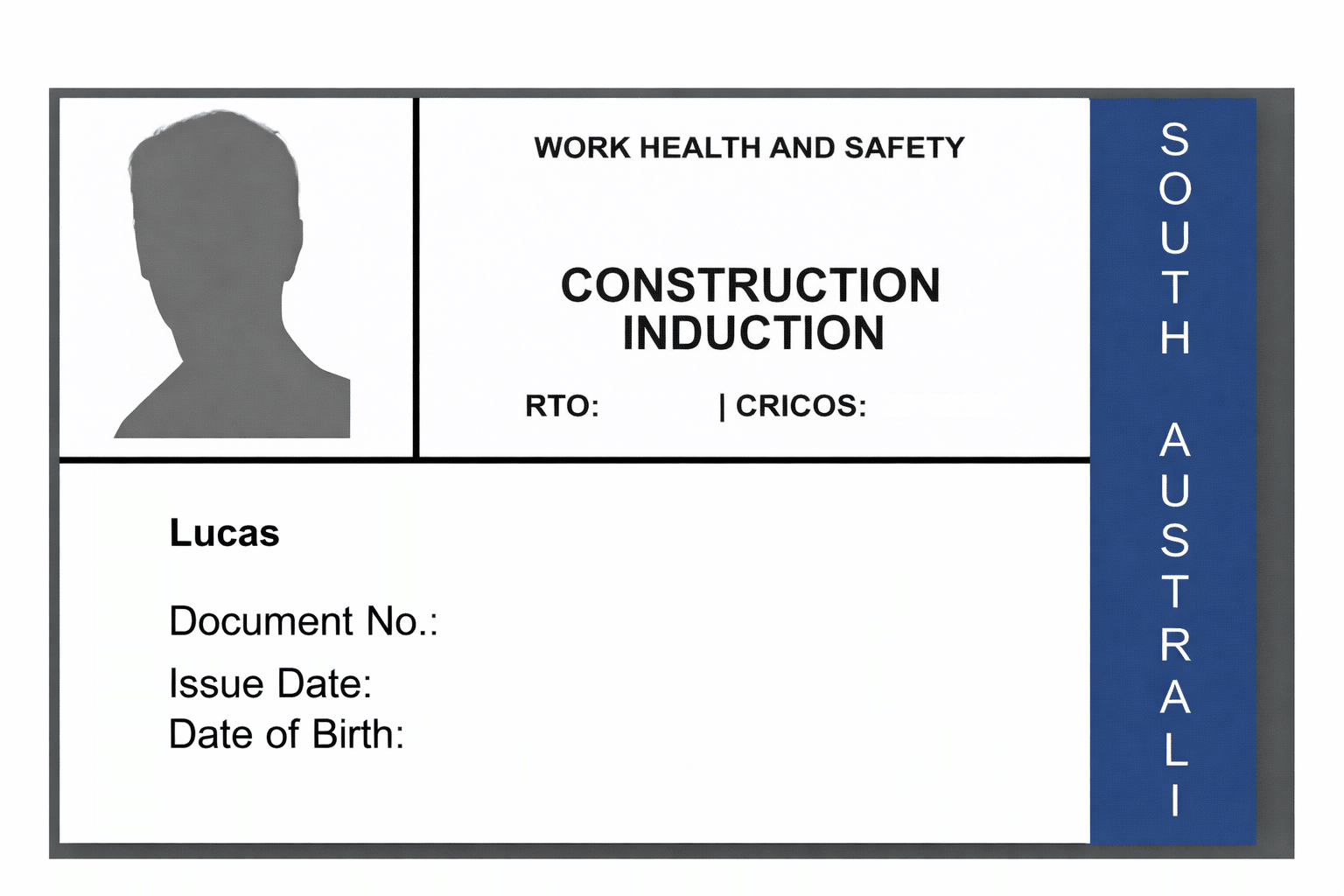
Photo on Course Day | A photograph (head, neck, and shoulders) is taken on the day for the white card |
South Australia-Specific White Card Enrolment Requirements
In addition to the general requirements listed above, participants enrolling in the white card course in South Australia must meet the following criteria:
- Be 14 years of age or older on the day of the course
- Participants aged under 18 must provide signed parental or guardian consent prior to attending
- Reside in South Australia at the time of enrolment
- Provide valid identification that meets WorkSafe SA Evidence of Identity Requirements
- Successfully complete all assessment components, including written, oral, and practical demonstrations
If you are unsure whether you meet the eligibility requirements for your state, contact the First Aid Pro team directly before booking your place.


Does the White Card Expire? Replacement and Renewal Information
How Long Is a White Card Valid in Australia?
One of the most common questions asked by people completing their general construction induction training is whether the white card has an expiry date. The answer is no — a white card issued in Australia does not expire and remains valid indefinitely, provided the holder continues to work in the construction industry. There is no mandatory renewal period and no requirement to resit the CPCWHS1001 course on a regular basis.
However, there are circumstances in which an employer, a principal contractor, or a state safety authority may request that a worker completes refresher training or retakes the course. These include situations where the worker has not been active in construction for two or more years, where significant changes to WHS legislation have occurred, or where an individual employer’s safety policy requires updated induction training as a condition of site access.
How to Get a White Card Replacement in SA and NT
If your white card is lost, stolen, or damaged, the process for obtaining a replacement differs depending on which state you completed your training in.
State | Replacement Process | Fee |
South Australia | Contact First Aid Pro directly to request a replacement card. Cards can be collected from our SA locations. | $50 |
Northern Territory | Apply directly with the NT Government within 60 days of course completion. After 60 days, contact First Aid Pro for a completion letter (available up to 4 months post-course). After 4 months, the CPCWHS1001 course must be completed again. | NT Government fees apply |

Career Opportunities Unlocked by Your White Card Certification
Completing the CPCWHS1001 white card course is far more than a compliance exercise — it is the gateway to a broad and rewarding range of career pathways across the Australian construction industry and related sectors. The white card demonstrates to employers, principal contractors, and site managers that you have completed nationally recognised training and are ready to contribute safely to any worksite.
For those entering the construction workforce for the first time, the white card is typically the first formal qualification obtained and serves as the foundation upon which further trade certificates, licences, and supervisory credentials are built. For experienced workers transitioning between trades or relocating interstate, it confirms their eligibility to work on construction sites anywhere in Australia without the need for re-induction.
Industry Sector | Example Roles | Career Pathway Notes |
Residential Construction | Carpenter, Bricklayer, Tiler, Painter, Plasterer | White card required from day one of any apprenticeship on site |
Commercial Construction | Site Supervisor, Form Worker, Concretor, Steel Fixer | Most major contractors require the card before granting site access |
Civil and Infrastructure | Road Worker, Bridge Builder, Rail Worker, Pipefitter | Government contracts typically require current CPCWHS1001 certification |
Mining and Resources | Construction Labourer, Maintenance Worker, Shutdown Trades | Mining sites with construction activity require white card compliance |
Demolition | Demolition Worker, Asbestos Removalist Support | High-risk sector requiring full WHS induction compliance |
Film / TV / Events | Set Builder, Staging Crew, Rigging Assistant | Sets and stages are classified as construction environments in Australia |
ENROL NOW — Don’t wait. Your next construction opportunity starts with your white card. Enrol with First Aid Pro today and complete your CPCWHS1001 White Card Course in SA or NT. From $99. Same-day certificate.
References
- Safe Work Australia. (2024). Construction Work Code of Practice. Canberra: Safe Work Australia.
- SafeWork NSW. (2025). Construction Induction Training (White Card).
- NT WorkSafe — Construction Induction Training
Australian Skills Quality Authority (ASQA): Construction Induction Training. (2025). National Register of VET.
WorkSafe SA — White Card
Frequently Asked Questions
How much does the CPCWHS1001 white card course cost in SA and NT?
The cost of a white card course with First Aid Pro starts from $99. This includes all course materials, assessment, and the same-day issue of your Statement of Attainment and white card. Group booking rates are available for worksites, apprenticeship providers, and training organisations — contact First Aid Pro for a quote tailored to your team’s requirements.
Can I complete my white card course online in South Australia or the Northern Territory?
No. SafeWork SA and NT WorkSafe both require that general construction induction training be delivered face-to-face. There is no approved online option for the CPCWHS1001 white card course in South Australia or the Northern Territory. Be cautious of any provider offering a fully online white card course in SA or NT — these are not compliant with local regulatory requirements. First Aid Pro delivers fully in-person training at venues across both states.
Is my white card recognised on construction sites in other Australian states?
Yes. The white card is a nationally recognised qualification. A card obtained through a registered training organisation such as First Aid Pro is valid on construction sites across all Australian states and territories, including New South Wales, Victoria, Queensland, Western Australia, and Tasmania. There is no need to obtain a separate card if you move interstate for work, provided your original card was issued by an ASQA-registered RTO following completion of the CPCWHS1001 unit.
What identification do I need to bring to the white card course?
Participants in South Australia must provide identification that meets WorkSafe SA Evidence of Identity Requirements. This typically requires at least one form of primary photo identification, such as a current Australian driver’s licence, passport, or proof-of-age card. A photograph will also be taken on the day for your white card. If you are unsure what identification is acceptable, contact First Aid Pro before your course date to confirm.
What happens if I fail the white card course assessment?
If a participant does not achieve competency during the first attempt at any part of the CPCWHS1001 assessment, they will not receive their white card on the day. First Aid Pro trainers will provide clear, constructive feedback explaining which areas require further development. Participants are typically offered an opportunity for re-assessment, either later in the same session or at a subsequent course date. If you have concerns about the written or verbal components of the assessment, raise these with your trainer early in the day so they can provide additional support before the assessment begins.