




Sharon has 21+ years of experience as a qualified Emergency Care Nurse registered with the Australian Health Practitioner Regulation Agency (APHRA) and 12+ years as a First Aid Trainer.
She takes pride in FirstAidPro making first aid training available, comprehensive and affordable to everybody.
Fire warden vs chief fire warden – what is the difference? Both are essential roles within a workplace emergency control organisation (ECO), but they carry distinct responsibilities, authority levels, and training requirements. Understanding the difference between these two roles is critical for any Australian workplace seeking to meet its obligations under AS 3745-2010 and relevant work health and safety legislation.
Key Takeaways
- A fire warden is responsible for everyone within a designated area or floor, while a chief fire warden leads the entire ECO and holds overall incident command authority.
- Both roles are legally required under AS 3745-2010 and Work Health and Safety legislation in Australian workplaces.
- PUAFER005 covers warden-level responsibilities; PUAFER006 covers leading an emergency control organisation — and PUAFER005 is a prerequisite for PUAFER006.
- The chief warden must liaise with emergency services, implement emergency response procedures, and coordinate all wardens from the moment the emergency alarm sounds.
- Completing both units as a combined warden training course is the most efficient pathway and gives participants a comprehensive understanding of the full emergency control organisation.
- Nationally accredited bundled emergency warden training through a registered training organisation such as First Aid Pro ensures your workplace emergency management meets current Australian standards.

Fire Warden vs Chief Fire Warden - What Is the Difference?
At its simplest, a fire warden is responsible for everyone within a designated area or floor during an emergency, while a chief fire warden is responsible for leading the entire emergency control organisation and coordinating the overall response. One role is operational; the other is command-level leadership.
Both wardens and chief fire wardens are trained professionals whose skills and knowledge are essential to ensuring safe evacuation and effective emergency management. However, the scope of authority, decision-making responsibility, and required training differ significantly between them.
Fire Warden vs Chief Fire Warden Explained Simply
A fire warden monitors and manages a specific zone — typically a floor or area — during a workplace emergency. They conduct area sweeps, guide occupants to assembly points, and report back to the chief warden. A chief fire warden, on the other hand, assumes overall command the moment the emergency alarm sounds, coordinates all wardens including deputy chief wardens, and liaises with emergency services upon their arrival.
Quick Comparison Table: Roles, Responsibilities and Authority
Feature | ||
Training unit | ||
Scope of responsibility | Designated area or floor | Entire facility / ECO |
Decision-making authority | Limited to their zone | Full incident command |
Reports to | Chief warden | Emergency services / management |
Coordinates | Occupants in their area | All wardens, deputy wardens, first aid officers |
Liaises with emergency services | No | Yes |
Required for ECO | Yes | Yes |
Why Both Roles Are Essential in an Emergency Control Organisation
An ECO cannot function effectively without trained fire wardens and chief fire wardens working in concert. Wardens play a crucial frontline role in ensuring occupants evacuate safely, while the chief warden must investigate and determine the nature of the emergency, implement the appropriate emergency response procedures, and ensure the entire facility is accounted for. Removing either role from the chain of command creates dangerous gaps in workplace emergency management.
What Does a Fire Warden Do? (PUAFER005 Responsibilities)
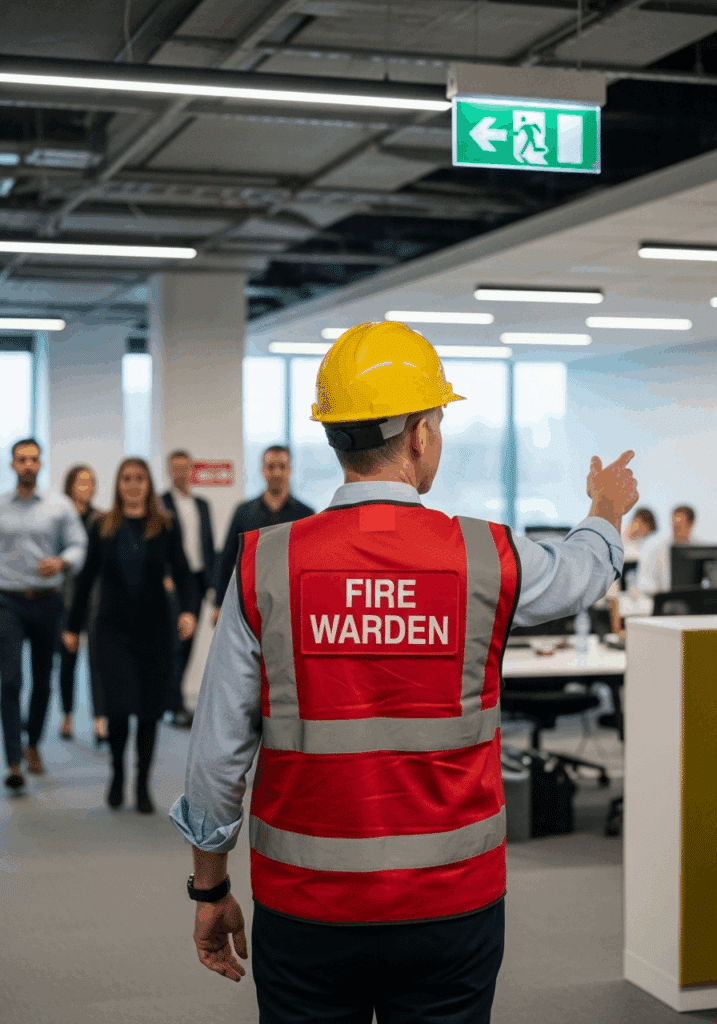
Under the nationally accredited unit PUAFER005 – Operate as Part of an Emergency Control Organisation — a trained fire warden is responsible for a defined area within the workplace. Their primary duty is to ensure all occupants within that space are accounted for and guided to safety in the event of an emergency.
Core Fire Warden Duties During an Emergency
A fire warden is responsible for everyone in their designated area or floor. Key duties include:
- Recognising emergency signals and initiating evacuation procedures
- Searching their designated area to ensure all occupants have evacuated
- Assisting persons with mobility limitations or special needs
- Operating basic fire safety equipment, including portable fire extinguishers and fire blankets, when safe to do so
- Preventing occupants from re-entering the building during an evacuation
- Maintaining calm and orderly movement to the assembly area
Evacuation Procedures and Area Sweeps
One of the most critical responsibilities of a fire warden is conducting thorough area sweeps before reporting that their zone is clear. This involves checking offices, bathrooms, storerooms, and any areas where an occupant could be isolated. A warden must investigate and determine whether any individual remains within their zone before advising the chief warden.
Communication Responsibilities and Reporting to the Chief Warden
The moment the emergency alarm sounds, fire wardens must maintain clear communication with the chief warden. They report the status of their area, relay information about any hazards or persons unaccounted for, and receive updated instructions as the emergency evolves. This communication chain is fundamental to effective emergency response.
Post-Evacuation Tasks and Incident Reporting
Once occupants have safely evacuated, wardens report to the assembly area, conduct headcounts within their zone, and relay that information to the chief warden. After the emergency, wardens contribute to incident reporting and debriefing processes to improve future emergency preparedness.
Ready to get your team certified? First Aid Pro offers a complete fire safety training bundle combining PUAFER005 and PUAFER006 — both nationally accredited units completed in a single day. Enrol your team now.

What Does a Chief Fire Warden Do? (PUAFER006 Responsibilities)
The unit PUAFER006 – Lead an Emergency Control Organisation — prepares individuals to take command during workplace emergencies. The chief warden must be capable of making high-pressure decisions quickly, coordinating a team of wardens, and managing the emergency until professional services arrive.
Chief Fire Warden Leadership Role Explained
The chief fire warden is the most senior member of the ECO. From the moment the emergency alarm sounds, the chief warden is responsible for activating the emergency management plan, confirming the nature of the incident, and directing all wardens accordingly. Unlike floor wardens who focus on a specific area, the chief warden holds a facility-wide perspective.
Incident Command and Decision-Making Under Pressure
A chief warden must investigate and determine whether to initiate a full evacuation, a partial evacuation, or a shelter-in-place response, depending on the type and location of the emergency. This decision-making must be swift, accurate, and communicated clearly to all ECO members. Training under PUAFER006 prepares candidates for realistic emergency scenarios so that these decisions become second nature.
Coordinating Emergency Control Organisation Teams
The chief fire warden is responsible for coordinating all wardens, deputy chief wardens, and first aid officers during an emergency. This includes assigning tasks, receiving status reports from floor wardens, managing deputy wardens in the absence of direct communication, and ensuring the entire facility’s evacuation is progressing safely.
Liaising With Emergency Services and Managing the Response
Once emergency services arrive on scene, the chief warden must liaise with emergency services and provide them with an accurate situation report: the nature of the incident, the location, the number of occupants accounted for, and any persons still unaccounted for. This handover of information is critical to the safety of occupants and the efficiency of the emergency response.

Fire Warden vs Chief Fire Warden – Key Differences in Responsibilities
Responsibility | Fire Warden | Chief Fire Warden |
Zone vs facility oversight | Zone / area | Entire facility |
Evacuation sweep | Yes — own zone | Confirms all zones clear |
Incident command | No | Yes |
Directing ECO members | No | Yes |
Emergency services liaison | No | Yes |
Emergency management plan | Follows plan | Implements the plan |
Post-incident reporting | Contributes | Leads |

Operational vs Leadership Roles
The fire warden operates within a defined space, following established emergency procedures and reporting upwards. The chief fire warden provides leadership and command across the entire response. Both roles are necessary; neither can substitute for the other.
Decision-Making Authority During Emergencies
A key distinction between wardens and chief fire wardens is decision-making authority. A warden makes decisions within their zone — whether to use a fire extinguisher, how to assist an occupant with limited mobility — while the chief warden must make facility-wide calls that affect all occupants and ECO members simultaneously.
Communication Flow and Command Structure
The ECO operates on a clear chain of command. Floor wardens report to deputy chief wardens or directly to the chief warden depending on the facility’s structure. The chief warden then provides updated instructions and, ultimately, communicates with arriving emergency services. This hierarchy ensures that emergency response procedures and information flow efficiently under pressure.
Skills and Competencies Required for Each Role
Fire wardens require solid knowledge of their area’s layout, evacuation routes, and the location of fire safety equipment such as portable fire extinguishers and fire blankets. Chief fire wardens require all of those competencies plus incident command skills, leadership under pressure, knowledge of the full emergency management plan, and the ability to liaise with emergency services effectively.
Fire Warden vs Chief Warden Training Requirements in Australia
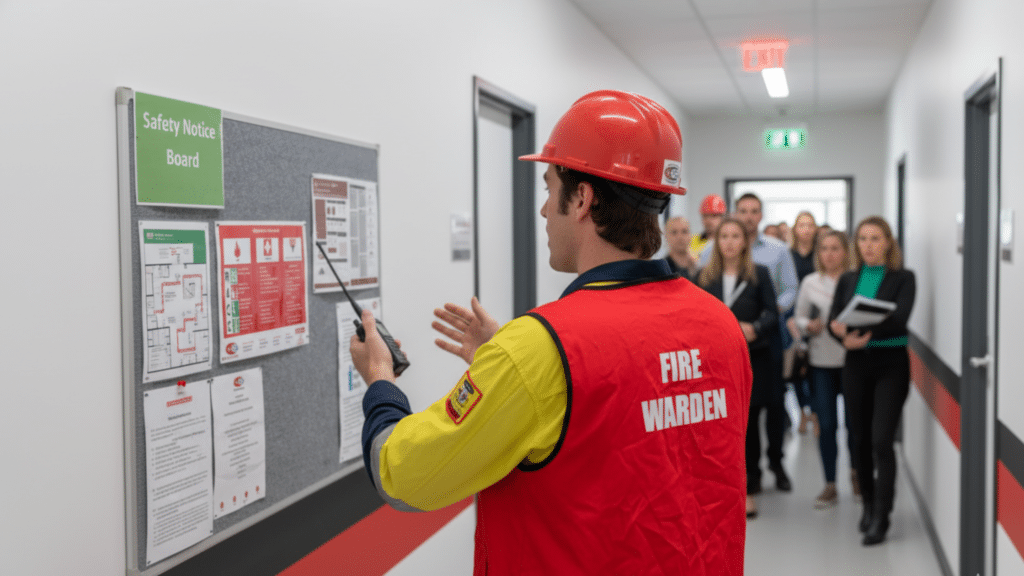
Both roles require nationally recognised training through a registered training organisation. The units are nationally accredited and align with Australian Standard AS 3745-2010, Planning for Emergencies in Facilities.
PUAFER005 – Operate as Part of an Emergency Control Organisation
PUAFER005 is the foundational warden training unit. It covers emergency procedures, communication within the ECO, safe evacuation techniques, basic first aid awareness, and the correct use of fire safety equipment including portable fire extinguishers and fire blankets. This unit is suitable for any staff member taking on a warden role within their workplace.
PUAFER006 – Lead an Emergency Control Organisation
PUAFER006 builds on PUAFER005 and prepares participants to lead an emergency control organisation. It covers incident command, coordinating teams of wardens, implementing emergency response procedures and informing all ECO members, and conducting post-incident debriefs. This unit is appropriate for senior staff, safety officers, and those taking on the role of chief or deputy chief warden.
Why PUAFER005 Is a Prerequisite for PUAFER006
PUAFER005 is a prerequisite for PUAFER006 because a chief warden must first understand what it is to operate within the ECO before they can lead it. A chief fire warden who lacks direct warden experience cannot effectively coordinate floor wardens, anticipate communication breakdowns, or appreciate the operational challenges their team faces during a live emergency.
Benefits of Completing a Combined Fire Warden and Chief Warden Course
Completing both units in a single training course is efficient, cost-effective, and ensures that the skills and knowledge from each unit are reinforced together. Participants gain a comprehensive understanding of both the operational and command dimensions of workplace emergency management, which is particularly valuable for those who hold — or may progress to — chief warden responsibilities.

Emergency Control Organisation (ECO) Structure Explained
What Is an ECO and Why It Matters
An emergency control organisation is the structured team of trained personnel responsible for managing emergency situations within a facility. Under AS 3745-2010, all workplaces are required to establish and maintain an ECO as part of their broader emergency management plan. The ECO is the practical mechanism through which emergency preparedness translates into action.
Roles Within an ECO: Wardens, Chief Wardens and First Aid Officers
A standard ECO includes the following roles:
Role | Primary Function |
Chief Fire Warden | Overall command and ECO coordination |
Deputy Chief Fire Warden | Supports and substitutes for the chief warden |
Floor / Area Wardens | Manage evacuation in designated zones |
First Aid Officers | Provide basic first aid during emergencies |
Communications Officer | Manages internal and external communications |
How the Chain of Command Works During an Emergency
From the moment the emergency alarm sounds, the chain of command activates automatically. Area wardens begin their zone sweeps, deputy chief wardens consolidate floor reports, and the chief warden manages the overall response from the designated emergency control point. This structured hierarchy prevents confusion and ensures that every part of the facility is covered during even the most complex workplace emergencies.

Legal Requirements for Fire Wardens in Australia (AS 3745-2010)
Workplace Fire Safety Compliance and WHS Obligations
Australian workplaces are legally required to maintain fire safety compliance under both AS 3745-2010 and applicable Work Health and Safety legislation. AS 3745-2010 sets out the requirements for planning for emergencies in facilities, including the establishment of an ECO, the appointment of trained wardens, and the documentation of an emergency management plan.
Why Businesses Must Appoint Trained Wardens
The appointment of trained fire wardens is not optional — it is a legal requirement under workplace safety regulations. Failure to maintain a trained ECO exposes businesses to significant liability in the event of a workplace emergency. More importantly, it puts staff, visitors, and contractors at unnecessary risk.
Industry-Specific Requirements Across Different Workplaces
While AS 3745-2010 applies broadly, certain industries carry additional obligations. Healthcare facilities, schools, large commercial buildings, and industrial sites each have specific fire safety requirements regarding the ratio of trained fire wardens to occupants, the frequency of emergency drills, and the complexity of their emergency management plan.
First Aid Pro’s combined PUAFER005 and PUAFER006 fire safety course is nationally recognised and aligned with AS 3745-2010. Complete both units in one day and ensure your workplace is prepared for emergencies. Book your fire warden training course today.

Which Role Is Right for You – Fire Warden or Chief Fire Warden?
Choosing Based on Your Workplace Responsibilities
If you are responsible for a specific area, floor, or team during an emergency, the fire warden role and PUAFER005 training is the appropriate starting point. If you hold a senior position, manage other staff, or are responsible for the overall emergency management of your facility, chief warden training through PUAFER006 is the correct qualification.
When You Should Progress to Chief Warden Training
Staff should consider progressing to chief warden training when they have completed PUAFER005, have gained experience operating within an ECO, and are being asked to take on greater responsibility in their workplace’s emergency management plan. Deputy chief wardens, in particular, should complete PUAFER006 so they can step in if the chief warden is unavailable.
Who Should Complete Both PUAFER005 and PUAFER006
Any individual who will serve as a chief fire warden, deputy chief fire warden, or safety officer should complete both units. Completing the full training bundle ensures they understand both the operational realities faced by floor wardens and the command responsibilities of the chief warden role — making them more effective leaders during emergencies.
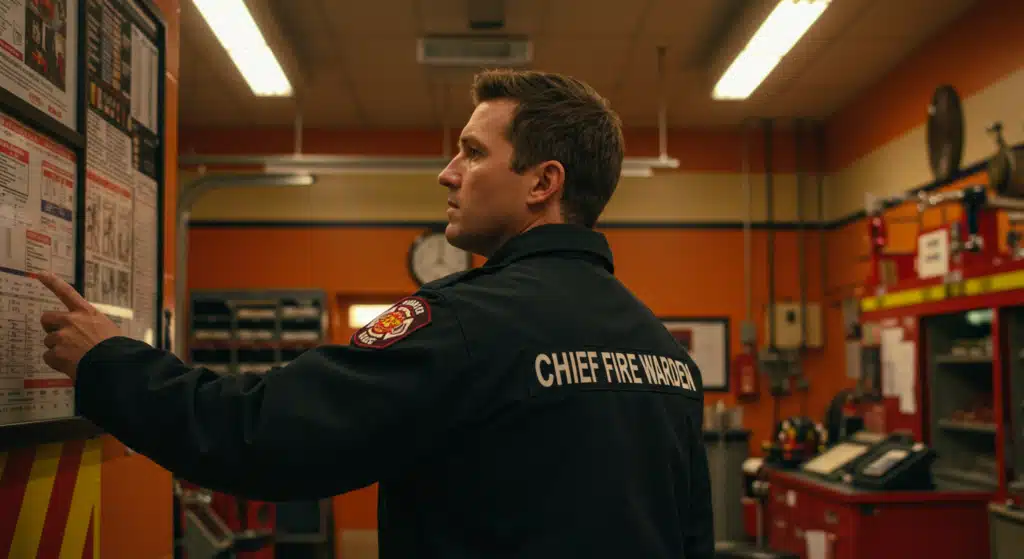
Get Certified: Fire Warden and Chief Fire Warden Training With First Aid Pro
First Aid Pro offers a complete, nationally accredited fire safety training bundle that covers both PUAFER005 and PUAFER006 in a single day. The training includes practical components such as live fire extinguisher use, evacuation exercises, and realistic emergency scenarios — ensuring that participants gain skills and knowledge they can apply immediately in their workplace.
Complete Both Units in One Day (PUAFER005 + PUAFER006)
By combining both units, participants save time and reinforce the connection between operating in and leading an emergency control organisation. The course is delivered by experienced trainers through a registered training organisation, ensuring the qualification meets the requirements of AS 3745-2010.
Nationally Recognised Training Aligned With AS 3745-2010
All First Aid Pro fire safety courses are nationally accredited and aligned with current Australian standards. Participants receive a Statement of Attainment upon completion, which is recognised by employers and regulators across Australia.
Book Your Fire Warden Training Course Today
Ensure your workplace is prepared for emergencies. Enrol in First Aid Pro’s combined PUAFER005 and PUAFER006 fire safety course and give your team the skills and knowledge they need to respond confidently and safely. Book now at firstaidpro.com.au.
Knowledge Test: Fire Warden vs Chief Fire Warden
Test your understanding with the following questions.
1. Which unit trains a person to lead an emergency control organisation?
2. Who is responsible for liaising with emergency services when they arrive on scene?
3. What Australian Standard governs planning for emergencies in facilities?
4. Which of the following is a fire warden's primary responsibility?
5. Why is PUAFER005 a prerequisite for PUAFER006?
References
Standards Australia. (2010). AS 3745-2010: Planning for Emergencies in Facilities.
Australian Skills Quality Authority (ASQA). (2023). PUAFER005 – Operate as Part of an Emergency Control Organisation.
Australian Skills Quality Authority (ASQA). (2023). PUAFER006 – Lead an Emergency Control Organisation
Safe Work Australia. (2023). Work Health and Safety Act 2011 (Model).
Safe Work Australia: Emergency Plans Fact Sheet
Frequently Asked Questions
Can a fire warden become a chief fire warden?
Do you need both PUAFER005 and PUAFER006?
How many fire wardens does a workplace need?
AS 3745-2010 does not specify a fixed ratio but requires that a workplace appoint a sufficient number of wardens to cover all areas, including provisions for absences. In practice, most facilities appoint at least one warden per floor or work area, plus a chief warden and at least one deputy chief warden.
Is fire warden training a legal requirement in Australia?
Yes. The appointment and training of fire wardens is a legal requirement under AS 3745-2010 and applicable Work Health and Safety legislation. Workplaces that fail to maintain trained wardens risk regulatory penalties and, more critically, jeopardise the safety of occupants during workplace emergencies.
How long does fire warden certification last?
While AS 3745-2010 does not mandate a specific refresher interval, industry best practice and most workplace safety frameworks recommend fire warden refresher training every one to two years. Regular refreshers ensure that trained fire wardens maintain current skills and remain confident in their emergency response responsibilities.