


Sharon has 21+ years of experience as a qualified Emergency Care Nurse registered with the Australian Health Practitioner Regulation Agency (APHRA) and 12+ years as a First Aid Trainer.
She takes pride in FirstAidPro making first aid training available, comprehensive and affordable to everybody.
Personal protective equipment—or PPE—is any clothing, gear, or device you wear to protect yourself from workplace hazards that could cause injury or illness. From disposable gloves in a first aid kit to hard hats on a construction site, PPE creates a physical barrier between you and potential dangers.
The catch? PPE only works when you select the right equipment and use it correctly. This guide covers the main types of PPE, when to use them, your legal obligations under Australian WHS law, and how protective equipment fits into first aid and emergency response.
Key takeaways
- PPE definition: Personal protective equipment includes any clothing, gear, or device worn to minimise exposure to hazards that cause workplace injuries or illnesses
- Seven main types: Head, eye and face, hearing, respiratory, hand, foot, and body protection, plus fall protection for working at heights
- Last line of defence: PPE sits at the bottom of the hierarchy of control and comes into play when other safety measures cannot fully eliminate risks
- Legal requirements: Under Australian WHS law, employers are responsible for providing, maintaining, and training workers in appropriate PPE
- First aid relevance: Gloves, face shields, and protective eyewear are essential when providing first aid or CPR to protect both rescuer and casualty
What is personal protective equipment (PPE)?
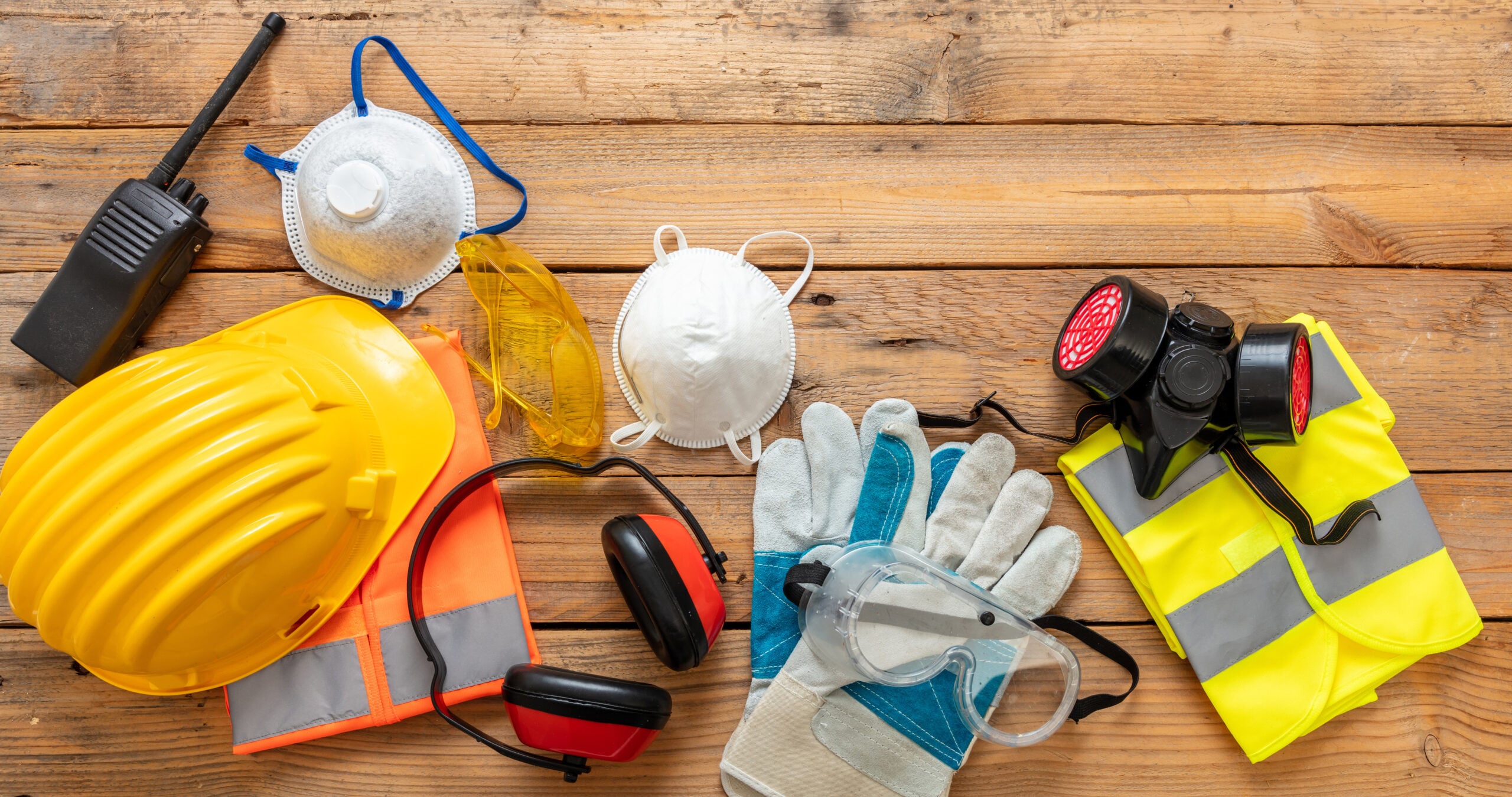
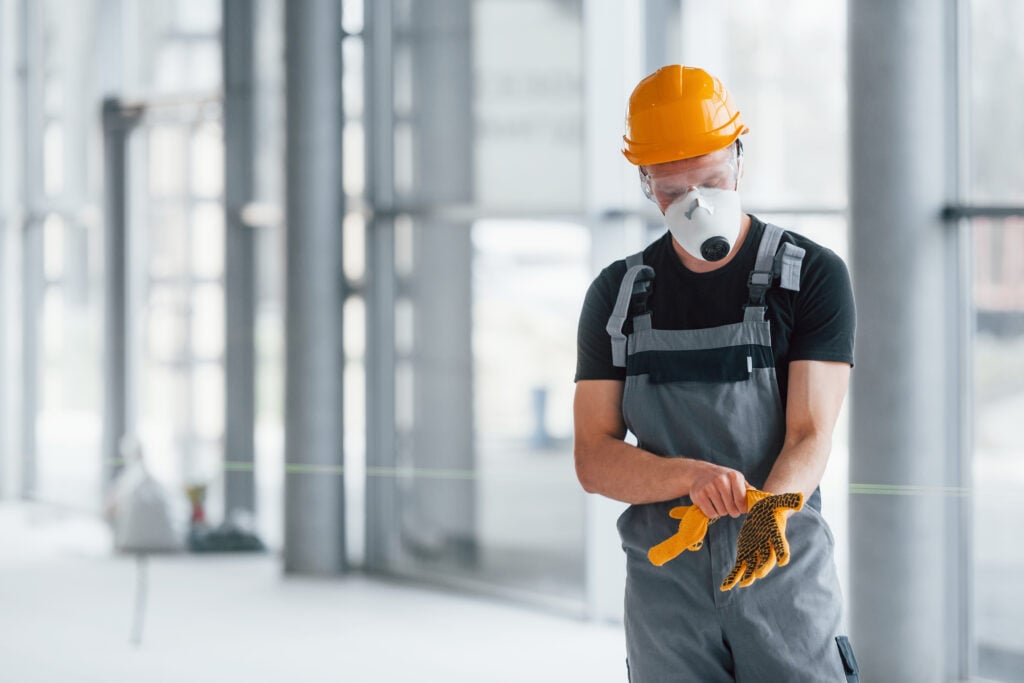
Personal protective equipment—commonly called PPE—refers to any garments or gear worn to minimise exposure to hazards that cause serious workplace injuries or illnesses. Think gloves, safety glasses, hard hats, respirators, high-visibility clothing, and steel-capped boots. PPE creates a physical barrier between you and potential dangers, whether flying particles, chemical splashes, loud noise, or infectious materials.
You’ll encounter PPE across virtually every industry in Australia. Construction sites, manufacturing plants, healthcare facilities, childcare centres—all of them rely on some form of protective equipment. The specific gear you wear depends entirely on the hazards present in your work environment.
Why PPE matters in the workplace
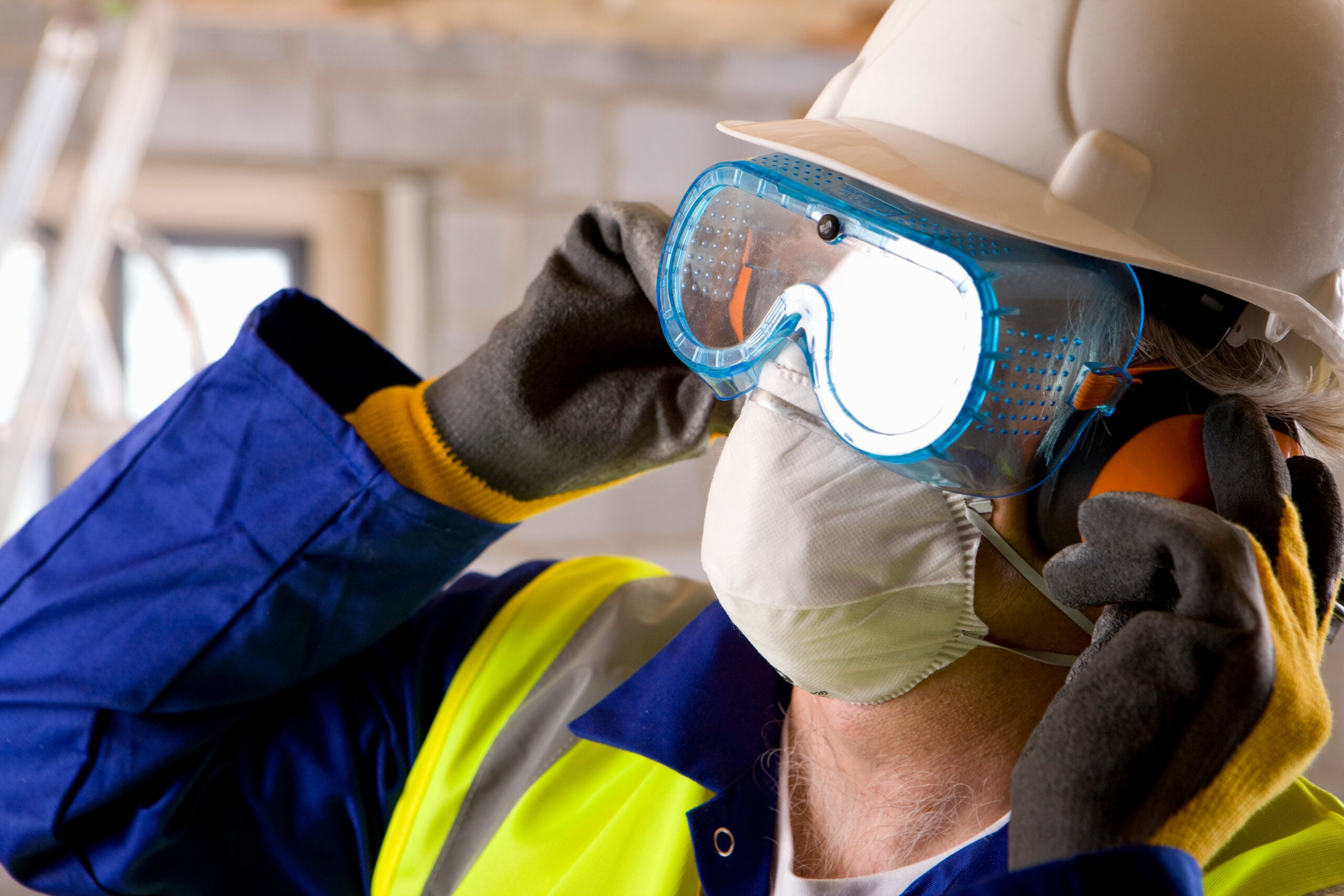
PPE serves as your final layer of protection when other safety controls cannot fully eliminate workplace risks. Properly selected and correctly worn equipment can mean the difference between a minor incident and a life-changing injury.
Here’s why PPE is so important:
- Injury prevention: PPE shields you from cuts, burns, chemical splashes, impacts, and crushing injuries
- Infection control: Barriers like gloves and masks protect against bloodborne pathogens, body fluids, and infectious diseases
- Legal compliance: Australian Work Health and Safety regulations require appropriate PPE in many workplaces
- Emergency readiness: The right equipment enables you to respond safely during first aid situations without putting yourself at risk
Main types of PPE you need to know
PPE is typically categorised by the body part it protects. Understanding each category helps you identify what equipment is appropriate for different tasks and environments.

Head protection
Hard hats and safety helmets protect your head from falling objects, bumps against fixed structures, and electrical hazards. You’ll see them on construction sites, in warehouses, and anywhere overhead work is taking place. In Australia, hard hats are manufactured to meet Australian Standard AS/NZS 1801.
Bump caps offer lighter protection for environments where you might hit your head on low-hanging equipment but where falling objects aren’t a concern.
Eye and face protection
Safety glasses with side shields protect against flying particles and debris—think grinding, cutting, or woodworking. Goggles create a seal around your eyes for protection against dust, chemical splashes, and liquid hazards. Face shields provide secondary protection for your entire face and are typically worn over glasses or goggles when there’s a splash risk.
Hearing protection
Prolonged exposure to loud noise—anything above 85 decibels—can cause permanent hearing damage. Earplugs fit inside the ear canal, while earmuffs cover the entire outer ear. Some workers in extremely noisy environments use both together for maximum protection.
Respiratory protection
Respirators and masks filter out airborne contaminants including dust, fumes, gases, vapours, and infectious particles. Options range from simple disposable dust masks to half-face respirators with replaceable cartridges to full-face supplied-air systems.
Fit testing is often required to ensure your respirator creates a proper seal against your face. A poorly fitting respirator offers significantly reduced protection.
Hand protection
Gloves come in many varieties, each designed for specific hazards:
- Disposable nitrile or latex gloves: Protect against biological hazards and are essential for first aid
- Chemical-resistant gloves: Made from materials like neoprene or butyl rubber for handling hazardous substances
- Cut-resistant gloves: Contain materials like Kevlar for tasks involving sharp objects
- Insulated gloves: Protect against extreme heat, cold, or electrical hazards
Foot protection
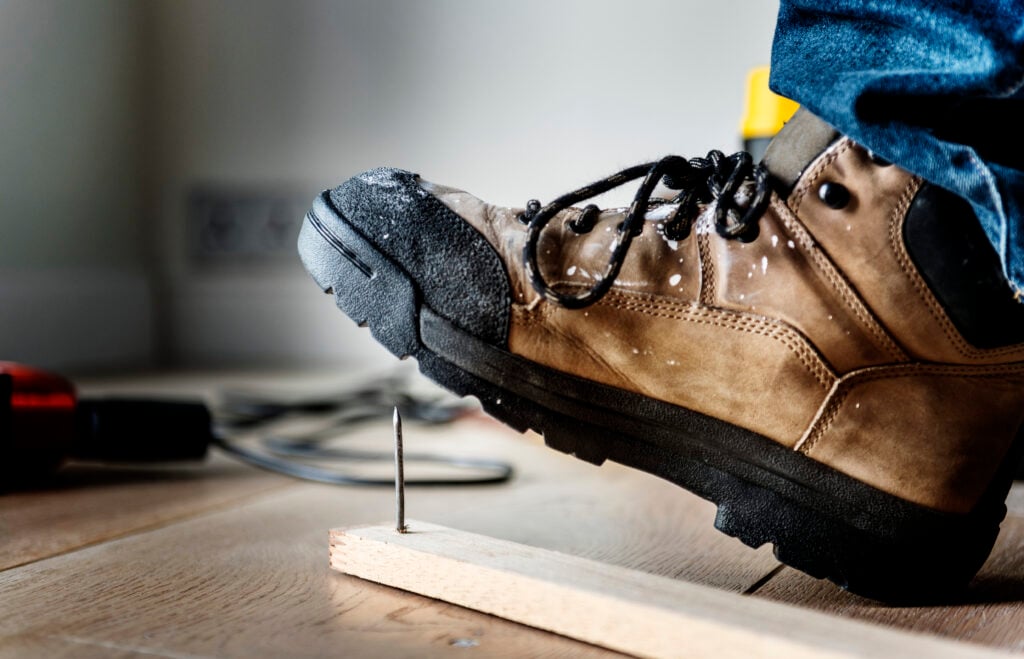
Safety boots with steel or composite toe caps protect against crushing injuries from heavy objects. Puncture-resistant soles prevent sharp objects from penetrating through the bottom of the boot. Slip-resistant outsoles reduce the risk of falls on wet or oily surfaces.
Body and skin protection
Coveralls, aprons, and lab coats protect your skin and clothing from contamination, chemical splashes, and biological hazards. High-visibility clothing—those bright orange or yellow vests and shirts—ensures you’re seen in environments with vehicle traffic or low light conditions.
Fall protection
When working at heights, harnesses, lanyards, and anchor systems prevent fatal falls. In Australia, fall protection is generally required when working 2 metres or more above the ground. Proper training is essential before using any fall protection equipment.

When to use PPE at work
PPE is appropriate whenever hazards cannot be eliminated or adequately controlled through other means. A workplace risk assessment—conducted by your employer or a safety professional—determines exactly what PPE is required for specific tasks.
Common scenarios where PPE is typically required:
- Handling hazardous chemicals or biological materials
- Working in environments with noise levels above 85 decibels
- Performing tasks with risk of falling objects or working at heights
- Providing first aid or CPR to a casualty
- Entering confined spaces or areas with airborne contaminants
PPE requirements under Australian WHS law
Under Australian Work Health and Safety legislation, both employers and workers have specific responsibilities regarding PPE.
Responsibility | Employer duties | Worker duties |
|---|---|---|
Provision | Provide suitable PPE at no cost to workers | Use PPE as instructed and trained |
Fit and suitability | Ensure PPE fits correctly and suits the task | Report any fit issues or discomfort |
Training | Provide information and training on correct use | Follow training and instructions |
Maintenance | Maintain, repair, and replace PPE as needed | Store PPE correctly and report damage |
Employers are also required to consult with workers when selecting PPE. After all, the people wearing the equipment often have valuable insights into what works and what doesn’t.
PPE in first aid and emergency response
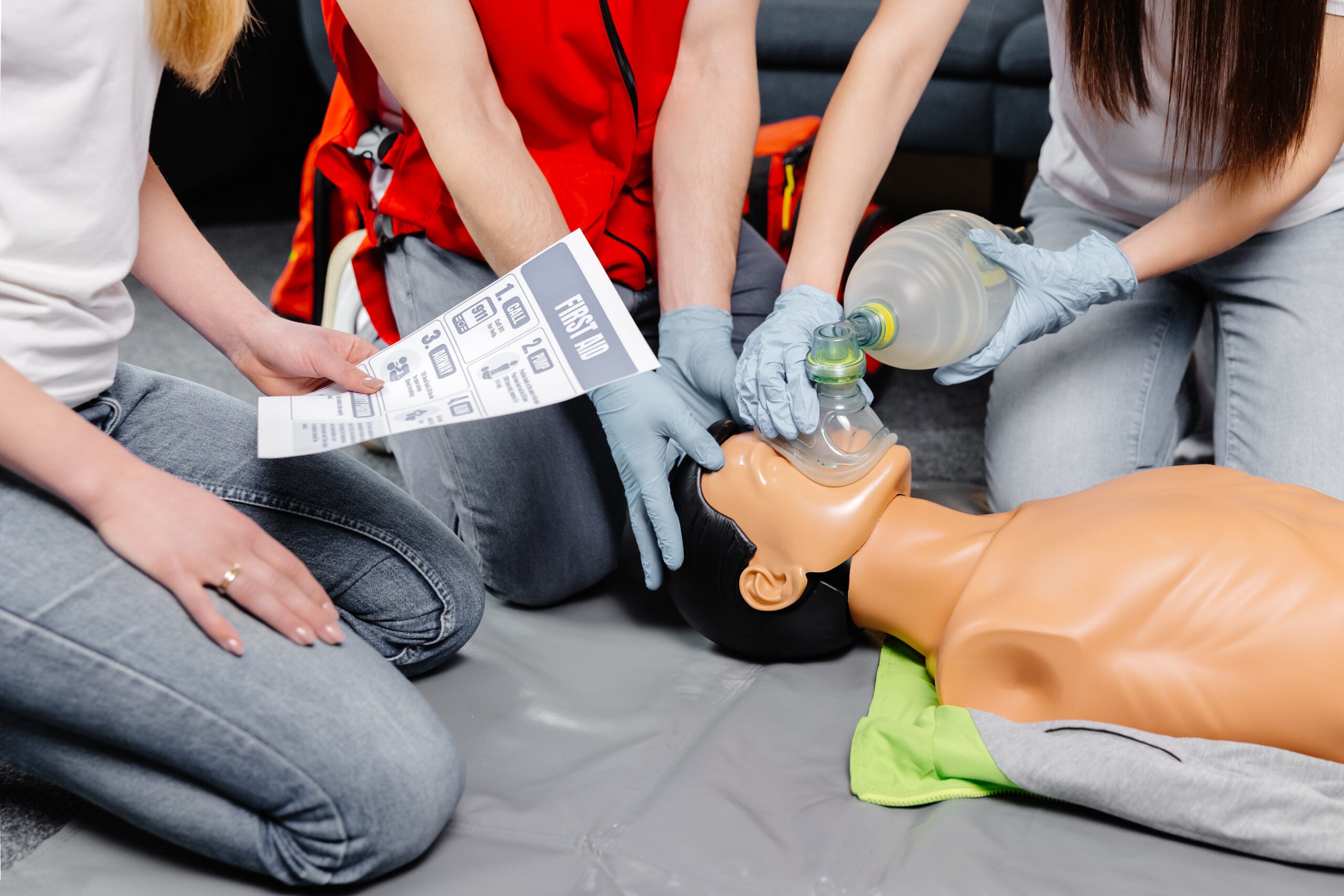
When you’re providing first aid, PPE protects both you and the person you’re helping. The DRSABCD action plan—taught in all accredited first aid courses—begins with checking for Dangers, and wearing appropriate PPE is part of managing those dangers.
Disposable gloves
Nitrile or latex gloves create a barrier against blood and body fluids. Wear gloves whenever you’re treating wounds, managing bleeding, or performing CPR. Standard workplace first aid kits include disposable gloves for exactly this reason.
CPR face shields and pocket masks
Face shields and pocket masks protect you from disease transmission during rescue breathing.
Pocket masks with one-way valves are preferred because they create a more effective seal and direct exhaled air away from the rescuer.
Protective eyewear
Safety glasses or goggles protect your eyes from blood splashes and body fluid exposure during emergency response—particularly important when managing arterial bleeding or providing care in chaotic environments.
Tip: Keep a pair of disposable gloves in your bag, car, or desk drawer. You never know when you might provide first aid, and having up-to-date gloves on hand means you can respond safely.
How PPE fits the hierarchy of control
PPE is important, but it’s actually the last resort in workplace safety—not the first. The hierarchy of control ranks safety measures from most effective to least effective:
Control level | Example |
|---|---|
Elimination | Remove the hazard entirely |
Substitution | Replace with a less hazardous option |
Engineering controls | Install guards, ventilation, barriers |
Administrative controls | Training, procedures, signage |
PPE | Gloves, masks, hard hats, safety glasses |
Why is PPE at the bottom? Because it relies entirely on the worker using it correctly, every single time. A machine guard works whether you’re paying attention or not. PPE only works if you’re wearing it properly.
That said, many hazards simply cannot be fully controlled through other means. In those situations, appropriate PPE is your critical line of defence.
How to don and doff PPE safely
Putting on (donning) and removing (doffing) PPE correctly is just as important as wearing it. Improper removal can actually cause the contamination you were trying to avoid.
1. Perform hand hygiene
Wash your hands thoroughly or use alcohol-based hand sanitiser before touching any PPE.
2. Put on your gown or apron
If required, put on protective clothing first, securing ties at the back or side.
3. Fit your mask or respirator
Place the mask over your nose and mouth, secure the straps, and mould the nose piece for a tight seal.
4. Apply eye and face protection
Put on goggles or a face shield, ensuring they sit securely and don’t obstruct your vision.
5. Put on gloves
Pull gloves over the cuffs of your gown to ensure no skin is exposed between glove and sleeve.
6. Remove PPE in reverse order
When doffing, remove the most contaminated items first: gloves, then eye protection, then gown, and finally your mask. Perform hand hygiene between each step and again after all PPE is removed.
How to get trained in PPE and workplace safety
Understanding PPE is one thing—knowing how to select, use, and maintain it correctly requires proper training. Many nationally accredited courses include PPE components as part of their curriculum.
- White Card (CPCWHS1001): Covers PPE selection and use for construction sites
- First Aid (HLTAID011): Teaches infection control and PPE use during emergency response
- CPR (HLTAID009): Includes barrier device use and infection control principles
- Manual Handling (HLTWHS005): Covers protective equipment for safe lifting
Book your course with FirstAidPro and learn to protect yourself and others in any workplace situation.
Related Reading
Safe Work Australia – WHS Duties – Personal protective equipment (PPE)
Safe Work Australia – Personal protective equipment (PPE) – Overview
First Aid Pro – PPE, Safety Gear & First Aid Kits in the Workplace Guide
Frequently asked questions about PPE
What are the 7 basic types of PPE?
The seven basic types of PPE are head protection, eye and face protection, hearing protection, respiratory protection, hand protection, foot protection, and body protection. Some classifications include fall protection as an eighth category.
Who pays for PPE at work in Australia?
Under Australian WHS law, employers are required to provide PPE to workers at no cost when it’s needed to manage workplace risks. Employers are also responsible for maintaining and replacing PPE as needed.
How often is PPE replaced or inspected?
PPE is inspected before each use and replaced whenever it shows signs of damage, wear, or contamination. Single-use items like disposable gloves are discarded after one use.
Is PPE training required by Australian law?
Yes. Australian WHS Regulations require employers to provide workers with information, training, and instruction on the correct use, fit, storage, and maintenance of PPE.