



Sharon has 21+ years of experience as a qualified Emergency Care Nurse registered with the Australian Health Practitioner Regulation Agency (APHRA) and 12+ years as a First Aid Trainer.
She takes pride in FirstAidPro making first aid training available, comprehensive and affordable to everybody.
If you work in security or plan to get your security licence, you need a current first aid certificate. This is not a recommendation — it is a mandatory requirement built into the national training package for security operations. Depending on your role and your state, you may need either HLTAID011 Provide First Aid or the more advanced HLTAID014 Provide Advanced First Aid.
This guide breaks down first aid requirements for security licence holders by state, explains when HLTAID014 applies, and shows you how to stay compliant so your licence is never at risk.
Key Takeaways
- HLTAID011 Provide First Aid is a core unit in CPP20218 Certificate II in Security Operations — you cannot get or renew your security licence without a current certificate.
- Some states, particularly NSW, require HLTAID014 Provide Advanced First Aid for specialist security roles including crowd controllers (Class 1B) and bodyguards (Class 1D/1F).
- All first aid certificates are valid for 36 months — you must renew before expiry to continue working.
- HLTAID014 includes four units (HLTAID014, HLTAID011, HLTAID010, and HLTAID009), covering advanced trauma, triage, and multi-casualty management.
- FirstAidPro delivers HLTAID014 at 170+ locations throughout Australia with same-day certification and 7-day scheduling.

What Are the First Aid Requirements for Security Licence Holders?
Under the national training framework, CPP20218 Certificate II in Security Operations includes HLTAID011 Provide First Aid as a core unit of competency. This means that first aid training is not an elective or add-on — it is a mandatory prerequisite for obtaining and maintaining your security licence in every Australian state and territory.
You cannot apply for a new security licence, and you cannot renew an existing one, without holding a current first aid certificate issued by a Registered Training Organisation (RTO). Self-study certificates, non-accredited first aid courses, or workplace inductions that cover basic first aid awareness will not be accepted by state or territory licensing authorities. Your certificate must come from an RTO that delivers the nationally recognised unit of competency.
Your certificate must be renewed every 3 years (36 months). If your first aid lapses, your security licence becomes non-compliant, and you may be unable to legally perform security work until you complete a new course and receive a current Statement of Attainment.
For standard security roles (static guarding, retail loss prevention, mobile patrols), HLTAID011 is the minimum requirement in most states. However, if you work in or are moving into specialist roles — crowd control, close protection, or bodyguard duties — your state may require HLTAID014 Provide Advanced First Aid instead. HLTAID014 supersedes the former HLTAID006 and is now the current advanced first aid unit recognised nationally.
The next section covers these requirements state by state so you can confirm exactly what you need for your role.

State-by-State First Aid Requirements for Security Licences
First aid requirements for security licences vary between states and territories. The table below summarises the minimum first aid unit required for each licence class or role.
State/Territory | Standard Security (Guarding) | Crowd Controllers | Close Protection / Bodyguard |
|---|---|---|---|
NSW | HLTAID011 (Class 1A, 1C) | HLTAID014 (Class 1B) | HLTAID014 (Class 1D, 1F) |
QLD | HLTAID011 | HLTAID011 (minimum); HLTAID014 recommended as ongoing training | HLTAID014 (recommended as ongoing training) |
VIC | HLTAID011 | HLTAID011 | HLTAID014 (Close Protection) |
WA | HLTAID011 | HLTAID011 | HLTAID014 (Close Protection) |
SA | HLTAID011 | HLTAID011 | HLTAID011 |
TAS | HLTAID011 | HLTAID011 | HLTAID011 |
NT | HLTAID011 | HLTAID011 | HLTAID011 |
ACT | HLTAID011 | HLTAID011 | HLTAID011 |
Key points from the table:
- NSW has the most prescriptive requirements. The NSW Police Security Licensing and Enforcement Directorate (SLED) mandates HLTAID014 for Class 1B (crowd controller), Class 1D (bodyguard), and Class 1F (close protection) licence holders. Classes 1A (unarmed guarding) and 1C (patrol) require HLTAID011.
- Queensland lists HLTAID011 as the base requirement under the Security Providers Act 1993, but crowd controllers and bodyguards have ongoing training obligations that include advanced first aid. HLTAID014 is listed as meeting these requirements for higher-risk roles.
- Victoria and Western Australia require HLTAID014 specifically for close protection operatives.
- SA, TAS, NT, and ACT currently require HLTAID011 for all security licence classes. However, employers in these jurisdictions may still require HLTAID014 for roles involving crowd management or high-risk venues.
Even where HLTAID014 is not explicitly legislated, holding advanced first aid gives you a competitive edge with employers and demonstrates duty-of-care readiness for complex incidents. Many security companies and venue operators now list HLTAID014 as a preferred qualification in job advertisements, even in states where the legislative minimum remains HLTAID011.
Note that HLTAID014 supersedes the former HLTAID006 unit. If your previous certificate lists HLTAID006, you will need to complete the current HLTAID014 unit on renewal.
Why Crowd Controllers Should Consider HLTAID014
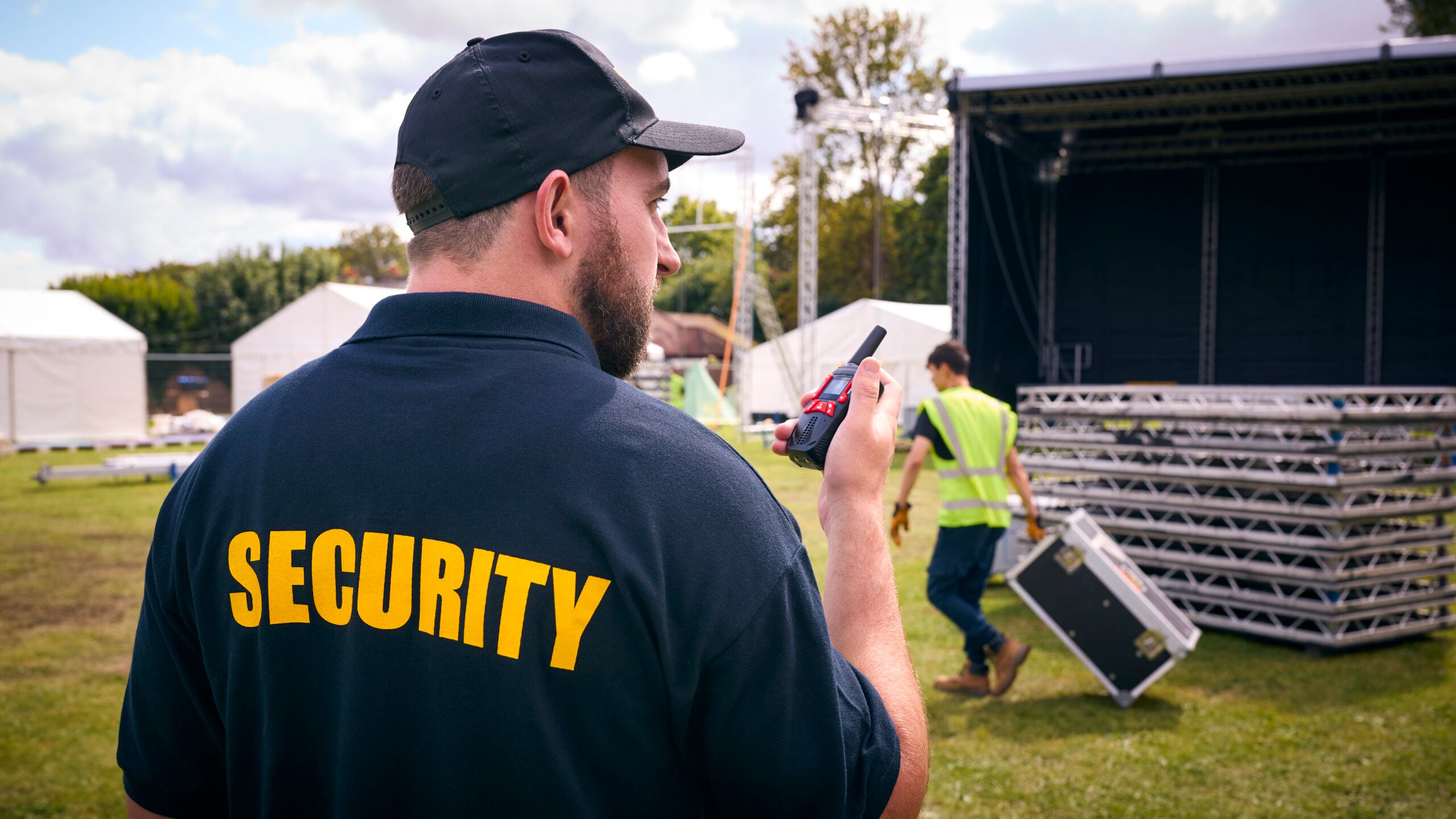
Crowd controllers operate in some of the highest-incident environments in the security industry. Licensed venues, music festivals, nightclubs and major events can present a concentrated mix of hazards that basic first aid training may not fully prepare you for.
Common Emergencies in Crowd Control Environments
- Alcohol and drug intoxication, including overdose
- Cardiac events, including cardiac arrest and heart attacks
- Crush injuries and crowd surge
- Violent trauma, including stabbings, glassings and blunt force injuries
- Allergic reactions and anaphylaxis
- Heat exhaustion and dehydration at outdoor events
HLTAID011 provides foundational response skills such as CPR, bleeding control and basic casualty assessment. But situations involving multiple casualties, advanced trauma or patient triage while waiting for paramedics can demand a broader level of emergency response capability.
What HLTAID014 Adds for Crowd Controllers
- Advanced casualty assessment and triage protocols for multi-casualty incidents
- Tourniquet application and haemostatic dressing use for severe haemorrhage
- Complex spinal and trauma management
- Coordination of emergency responses across a team
- Advanced airway management beyond basic CPR
NSW already mandates HLTAID014 for Class 1B crowd controller licences. Queensland’s Security Providers Act 1993 identifies advanced first aid as meeting the ongoing training obligations for crowd controllers and bodyguards. Nationally, employers running large-scale events and high-risk venues are increasingly specifying HLTAID014 in position descriptions and contract requirements.
From a duty-of-care perspective, holding only basic first aid in a high-incident environment creates a gap between the emergencies you are likely to encounter and the skills you hold to manage them. HLTAID014 closes that gap.
This is not about upselling a course — it is about matching your training to the genuine risks you face on shift. If you regularly manage intoxicated patrons, medical emergencies in crowded spaces, or incidents involving weapons, HLTAID014 equips you with the advanced response skills your working environment demands.
HLTAID014 vs HLTAID011 — What's the Difference for Security Professionals?
Both HLTAID011 and HLTAID014 are nationally accredited, RTO-delivered qualifications valid for 36 months. The difference is scope: HLTAID014 builds on HLTAID011 and adds advanced emergency response skills designed for complex and high-risk environments.
Feature | HLTAID011 Provide First Aid | HLTAID014 Provide Advanced First Aid |
|---|---|---|
Delivery | Blended (online + face-to-face) | Blended (online + 5-hour face-to-face) |
Scope | Basic first aid, CPR, AED, bleeding control, casualty management | All of HLTAID011 plus advanced trauma, triage, multi-casualty coordination |
Units Issued | HLTAID011, HLTAID009 | HLTAID014, HLTAID011, HLTAID010, HLTAID009 |
Validity | 3 years | 3 years |
Key Skills | CPR, wound management, basic assessment, emergency calls | Tourniquet use, haemostatic dressings, spinal management, advanced airway, triage |
Suited For | Static guards, patrol officers, retail security | Crowd controllers, close protection, event security, high-risk environments |
Why this matters for your career:
Completing HLTAID014 means you hold four units of competency in a single course, including full HLTAID011 certification. You do not need to complete HLTAID011 separately — it is included. This gives you maximum flexibility when applying for any security role, from standard guarding through to specialist crowd control and close protection positions.
For security professionals looking to move between states or into higher-paying specialist roles, HLTAID014 ensures you meet the highest standard required anywhere in Australia without needing to retrain.
If you are unsure which level you need, the simple rule is: if your role involves crowd management, close protection, or high-risk venues, HLTAID014 is the safer and more versatile choice. It covers everything in HLTAID011 and prepares you for the advanced scenarios your basic training does not address.
How to Renew Your First Aid for Security Licence Renewal
Your first aid certificate expires after 36 months (3 years). Renewal is not an update or refresher — you must complete the full course again with practical assessment to be re-certified.
Important timelines to plan for:
- Your security licence renewal application will require a current first aid certificate. If yours has lapsed, you cannot renew.
- The Australian Resuscitation Council (ARC) recommends annual CPR refresher training to maintain skill retention, even though certification is valid for 3 years.
- Do not wait until your licence renewal is due. A lapsed first aid certificate means you are non-compliant and may be unable to work until you re-certify.
Plan ahead. Check your certificate expiry date now and book your renewal at least 4-6 weeks before it lapses. This gives you time to find a session that works around your shift roster without risking a compliance gap.
FirstAidPro makes renewal straightforward:
- 7-day scheduling — courses run every day of the week, so you can fit training around shifts
- 170+ locations across Australia — find a venue close to your worksite or home
- Same-day certification — receive your Statement of Attainment on the day you complete your course, so there is no gap in your compliance
- Price-beat guarantee — competitive pricing with no hidden costs
Book your HLTAID014 renewal now and keep your security licence compliant.
Related Reading
National Training Register – CPP20218 Certificate II in Security Operations
NSW Government – Security Licences
Queensland Government – Security Industry Regulation
National Training Register – HLTAID014 Provide Advanced First Aid
Australian Resuscitation Council (ARC)
FAQs
Do Security Guards Need First Aid in Australia?
Yes. HLTAID011 Provide First Aid is a core unit in CPP20218 Certificate II in Security Operations, which is the national training package for security licensing. You cannot obtain or renew a security licence in any Australian state or territory without a current first aid certificate from a Registered Training Organisation.
What First Aid Do I Need for a NSW Security Licence?
In NSW, Class 1A (unarmed guarding) and Class 1C (patrol) licence holders need HLTAID011. Class 1B (crowd controller), Class 1D (bodyguard), and Class 1F (close protection) licence holders need HLTAID014 Provide Advanced First Aid. These requirements are set by the NSW Police Security Licensing and Enforcement Directorate (SLED).
Do Crowd Controllers Need HLTAID014?
In NSW, yes — HLTAID014 is mandatory for Class 1B crowd controller licences. In Queensland, advanced first aid is listed as meeting ongoing training requirements for crowd controllers under the Security Providers Act 1993. In other states, HLTAID011 is the minimum standard, but many employers and venues now require HLTAID014 for crowd control and event security roles.
How Often Do I Need to Renew My First Aid for My Security Licence?
All first aid certificates (HLTAID011 and HLTAID014) are valid for 3 years (36 months). You must complete the full course again before your certificate expires. The ARC recommends annual CPR refresher training to maintain your skills between certifications.
Can I Do My Security First Aid Course Online?
Standard first aid courses often use a blended delivery model — you complete theory components online at your own pace, then attend a face-to-face practical session for hands-on assessment. You cannot complete the entire qualification online because practical skills like CPR, bandaging, and casualty management must be assessed in person by a qualified trainer.
What Happens If My First Aid Certificate Expires While I Hold a Security Licence?
If your first aid certificate lapses, you become non-compliant with your security licence conditions. Depending on your state, this may mean you cannot legally perform security work until you re-certify. It may also affect your ability to renew your licence. Complete your first aid renewal before your certificate expires to avoid any gap in your ability to work.