



Sharon has 21+ years of experience as a qualified Emergency Care Nurse registered with the Australian Health Practitioner Regulation Agency (APHRA) and 12+ years as a First Aid Trainer.
She takes pride in FirstAidPro making first aid training available, comprehensive and affordable to everybody.
If you’ve spent time in the bush, garden, or parklands of southeastern Australia, you’ve probably encountered a jack jumper ant — and if you have, you almost certainly remember it. That electric sting. The distinctive jerky, hopping movement. The unsettling sense that this small, aggressive ant is sizing you up rather than retreating. Australia is famous for dangerous wildlife, and among its stinging ants, the jack jumper (Myrmecia pilosula) stands in a class of its own.
Also known as the jumping jack, hopper ant, or jumper ant, this venomous Australian ant is responsible for more anaphylaxis cases than any other ant species in the country. Jack jumpers are widespread across southeastern Australia and found in Tasmania in particularly high numbers — and for anyone spending time in endemic areas, understanding this insect is not just interesting. It could be life-saving.
Don’t wait for a severe health crisis to occur – enrol in nationally accredited first aid training with FirstAidPro and equip yourself to handle a severe allergic reaction emergency with confidence.
Key Takeaways: Facts About The Jack Jumper Ant
- The jack jumper ant (Myrmecia pilosula) is a highly aggressive ant species from the genus Myrmecia, one of the most ancient and primitive ant genera on Earth.
- Jack jumpers are among the most dangerous ant genera in the world, responsible for around 90% of all Australian ant venom allergies.
- Jack jumper ant allergy affects between 2 and 3% of people living in endemic areas — a higher rate than allergy to honeybee or wasp venom.
- The venom of the jumper ant contains unique peptides called pilosulins, with pilosulin 1 (Myr p 1) and pilosulin 3 (Myr p 2) identified as the major allergens.
- Anaphylaxis in Australia is more commonly triggered by jack jumper ant stings than by any other ant species, and the reaction can be severe or fatal without prompt first aid.
- Venom immunotherapy (desensitisation) is a highly effective long-term treatment for jack jumper ant allergy, offering protection in up to 90% of patients.
What Is the Jack Jumper Ant? Facts About Jack Jumpers and Their Place in Nature
The jack jumper ant is a venomous native Australian ant belonging to the genus Myrmecia, a group of primitive ants whose fossil record dates back to the dawn of time. The Myrmecia are among the most dangerous ant genera on the planet, and the jack jumper (Myrmecia pilosula) is their most medically significant representative. The species was first formally described by British entomologist Frederick Smith in 1858 from specimens collected in Hobart, Tasmania.
Appearance: Is the Jack Jumper Ant a Dangerous Ant You Can Identify?
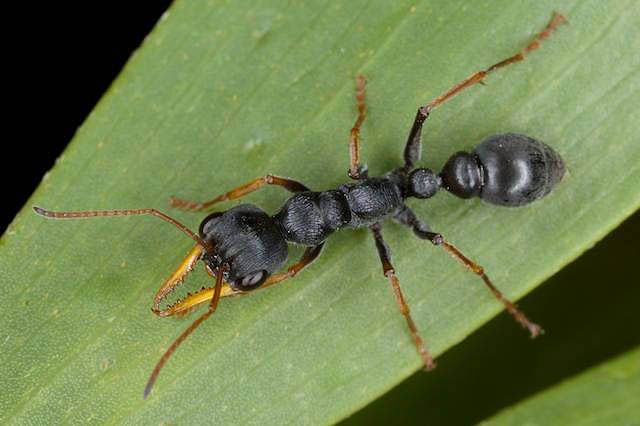
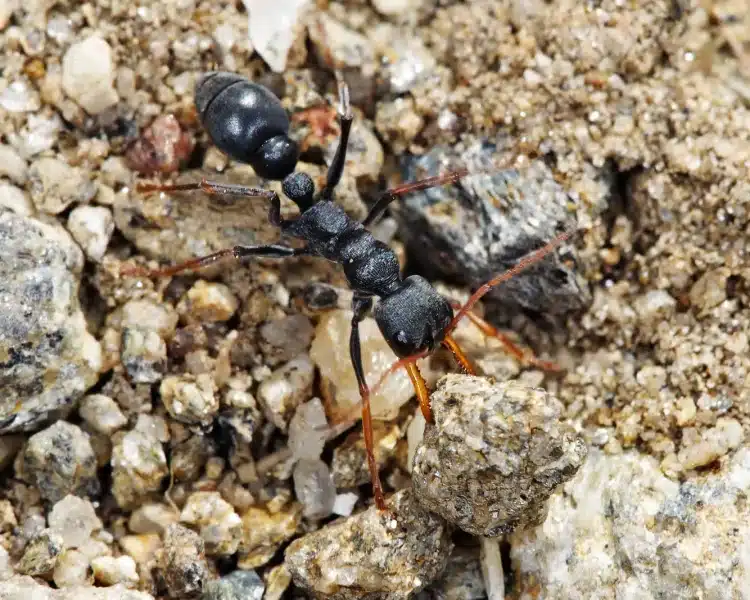
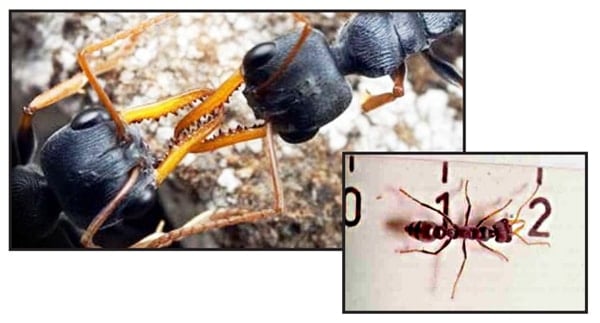
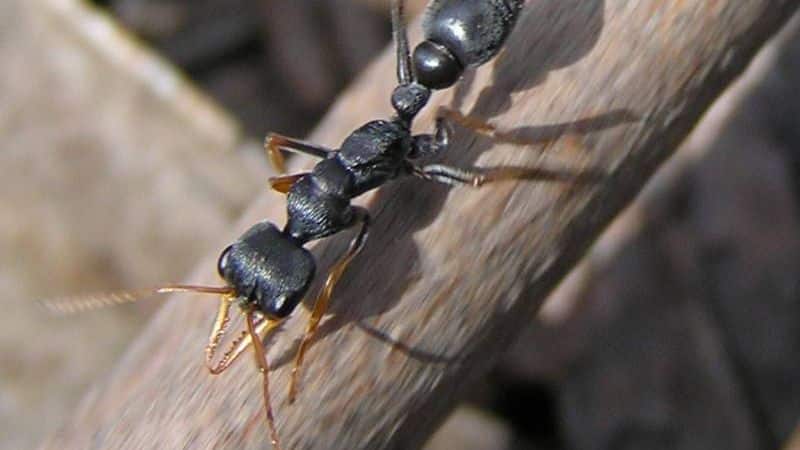
Workers are typically 12 to 14 mm in length — medium-sized compared to other Myrmecia species. The ant is greyish in pubescence (fine body hair), with a predominantly black body and distinctive yellow or orange mandibles, legs, antennae, and tarsi. Queens are slightly larger at 14 to 16 mm. Unlike many ant species, jack jumpers have notably large compound eyes relative to their head size, giving them excellent vision and the ability to track movement from up to one metre away.
The jack jumper is a member of the Myrmecia pilosula species complex — a group of closely related ant species that share similar appearance, behaviour, and venom properties. This complex also includes ants that are sometimes confused with the common bull ant and the bulldog ant, both of which are also members of genus Myrmecia but are generally larger and less allergenic in their sting reactions.
Behaviour: Why Jack Jumpers Are Considered a Highly Aggressive Ant Species
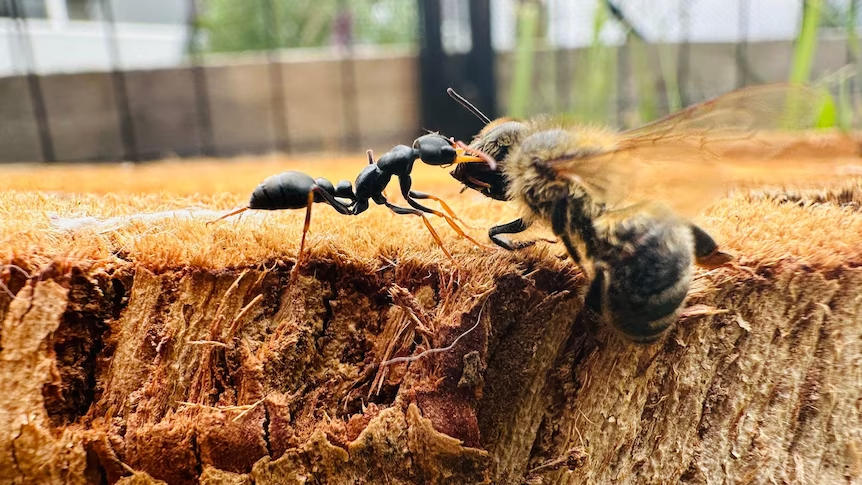
What sets jack jumpers apart from other stinging ants is their behaviour. When disturbed or threatened, these ants display the jerky, hopping movement that gives them their many common names — jack jumper, jumping jack, hopper ant, jumper ant. Some individuals within the Myrmecia pilosula species complex are capable of jumping several centimetres when agitated, propelling themselves by a sudden extension of their middle and hind legs.
Jack jumpers are known for their aggression towards humans. Unlike many ant species that will retreat from perceived threats, jack jumpers will actively pursue an intruder, using their excellent eyesight to track movement rather than relying on scent trails as most other ants do. This aggression is especially pronounced near the nest, where worker ants are quick to swarm. Like every ant in genus Myrmecia, they can sting repeatedly — their stingers are barbless, meaning they do not empty the venom sac in a single sting the way a honeybee does.
Where Are Jack Jumper Ants Found? Distribution Across Southern Australia
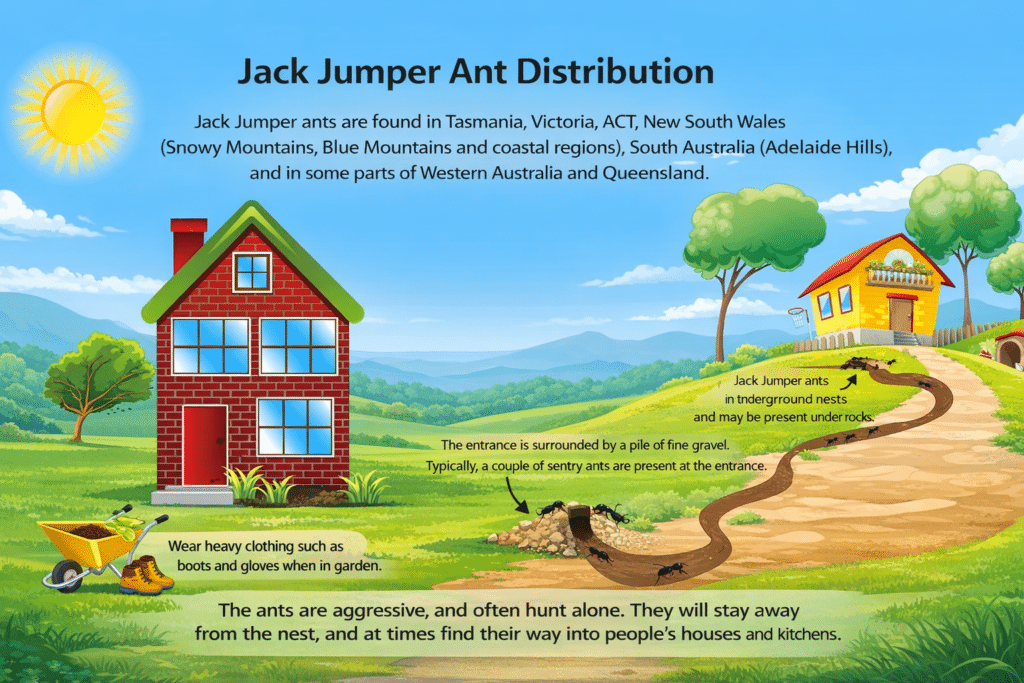
Jack jumpers are widespread throughout most of southeastern Australia. The species is found in Tasmania (where populations are particularly dense), Victoria, New South Wales — especially highland areas including the Snowy Mountains and Blue Mountains as well as coastal regions — South Australia, and the southwestern tip of Western Australia.
Habitat: Where Jack Jumpers Build Their Nest
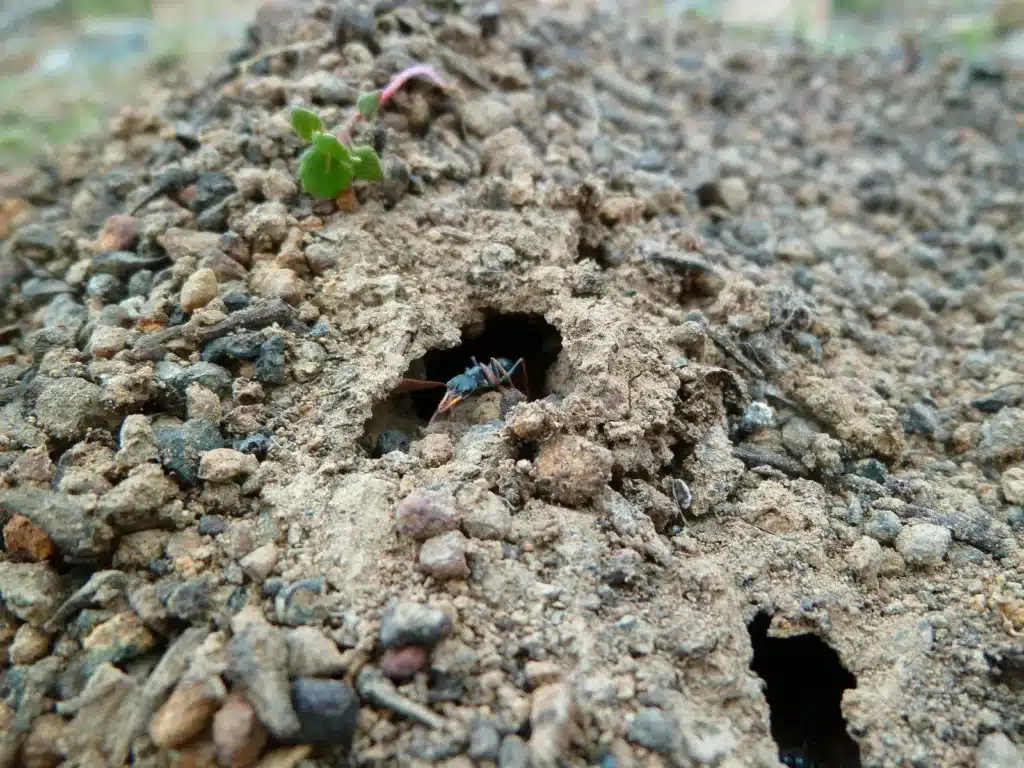
Jack jumper ants are primarily active during the day and live in open habitats, nesting in bushland, woodland, and dry open forests. Their nest is typically found in the ground, often surrounded by fine gravel or sandy soil — a useful identifying feature. Established nests can form mounds, but many are less obvious, with only a small pile of fine gravel marking the entrance and a couple of sentry ants standing guard.
Ant colonies of the jack jumper are relatively small compared to many other ant species, typically holding between 500 and 1,000 individuals. Excavated nests have been recorded with as few as 34 individuals, reflecting the fact that jack jumper colonies are less populous than, say, fire ant colonies, which can contain hundreds of thousands. Jack jumpers are less common in urban areas and suburban areas than in rural bushland, though they do stray long distances from their nest and are not unheard of in outer suburban areas with nearby bushland.
In South Australia, the species is frequently encountered in the Adelaide Hills and surrounding regions. In New South Wales, populations are well established in the Snowy Mountains and coastal regions. The ant also resides in parts of Queensland and the ACT.
Fascinating Facts About Jack Jumper Ant Biology
A Record-Breaking Chromosome Count
Among the most remarkable facts about jack jumper ants is their genetics. The Myrmecia pilosula species complex is known to have a single pair of chromosomes — the lowest chromosome number of any known animal. Female (diploid) workers carry two chromosomes (2n = 2), while haploid males carry just one. This extraordinary genetic simplicity has made the jack jumper an important subject of ant allergy research and broader biological study.
Colony Foundation and Polyandry in Jack Jumper Colonies
Jack jumper colony social structure is both unusual and fascinating. Queens are polyandrous — meaning they mate with more than one male — though polyandry in jack jumper colonies is low in comparison to other Myrmecia ants, with queens typically mating with one to nine males during a nuptial flight. Colonies are mainly polygynous, housing one to four queens at a time. Interestingly, in multiple-queen colonies, the egg-laying queens are unrelated to one another.
During colony foundation, there is evidence of dependent colony foundation in jack jumper queens, where inseminated queens may seek adoption into existing colonies if suitable nest site areas are not available. Independent colony foundation also occurs, as queens have fully developed wings and are capable of flight.
Worker ants are gamergates, meaning they can reproduce with drones whether or not a queen is present in the colony. The average life expectancy of worker ants is around 1.3 years — between 401 and 584 days — while queens can live for 10 years or more.
Comparison to Other Myrmecia Ants: Bull Ant and Bulldog Ant
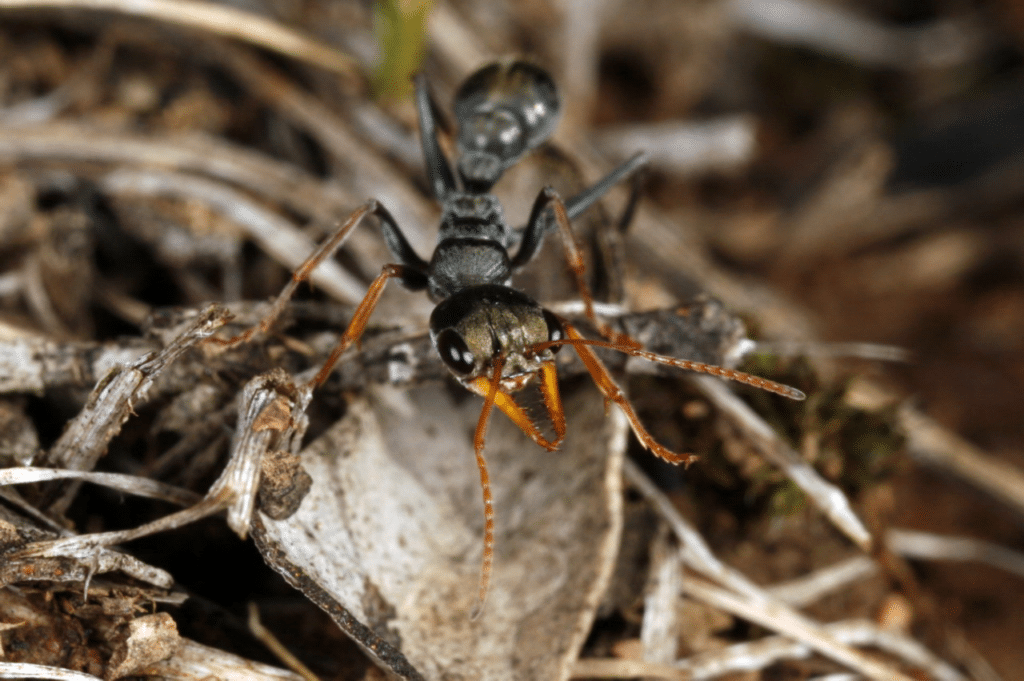
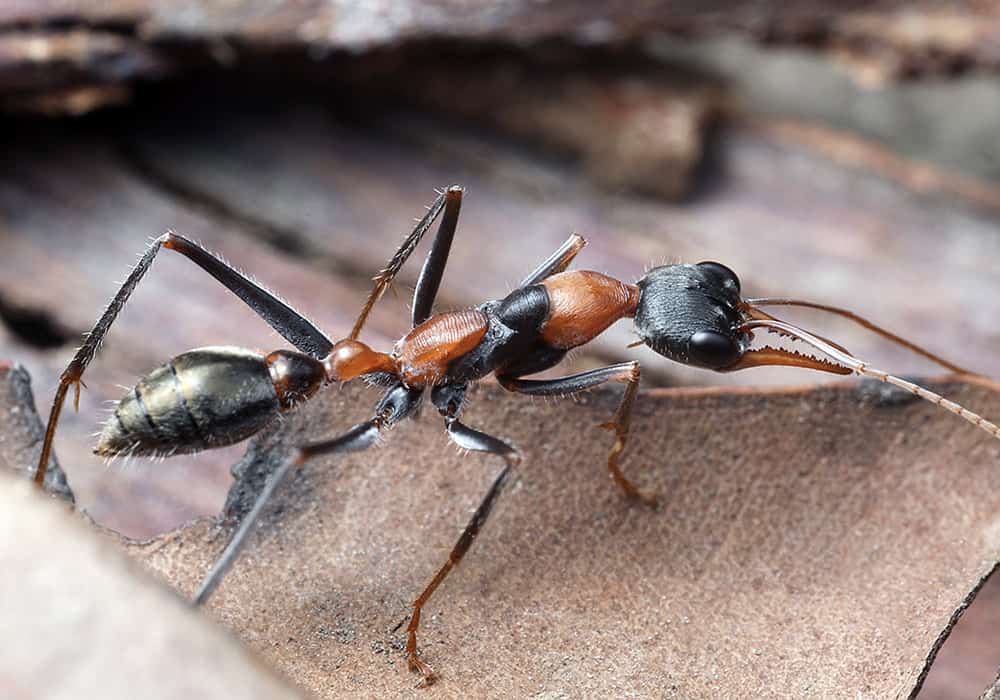
The jack jumper is often confused with the common bull ant and the bulldog ant (seen above), both of which also belong to genus Myrmecia. Bull ants and bulldog ants are generally larger — typically 15 to 25 mm — while jack jumpers measure 10 to 15 mm. The ant Myrmecia pyriformis (the bulldog ant, also called the inchman ant) holds the Guinness World Records title for the world’s most dangerous ant, though it is considered less aggressive than the jack jumper. Both species can cause anaphylaxis in sensitive individuals, and the venom of the jumper ant is comparably potent to that of M. pyriformis ants.
Unlike the introduced red fire ant (Solenopsis invicta), which is now established in southeastern Queensland, jack jumpers are a native Australian ant species that have adapted alongside the Australian landscape. The fire ant’s venom causes burning and hives and can trigger severe allergic reactions — similar to jack jumper ant stings — but the two species are unrelated and require different management approaches.
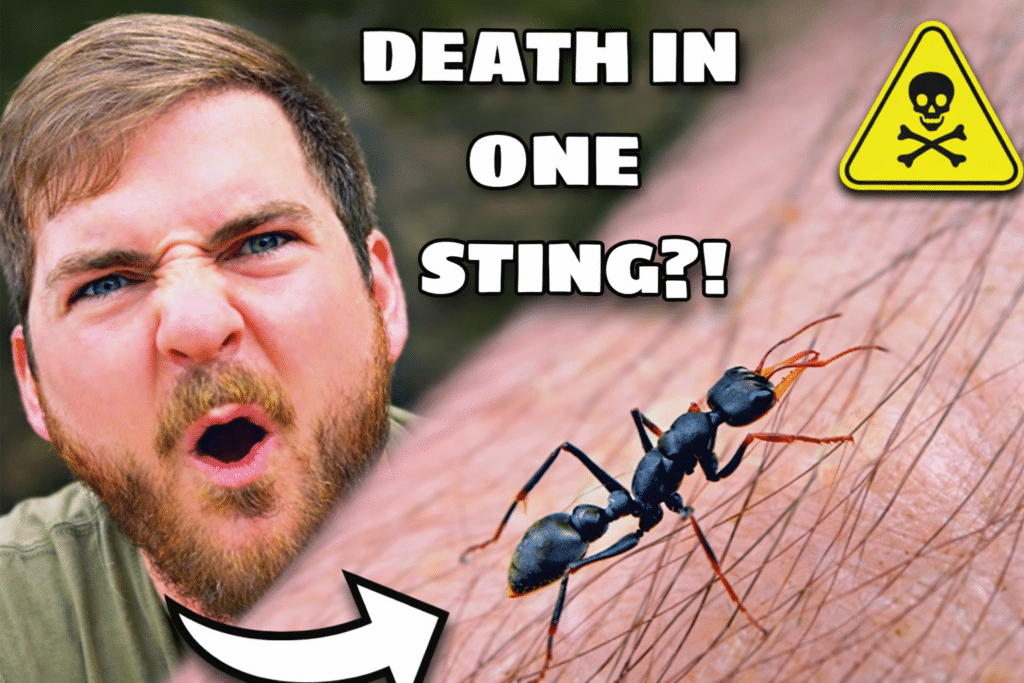
The Venom: Why the Jack Jumper Ant Sting Is So Dangerous
Venom Composition: What Makes Jack Jumper Ant Venom Unique
Unlike the venoms of most other stinging ants, which are primarily formic acid-based, the venom of the jumper ant consists of approximately 90% peptides by weight. The key components are a family of small peptides called pilosulins. Pilosulin 1 (Myr p 1) and pilosulin 3 (Myr p 2) are the major allergens identified in ant allergy research, with pilosulin 4.1 (Myr p 3) classified as a minor allergen. These peptides have cytotoxic and haemolytic activity — meaning they can damage cells and red blood cells. The venom also contains histamine, hyaluronidase, and phospholipases, which contribute to the intense pain of the sting reaction and help spread the venom through tissue.
The median lethal dose (LD50) of Myrmecia venom is 0.18 to 0.35 mg/kg, placing it among the most potent insect venoms known. When injecting venom, the jack jumper does not leave an empty venom sac behind — unlike the honeybee — meaning it can deliver multiple full stings.
Jack Jumper Ant Allergy: The Most Allergenic Stinging Insect in Australia
Jack jumper ant stings are the leading cause of anaphylaxis in Australia among stinging insects, ahead of honeybee and wasp stings in endemic regions. In populations living in endemic areas, between 2 and 3 percent of adults have developed an allergy to jack jumper ant venom. This is higher than the rate of honeybee allergy (approximately 1.6%) or European wasp allergy (approximately 0.6%), making the Australian jumper ant Myrmecia pilosula proportionally the most allergenic stinging insect in the country.
Of those with a confirmed jack jumper ant allergy, around half are at risk of a severe allergic reaction — including anaphylaxis — if stung again. Research in immunology and allergy has shown that approximately 70% of individuals with a history of systemic allergic reaction to jack jumper ant stings will experience another such reaction upon subsequent stings. Between 1980 and 2000, four deaths in Australia were attributed to anaphylaxis from jack jumper ant stings, all in Tasmania.
What Happens After an Ant Bite or Sting from a Jack Jumper?
It is worth clarifying a common misconception: like bees and wasps, jack jumper ants do not bite in the conventional sense. They grasp their victim using their large mandible, then bend their abdomen to deliver the sting from the tip of their tail — injecting venom directly into the skin. It is the sting, not the mandible grasp, that causes the dangerous reaction.
Localised Sting Reaction
For most people without an allergy, jack jumper ant stings cause an immediate sharp pain — commonly compared to an electric shock — followed by local redness, swelling, and itching. This localised sting reaction is normal and typically resolves within a few days. Reactions to the ant’s sting show similar symptoms to fire ant stings in terms of local swelling, though the venom causes different systemic effects in allergic individuals.
Severe Allergic Reaction and Anaphylaxis in Australia
For people with a jack jumper ant allergy, the picture changes significantly. A mild allergic reaction may include spreading hives, swelling of the lips, face, and eyes, watery eyes, and runny nose. These symptoms require medical attention but are not immediately life-threatening.
Anaphylaxis is a medical emergency. Signs of anaphylaxis following jack jumper ant stings include difficulty breathing or wheezing, throat tightening or hoarse voice, rapid heart rate, sudden blood pressure drop, dizziness or loss of consciousness, nausea, vomiting, or abdominal pain, and a pale or flushed appearance. Critically, a mild allergic reaction does not always precede anaphylaxis — in some individuals, a severe anaphylactic reaction can occur without warning even on a first documented sting.
First Aid for Jack Jumper Ant Stings
If the person stung has no known jack jumper ant allergy and shows only local pain, redness, and swelling at the sting site, follow these steps.
What to do — step by step
When to get medical help

Emergency Response for Anaphylaxis from Jack Jumper Ant Stings
If the person shows any signs of anaphylaxis — difficulty breathing, throat tightening, dizziness, collapse, rapid heart rate, or widespread hives — act immediately.
What to do — step by step
Do not do this
Following any anaphylactic reaction, the person should be referred to a specialist in immunology and allergy for full assessment. If jack jumper ant allergy is confirmed, venom immunotherapy may be discussed by a medical practitioner.

Venom Immunotherapy: Long-Term Management of Jack Jumper Ant Allergy
For Australians with confirmed jack jumper ant allergy, venom immunotherapy (also known as desensitisation) is the most effective long-term management option available. This treatment — offered through specialist immunology and allergy centres — involves a series of injections of gradually increasing doses of jack jumper ant venom under medical supervision. Over time, this process promotes loss of sensitivity in the immune system, reducing the risk of future anaphylactic reactions.
Clinical studies have shown venom immunotherapy offers protection against anaphylaxis in up to 90% of patients — a remarkable success rate for a condition that is otherwise potentially fatal. Treatment is currently available at specialist centres including the Royal Hobart Hospital, Monash Hospital in Melbourne, and the Royal Adelaide Hospital. Speak to your GP about a referral if you or someone you care for has experienced a severe allergic reaction to a jack jumper ant sting.
Reducing Your Risk Around Jack Jumper Nests
Jack jumpers are difficult to avoid in endemic areas. Ants are widespread and worker ants stray long distances from the nest, meaning encounters are not always predictable. That said, the following precautions reduce your risk meaningfully:
Precautions that reduce risk
Quick checklist

Know First Aid Before You Encounter the Jack Jumper
The jack jumper ant is a genuinely fascinating creature — one of Earth’s most primitive ants, a genetic outlier, a skilled predator, and an important part of Australia’s native ecosystem. But for a meaningful proportion of Australians living in endemic areas, it is also among the most dangerous ants they are likely to encounter in daily life.
The gap between a painful sting and a fatal anaphylactic reaction can come down to preparedness — knowing how to recognise the signs of anaphylaxis, how to use an adrenaline autoinjector, and how to act fast. That’s why first aid training isn’t just a good idea. For anyone spending time outdoors in Australia, it is essential.
At First Aid Pro, our nationally recognised first aid courses cover anaphylaxis management, emergency response, and everything in between. Whether you’re new to first aid or refreshing an existing certification, our expert trainers will give you the skills and confidence to respond when it matters most. Find a course near you today at firstaidpro.com.au — and be ready for whatever the Australian bush throws your way.
References
- Australian Society of Clinical Immunology and Allergy – ASCIA: Jack Jumper Ant Allergy
- Better Health Channel: Anaphylaxis
- Healthdirect: Allergies and hypersensitivities
- National Allergy Centre of Excellence: New research marks 25 years of Jack Jumper ant venom immunotherapy
- Allergy and Anaphylaxis Australia: Jack Jumper Ant
Frequently Asked Questions
Are jack jumper ants more dangerous than fire ants?
In terms of venom potency and the risk of severe allergic reaction, the jack jumper ant is considered more dangerous to humans in Australia than the red imported fire ant. While fire ants are aggressive in large numbers and their venom causes burning pain and hives — and can trigger severe allergic reactions — jack jumper ant allergy affects a higher proportion of the population in endemic areas. The Australian jumper ant Myrmecia pilosula is responsible for around 90% of all Australian ant venom allergies, and jack jumper ant stings are among the most common causes of fatal anaphylaxis in Australia. That said, the red imported fire ant poses a significant ecological and public health threat and should not be underestimated.
How do I know if I have a jack jumper ant allergy?
You may have a jack jumper ant allergy if you experience symptoms beyond the immediate sting site after being stung — such as spreading hives, swelling of the lips or face, difficulty breathing, rapid heart rate, or dizziness. These are signs of a systemic allergic reaction and require prompt first aid and medical attention. Definitive diagnosis is made through skin prick testing or specific IgE blood testing at a specialist immunology and allergy clinic. If you live in southern Australia and have reacted to ant stings in the past, ask your GP about a referral for allergy testing.
What's the difference between a jack jumper ant and a bull ant?
Both the jack jumper ant and the common bull ant belong to genus Myrmecia and are among Australia’s most dangerous stinging ants. The main differences are size and distribution. Bull ants (including the bulldog ant, also called Myrmecia pyriformis) are generally larger — 15 to 25 mm — whereas jack jumpers measure 12 to 14 mm. The ant Myrmecia pyriformis holds the Guinness World Records title for the world’s most dangerous ant, though the jack jumper is considered the more allergenic of the two species. Visually, jack jumpers are often identified by their black body with orange-brown mandibles and the characteristic hopping movement. Both species have a powerful sting and large mandibles and should be treated with equal caution.
Can jack jumper ants be found in suburban areas?
Jack jumpers are primarily found in rural bushland and are less common in urban areas. However, the ant also resides in outer suburban areas with nearby bushland, and worker ants frequently stray well away from the nest. Suburban areas on the fringes of Melbourne, Adelaide (particularly the Adelaide Hills), and Hobart have all recorded jack jumper encounters. The ants are active during the day in warmer weather, making encounters more likely during summer outdoor activities. If you find a nest near your home, contact a pest management professional rather than attempting to remove it yourself.
What should I do if I'm stung by a jack jumper ant and I don't know whether I'm allergic?
Treat the sting with soap, water, a cold pack, and over-the-counter antihistamines, and then monitor yourself carefully for the next 30 to 60 minutes. If you develop any symptoms beyond the immediate sting site — such as hives spreading from the sting area, swelling of the face or throat, difficulty breathing, dizziness, or nausea — seek medical attention immediately or call triple zero (000). A first-time severe allergic reaction is possible even with no prior allergy history. After any reaction, see your GP to discuss whether a referral to a specialist in immunology and allergy is appropriate, and whether you should be carrying an adrenaline autoinjector.