


Sharon has 21+ years of experience as a qualified Emergency Care Nurse registered with the Australian Health Practitioner Regulation Agency (APHRA) and 12+ years as a First Aid Trainer.
She takes pride in FirstAidPro making first aid training available, comprehensive and affordable to everybody.
Key Takeaways
- Handling children is a hazardous manual task under WHS law, not just heavy lifting.
- In NSW, child care workers’ compensation claims rose from 9.2 to 34.7 per million hours worked between 2015 and 2024 (SafeWork NSW).
- Six everyday movements drive the risk: lifting children, cot and change-table transfers, child-sized furniture, floor-to-standing transitions, reaching for supplies, and moving equipment.
- Employers (PCBUs) must eliminate or minimise manual handling risks so far as is reasonably practicable.
- Accredited training in HLTWHS005 Conduct Manual Tasks Safely builds the technique your team needs.
- Many centre directors pair Manual Handling for Childcare Educators with HLTAID012 Provide First Aid in an Education and Care Setting to cover core WHS and care-safety compliance in one booking.
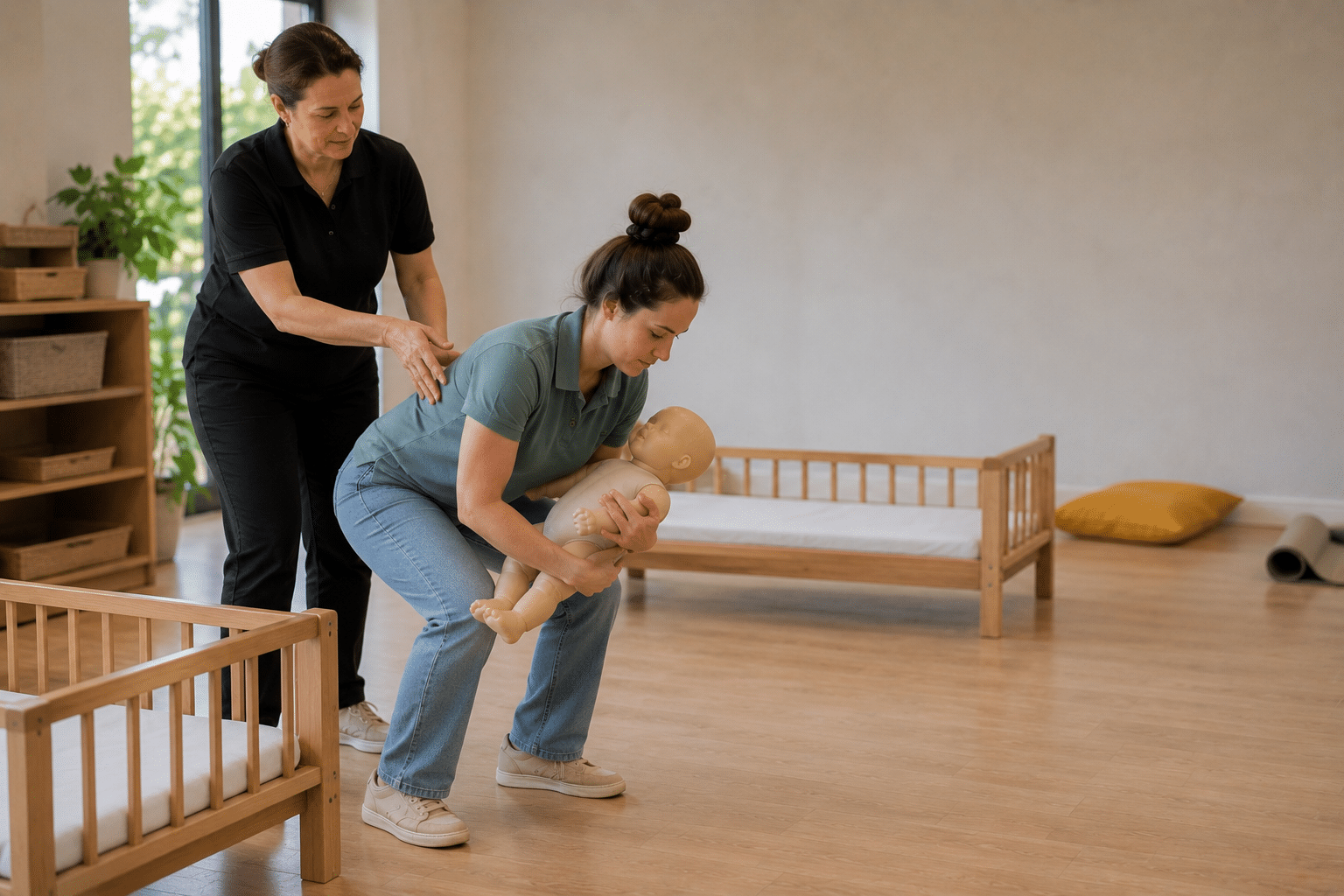
If you work in early childhood education and care, you already know how physical the job is. You lift toddlers in and out of cots. You bend to tie shoelaces, kneel to read stories, and squat to comfort an upset child, dozens of times a day.
This everyday movement is the leading body-stressing hazard in early learning settings. The injuries are real: strained backs, sore shoulders, and chronic musculoskeletal problems that can push experienced educators out of the sector.
The good news? Manual handling risk is manageable. With the right controls and trained technique, you can protect your body and keep doing the work you love.
This guide explains why manual handling matters in childcare, what the law expects of your centre, and how accredited training helps your team lift, lower and move safely.
Why Manual Handling Is a Real Risk in Early Learning
Manual handling injuries are not just a problem for warehouse workers or aged-care nurses. Childcare educators face significant physical demands every shift.
In NSW, workers’ compensation claims in the child care sector rose from 9.2 to 34.7 per million hours worked between 2015 and 2024, according to SafeWork NSW research. That is nearly a fourfold increase in a decade.
National data from Safe Work Australia shows the child care sector has a workers’ compensation injury frequency rate (WCIFR) of 20.3 (2022–23). That sits well above the broader health care and social assistance industry average of 13.8, and significantly higher than preschool education at 4.2.
What is driving these numbers? In NSW, the top injury mechanisms include:
- Falls on the same level: 26%
- Muscular stress from lifting or carrying: 11%
- Being hit by a person (often a child): 9%
- Muscular stress from other handling tasks: 8%
When it comes to injury type, soft-tissue injuries account for 29% of NSW claims, followed by contusions (14%) and joint or ligament injuries (10%).
The pattern is clear: repetitive lifting, bending and awkward postures are taking a toll on educator bodies.
What Counts as a Hazardous Manual Task?
Under WHS law, a hazardous manual task is any task that requires you to lift, lower, push, pull, carry, move, hold or restrain a person or object and involves one or more of:
- Repetitive or sustained force
- High or sudden force
- Repetitive movement
- Sustained or awkward posture
- Vibration
This definition comes from the Hazardous Manual Tasks Code of Practice approved under WHS legislation. Note that Victoria operates under its own OHS Act 2004, but similar principles apply.
Importantly, there is no safe weight limit written into the law. The risk depends on the movement, the posture, and how often you do it, not just how heavy the load is. A 12-kilogram toddler lifted 30 times a day from a low cot creates more cumulative strain than a single heavy lift.
SafeWork NSW states plainly: “Handling children can be a hazardous manual task.” The regulations in Part 4.2 of the WHS Regulations set out the duties your employer (the PCBU) must meet.

The 6 Daily Movements That Wreck Educator Backs
SafeWork NSW research identifies specific tasks that expose early childhood educators to musculoskeletal injury. Here are the six movements that matter most:
1. Lifting and Carrying Children
This is the most obvious hazard. You lift children to comfort them, move them to safety, or help them reach something. The loads are unpredictable (a wriggling toddler is harder to control than a static box), and the frequency adds up fast.
2. Cots, Highchairs and Change Tables
Reaching into a cot or leaning over a change table forces your spine into awkward, sustained postures. The deeper the cot or the lower the table, the greater the strain on your lower back and shoulders.
3. Child-Sized Furniture and Low Tables
Early learning environments are designed for children, not adults. You spend hours at tables that reach your knees, sitting on tiny chairs or crouching to supervise activities. One Australian study found only 64% of centres had adult-sized furniture available for educators.
4. Floor-to-Standing All Day
You squat to engage with children at their level, then rise to standing, then squat again. This repeated floor-to-standing transition loads your knees, hips and lower back throughout the day.
5. Reaching and Storing Supplies
Art supplies on high shelves. Nappy bags under benches. Every time you reach overhead or bend into a cupboard, you add low-grade strain. Done repeatedly, it accumulates.
6. Moving Furniture and Play Equipment
Dragging mats, pushing trolleys, shifting outdoor equipment: these tasks involve pushing and pulling loads that can cause injury if your posture is wrong or the equipment heavy.

How to Reduce the Risk
The Hazardous Manual Tasks Code of Practice requires PCBUs (persons conducting a business or undertaking) to eliminate or minimise manual handling risks so far as is reasonably practicable. That is not a vague aspiration; it is a legal duty.
When assessing risks, the WHS Regulations (cl.60(2)) require you to consider:
- Postures, movements, forces and vibration involved
- Duration and frequency of the task
- Work-area design and workplace layout
- Systems of work (how the task is organised)
- Nature, size, weight and number of items handled
Redesign the environment
- Invest in height-adjustable change tables so educators can work at waist height.
- Provide adult-sized seating for floor activities. Low stools or cushioned floor chairs reduce strain.
- Store frequently used supplies at waist to shoulder height, not overhead or at floor level.
Change how tasks are done
- Get to the child’s level rather than lifting. Kneel or squat beside them where safe.
- Use team lifting for heavy or awkward loads (furniture, outdoor equipment).
- Rotate tasks among staff so no single educator does all the lifting.
Apply people-handling guidance
The Hazardous Manual Tasks Code of Practice states: “No worker should fully lift a person, other than a small infant, unaided.” Even infant lifting needs risk management: use change tables and cots at the right height, and train your team in safe technique.
Build habits
- Face the child before lifting; avoid twisting.
- Keep the load close to your body.
- Bend your knees, not your back.
Small changes to equipment, layout and routine make a measurable difference.

What the Law Expects of Your Centre
If you are a centre director or approved provider, you are a PCBU under WHS legislation. That means you have a legal duty to manage manual handling risks for your educators.
Your WHS duties arise from the Work Health and Safety Act and Regulations, not from the National Quality Framework directly. The Hazardous Manual Tasks Code of Practice is an approved code under s.274 of the WHS Act (except in Victoria, which operates under its own OHS Act 2004).
What compliance looks like:
- Identify hazardous manual tasks in your centre (lifting children, using cots, moving equipment).
- Assess the risks: consider posture, frequency, duration and load.
- Control the risks using the hierarchy of controls (eliminate, substitute, engineer, administer, PPE).
- Review controls regularly and after any incident or near-miss.
You must also consult with workers and keep records of your risk assessments and controls.
SafeWork NSW has published a suite of guidance documents specifically for ECEC settings, covering cots, highchairs, change tables, storing supplies, moving equipment and working at low levels. These resources are available in the SafeWork NSW resource library.
Training Your Educators in Safe Manual Handling
Controls and equipment only go so far. Your educators also need the technique and awareness to apply them.
HLTWHS005 Conduct Manual Tasks Safely is the nationally accredited manual handling unit listed on training.gov.au. It teaches participants to identify hazardous manual tasks, conduct risk assessments, and apply safe lifting, transferring, pushing, pulling and carrying techniques in line with WHS regulations and the Hazardous Manual Tasks Code of Practice.
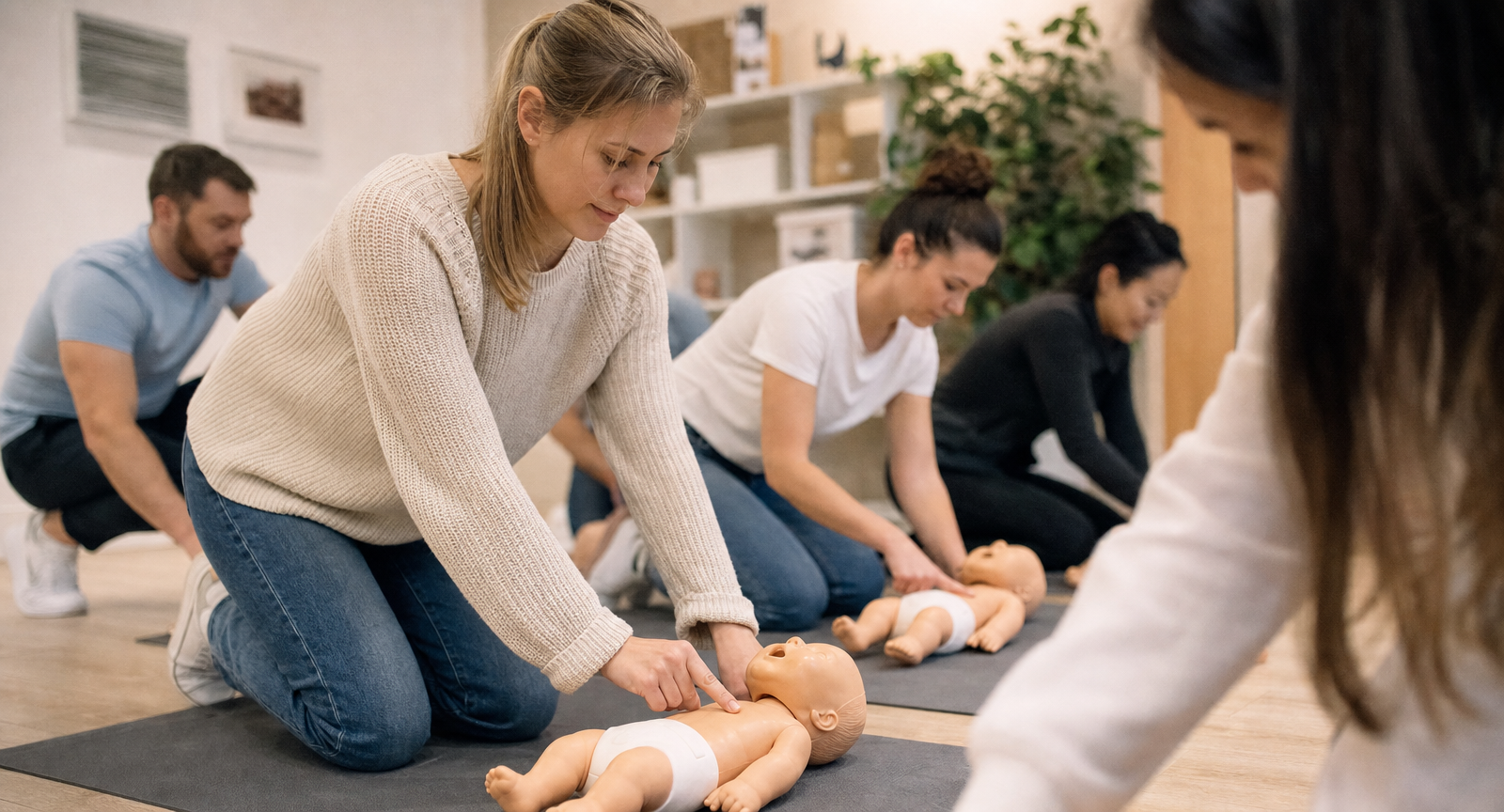
At FirstAidPro, we deliver HLTWHS005 in a blended format: self-paced online theory plus a 3-hour face-to-face practical session. Your educators complete realistic simulations and receive a same-day nationally recognised Statement of Attainment. Certificates Issued Same Day* (T&Cs Apply).
There is no mandatory national renewal period for HLTWHS005. However, many centres renew every two to three years as workplace policy, especially when staff turnover is high or risks change.
A note for centre directors: If you are booking manual handling training for your team, consider pairing it with HLTAID012 Provide First Aid in an Education and Care Setting. Together, HLTWHS005 and HLTAID012 cover your centre’s core WHS compliance and care-safety obligations in one coordinated booking. We offer onsite group training options to minimise disruption.
Frequently Asked Questions
Is Handling Children Considered Manual Handling Under WHS Law?
Yes. SafeWork NSW states that “handling children can be a hazardous manual task.” Under the Hazardous Manual Tasks Code of Practice, any task involving lifting, lowering, holding or carrying that includes repetitive force, awkward posture or sustained effort meets the definition, regardless of the weight involved.
Do Childcare Educators Have to Do Accredited Manual Handling Training?
There is no single national mandate requiring all childcare educators to hold HLTWHS005. However, the PCBU (your employer) must ensure workers are competent to perform manual tasks safely. Accredited training in HLTWHS005 Conduct Manual Tasks Safely, listed on training.gov.au, is the recognised pathway to demonstrate that competence.
How Often Should Manual Handling Training Be Refreshed?
There is no mandatory national renewal period for HLTWHS005. In practice, many early learning centres renew training every two to three years as part of their WHS policy, or when staff change, new equipment is introduced, or incident trends suggest a skills gap.
What Are the Most Common Manual-Handling Injuries in Childcare?
In NSW, soft-tissue injuries account for 29% of workers’ compensation claims in the child care sector. Muscular stress from lifting or carrying is the second-highest injury mechanism at 11%, according to SafeWork NSW data (2015–2024).
Can Educators Lift Children Safely?
Yes, with proper technique and controls. The Hazardous Manual Tasks Code of Practice advises that no worker should fully lift a person, other than a small infant, unaided. Even infant lifting requires risk management: height-adjustable equipment, correct posture, and trained technique all reduce the risk.
Who Is Responsible for Manual Handling Safety in a Centre?
The PCBU (typically the approved provider or employer) holds the primary duty to eliminate or minimise manual handling risks so far as is reasonably practicable. This includes providing safe equipment, systems of work, and training. Workers also have a duty to follow safe work procedures and report hazards.
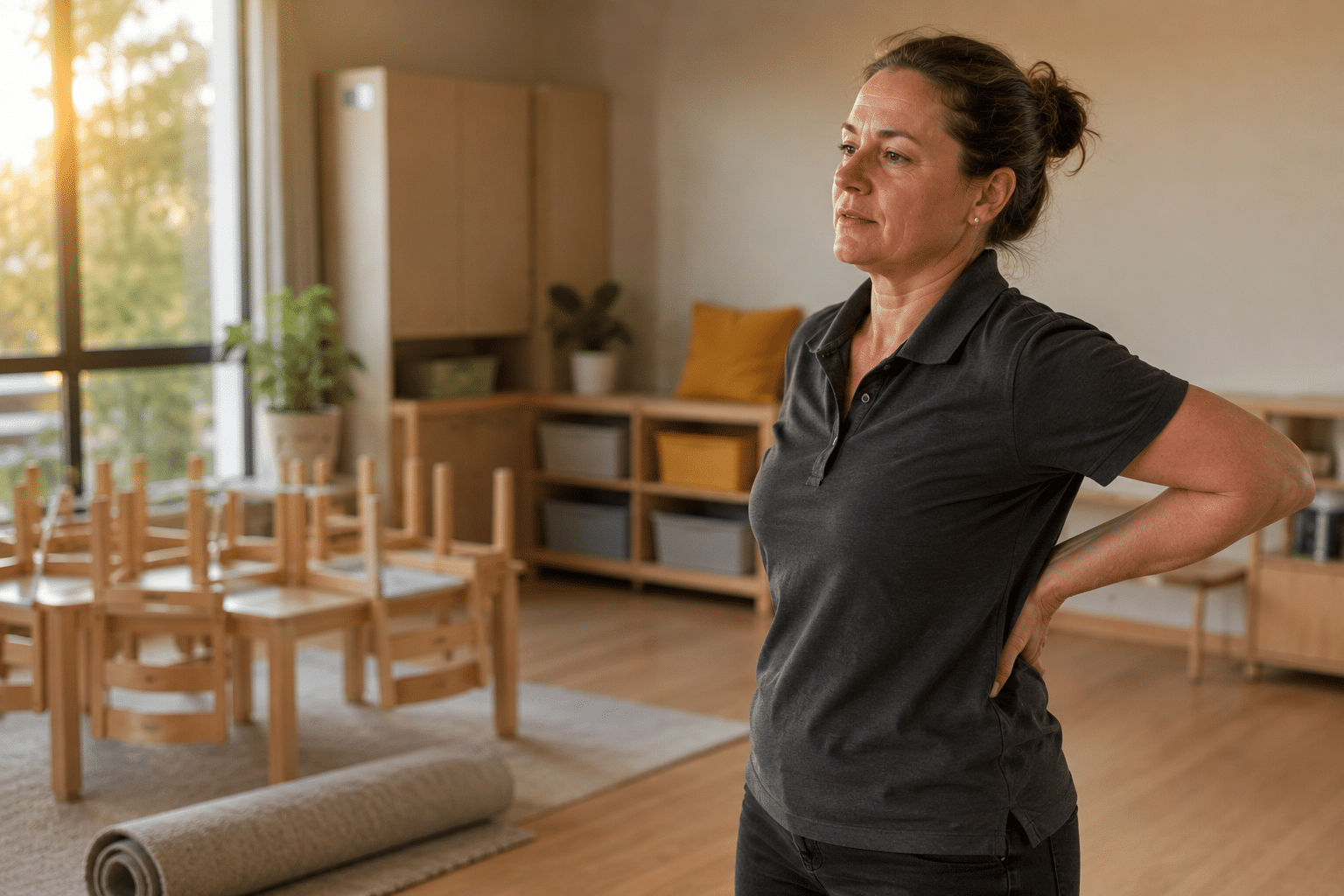
Manual handling is a real and growing risk in early childhood education and care. The data from SafeWork NSW and Safe Work Australia shows that educators face higher injury rates than many comparable sectors, and the everyday tasks of lifting children, using low furniture and reaching for supplies are the drivers.
The risk is manageable. With the right controls (height-adjustable equipment, adult-sized furniture, task rotation, and safe lifting technique), you can protect your educators and reduce injuries.
Accredited training in HLTWHS005 Conduct Manual Tasks Safely gives your team the skills they need. At FirstAidPro, we deliver it with a practical component and same-day certification, and we offer onsite group options to fit your centre’s schedule.
Ready to get your team trained?
Disclaimer
This article provides general information about manual handling risks and WHS requirements in early childhood education and care settings. It is not medical or legal advice. Refer to current SafeWork guidance, the Hazardous Manual Tasks Code of Practice, and your state or territory WHS regulator for specific compliance requirements.