




Sharon has 21+ years of experience as a qualified Emergency Care Nurse registered with the Australian Health Practitioner Regulation Agency (APHRA) and 12+ years as a First Aid Trainer.
She takes pride in FirstAidPro making first aid training available, comprehensive and affordable to everybody.
Key Takeaways
- A CPR certificate (HLTAID009) — or a first aid certificate (HLTAID011), which includes CPR — is a hiring requirement across childcare, education, security, healthcare, fitness, aquatics, aviation, electrical, construction and more.
- Some roles are legally required to hold it (childcare, security, cabin crew, police, live-electrical work). Others need it through industry registration (fitness, swim teachers, lifeguards) or an employer duty of care (aged care, mining, nursing).
- Safe Work Australia’s First Aid in the Workplace Code of Practice sets the standard cycle: refresh CPR every 12 months and renew first aid every three years.
- A CPR course starts from $45 and takes about an hour — one of the cheapest, fastest ways to widen your job options. Find one on our course calendar.
CPR Certificate vs First Aid Certificate — What Employers Actually Ask For
Before the list, it helps to know the difference between the two certificates you’ll see in job ads.
HLTAID009 Provide CPR is the standalone CPR course. It takes about an hour, and the certificate is valid for 12 months. HLTAID011 Provide First Aid is the broader qualification. It includes the CPR unit plus wound care, asthma, anaphylaxis and more, and it’s valid for three years.
So when an employer asks for a “current” certificate, they usually mean CPR completed within the past 12 months, or first aid within the past three years. That cycle comes from Safe Work Australia’s First Aid in the Workplace Code of Practice.
Some roles need a setting-specific version. Childcare uses HLTAID012 Provide First Aid in an Education and Care Setting, while some senior and remote roles call for HLTAID014 Provide Advanced First Aid. If you’re unsure which one a job needs, our trainers can point you to the right course.
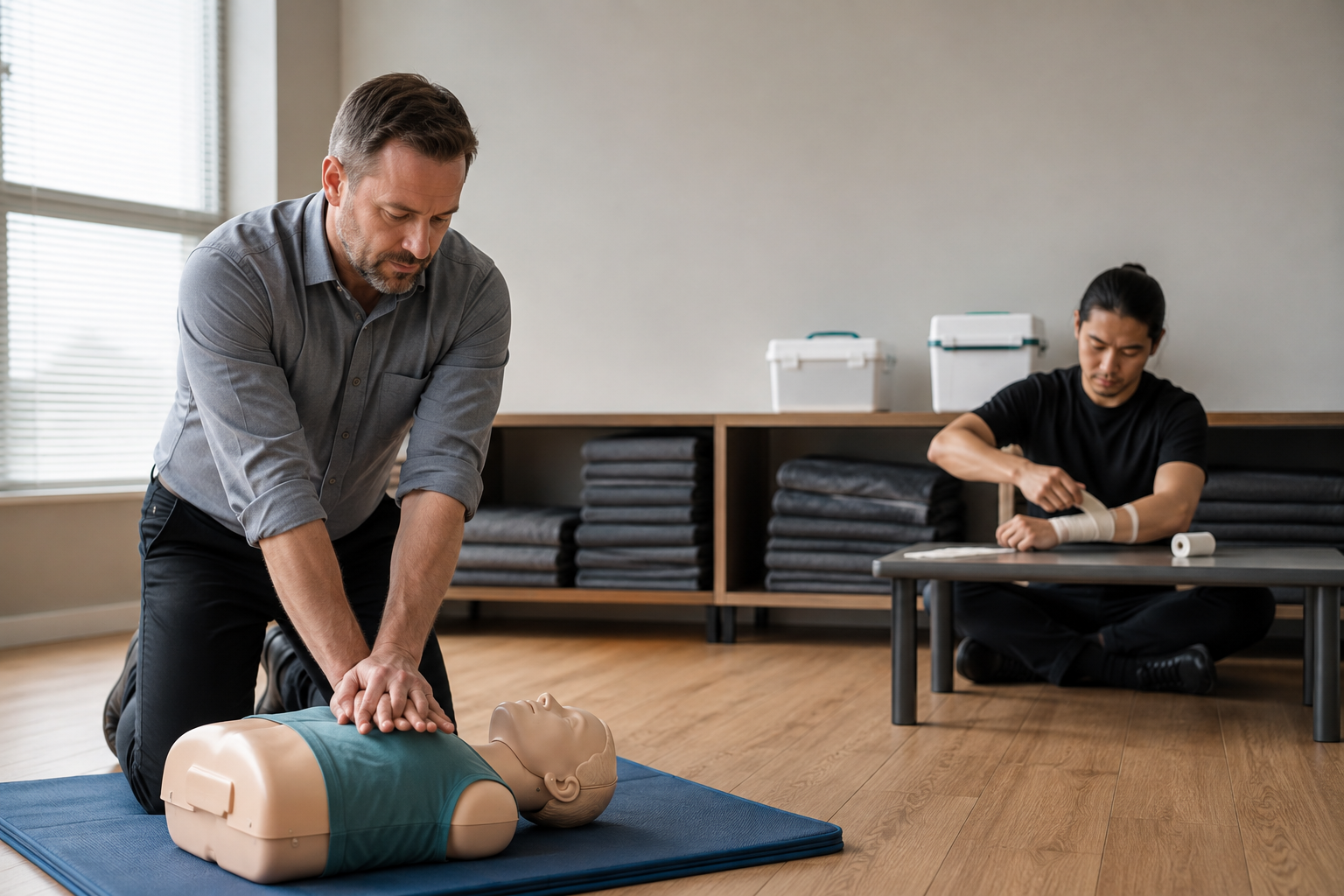
The 15 Jobs That Require a CPR Certificate in Australia
Here are 15 roles where a CPR or first aid certificate is part of the deal. Each entry tells you whether it’s required by law, by industry registration, or recommended — and exactly which certificate to get.
- Early Childhood Educators & Childcare Workers — Legally Required. Under Regulation 136 of the Education and Care Services National Regulations, at least one staff member holding a current approved first aid qualification and current CPR must be present whenever children are in care. CPR must be refreshed within the previous 12 months. The governing authority is ACECQA, and the qualification that meets all requirements in one course is HLTAID012. See our childcare first aid guide for the full picture.
- School Teachers & Education Support Staff — Legally Required (Varies by State). Schools need staff with current first aid and CPR, but the exact rule depends on your state department of education. In Victoria, first aid officers must hold HLTAID011 plus annual CPR (HLTAID009). In South Australia, HLTAID010 is the accepted minimum for teacher employment. Always check your own state’s department of education, as requirements vary. Our first aid for teachers article breaks it down further.
- Electricians & Electrical Workers (Live LV Work) — Legally Required. Where live low-voltage work is carried out, AS/NZS 4836:2023 requires a safety observer who is proficient in Low Voltage Rescue (LVR) and CPR. In Queensland, licensed electricians must show current CPR and LVR — refreshed within 12 months — to renew their licence under the Electrical Safety Regulation 2013 (Qld) s.42. The certificate is CPR LVR. Read why every electrician needs LVR here!
- Lifeguards — Industry Standard. Pool lifeguards learn to perform rescues and provide first aid, CPR and oxygen therapy as core parts of their accreditation. The governing body is the Royal Life Saving Society – Australia, which sets and delivers the Pool Lifeguard skill set. The Pool Lifeguard award requires periodic re-accreditation, so your CPR stays current within it — check with your state Royal Life Saving office for the current renewal cycle. Start with our HLTAID009 CPR course.
- Swim Teachers — Industry Standard. A current CPR statement of attainment is a mandatory prerequisite for AUSTSWIM Teacher of Swimming and Water Safety accreditation. Without it, the teaching licence can’t be issued. The certificate you need is HLTAID009, current at the time you apply. Book your CPR course to get accredited.
- Personal Trainers & Fitness Instructors — Industry Standard. AUSactive, the peak fitness body, requires both a current first aid certificate (HLTAID011, three years) and current CPR (HLTAID009, 12 months) for professional registration. Both must be current at all times, or your registration lapses — and your insurance may become invalid. AUSactive registration is the industry standard rather than a statutory licence in most states, but gyms and insurers expect it.
- Security Guards & Crowd Controllers — Legally Required. In New South Wales, a current first aid certificate is a condition of a Class 1 security licence under the Security Industry Act 1997 (NSW). Class 1A and 1C applicants must complete HLTAID011, renewed every three years while you hold the licence. The authority is NSW Police (SLED), and Queensland applies an equivalent requirement. Requirements vary by state, so check your local regulator.

- Nurses & Healthcare Workers — Industry Standard (Employer-Mandated). Nurses and midwives are required to maintain annual CPR/BLS competency as part of their professional obligations under the NMBA CPD standard and their employer’s clinical competency requirements. This is operationalised through facility policy rather than a named legislative CPR clause. The certificate is CPR/BLS, refreshed annually. Our HLTAID009 course keeps your competency current.
- Aged Care & Disability (NDIS) Support Workers — Required for Direct Supports. The NDIS Quality and Safeguards Commission Practice Standards name CPR skills for workers delivering high-intensity supports, and most registered providers require current first aid including CPR for all direct support workers. Renewal follows the Safe Work Australia cycle: three years for first aid, 12 months for CPR. The certificate is HLTAID011. See our NDIS and support worker training options.
- Construction Workers — Site Coverage Legally Required. Construction is a high-risk workplace, so employers must ensure at least one trained first aider for every 25 workers under the Safe Work Australia Code of Practice. Note the White Card (CPCWHS1001) is general construction WHS induction only — it does not include CPR. Most principal contractors require HLTAID011 for site access. The authority is Safe Work Australia and WHS Regulation cl.42.
- Flight Attendants / Cabin Crew — Legally Required. CASA requires cabin crew to complete first-aid training, including CPR, under the Civil Aviation Safety Regulations Part 121 Manual of Standards (section 13.20). Annual emergency and safety procedures training is also required under the same Manual of Standards. The certificate is first aid including CPR. If you’re preparing for a cabin crew role, HLTAID011 is a solid foundation.
- Police Officers — Legally Required (Recruitment). Police recruits must hold a current first aid certificate with CPR before induction, and keep it current on the job. Victoria Police requires a Level 1 certificate (HLTAID010 minimum, or HLTAID011) with regular CPR renewal, and NSW requires HLTAID011. Requirements vary by state, so check your state police force’s recruitment page before you apply.
- Mining & Resources / FIFO Workers — Site Access & Senior-Role Requirement. In NSW, holders of a certificate of competence for senior mining roles must hold first aid under the Work Health and Safety (Mines and Petroleum Sites) Act 2013. Mining sites are classified as remote high-risk workplaces, triggering the strictest first-aider ratio (one per 10 workers) under the Safe Work Australia Code of Practice. Most employers require HLTAID011 for site access.
- Dental Practitioners — Recommended (Not Mandated). The Dental Board of Australia sets a 60-hour triennial CPD requirement but has not specified any mandatory CPD activities, so CPR is not mandated. That said, CPR counts as qualifying CPD, and because resuscitation skills fade without practice, it’s strongly advised. The certificate is CPR (HLTAID009) as CPD. Our one-hour CPR course fits neatly into a busy clinical schedule.
- Community Sports Coaches & Volunteers — Recommended / Body-Specific. There’s no single national law requiring community coaches or volunteers to hold CPR, so this one is recommended rather than mandated. The expectation comes from duty of care, sporting-body accreditation and venue rules, and most bodies encourage current first aid and CPR. Employed coaches are also covered by their employer’s WHS duties. The certificate is HLTAID011 or HLTAID009.

How Often Do You Need to Renew Your CPR Certificate?
The short answer: refresh CPR every 12 months and renew your first aid certificate every three years. This cycle comes from Safe Work Australia’s First Aid in the Workplace Code of Practice, and ACECQA mirrors it for the childcare sector.
Why annually? CPR is a hands-on skill, and technique fades faster than most people expect. The Australian Resuscitation Council goes further still, noting that 12–24 month retraining cycles are likely insufficient and encouraging more frequent practice to keep skills sharp — so treat the 12-month refresher as the minimum floor, not the ceiling.
If your certificate is close to expiring, don’t wait for a job knock-back to renew it. Our short CPR refresher keeps you compliant and confident. See our guidance on CPR training frequency for more detail.

How To Get Your CPR Certificate Fast and Affordably!
Getting certified is easier than most jobseekers assume. Our HLTAID009 Provide CPR course starts from $45, duration starts from one hour, and is valid for 12 months. A full first aid certificate (HLTAID011) starts from $97 and lasts from 2 hours.
We offer four delivery modes to suit your schedule: Traditional Fully Face-to-Face (No-Online), Blended, Express and 100% Online via Zoom. With more than 170 locations across the country, there’s likely a session near you — and we run courses seven days a week. We also issue Certificates Issued Same Day* (T&Cs Apply), so you can add your ticket to job applications quickly.
Ready to widen your options? Book a course or find a course near you on our calendar.
Recent Posts
What First Aid Do I Need for Childcare?
First Aid for Teachers: What the Rules Say
Why Every Electrician Needs LVR
Determining the Frequency of CPR Training in Australia
Frequently Asked Questions
What jobs require a CPR certificate in Australia?
CPR or first aid certificates are required across childcare, education, security, healthcare, fitness, aquatics, electrical, cabin crew, police, and aged care and disability support, among others. Some roles require it by law, such as childcare under ACECQA’s National Regulations. Others require it through industry registration bodies like AUSactive and AUSTSWIM, or through an employer’s duty of care.
Is a CPR certificate the same as a first aid certificate?
No. HLTAID009 Provide CPR is a standalone CPR qualification valid for 12 months. HLTAID011 Provide First Aid is broader — it includes the CPR unit plus other first aid skills — and is valid for three years. Safe Work Australia’s Code of Practice defines what “current” means for each.
How long is a CPR certificate valid for in Australia?
A CPR certificate is valid for 12 months. Safe Work Australia’s First Aid in the Workplace Code of Practice recommends an annual CPR refresher, while first aid qualifications are renewed every three years. Many employers and industry bodies apply this cycle as a condition of work.
Do I need a CPR certificate for childcare work?
Yes. Under Regulation 136 of the Education and Care Services National Regulations, at least one staff member with current approved first aid and CPR must be present whenever children are in care. ACECQA confirms CPR must be within the past 12 months. HLTAID012 covers all the childcare requirements in one course.
Does the White Card include CPR?
No. The White Card (CPCWHS1001) is general construction WHS induction that covers hazard awareness and safe work practices — it does not include CPR. CPR comes from a separate first aid or CPR course, and most construction sites require HLTAID011 for site access under Safe Work Australia’s Code of Practice.
Do personal trainers need a CPR certificate?
Yes. AUSactive, the peak fitness industry body, requires both a current first aid certificate and current CPR for professional registration, and both must be current at all times. If either lapses, your registration can lapse and your insurance may become invalid.