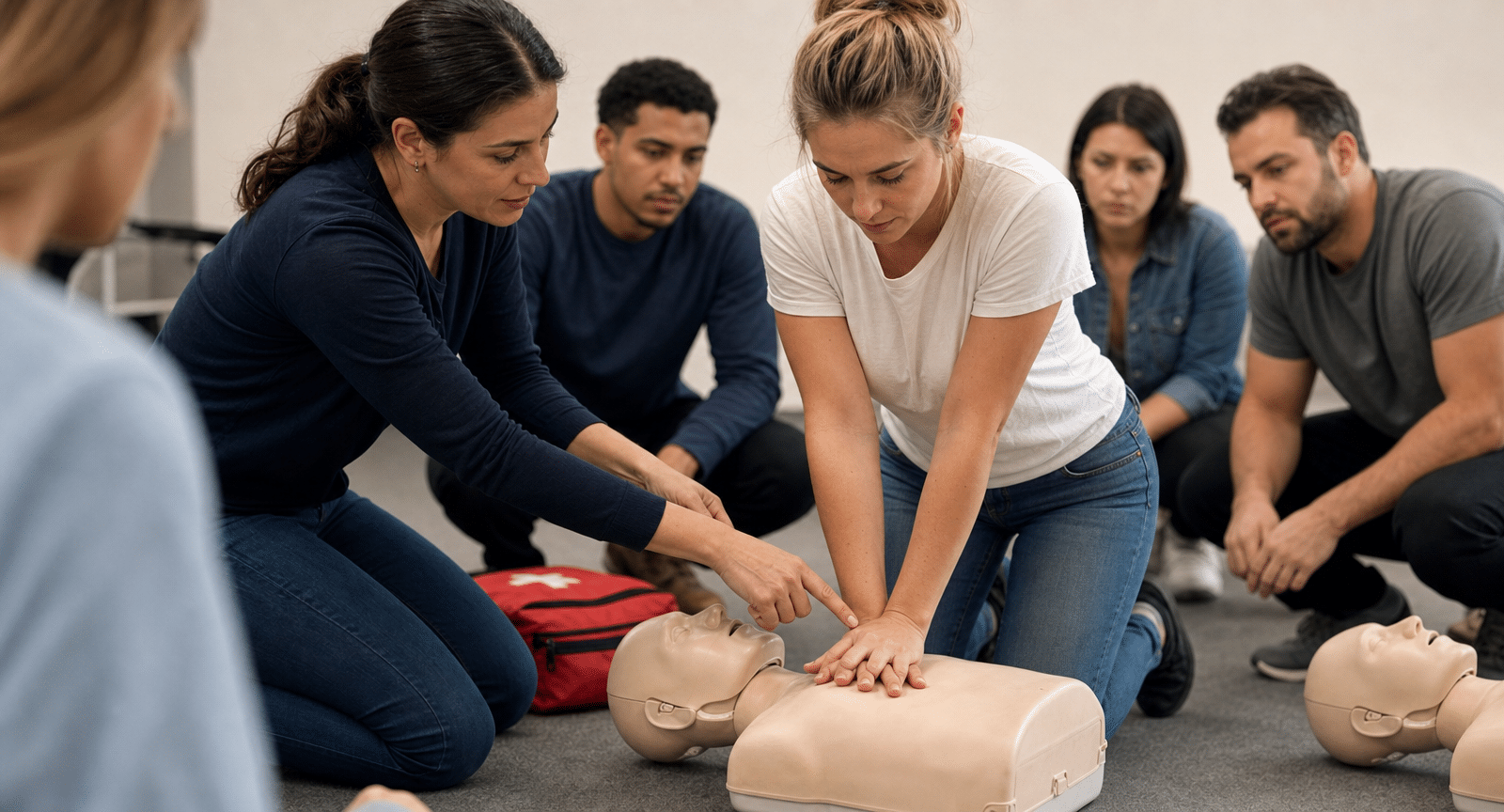





Sharon has 21+ years of experience as a qualified Emergency Care Nurse registered with the Australian Health Practitioner Regulation Agency (APHRA) and 12+ years as a First Aid Trainer.
She takes pride in FirstAidPro making first aid training available, comprehensive and affordable to everybody.
High Intensity Daily Personal Activities (HIDPA) are specialised support services required by NDIS participants with complex health or disability-related needs. These activities form a critical component of Module 1 of the NDIS Practice Standards, establishing the framework for how providers must deliver complex, clinically risky supports to ensure participant safety and wellbeing while maintaining their dignity and choice.
First Aid Pro offers a wide range of in-person and online NDIS High Intensity Support Skills training courses for support workers, carers, nurses and NDIS providers throughout Australia. Enrol today to ensure your organisation meets NDIS compliance requirements while delivering the highest standard of care!
Understanding High Intensity Daily Personal Activities (HIDPA) in the NDIS Framework

What Are High Intensity Daily Personal Activities Under NDIS Module 1?
High Intensity Daily Personal Activities is the term used by the NDIS to describe the more complex supports that some participants need to manage their daily lives. These activities require support workers with specialised training due to their higher clinical risk and complexity.
The NDIS Practice Standards Module 1 specifically addresses HIDPAs, outlining the requirements for registered NDIS providers who deliver these supports. This supplementary module ensures participants who rely on high intensity daily personal activities receive safe, quality care from appropriately trained staff.
Common HIDPAs include:
- Complex bowel care
- Enteral feeding and management
- Tracheostomy care
- Urinary catheter support
- Ventilator support
- Severe dysphagia management
- Subcutaneous injections
- Complex wound care
- Epilepsy and seizure management

Why HIDPA Supports Require Specialised Training and Assessment
The delivery of HIDPA supports involves significant risk to participants if not performed correctly. Support workers must demonstrate specific skills and knowledge before providing high intensity care to participants in alignment with their support plan.
NDIS providers should ensure their workers complete comprehensive training and assessment programs delivered by qualified practitioners. This training:
- Reduces risks to participant safety
- Ensures compliance with NDIS registration requirements
- Provides workers with confidence in delivering complex care
- Respects participant dignity and preferences
The Critical Link Between HIDPAs and Participant Safety
Participant safety is paramount when delivering HIDPA supports. Without properly trained staff, NDIS participants face increased risks of complications, including infection, injury, or medical emergencies. Proper training also ensures support workers can recognise and respond to warning signs that may indicate a need for medical intervention.
This level of support directly impacts participants’ quality of life, enabling them to live more independently while receiving the complex care they require safely and with dignity.
High Intensity Support Skills Descriptors (HISSD): Your Guide to NDIS Compliance

How HISSD Frameworks Support Quality Care Delivery
The High Intensity Support Skills Descriptors (HISSD) provide a detailed framework outlining the specific competencies support workers need to safely deliver HIDPA supports. These descriptors:
- Define the necessary skills and knowledge workers have when supporting participants
- Establish clear standards for training and assessment
- Create consistency in care delivery across different providers
- Focus on person-centred approaches to complex care
The HISSD framework covers each HIDPA category with specific guidance on procedures, risk management, and best practices for frontline workers..
Meeting NDIS Quality and Safeguards Commission Requirements
To maintain NDIS registration and meet compliance standards, providers must demonstrate that their workers have completed appropriate training for the HIDPAs they deliver. The NDIS Quality and Safeguards Commission regularly audits providers to ensure:
- Staff have current qualifications and training
- Documentation of competency assessments is maintained
- Supports are delivered according to participant plans
- Ongoing professional development is provided
Failure to meet these requirements can jeopardise provider registration and, more importantly, put participants at risk.

Documentation and Audit Preparation for NDIS Providers
Robust documentation is essential for NDIS providers delivering HIDPA supports. During the registration process and subsequent audits, providers must be able to produce evidence of:
| Documentation Required | Purpose | Update Frequency |
|---|---|---|
| Training certificates | Verify completion of recognised training | Upon completion |
| Competency assessments | Demonstrate practical skills verification | Initially and annually |
| Supervision records | Show appropriate oversight by qualified practitioners | Ongoing |
| Incident reports | Track and address any safety concerns | As needed |
| Professional development plans | Show commitment to ongoing skill enhancement | Annually |
Maintaining these records not only satisfies auditor requirements but also provides protection for workers, providers and participants.
Essential HIDPA Training for Supporting Participants with Complex Needs

Complex Bowel Care and Stoma Management Training
Complex bowel care requires specialised knowledge to manage the unique needs of participants with bowel dysfunction, including those with stomas. Proper training covers:
- Stoma care and appliance management
- Bowel management plans and protocols
- Monitoring for complications
- Dignity and privacy considerations
- Infection control procedures
Support workers with this training can significantly improve participants’ comfort, dignity and health outcomes while reducing the risk of complications.
Enteral Feeding Support and Tube Management

Enteral feeding provides nutrition when participants cannot safely consume food orally. Training in this HIDPA includes:
- PEG, PEJ and nasogastric tube care
- Formula preparation and administration
- Equipment cleaning and maintenance
- Complication recognition and management
- Positioning for feeding safety
With proper training, support workers can ensure participants receive adequate nutrition while minimising risks of aspiration, infection, or tube displacement.
Tracheostomy Care and Ventilator Support Training

Tracheostomy and ventilator supports are among the highest-risk HIDPAs, requiring meticulous training and oversight by a registered nurse or similarly qualified practitioner. Training covers:
- Tracheostomy tube care and suctioning
- Ventilator setup and monitoring
- Emergency response protocols
- Infection prevention
- Communication strategies with non-verbal participants
This specialised training enables support workers to provide life-sustaining care safely while supporting participants’ independence and communication needs.
First Aid Pro delivers comprehensive ventilator and tracheostomy support workplace training in all HIDPA procedures, helping your organisation support participants with complex needs. Book your team training session and ensure your support workers have the skills they need to provide safe, person-centred care.
Specialised HIDPA Procedures for Support Workers and Nurses

Severe Dysphagia Management and Safe Swallowing Support
Severe dysphagia management is critical for participants with swallowing difficulties, who face risks of choking, aspiration pneumonia, and malnutrition. Training includes:
- Food texture modification techniques
- Safe feeding positioning and strategies
- Recognising signs of aspiration
- Emergency choking response
- Working with speech pathology recommendations
Properly trained staff can make mealtimes safer and more enjoyable for participants with dysphagia while reducing serious health risks.

Epilepsy and Seizure Training for Frontline Workers
Support workers assisting participants with epilepsy need specialised training to respond appropriately during seizure events. This training covers:
- Seizure recognition and types
- Proper emergency response procedures
- Administering emergency medications
- Seizure monitoring and documentation
- Risk management in daily activities
This training empowers support workers to provide safe care during seizures while promoting participant independence in daily activities.

Complex Wound Care and Infection Prevention Protocols
Complex wound care requires careful attention to infection prevention and healing promotion. Comprehensive training includes:
- Wound assessment and documentation
- Dressing selection and application techniques
- Infection signs and prevention
- Pain management during procedures
- When to escalate concerns to health professionals
With proper training, support workers can help participants manage wounds effectively while preventing complications.
Advanced HIDPA Support Skills for Registered NDIS Providers

Urinary Catheter Support and Maintenance Procedures
Urinary catheter support is essential for many NDIS participants. Training in this area covers:
- Catheter care and maintenance
- Emptying and changing collection bags
- Identifying complications like infections
- Promoting urinary health
- Maintaining dignity and comfort
This training enables support workers to provide this intimate care with respect while minimising infection risks.

Subcutaneous Injections Training for Support Workers
Many participants require regular subcutaneous injections, such as insulin for diabetes management. Training includes:
- Preparation and administration techniques
- Medication management and documentation
- Site rotation and care
- Sharps handling and disposal
- Monitoring for adverse reactions
This specialised training allows support workers to safely administer necessary medications while supporting participant independence.
Personalised Care Planning for Unique Participant Needs
Every NDIS participant has unique needs requiring personalised approaches. Advanced HIDPA training teaches support workers to:
- Tailor standard procedures to individual preferences
- Incorporate participant goals into care delivery
- Adapt techniques based on participant feedback
- Document personalised approaches for consistency
- Balance safety requirements with participant choice
This person-centred approach ensures HIDPA supports enhance rather than diminish participants’ autonomy and dignity.
First Aid Pro: An Australian Leader in NDIS HIDPA Training

Nationally Recognised Training Programs for NDIS Compliance
First Aid Pro delivers nationally recognised HISS training that meets all NDIS compliance requirements. Our comprehensive courses include:
| Course | Key Skills Covered | Compliance Alignment |
|---|---|---|
| Complex Bowel Care | Stoma care, bowel management | NDIS Module 1, HISSD |
| Enteral Feeding Support | Tube feeding, equipment management | NDIS Module 1, HISSD |
| Tracheostomy Care | Suctioning, tube maintenance | NDIS Module 1, HISSD |
| Ventilator Support | Setup, monitoring, troubleshooting | NDIS Module 1, HISSD |
| Dysphagia Support | Safe feeding, choking prevention | NDIS Module 1, HISSD |
| Epilepsy & Seizure Training | Seizure response, medication administration | NDIS Module 1, HISSD |
| Urinary Catheter Support | Catheter care, infection prevention | NDIS Module 1, HISSD |
| Complex Wound Care | Dressing techniques, infection control | NDIS Module 1, HISSD |
| Subcutaneous Injections | Injection technique, medication management | NDIS Module 1, HISSD |
Our training includes everything you need to provide high intensity care to participants while maintaining NDIS registration requirements.
Flexible Delivery Options for Individuals and Organisations
First Aid Pro offers flexible training options to meet the diverse needs of NDIS providers:
- Onsite training at your workplace
- Small private group sessions at our training venues around Australia
- Customised programs for organisational needs
- Individual public courses
- Online training options
- Refresher training for existing staff
This flexibility ensures all support workers can access the training they need, regardless of location or organisational size.

How Our Training Helps Manage Daily Routines Safely
First Aid Pro’s NDIS courses emphasise practical, real-world application of skills within participants’ daily routines. Our training:
- Uses scenario-based learning reflecting real support situations
- Teaches risk assessment in different environments
- Includes strategies for incorporating procedures into daily activities
- Focuses on maintaining participant dignity and preferences
- Prepares workers for common challenges and solutions
Contact First Aid Pro today to discuss how our nationally recognised training can benefit your organisation and the participants you support!
Implementing HIDPA Training Across Your NDIS Support Team

Creating a Comprehensive Professional Development Plan
Effective HIDPA implementation requires a strategic approach to professional development across your support team. Consider:
- Mapping staff skills against participant needs
- Scheduling regular refresher training
- Creating mentoring programs for new staff
- Developing clear competency assessment processes
- Building feedback mechanisms for continuous improvement
This structured approach ensures consistent quality care while supporting staff professional growth.

Ensuring Appropriately Qualified Health Practitioner Oversight
HIDPA supports require appropriate oversight from qualified health practitioners. This typically involves:
- Regular supervision by registered nurses
- Protocol development by relevant specialists
- Competency assessment by qualified assessors
- Clear escalation pathways for concerns
- Collaborative care planning with health professionals
This oversight ensures support workers have the guidance needed to deliver complex care safely.
Supporting Workers and Participants Through the Training Process
Implementing NDIS High Intensity Support Skills training impacts both workers and participants and requires careful management:
- Communicate clearly with participants about training requirements
- Involve participants in training where appropriate and desired
- Address worker concerns or anxiety about new responsibilities
- Create supportive learning environments that encourage questions
- Celebrate skill development and quality care achievements
This supportive approach creates positive outcomes for both workers and participants during the training process.

Benefits of Workplace First Aid Training for NDIS Providers
Beyond specific NDIS training, comprehensive workplace first aid training offers significant benefits for NDIS providers:
- Emergency preparedness for all staff, not just direct support workers
- Confidence in responding to common medical emergencies
- Reduced workplace incidents through improved risk awareness
- Lower insurance premiums through demonstrated safety commitment
- Enhanced participant confidence in the organisation’s capabilities
First Aid Pro’s workplace first aid training complements HIDPA-specific courses, creating a holistic safety culture within NDIS provider organisations.
References
NDIS Quality and Safeguards Commission. (2023). High Intensity Support Skills Descriptors. https://www.ndiscommission.gov.au/
Australian Health Practitioner Regulation Agency. (2023). Guidelines for registered health practitioners providing care to NDIS participants. https://www.ahpra.gov.au/
National Disability Insurance Agency. (2023). Operational Guidelines for Complex Support Needs. https://www.ndis.gov.au/
Allied Health Professions Australia. (2023). Best Practice Guidelines for Allied Health Professionals Working with NDIS Participants. https://ahpa.com.au/
Frequently Asked Questions
High Intensity Daily Personal Activities (HIDPA) are specialised support services for NDIS participants with complex health or disability-related needs. These activities involve higher clinical risk and require workers with specific skills and knowledge. Examples include complex bowel care, enteral feeding, tracheostomy management, and ventilator support. HIDPAs are formally defined under Module 1 of the NDIS Practice Standards.
Most HIDPA competencies require annual refresher training to ensure skills remain current and align with best practices. However, this can vary based on the specific activity and organisational policies. Some high-risk procedures may require more frequent reassessment, particularly if they are performed infrequently. NDIS providers should establish clear refresher schedules based on risk assessments and manufacturer recommendations for specific equipment.
Yes, First Aid Pro’s HIDPA training courses are nationally recognised and accredited across Australia. Our courses are designed to meet the NDIS Practice Standards and align with the High Intensity Support Skills Descriptors (HISSD) issued by the NDIS Quality and Safeguards Commission. This ensures that certification from First Aid Pro is recognised by all NDIS auditors and regulatory bodies throughout Australia.
Proper HIDPA training significantly improves participant outcomes by reducing risks of complications, increasing comfort during procedures, respecting dignity and preferences, enabling greater independence, and ensuring consistent quality of care across different support workers. Trained staff can also better recognise early warning signs of potential health issues, allowing for timely intervention and preventing more serious complications.
For compliance audits, NDIS providers delivering HIDPA supports need to maintain: training certificates for all staff performing HIDPAs; competency assessment records signed by qualified assessors; evidence of regular supervision by appropriate health practitioners; documented support plans detailing personalised HIDPA procedures; incident reports related to HIDPA delivery; and evidence of ongoing professional development. These records should be systematically organised and readily accessible during audits.