




Sharon has 21+ years of experience as a qualified Emergency Care Nurse registered with the Australian Health Practitioner Regulation Agency (APHRA) and 12+ years as a First Aid Trainer.
She takes pride in FirstAidPro making first aid training available, comprehensive and affordable to everybody.
World Heart Day 2026 falls on 29 September, bringing global attention to cardiovascular disease and the importance of recognising when a heart emergency is happening. For Australians, it is also a timely reminder that a heart attack and cardiac arrest are not the same thing — and that knowing CPR, calling Triple Zero (000) quickly and using an automated external defibrillator (AED) can make a critical difference when someone’s heart suddenly stops.
The World Heart Federation’s theme for 2026 continues “Don’t Miss a Beat”, with a particular emphasis on recognising signs and symptoms that can otherwise go unnoticed. Cardiovascular disease remains the world’s leading cause of death, and here in Australia, heart disease continues to have an enormous impact on individuals, families and communities. (World Heart Federation)
Heart health is often discussed in terms of prevention: exercise, diet, smoking, blood pressure and regular health checks. Those things matter enormously. But there is another side to heart health that deserves attention on World Heart Day.
What happens when the emergency has already begun?
That is where CPR knowledge moves from something useful to something that could help save a life.

Key Takeaways
- World Heart Day is held on 29 September and raises awareness of cardiovascular disease and heart health around the world.
- A heart attack and cardiac arrest are different emergencies. A heart attack involves interrupted blood flow to the heart muscle, while cardiac arrest occurs when the heart stops functioning effectively.
- An unresponsive person who is not breathing normally needs CPR. Occasional gasping should not be mistaken for normal breathing.
- Early CPR and defibrillation matter. More than 32,000 Australians experience cardiac arrest each year, and survival from out-of-hospital cardiac arrest remains around 10%.
- CPR is a practical skill worth learning. HLTAID009 Provide cardiopulmonary resuscitation teaches people to recognise an emergency, perform CPR and use an AED in accordance with Australian resuscitation guidelines.

World Heart Day 2026: Don't Miss a Beat
World Heart Day was established by the World Heart Federation and is observed every year on 29 September.
The 2026 campaign continues the message “Don’t Miss a Beat”, drawing attention to the fact that heart disease can sometimes hide in plain sight. The campaign encourages people to recognise signs of cardiovascular disease, protect their heart health and support broader action to reduce preventable cardiovascular disease.
The numbers explain why this conversation still matters.
According to the Australian Institute of Health and Welfare (AIHW), cardiovascular disease was the underlying cause of 42,300 deaths in Australia in 2024, accounting for 23% of all deaths. Coronary heart disease alone was the underlying cause of 16,300 deaths. (AIHW)
The picture is not entirely bleak. Australia has made substantial progress in reducing coronary heart disease over recent decades. Even so, acute coronary events remain common. The AIHW estimates there were around 57,100 acute coronary events among Australians aged 25 and over in 2023 — approximately 156 every day. (AIHW)
Those figures make recognising a heart emergency more than an abstract health lesson. It is knowledge that ordinary people may one day need.
Heart Attack and Cardiac Arrest Are Not the Same Thing
The terms heart attack and cardiac arrest are sometimes used interchangeably in everyday conversation. Medically, however, they describe different events.
A heart attack, or acute myocardial infarction, happens when the blood supply to part of the heart muscle becomes blocked. Without adequate blood and oxygen, heart muscle can become damaged.
A person experiencing a heart attack will usually remain conscious and may still be breathing normally, although their condition can deteriorate rapidly.
A cardiac arrest is different. It occurs when the heart suddenly stops pumping blood effectively around the body. Blood flow to the brain and other vital organs stops, and the person becomes unresponsive and does not breathe normally.
There is an important connection between the two emergencies: a heart attack can lead to cardiac arrest.
That is one reason recognising warning signs and getting medical assistance quickly is so important.

What Can a Heart Attack Look Like?
Not every heart attack looks like the dramatic movie version where someone suddenly clutches the centre of their chest and collapses. Symptoms can vary between people.
Chest discomfort may feel different
A person may experience pain, pressure, heaviness, tightness or discomfort in the chest. The discomfort may also be felt in the arm or arms, shoulder, neck, jaw or back.
Symptoms can sometimes be less obvious, which is why a heart attack should not be judged only by whether someone has severe chest pain.
Do not wait for a suspected heart attack to become a cardiac arrest. A suspected heart attack is a medical emergency and should be taken seriously. Seek urgent medical help.
What Does Cardiac Arrest Look Like?
Cardiac arrest is often much more abrupt. ANZCOR's current CPR guideline applies when a person is unresponsive and not breathing normally.
Occasional gasps are not normal breathing
A person in cardiac arrest may make occasional gasping movements. These should not be mistaken for normal breathing. If the person is unresponsive and not breathing normally, CPR should be started.
Imagine somebody collapses at work
This is the moment to act
Do not spend several minutes trying to work out exactly what caused the collapse. When someone is unresponsive and not breathing normally, the priority is the emergency response.
More Than 32,000 Australians Experience Cardiac Arrest Each Year
The scale of cardiac arrest in Australia is sobering.
The Heart Foundation reports that more than 32,000 people experience cardiac arrest in Australia each year, while only about 10% of people who experience an out-of-hospital cardiac arrest survive. (Heart Foundation)
This is where the people already standing nearby become enormously important.
An ambulance needs time to arrive. Cardiac arrest does not wait.
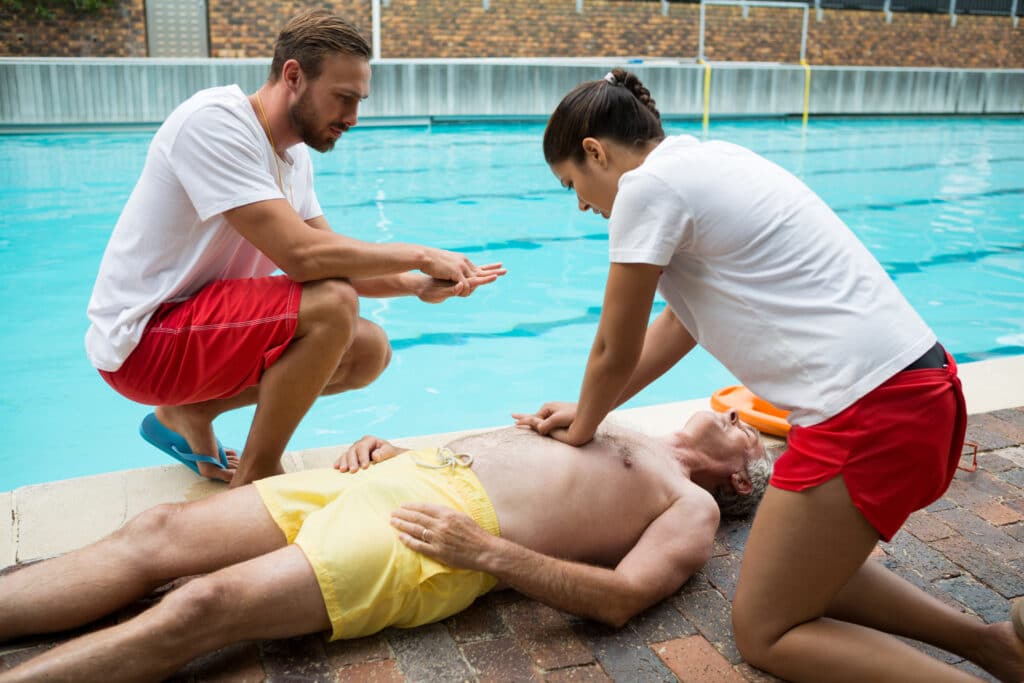
A bystander who recognises what is happening can call Triple Zero (000), begin CPR and arrange for an AED to be brought to the casualty while emergency medical help is on its way.
You do not need to be a doctor, nurse or paramedic to start that response.
You need to recognise the emergency and know what to do next.
Why CPR Matters When the Heart Stops
CPR does not simply “restart the heart”.
Its immediate purpose is to temporarily maintain circulation, helping preserve blood flow to the brain until specialised treatment becomes available.
That distinction is vital.
A person performing CPR is buying time.
ANZCOR recommends starting CPR when a person is unresponsive and not breathing normally. Current Australian guidance recommends a compression-to-ventilation ratio of 30:2 and a chest compression rate of approximately 100–120 compressions per minute. Interruptions to compressions should be kept to a minimum.
For adults, the lower half of the sternum should be compressed by approximately one-third of the depth of the chest — more than 5 cm — with each compression.
Those numbers are worth learning.
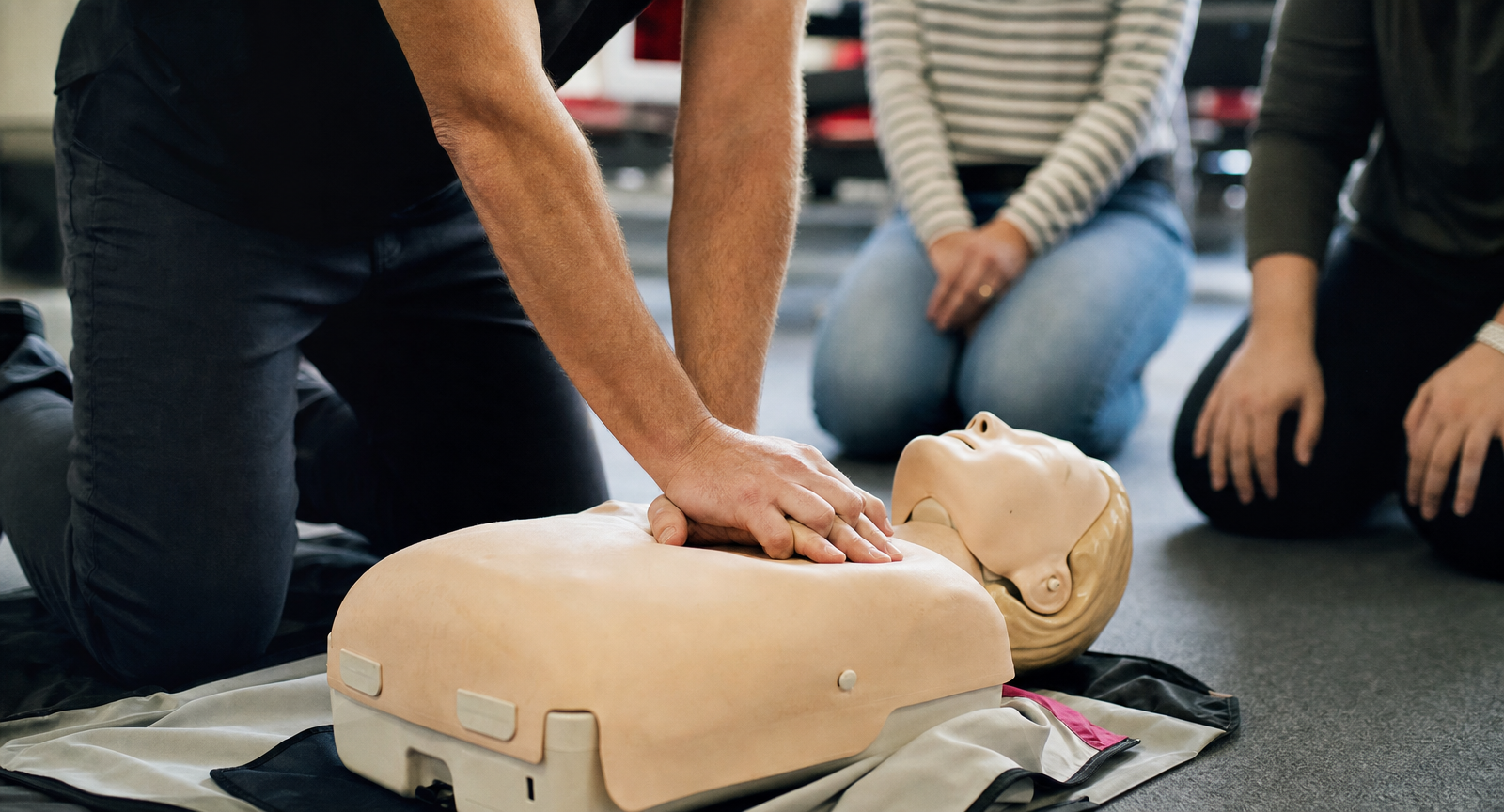
But there is a difference between reading 30:2 on a screen and actually kneeling beside a resuscitation manikin and maintaining effective compressions.
That is one of the reasons practical CPR training matters.
DRSABCD Gives You a Sequence to Follow
Emergencies can be confronting. A familiar action plan gives the responder somewhere to begin. Australian resuscitation training commonly uses DRSABCD:
Defibrillation
Attach an AED as soon as one becomes available and follow its prompts.
A sequence to fall back on when it matters
DRSABCD turns a frightening situation into a sequence of actions. You still need to think. You still need to assess what is happening. But you are not starting from nothing.
Don't Be Afraid of the AED
For someone who has never used one, an AED can look intimidating.
It is a piece of medical equipment sitting on the wall, often behind a sign featuring a heart and lightning bolt. In an emergency, people can understandably worry about using it incorrectly.
AEDs are designed to guide the rescuer.
Once switched on, the device provides instructions. It analyses the casualty’s heart rhythm and determines whether a shock is required. An AED will not simply deliver a shock because someone presses a button.
The Heart Foundation emphasises the importance of combining CPR with early access to an AED. Its current public information reports that when CPR is performed and an AED is used within the first three to five minutes, survival rates can rise substantially. (Heart Foundation)
The practical message is simple: if an AED is available during a cardiac arrest, get it quickly and use it.
CPR Skills Shouldn't Belong Only to Healthcare Workers
There is an understandable assumption that serious medical emergencies belong to medical professionals. Eventually, they do. But the first person beside someone who collapses may be an ordinary member of the community.
The first responder could be anyone
An emergency can happen in an office just as easily as anywhere else.
A colleague may collapse before professional help can arrive.
Staff may be the closest people available when an emergency begins.
Cardiac arrest can occur in physically demanding workplaces too.
Many cardiac arrests occur away from hospitals and healthcare settings.
Fitness and sporting environments are not immune from medical emergencies.
A customer or co-worker may suddenly need immediate help.
Sometimes the person who can help first is simply the person who is closest.
Cardiac arrest does not choose a setting
It can happen at home, at work, on a sporting field, in a shopping centre or somewhere else in the community. That is why CPR is not simply a healthcare skill. It is a community skill.
Why broader CPR knowledge matters
The more people who can recognise cardiac arrest and begin the appropriate response, the greater the chance that someone nearby will be willing and able to act while professional help is coming.
World Heart Day is a useful prompt to ask one very practical question:
If somebody collapsed in front of you today, would you know what to do?
What Does HLTAID009 CPR Training Cover?
For Australians wanting formal CPR training, HLTAID009 Provide cardiopulmonary resuscitation is the nationally recognised unit of competency specifically focused on CPR.
The unit describes the skills and knowledge required to perform CPR in line with Australian Resuscitation Council guidelines and applies across both community and workplace situations.
It covers much more than memorising a compression rate.
Learners are required to demonstrate skills including recognising and assessing an emergency, ensuring safety, identifying the need for CPR, seeking emergency assistance, performing CPR, operating an AED and communicating details of the incident.
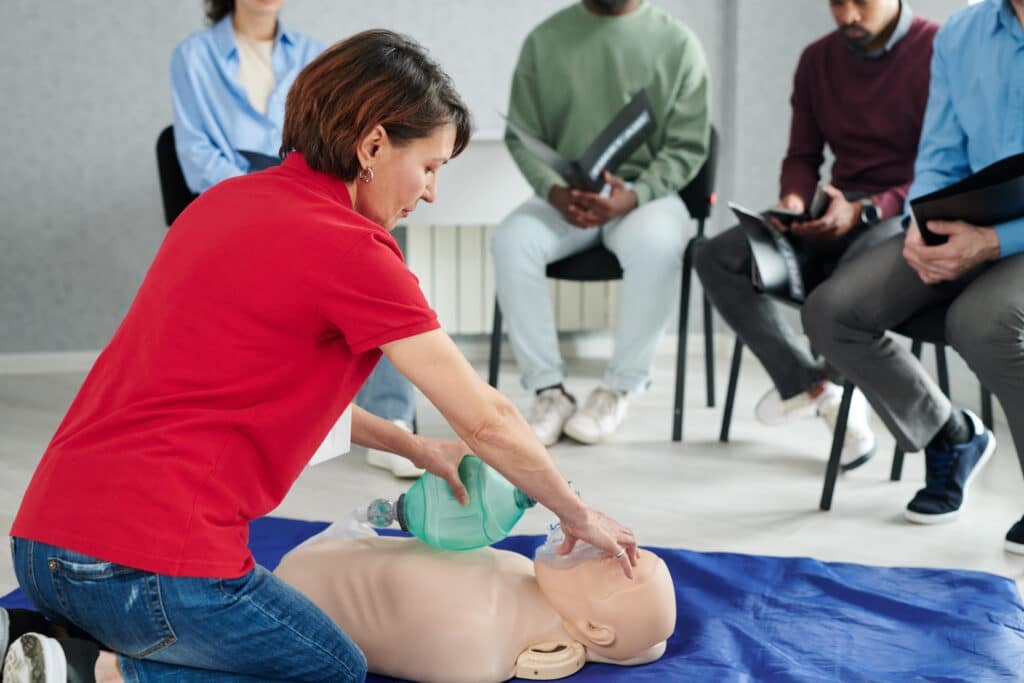
Importantly, CPR competency includes practical performance.
That matters because emergency skills need to work outside the classroom. When somebody is lying unresponsive in front of you, knowing the theory is only part of the job.
CPR Training and Australian Workplaces
CPR training also has an important place in workplace first aid arrangements.
Safe Work Australia advises that workplace first aiders should hold a nationally recognised statement of attainment from a registered training organisation and attend training regularly to keep their knowledge current. Workplace first aid requirements should be determined through risk assessment, considering factors such as hazards, workplace size, location and the people at the workplace. (Safe Work Australia)
Specific legal requirements can vary between Australian jurisdictions, so businesses should also check the requirements applying through their state or territory WHS regulator.
But compliance is only part of the reason for maintaining CPR capability.
A certificate sitting in a personnel file cannot perform chest compressions.
People can.
Regular training helps keep the sequence, physical technique and decision-making involved in CPR familiar enough that a trained person has something solid to draw upon when an emergency occurs.
Can You Complete HLTAID009 CPR Training Online?
For people who find attending a conventional classroom difficult, First Aid Pro offers HLTAID009 CPR training through a live Zoom virtual classroom.
This is not simply a collection of CPR videos or a theory quiz completed at home.
First Aid Pro’s Zoom CPR course is delivered live with a trainer, and training equipment is sent to the participant so that required practical activities can be performed and assessed remotely. The course includes CPR techniques, AED operation, emergency response, airway management and practical interaction with the trainer.
That distinction is important because nationally recognised CPR training requires practical demonstration of competency.
The online format changes where the learner performs the skills. It does not turn CPR into a theory-only qualification.
For people living remotely, workers with demanding schedules or anyone who values the convenience of training from home or work, this can provide another way to keep CPR skills current.
You can explore First Aid Pro’s HLTAID009 Zoom Online CPR Course and choose a session that suits your schedule.

Don't Wait Until Someone Collapses to Wish You Knew CPR
World Heart Day encourages us to think about prevention, awareness and the health of our own hearts.
It should also make us think about the hearts of the people around us.
Most of us hope we will never have to perform CPR outside a training course. Hopefully, we won’t.
But cardiac arrest happens to tens of thousands of Australians each year. When it happens, the person who can make the first difference may simply be whoever happens to be standing closest.
You cannot choose when a cardiac arrest will occur.
You can choose whether you have learned what to do.
This World Heart Day, consider making CPR knowledge part of the way you look after your family, colleagues and community. A recognised HLTAID009 Provide cardiopulmonary resuscitation course gives you an opportunity to practise the skills rather than merely read about them.
Explore First Aid Pro’s CPR training options, including live online Zoom CPR training, and turn World Heart Day awareness into something practical.
Related Reading
- World Heart Federation – World Heart Day 2026
- Training.gov.au – HLTAID009 Provide cardiopulmonary resuscitation
- Better Health Channel – Cardiopulmonary resuscitation (CPR)
- Healthdirect – How to perform CPR – on adults, children and babies
- ANZCOR Guidelines – Guideline 8 – Cardiopulmonary Resuscitation (CPR)
- First Aid Pro – Provide Basic Life Support: Essential Skills You Should Know
FAQs
When is World Heart Day 2026?
World Heart Day 2026 is held on Tuesday, 29 September 2026. Organised by the World Heart Federation, the annual campaign raises awareness of cardiovascular disease and encourages action to improve heart health around the world. The 2026 campaign continues the “Don’t Miss a Beat” theme. (World Heart Federation)
What is the difference between a heart attack and cardiac arrest?
A heart attack occurs when blood flow to part of the heart muscle is blocked or severely reduced. In cardiac arrest, the heart stops pumping blood effectively around the body. Someone having a heart attack may remain conscious and breathing, whereas a person in cardiac arrest is unresponsive and not breathing normally. A heart attack can sometimes lead to cardiac arrest.
When should I start CPR?
ANZCOR recommends starting CPR when a person is unresponsive and not breathing normally. Occasional gasping is not considered normal breathing. Call Triple Zero (000), begin CPR and arrange for an AED to be brought to the casualty as soon as possible.
What is the correct CPR compression rate in Australia?
ANZCOR recommends chest compressions at approximately 100–120 compressions per minute, using a compression-to-ventilation ratio of 30 compressions to two breaths. Interruptions to chest compressions should be minimised.
Can I complete an HLTAID009 CPR course online?
First Aid Pro offers HLTAID009 through a live Zoom online CPR course. Participants receive training equipment and complete practical activities while interacting with a trainer remotely. Successful completion can result in the nationally recognised HLTAID009 Provide cardiopulmonary resuscitation Statement of Attainment, subject to all course and assessment requirements being met. (FirstAidPro Australia)