


Sharon has 21+ years of experience as a qualified Emergency Care Nurse registered with the Australian Health Practitioner Regulation Agency (APHRA) and 12+ years as a First Aid Trainer.
She takes pride in FirstAidPro making first aid training available, comprehensive and affordable to everybody.
World First Aid Day 2026 falls on Saturday, 12 September, putting the spotlight on a simple idea with enormous practical value: ordinary people can learn first aid skills that may help save a life. This year’s international theme, “First Aid in Migration Contexts,” focuses on making lifesaving first aid knowledge more accessible and inclusive. Here in Australia, it is also a timely reminder to ask yourself a straightforward question: if someone collapsed, started choking or suffered a serious injury in front of you, would you know what to do?
Knowing first aid does not mean becoming a paramedic overnight. It means having enough knowledge and practical training to recognise an emergency, protect yourself and the casualty, call for professional help and provide appropriate care while you wait.
Those first few minutes can matter.
A nationally recognised HLTAID011 Provide First Aid course covers first aid responses for a range of emergencies in community and workplace settings, including CPR and the practical skills needed to respond appropriately when someone becomes ill or injured. The unit specifically requires participants to recognise and assess emergencies, seek assistance from emergency services and provide first aid in accordance with Australian guidelines.
If World First Aid Day has you thinking it is time to update your skills, you can book a First Aid Pro course and learn how to put these principles into practice.
Key Takeaways
- World First Aid Day 2026 is Saturday, 12 September, with the international theme “First Aid in Migration Contexts”.
- CPR is one of the most important emergency skills a member of the public can learn, particularly when combined with early access to an AED.
- Choking, severe bleeding and unconsciousness are emergencies where knowing the correct first aid response can make a critical difference.
- Calling Triple Zero (000) early is a first aid skill in itself — first aid does not replace professional medical assistance.
- HLTAID011 Provide First Aid provides nationally recognised practical training for responding to a wide range of first aid emergencies. (Training.gov.au)
What Is World First Aid Day All About?
World First Aid Day is an international awareness initiative associated with the International Federation of Red Cross and Red Crescent Societies (IFRC) and its Global First Aid Reference Centre.
Held on the second Saturday of September, the day promotes the importance of first aid knowledge and the ability of individuals and communities to respond to injuries and medical emergencies.
For 2026, World First Aid Day takes place on 12 September.
The official theme announced by the IFRC Global First Aid Reference Centre is “First Aid in Migration Contexts.” The campaign focuses on first aid as a tool for autonomy and dignity, breaking down barriers to accessing first aid and adapting first aid education to different contexts. (LinkedIn)
The theme has particular relevance for people on the move and the communities that receive and support them. It also speaks to a broader principle that applies everywhere: potentially lifesaving knowledge should not be confined to healthcare professionals.
A cardiac arrest can happen at home. Someone can choke over dinner. A colleague can suffer a serious injury at work. A family member can suddenly become unconscious.
Professional help may be on its way, but somebody still needs to act during the minutes before it arrives.
That is where first aid training earns its value.
First Aid Is About What Happens Before the Ambulance Arrives
People sometimes hesitate during emergencies because they are frightened of doing the wrong thing.
That reaction is understandable. Real emergencies do not look like training videos. There may be noise, panic, blood or confused bystanders, and you may have very little time to decide what to do.
Training gives you a framework.
Australia’s nationally recognised HLTAID011 Provide First Aid unit is built around responding to an emergency situation, applying appropriate first aid procedures, communicating incident details and reviewing the incident. It requires learners to recognise an emergency, ensure safety for themselves, bystanders and the casualty, assess the casualty and seek assistance from emergency services. (Training.gov.au)
It also requires practical demonstration rather than simply reading about first aid.
Here are five of the skills that illustrate why that matters.
1. CPR: Knowing What to Do When Someone Isn't Breathing Normally
Imagine somebody suddenly collapses in front of you.
They do not respond when you speak to them. They are not breathing normally.
This is the kind of emergency where knowing CPR can turn uncertainty into action.
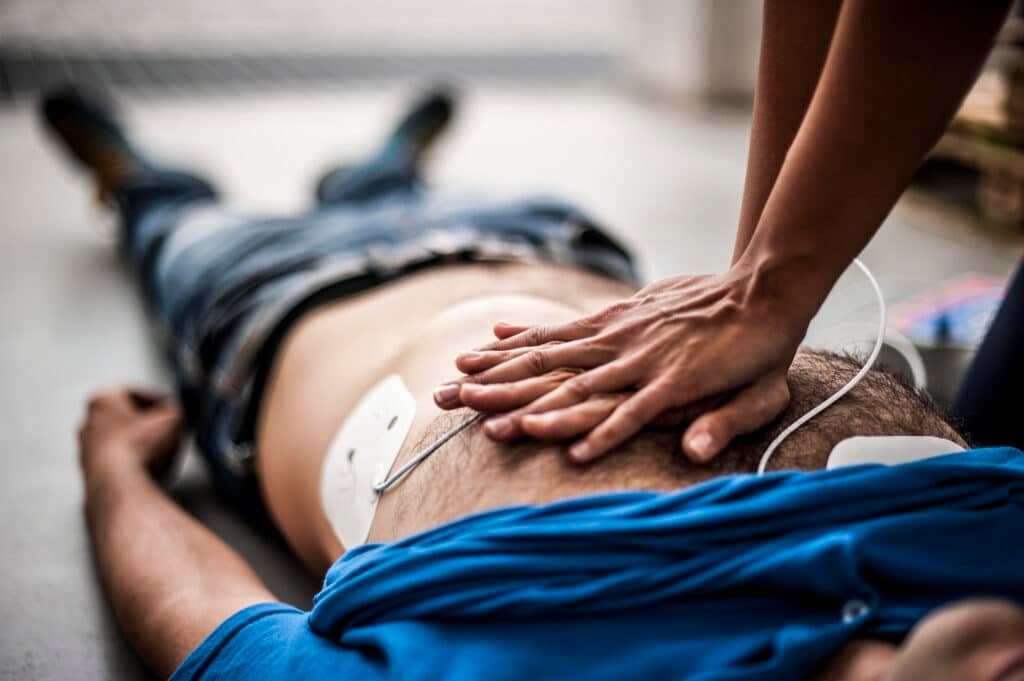
Australian resuscitation guidance follows the familiar DRSABCD approach: check for danger, check for a response, send for help, open and clear the airway as required, assess breathing, begin CPR when the person is unresponsive and not breathing normally, and use a defibrillator as soon as one is available.
CPR involves repeated chest compressions and rescue breaths. Australian guidance uses a ratio of 30 compressions to two breaths, with compressions delivered at approximately 100–120 per minute.
The purpose is not to magically “restart” a heart with your hands. CPR helps maintain circulation of oxygenated blood while emergency medical assistance and defibrillation are being organised.
An automated external defibrillator (AED) should be used as soon as possible when available. Modern AEDs are designed to analyse the person’s heart rhythm and provide clear prompts to the responder.
You do not need to diagnose the rhythm yourself.
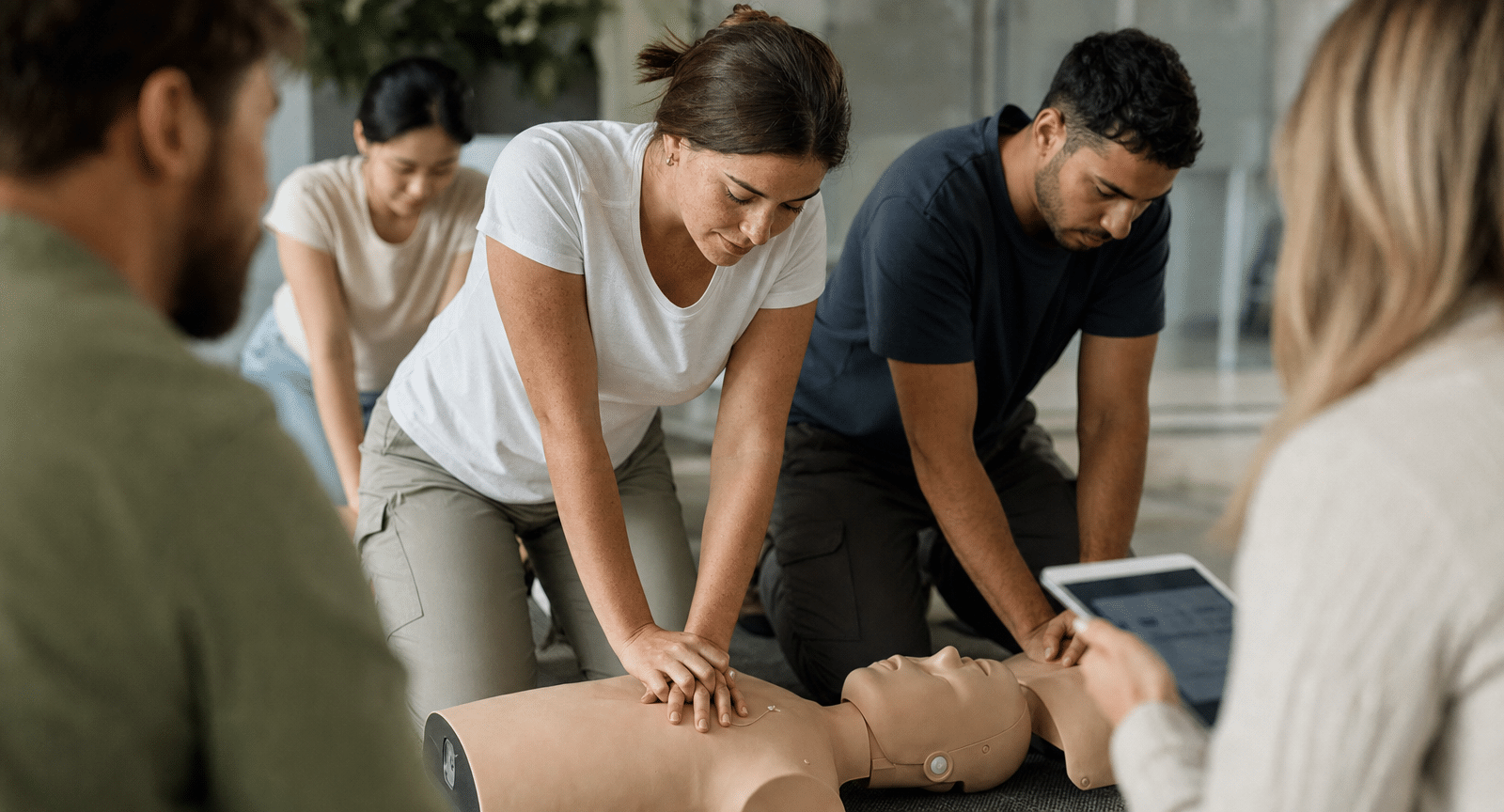
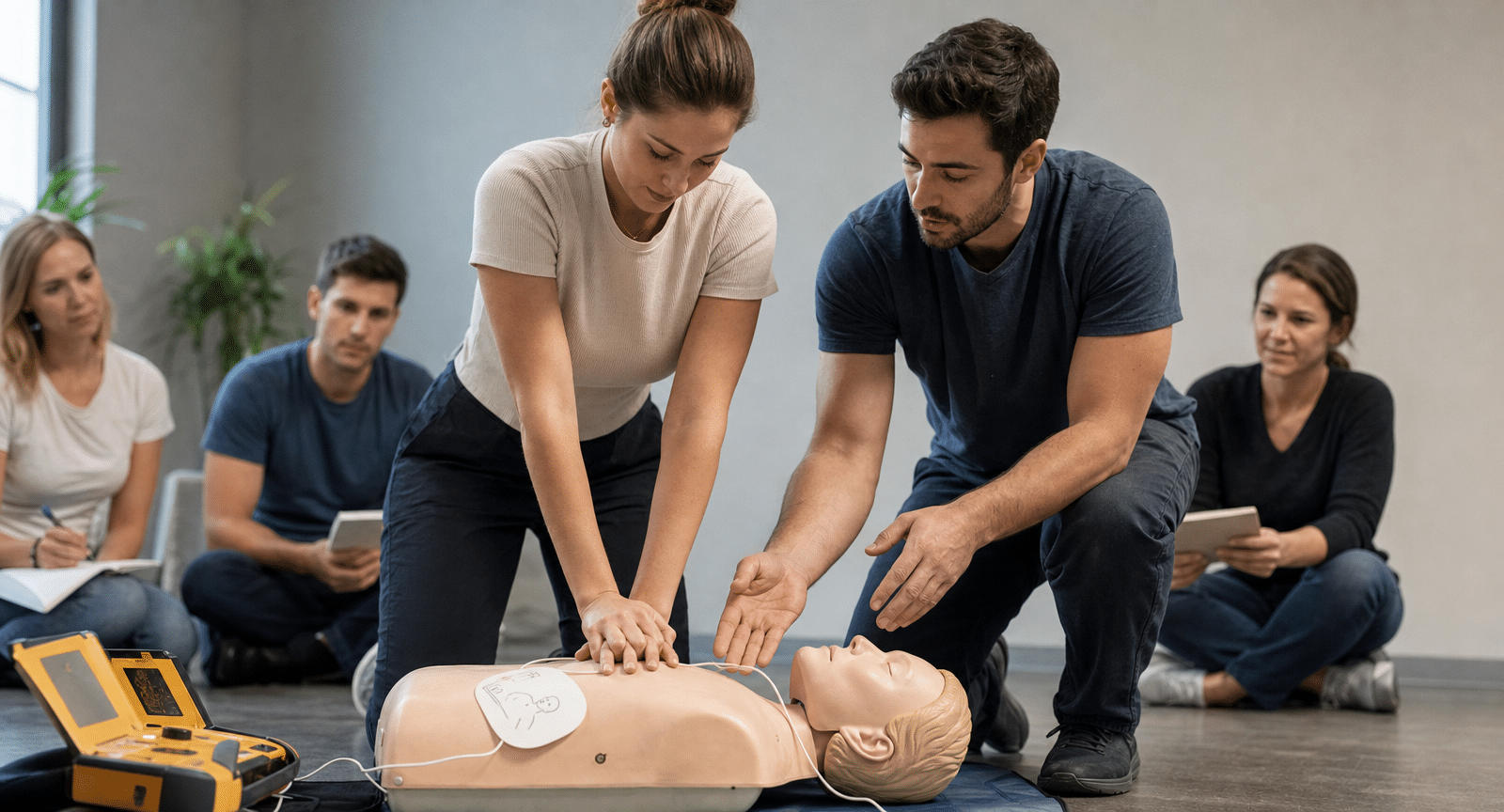
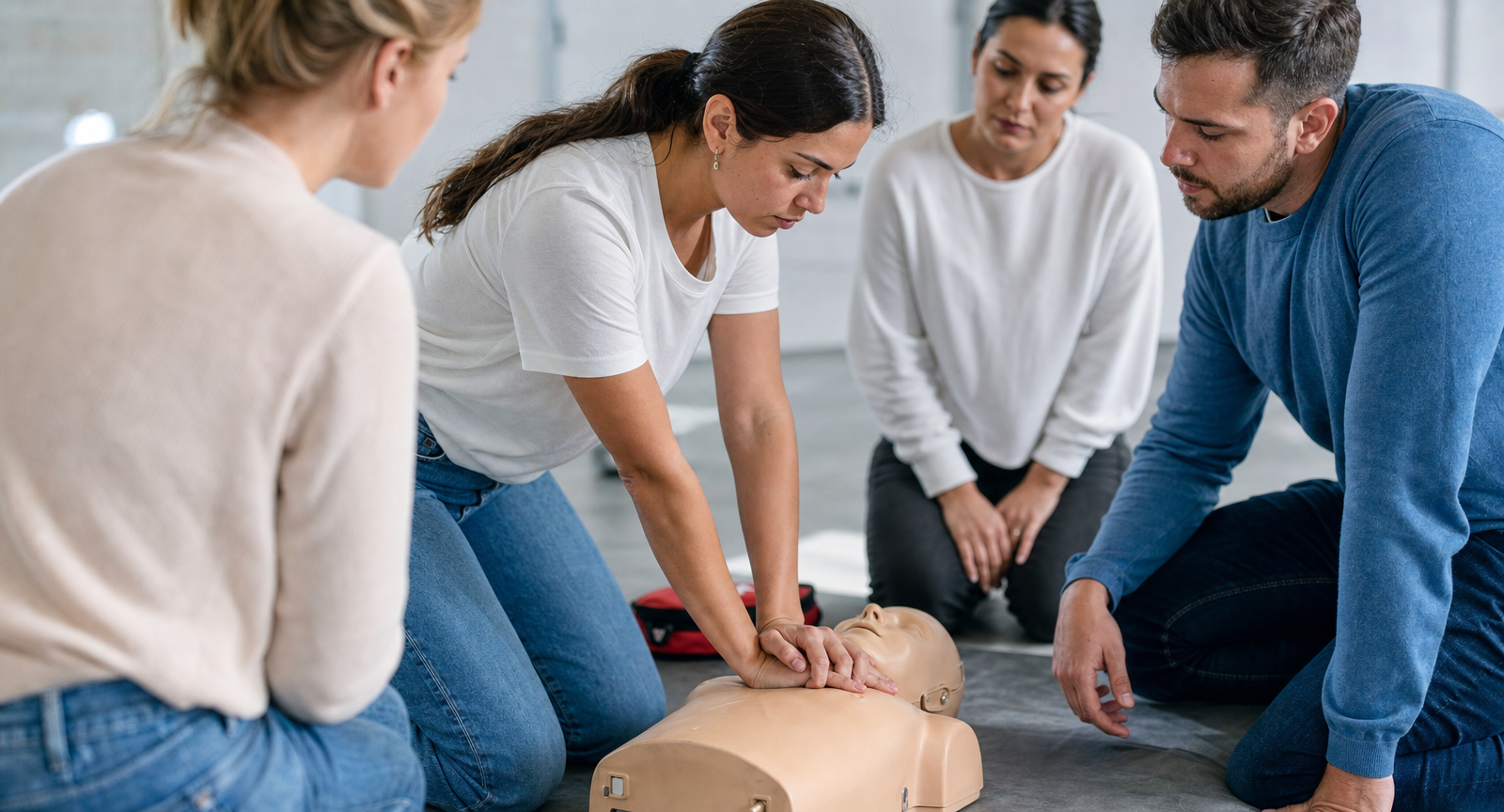
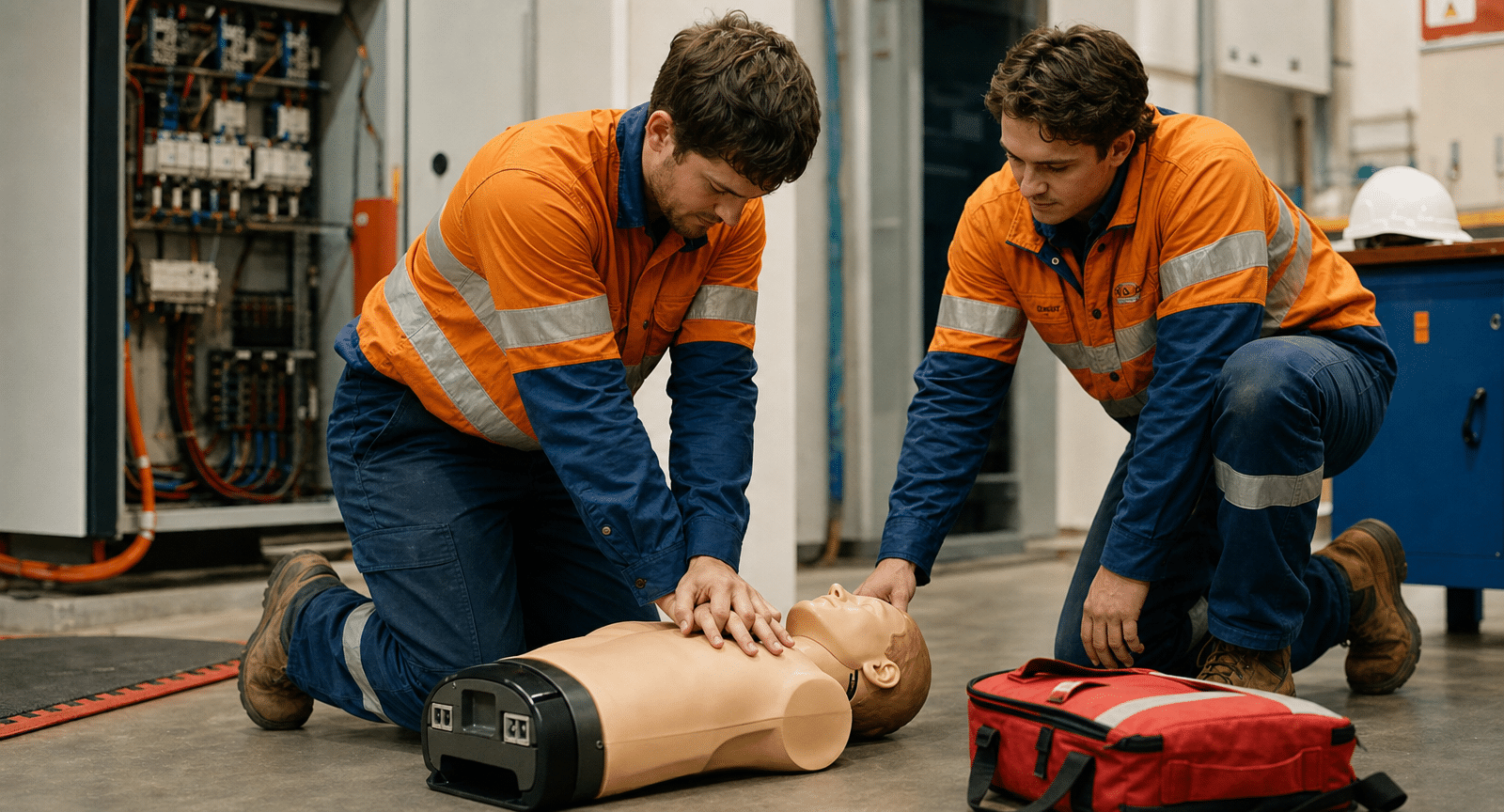
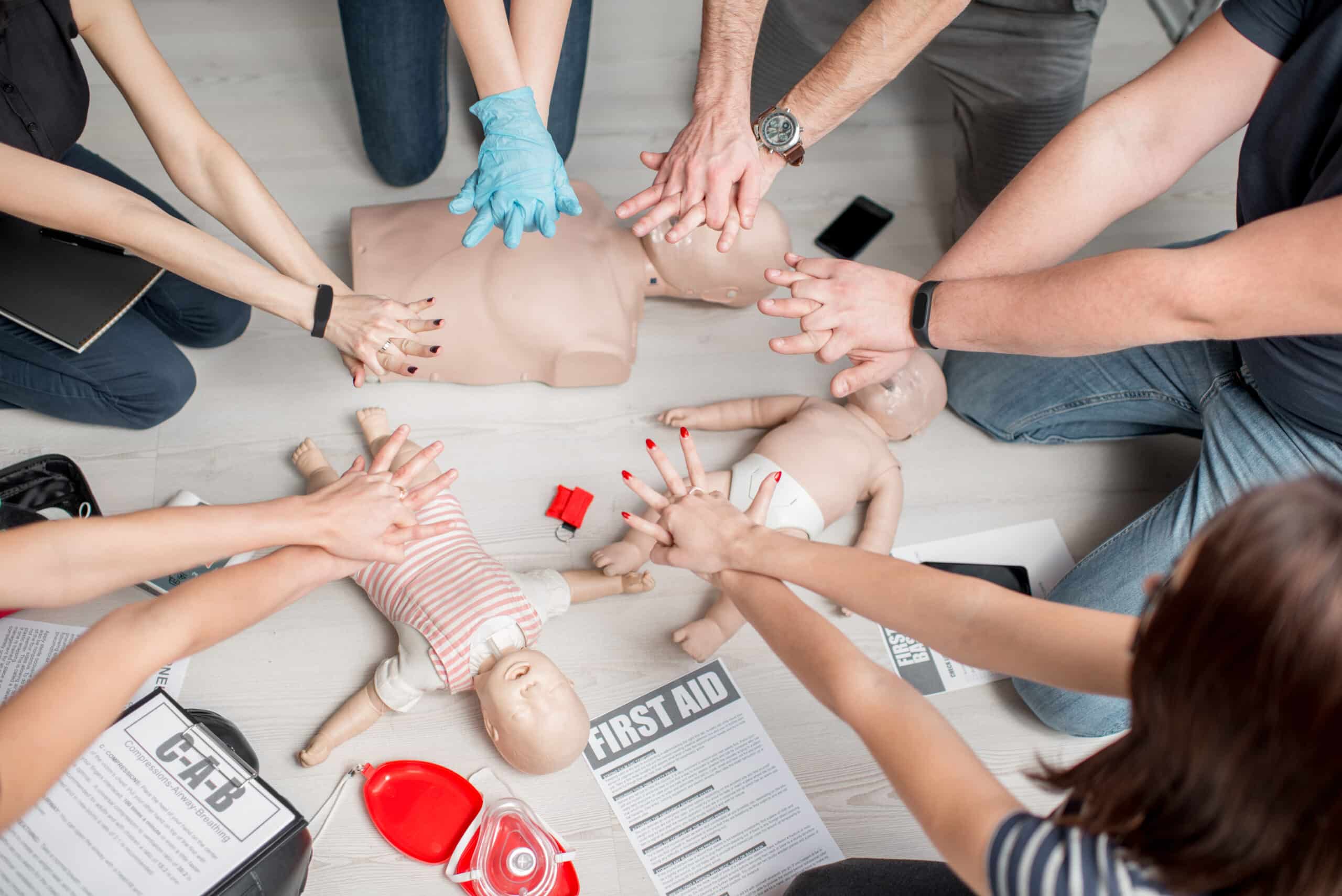
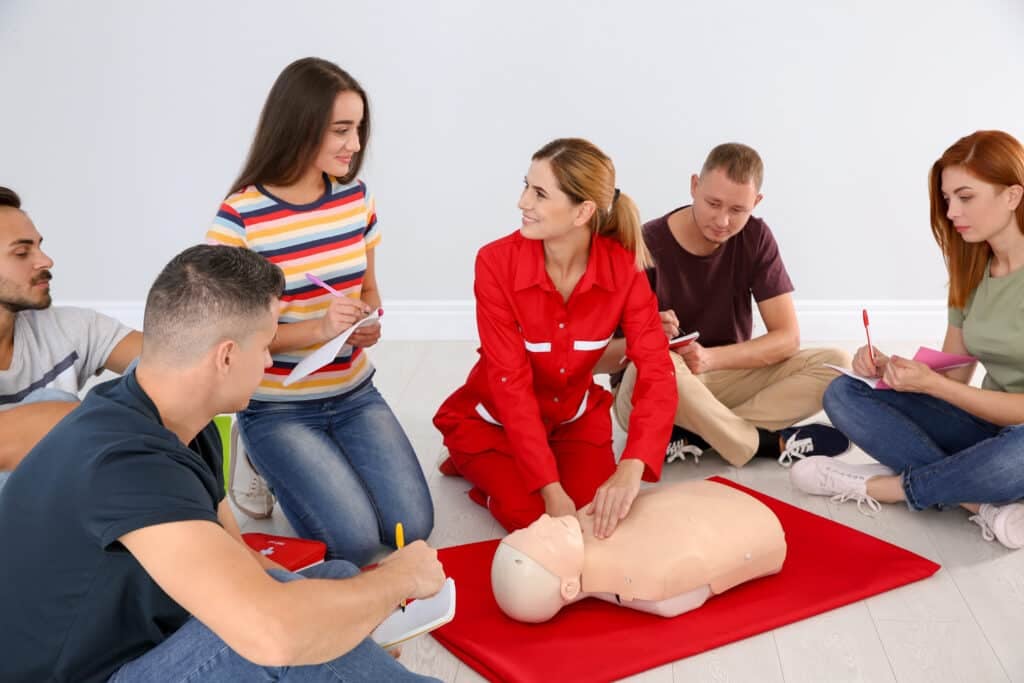
This is also why practical CPR training is so valuable. Reading “push hard and fast” is very different from performing CPR on a training manikin, positioning your hands correctly, achieving appropriate compression depth and becoming familiar with an AED.
HLTAID011 includes CPR competency in accordance with Australian Resuscitation Council guidelines. (Training.gov.au)
2. Choking: Recognising When an Airway Obstruction Becomes an Emergency
Most of us have experienced food briefly “going down the wrong way”. Usually, the person coughs, splutters and clears the obstruction themselves.
A severe airway obstruction is different.
The person may be unable to breathe effectively, speak or cough normally. Their condition can deteriorate rapidly if the airway remains blocked.
One important first aid skill is therefore recognising the difference between an effective cough and a serious obstruction.
If a person with an airway obstruction can cough effectively, encourage them to continue coughing and monitor them. When the obstruction is severe, Australian first aid guidance uses back blows and chest thrusts, with emergency assistance sought as required.
This is an area where internet advice can become confusing because first aid techniques taught in other countries are not necessarily identical to Australian recommendations.
That is a good reason to learn from current Australian training rather than relying on something remembered from television.
HLTAID011 includes first aid responses for choking and airway obstruction as part of its required knowledge and practical application. The unit is explicitly based on first aid guidelines determined by the Australian Resuscitation Council and other Australian national peak clinical bodies.
And if the choking person becomes unresponsive and is not breathing normally, the situation moves into CPR. Knowing what comes next matters.

3. Severe Bleeding: Taking Action Rather Than Waiting
Blood can make even calm people panic. Yet serious bleeding is an emergency where a trained first aider may be able to take meaningful action immediately.
The priority is to control the bleeding while emergency medical assistance is arranged.
Depending on the circumstances, this can involve exposing the wound where practical, applying firm direct pressure and using appropriate dressings or bandages. Life-threatening bleeding may require additional measures in accordance with current first aid guidance and the equipment available.
The important point is that severe bleeding should not be treated casually.
A small cut and a rapidly bleeding wound are very different first aid situations. Learning to assess what you are seeing and respond appropriately is part of becoming a capable first aider.
First aid training also teaches something easily forgotten in the rush to help: your own safety matters.
Blood can present an infection risk. Gloves and other appropriate personal protective equipment should be used where available, and first aid training addresses standard precautions and infection control. The HLTAID011 training requirements specifically include knowledge of infection-control procedures, PPE and resuscitation barrier devices.
Helping effectively does not mean ignoring risks to yourself.
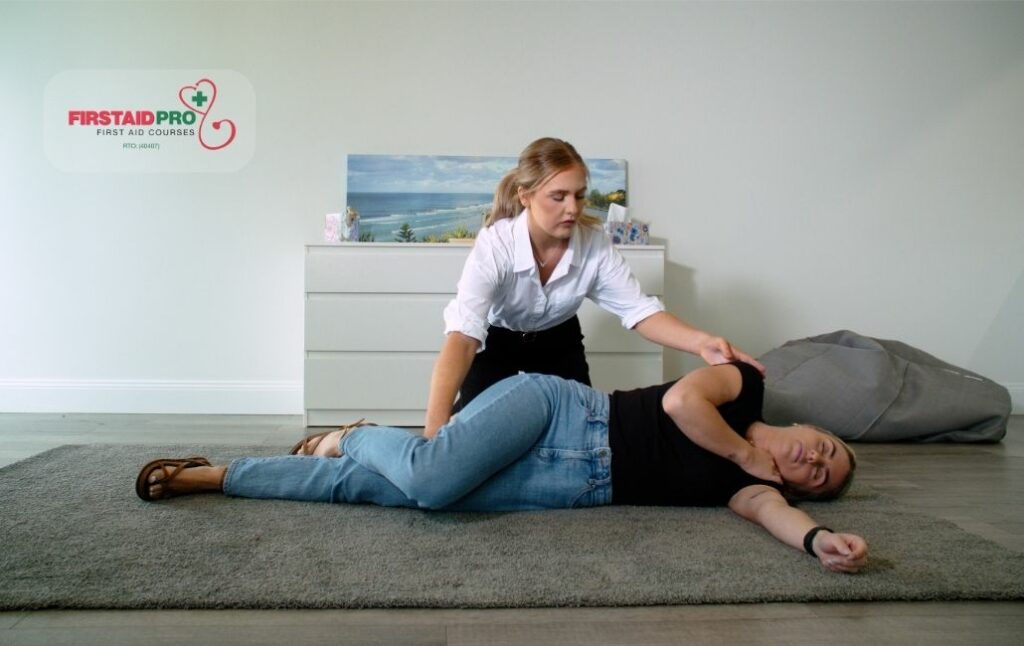
4. The Recovery Position: Protecting an Unconscious Person Who Is Breathing
Not every unconscious person requires CPR. If someone is unresponsive but breathing normally, positioning and monitoring them appropriately becomes important.
In many circumstances, this involves placing the person on their side in the recovery position while continuing to monitor their breathing and condition.
Why?
An unconscious person’s airway can become compromised. Positioning them appropriately can help maintain an open airway and allow fluids to drain from the mouth rather than obstructing breathing.
The details matter, however.
A first aider needs to assess the situation rather than treating the recovery position as an automatic response to every incident. The mechanism of injury, the casualty’s condition and whether normal breathing continues all matter.
Monitoring is also essential.
Someone who was breathing normally a moment ago may deteriorate. If they stop breathing normally, the response needs to change.
This is one of the broader lessons of first aid: treatment is not necessarily the end of your job.
HLTAID011 requires first aiders to monitor a casualty’s condition and respond in accordance with first aid principles.
You stay with the person, watch their breathing and condition, provide reassurance where appropriate and continue care until professional assistance takes over.

5. Calling for Help: The First Aid Skill People Underestimate
Calling Triple Zero (000) sounds obvious. In a stressful emergency, it may not feel obvious at all.
People can freeze. They may spend valuable time debating whether the situation is “serious enough”. They may assume somebody else has called. Sometimes several people reach for their phones and everyone assumes one of the others has made the call.
A trained response is more deliberate.
If emergency medical assistance is required, nominate a particular person to call Triple Zero where possible: “You in the blue shirt, call 000 and come back and tell me when you’ve done it.”
If you are alone, follow the appropriate emergency response sequence for the situation.
When speaking with the emergency call taker, provide clear information about what has happened, the location and the casualty’s condition. Answer questions and follow the instructions you are given.
Do not hang up simply because you think you have provided enough information.
HLTAID011 specifically requires participants to seek assistance from emergency services and accurately convey incident details to them.
That is worth emphasising because first aid is not about replacing paramedics. It is about bridging the gap between an emergency happening and professional care arriving. Sometimes the most important thing you can do is recognise quickly that you need more help.
Why Practical First Aid Training Matters
Reading can build knowledge. Practical training helps turn that knowledge into a response you can actually perform.
You can learn a great deal about first aid from reliable educational material, but there is a limit to what reading alone can teach you.
What You Can Learn on the Page
- Remember the CPR ratio of 30 compressions to 2 breaths.
- Learn the recommended compression rate.
- Read instructions for operating an AED.
- Understand the steps involved in common first aid responses.
What Practical Training Adds
- Perform CPR on a training manikin.
- Practise correct hand positioning and technique.
- Use an AED trainer in a simulated emergency.
- Build familiarity with responding under pressure.
CPR Is a Good Example
You can memorise the numbers, but practical training gives you the experience of physically performing the response.
HLTAID011 Provide First Aid is a nationally recognised unit of competency and applies to people who may need to provide first aid in a range of situations, including community and workplace environments. Its assessment requirements cover CPR and responses to a range of first aid scenarios.
First Aid Pro provides HLTAID011 Provide First Aid training at locations around Australia, with different delivery options available.
If you have been meaning to learn first aid — or your existing training needs updating — World First Aid Day is a good reason to stop putting it off. You can find and book a First Aid Pro course at a location that suits you.
First Aid Skills Belong in the Community
One of the most useful ideas behind World First Aid Day is that first aid should not belong exclusively to people with “first aider” written in their job description.
Emergencies happen wherever people happen to be.
- At home, the first responder might be a partner, parent or teenager.
- At a café, it could be another customer.
- On a sports field, it might be a coach or spectator.
- At work, it may be the colleague sitting at the next desk.
The 2026 World First Aid Day theme extends this principle to people in migration contexts, highlighting accessibility, inclusion, autonomy and dignity. The IFRC Global First Aid Reference Centre has described the campaign as an opportunity to address barriers to first aid and tailor education to different circumstances. (LinkedIn)
The setting may change, but the basic principle remains remarkably consistent.
- Someone needs help.
- Someone nearby needs to recognise that.
- And someone needs to act.
Make World First Aid Day 2026 the Day You Learn
You cannot predict where you will be when somebody needs first aid. That is precisely why the skills are worth learning.
CPR, responding to choking, controlling serious bleeding, positioning an unconscious breathing casualty and calling for emergency assistance are not abstract pieces of medical knowledge. They are practical actions ordinary Australians may one day need to perform for a colleague, friend, stranger or family member.
World First Aid Day 2026 is an opportunity to recognise the millions of people around the world who learn and teach first aid, but awareness alone is only the beginning.
The next step is learning what to do.
A nationally recognised HLTAID011 Provide First Aid course gives you the opportunity to practise emergency responses under instruction and demonstrate the skills required by the Australian unit of competency.
You may never need to use those skills in a life-threatening emergency.
But if that day comes, knowing what to do could make all the difference.
Book your HLTAID011 Provide First Aid course with First Aid Pro and make World First Aid Day 2026 the reason you finally get first aid ready.
Related Reading
- Training.gov.au – HLTAID011 Provide First Aid
World First Aid Day 2026 https://worldfirstaidday.org/
- Better Health Channel — Choking
Better Health Channel — First Aid Basics and DRSABCD
- First Aid Pro – Resources – Free First Aid Charts and Posters
- Healthdirect Australia — How to Perform CPR
FAQs
When is World First Aid Day 2026?
World First Aid Day 2026 is Saturday, 12 September. World First Aid Day is observed on the second Saturday of September and promotes awareness of the importance of first aid knowledge and training.
What is the World First Aid Day 2026 theme?
The official World First Aid Day 2026 theme is “First Aid in Migration Contexts.” The IFRC Global First Aid Reference Centre says the campaign focuses on first aid as a tool for autonomy and dignity, removing barriers through inclusive approaches and tailoring training to different contexts. (LinkedIn)
What are five important first aid skills to learn?
Five particularly valuable skills are performing CPR, responding to choking, controlling serious bleeding, placing an unconscious breathing casualty in an appropriate recovery position, and calling emergency services effectively. These are part of the broader skills and knowledge developed through first aid education.
What does HLTAID011 Provide First Aid cover?
HLTAID011 is a nationally recognised Australian unit covering the skills and knowledge required to provide a first aid response in line with Australian Resuscitation Council and other national peak clinical body guidelines. It covers recognising and assessing emergencies, CPR, appropriate first aid procedures, seeking emergency assistance, monitoring a casualty and communicating incident details.
Do I need first aid training if I'm not a workplace first aider?
You do not need to be a designated workplace first aider to benefit from learning first aid. HLTAID011 applies to people who may need to provide a first aid response across community and workplace situations. The skills can be valuable at home, at work, while travelling, during sport or anywhere an unexpected emergency occurs.