



Sharon has 21+ years of experience as a qualified Emergency Care Nurse registered with the Australian Health Practitioner Regulation Agency (APHRA) and 12+ years as a First Aid Trainer.
She takes pride in FirstAidPro making first aid training available, comprehensive and affordable to everybody.
Your complete 2026 guide to choosing Face-to-Face vs Express vs Online vs Blended CPR Course Options in Australia.
The Certificate Is the Same: What HLTAID009 Actually Is
HLTAID009 Provide Cardiopulmonary Resuscitation is the current nationally accredited CPR unit in Australia. It was released on 16 October 2020 and supersedes the older HLTAID001 unit, which is not equivalent. You can see the full details on the HLTAID009 unit page at training.gov.au.
The unit trains you to recognise and respond to cardiac and breathing emergencies in line with Australian Resuscitation Council (ANZCOR) guidelines. It covers the DRSABCD action plan, care of an unconscious casualty, adult, child and infant CPR technique, and safe use of an AED. It also covers infection control, legal considerations, and handover to emergency services.
One common mix-up is worth clearing up. HLTAID009 is Provide CPR. HLTAID011 is Provide First Aid, the broader unit that includes CPR alongside wound care, fractures, and other emergencies. Some websites reverse these codes. If your employer or regulator asks for CPR, HLTAID009 is the unit you need.
Here is the point that anchors this whole comparison. The Statement of Attainment is the same document no matter which mode you choose. Under the ASQA online training standards, all delivery modes share the same regulatory requirements. ASQA also confirms it does not treat online delivery differently to any other mode.
So a certificate earned by Zoom carries the same national recognition as one earned in a classroom. The competency measure is the same, the unit is the same, and the 12-month validity is the same. Your delivery mode is a convenience decision. It is not a quality decision.
Can You Do a CPR Course Online? Why the Practical Part Never Goes Away
Yes, you can do a CPR course online in Australia, and it is fully valid when an RTO delivers it with a live, trainer-observed practical. But there is one thing no accredited mode ever skips: a physical manikin assessment.
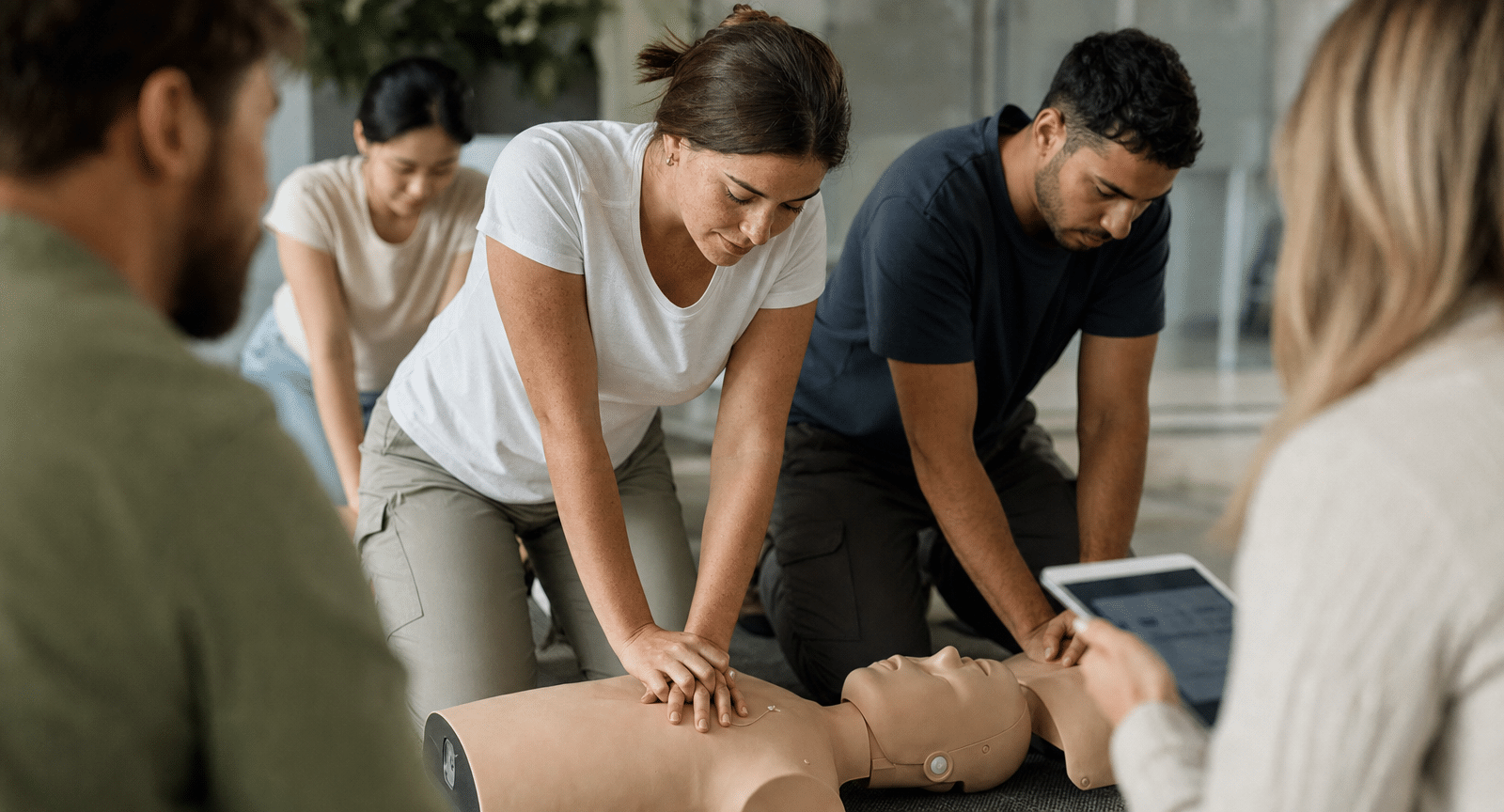
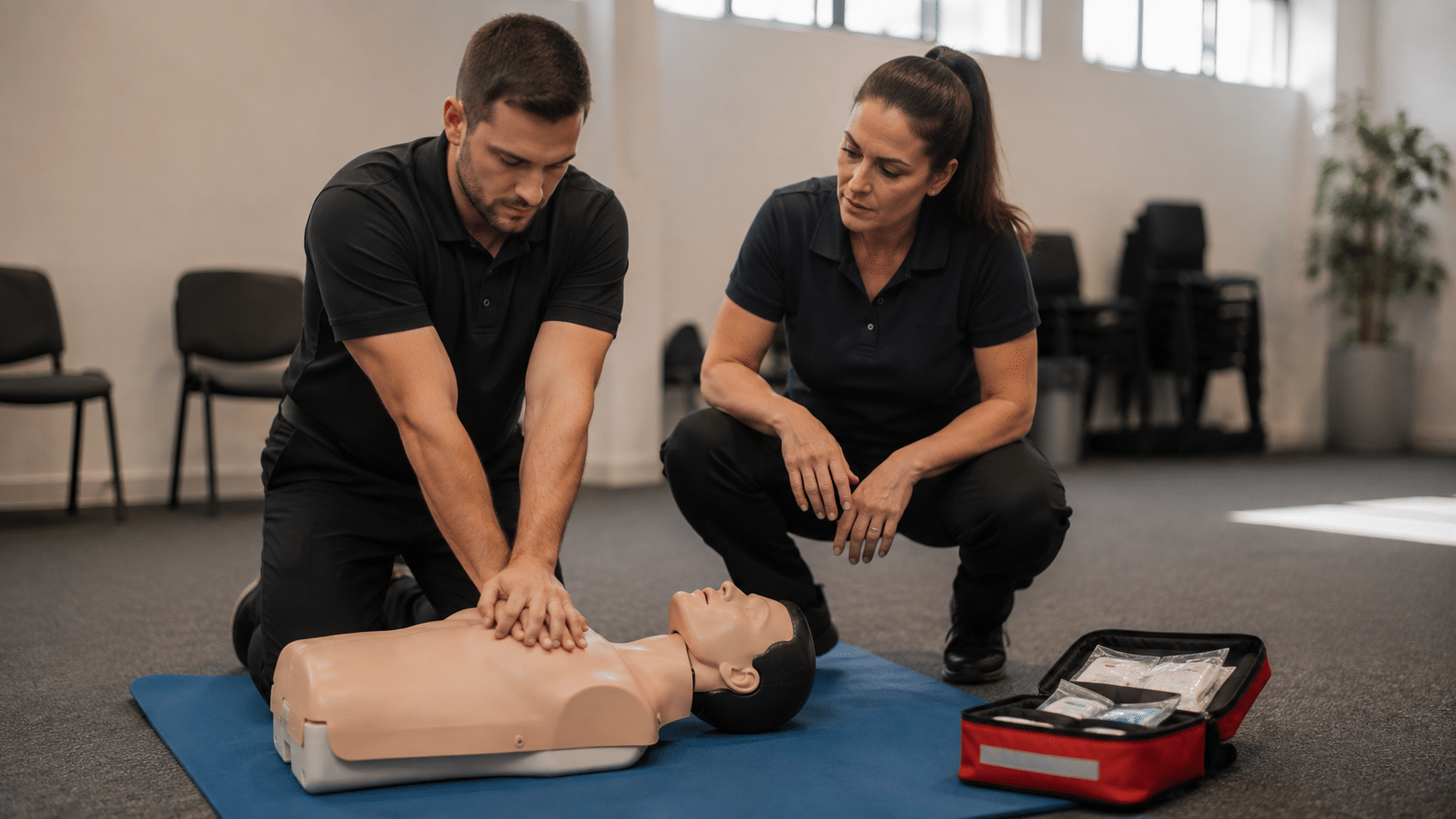
To be assessed as competent in HLTAID009, you must physically demonstrate CPR skills on a manikin. Under training.gov.au requirements, that means at least two minutes of uninterrupted single-rescuer CPR on an adult manikin placed on the floor, plus using an AED and performing CPR on an infant manikin.
ANZCOR Guideline 10.1 is clear that solely computer-based systems do not fulfil this requirement. A video you watch alone, with a quiz at the end, is not an accredited CPR course. This is why the phrase “free online CPR certificate” is a warning sign. If there is no hands-on assessment and no RTO behind it, the certificate is not nationally recognised.
That is exactly why every First Aid Pro mode keeps the hands-on part, including our 100% online Zoom class. The Zoom mode is live and instructor-led. We provide the training equipment, and our trainer observes you performing CPR on a physical manikin over the camera in real time.
So “online” here does not mean theory-only. It means the theory and the live class happen at home, while the physical skill you must prove happens on real equipment under a real trainer’s eye. That is the difference between a genuine accredited course and an unaccredited certificate mill.
The Four Ways to Do Your CPR Course
Every mode below awards the same HLTAID009 Statement of Attainment, with a same-day certificate on successful completion (T&Cs apply). What changes is where you spend your time and how you like to learn.
Traditional Face-to-Face CPR Course
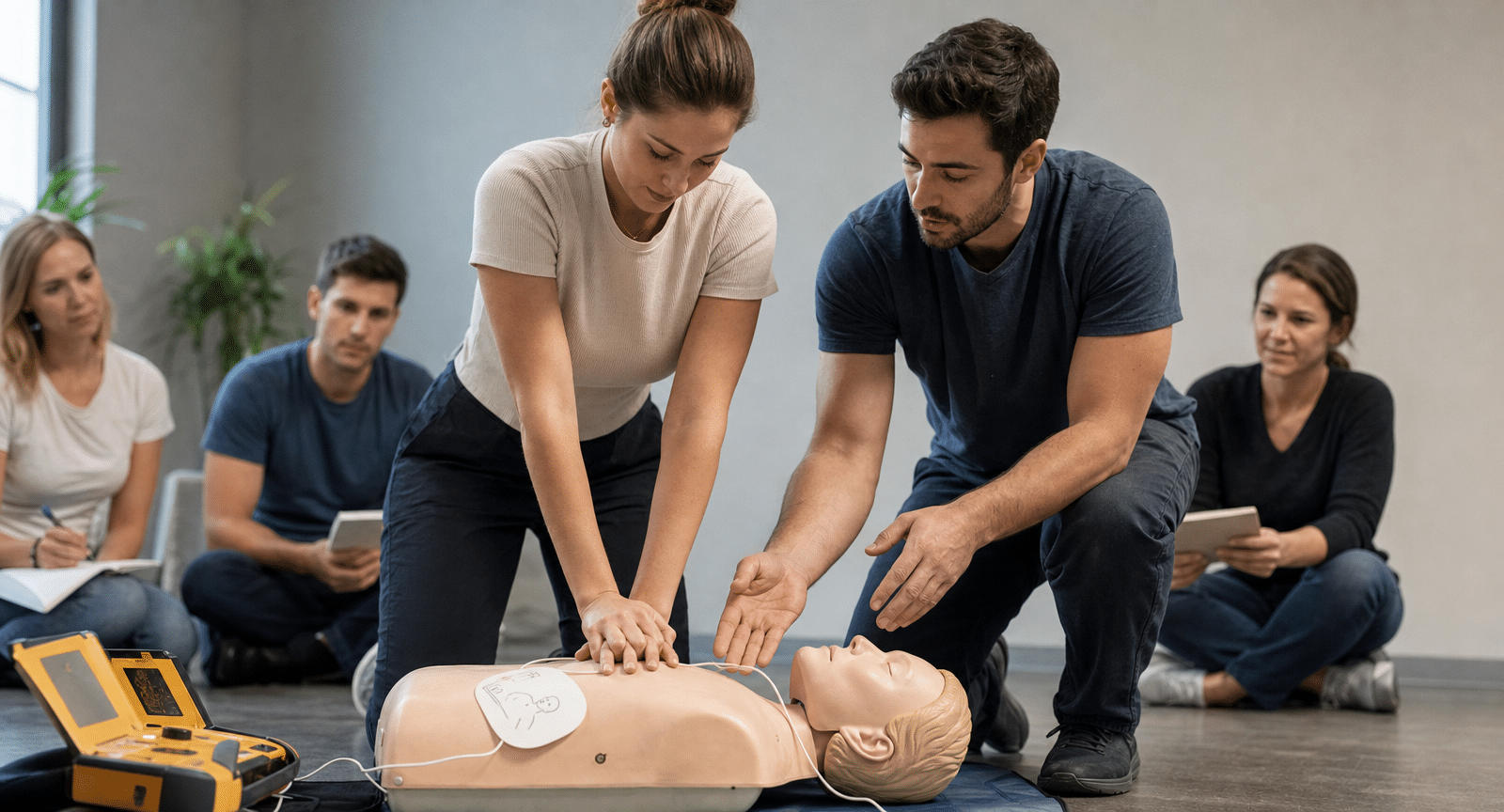
Our Traditional mode is a 2-hour, fully in-person class with no online component. You complete the theory and the practical together in the room with a trainer and a manikin in front of you.
This suits hands-on learners, nervous first-timers, and anyone who simply prefers a classroom. You ask questions on the spot and get immediate feedback from the trainer beside you. If you want zero screen time and the full experience in one sitting, this is the straightforward choice.
Blended CPR Course
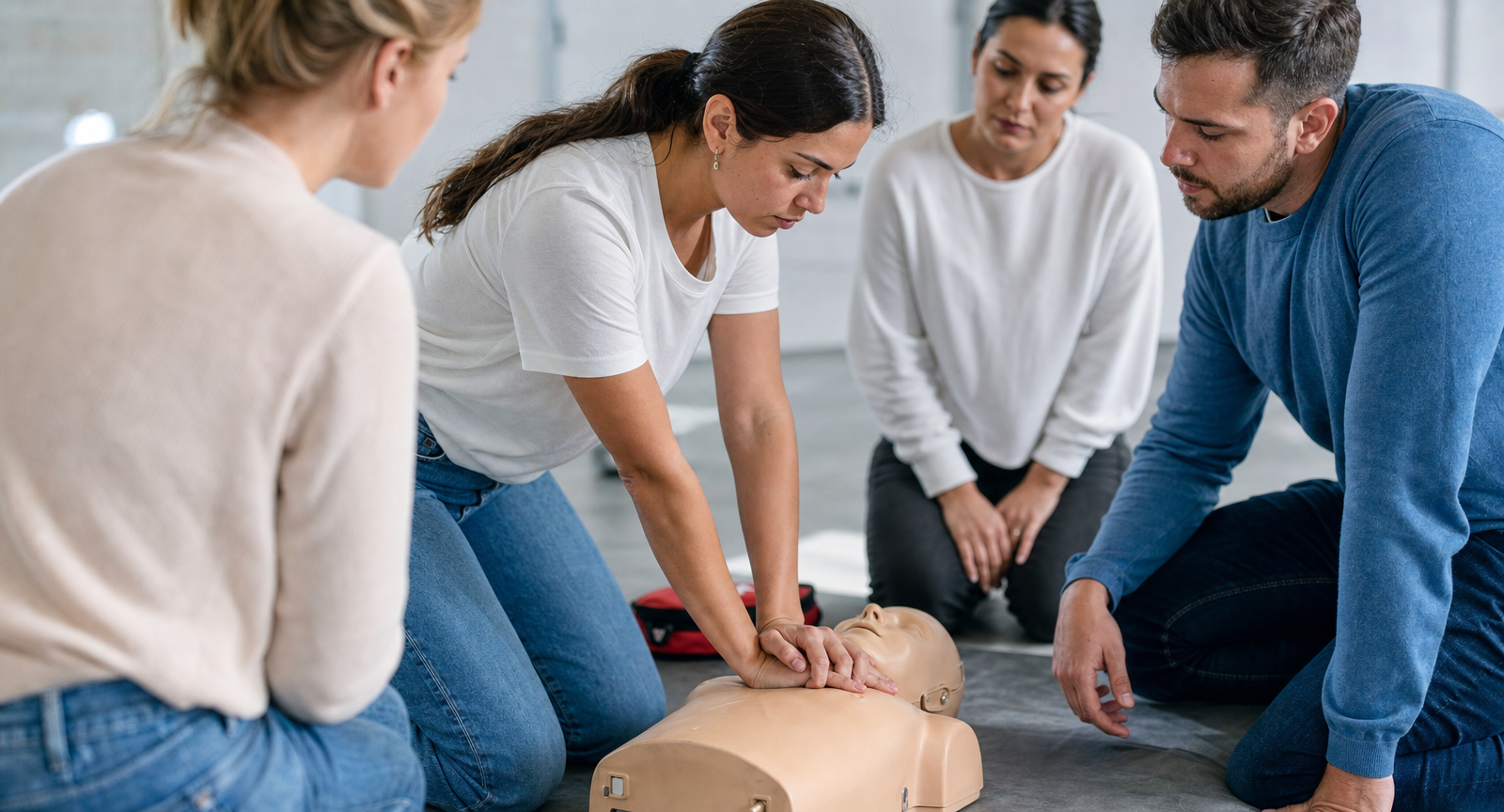
Our Blended mode splits the training. You complete the theory online at your own pace, then attend a 1.5-hour in-person practical at one of our 170+ locations to be assessed on a manikin.
This balances flexibility with real classroom practice. It suits people who want to save time on the day but still value hands-on coaching before assessment. ANZCOR Guideline 10.1 recommends a blended learning approach with a face-to-face component where resources and access allow, so this mode sits comfortably with best-practice guidance.
Express CPR Refresher
Our Express mode is for experienced participants renewing a current or recent qualification. You complete the theory online, then attend a 1-hour assessment-only session to demonstrate your skills.
This is the fastest in-person option because it skips the teaching you have already done. It suits confident annual renewers who know the technique and just need to prove competency. If your last certificate has lapsed by more than a short window, a full course may suit you better than the Express refresher.
100% Online Zoom CPR Course
Our Zoom mode is a 1-hour live, instructor-led virtual class. We provide the equipment, and you complete a physical manikin demonstration that the trainer observes over the camera in real time.
This suits remote and regional learners, and busy professionals who cannot reach a venue easily. You still perform genuine hands-on CPR, so the assessment is real, not theory-only. It is the most flexible way to complete a compliant CPR course online.
Side-by-Side: The Four CPR Delivery Modes Compared
Use this table to compare the four modes at a glance. Notice that the final column never changes.
| Mode | Total time | Online vs in-person split | Best for | Certificate & validity |
|---|---|---|---|---|
| Traditional face-to-face | 2 hours | 100% in-person, no online | Hands-on learners and first-timers who prefer a classroom | HLTAID009 Statement of Attainment, valid 12 months, same-day* |
| Blended | Online theory + 1.5-hour practical | Online theory, in-person practical | Learners who want flexibility plus classroom coaching | HLTAID009 Statement of Attainment, valid 12 months, same-day* |
| Express refresher | Online theory + 1-hour assessment | Online theory, in-person assessment | Experienced renewers with recent training | HLTAID009 Statement of Attainment, valid 12 months, same-day* |
| 100% online Zoom | 1-hour live virtual class | Fully online and live, equipment provided, manikin demo on camera | Remote, regional and time-poor learners | HLTAID009 Statement of Attainment, valid 12 months, same-day* |
Every mode awards the identical nationally recognised HLTAID009 Statement of Attainment, valid for 12 months, with Certificates Issued Same Day* (T&Cs Apply). The table shows the same truth in four rows: mode changes your convenience, not your qualification.
Which CPR Course Mode Should You Choose?
The best mode is the one that matches your experience, your schedule, and how you like to learn. Here is a simple way to decide when you are weighing an online vs face to face CPR course.
- First-timer or nervous about the hands-on part? Choose Traditional or Blended. Being in the room with a trainer builds confidence quickly.
- Renewing an existing qualification you know well? Choose the Express refresher. It is the quickest way to prove current competency.
- Remote, regional, or short on time? Choose the 100% online Zoom class. You train from home and still complete a live, observed manikin assessment.
- Prefer flexibility but still want classroom practice? Choose Blended. You do theory on your own time, then attend a short practical.
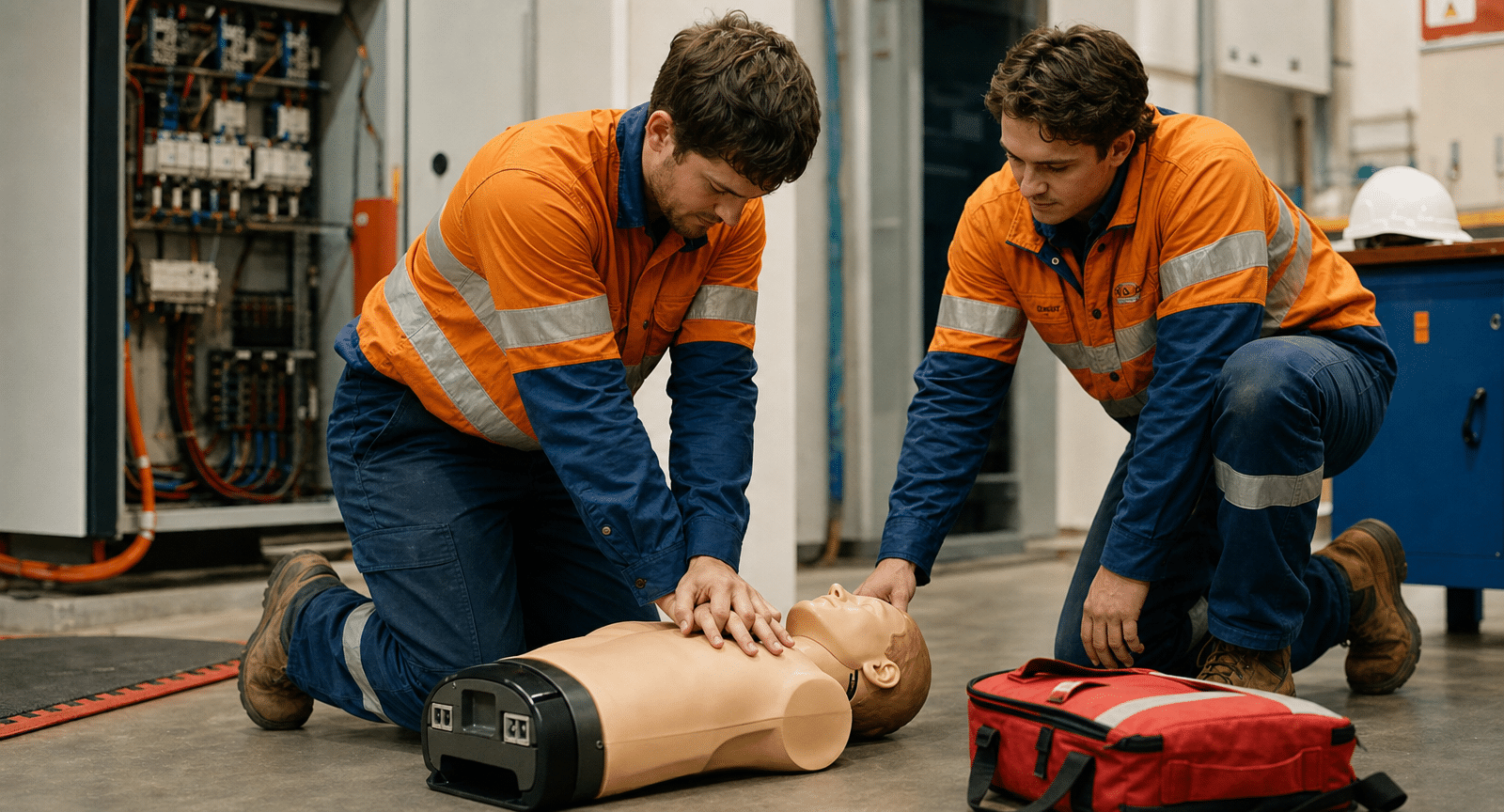
- A workplace or community group? Choose onsite or private group delivery in Traditional or Blended format, so we come to you and minimise downtime.
- A parent or community member wanting confidence at home? Any mode works. Pick the one that fits your week.
If you are still unsure, start with the questions that matter most. Have you trained before? Can you attend a venue? Do you learn best by watching, doing, or both? Your answers point clearly to one of the four modes. And because the credential is identical, there is no wrong choice at the quality level.
Compliance: How Long Your CPR Certificate Lasts and Who Needs It
An HLTAID009 Statement of Attainment is valid for 12 months. That currency comes from workplace and sector rules, not from a single guideline body, so it helps to know where the requirement actually sits.
For general workplaces, the Safe Work Australia Code of Practice for first aid in the workplace recommends that CPR refresher training be undertaken annually and that first aid qualifications be renewed every three years. This is model guidance that uses “should”, and adoption varies by state and territory, so check your own workplace requirements.
For education and care settings, the rule is stronger. Under the Education and Care Services National Regulations (regulation 136, from 1 October 2023), CPR training must be completed within the previous year to be treated as current. First aid training in that sector is otherwise renewed every three years. You can confirm the requirements on the ACECQA first aid qualifications page.
It is worth being accurate about ANZCOR here, because it is often misquoted. ANZCOR does not set the 12-month figure. Its position is that CPR skills decay quickly, and that retraining cycles of 12 to 24 months are likely insufficient to maintain high-quality performance. In other words, annual refresher training is a sensible floor, and brief, more frequent practice on top of it is even better.
Who needs current CPR? The list is wide. It includes workplace first aid officers, healthcare and aged care workers, childcare and education staff, fitness professionals, security personnel, and many trades. Parents and community members also train so they can act with confidence at home. If your role sits in education and care, treat the 12-month rule as a firm requirement rather than a suggestion.
The practical takeaway is simple. Book a refresher every 12 months at minimum, and sooner if your workplace or sector says so. When you are due, our Express and Zoom modes make renewal fast and low-disruption.
Book Your CPR Course
Ready to get certified? We run nationally accredited CPR training at 170+ locations across Australia, including Adelaide, Sydney, Melbourne, Brisbane and Perth, plus onsite delivery for workplace groups. CPR Courses from $45, with Certificates Issued Same Day* (T&Cs Apply) and RACGP & ACN endorsement behind every course.
Pick the mode that fits you and book in a few minutes:
- Face-to-face: face-to-face CPR courses for a classroom-only class with no screen time.
- Blended: blended CPR course for online theory plus a short in-person practical.
- Zoom: 100% online Zoom CPR for a live virtual class with equipment provided.
- All options and dates: HLTAID009 CPR course to compare every mode and book.
Find a course near you and book a course today. Prefer to train your team on site? We come to you for group and workplace bookings. Whichever mode you choose, you earn the same nationally recognised HLTAID009 certificate, ready the same day.
Frequently Asked Questions
Is an online CPR course valid in Australia?
Yes. When an RTO delivers it with a live, trainer-observed practical, the HLTAID009 Statement of Attainment is nationally recognised regardless of mode. ASQA confirms it does not treat online delivery differently to any other mode. Be cautious of self-paced video “certificates” with no hands-on assessment.
What is the difference between an online and a face-to-face CPR course?
Only the convenience. The unit, the assessment standard, and the certificate are identical. In a face-to-face class you do everything in the room. Online, your theory and live class happen at home, while you still complete a physical manikin assessment observed by a trainer.
How long does a CPR certificate last in Australia?
Twelve months. For workplaces, Safe Work Australia’s Code of Practice recommends an annual CPR refresher. For education and care settings, the National Regulations (reg 136) require CPR to be completed within the previous year to be current.
Can you get a CPR certificate completely online with no in-person part?
No accredited CPR course is theory-only. You must physically demonstrate CPR on a manikin, and ANZCOR states computer-only systems do not meet this requirement. Our Zoom mode handles this live on camera, with equipment we provide, so the hands-on assessment is real.
Is HLTAID009 the same as HLTAID011?
No. HLTAID009 is Provide CPR. HLTAID011 is Provide First Aid, the broader unit that includes CPR along with wound care, fractures and other emergencies. If you only need CPR, HLTAID009 is the correct unit.
Which CPR course mode is fastest?
For experienced renewers, the Express refresher is quickest: online theory plus a 1-hour assessment-only session. The 100% online Zoom class is the most flexible overall, running as a single 1-hour live session you join from home.
Can I get a same-day CPR certificate?
Yes. On successful completion you receive a same-day nationally recognised HLTAID009 Statement of Attainment (T&Cs apply). This applies in every mode, from Traditional face-to-face through to 100% online Zoom.