



Sharon has 21+ years of experience as a qualified Emergency Care Nurse registered with the Australian Health Practitioner Regulation Agency (APHRA) and 12+ years as a First Aid Trainer.
She takes pride in FirstAidPro making first aid training available, comprehensive and affordable to everybody.
Key Takeaways
- An accredited CPR course means nationally recognised HLTAID009 Provide Cardiopulmonary Resuscitation, delivered by an ASQA-registered RTO, listed on training.gov.au, and awards a Statement of Attainment.
- A CPR course run entirely online with no practical manikin assessment cannot meet HLTAID009. ANZCOR states that solely computer-based systems do not fulfil the requirement.
- Under the Safe Work Australia model Code of Practice, workplace first aiders should hold a nationally recognised Statement of Attainment issued by an RTO.
- Childcare and education services under the National Quality Framework need CPR completed within the previous year to count as current, under ACECQA regulation 136.
- You can check any provider yourself in minutes on training.gov.au. Book nationally recognised training through our HLTAID009 Provide CPR course.
What “Accredited” Actually Means for a CPR Course
“Accredited” and “nationally recognised” are not marketing words. They point to a specific system, and once you understand it you can judge any provider on your own.
In the Australian vocational education and training system, Registered Training Organisations (RTOs) are the only bodies authorised to issue nationally recognised qualifications and Statements of Attainment. According to ASQA, the national regulator, an RTO must be approved and registered before it can deliver that training. If a provider is not an RTO, it cannot issue nationally recognised outcomes, full stop.
When a unit or course is accredited, it is listed on the National Register at training.gov.au. That register is public and searchable, so you can confirm both the provider and the exact unit they are approved to deliver.
For CPR, the nationally accredited unit is HLTAID009 Provide Cardiopulmonary Resuscitation. If you want first aid as well, HLTAID011 Provide First Aid includes the CPR component and its manikin assessment. When you finish an accredited course you receive a Statement of Attainment, which is formal Australian Qualifications Framework documentation issued after assessment. You also supply a Unique Student Identifier (USI), which is part of how nationally recognised training is recorded. You will often see the Nationally Recognised Training (NRT) logo on genuine courses. That logo signals training that leads to an AQF qualification or Statement of Attainment.
We are First Aid Pro, a Registered Training Organisation (RTO 31124) registered with ASQA, and you can find our courses and venues at firstaidpro.com.au. Everything above is how we operate, and it is the same standard you should hold every provider to.
Accredited vs Non-Accredited CPR Courses: The Difference at a Glance
The core comparison comes down to what backs the document you receive. Here is the difference side by side.
| Feature | Accredited (nationally recognised HLTAID009) | Non-accredited certificate |
|---|---|---|
| Issued by | A Registered Training Organisation (RTO) | Any provider, no RTO required |
| Listed on training.gov.au | Yes | No |
| Practical manikin assessment | Required | Often none |
| Document you receive | Statement of Attainment (AQF) | A “certificate of completion” |
| Accepted by employers under the SWA Code of Practice | Yes | No |
| Valid for childcare (NQF) currency | Yes | No |
| USI required | Yes | No |
Read the table carefully, because the difference is not about how the course is delivered. It is about whether the training is nationally recognised and properly assessed.
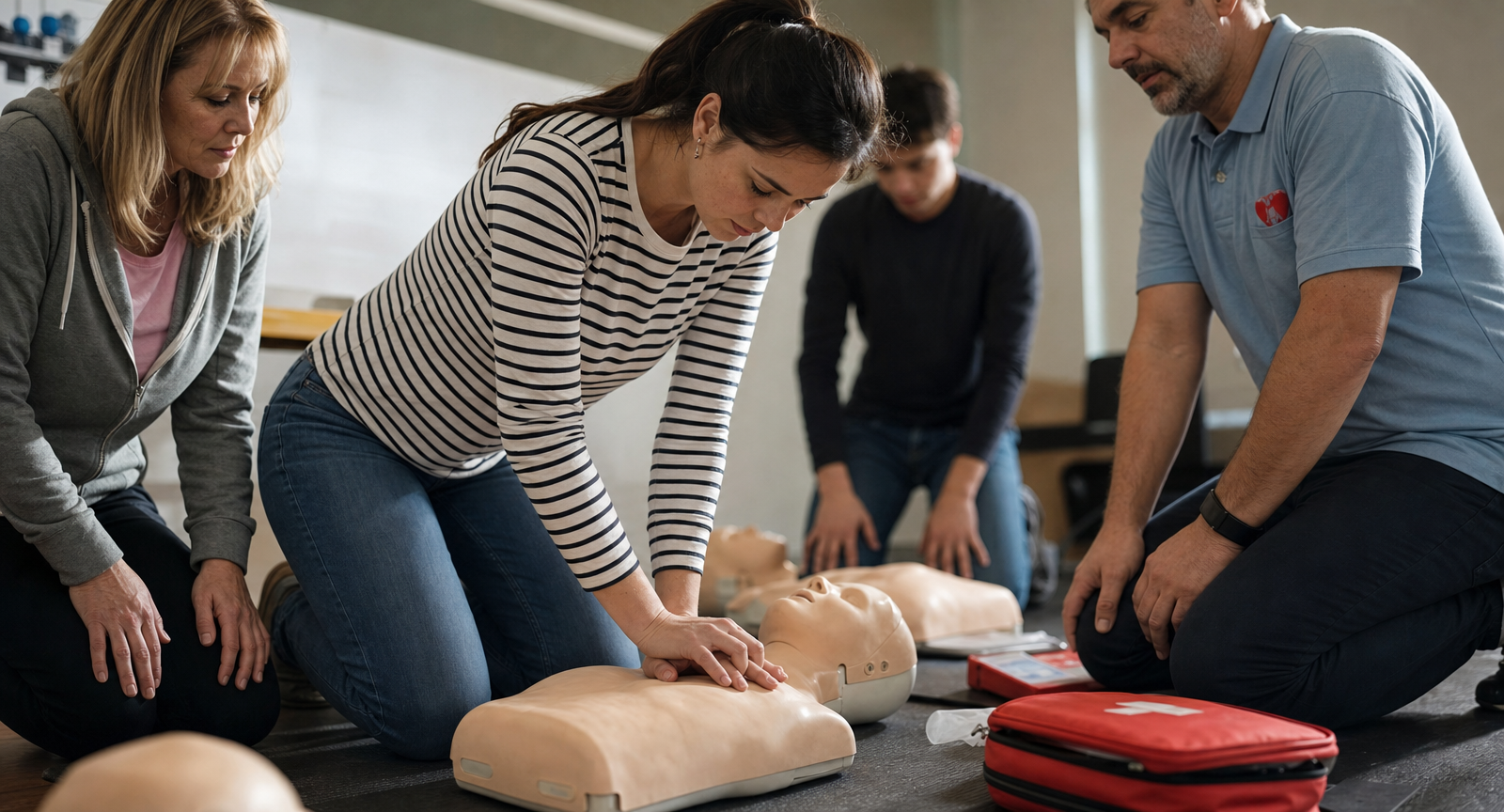
That distinction matters, so we will say it plainly. This is accredited versus non-accredited, not online versus face-to-face. A legitimate accredited CPR course can include online theory. What it must also include is an in-person practical assessment on a manikin, because that is a requirement of the unit.
A non-accredited certificate can still build general awareness, and learning any CPR is better than none. It is simply not nationally recognised, so it does not meet workplace or childcare compliance and can be rejected. If you need a certificate that counts, an accredited course is the one to book, and it finishes with a Statement of Attainment.
The Certificate Trap: Why a Fully Online Non-Accredited CPR Course Can Fail You
The trap is a specific pattern, so let us name the pattern rather than any provider. It is a course sold entirely online that issues a “certificate” with no practical assessment. You click through slides, answer some questions, and a document appears. Nothing about your actual CPR technique was ever checked.
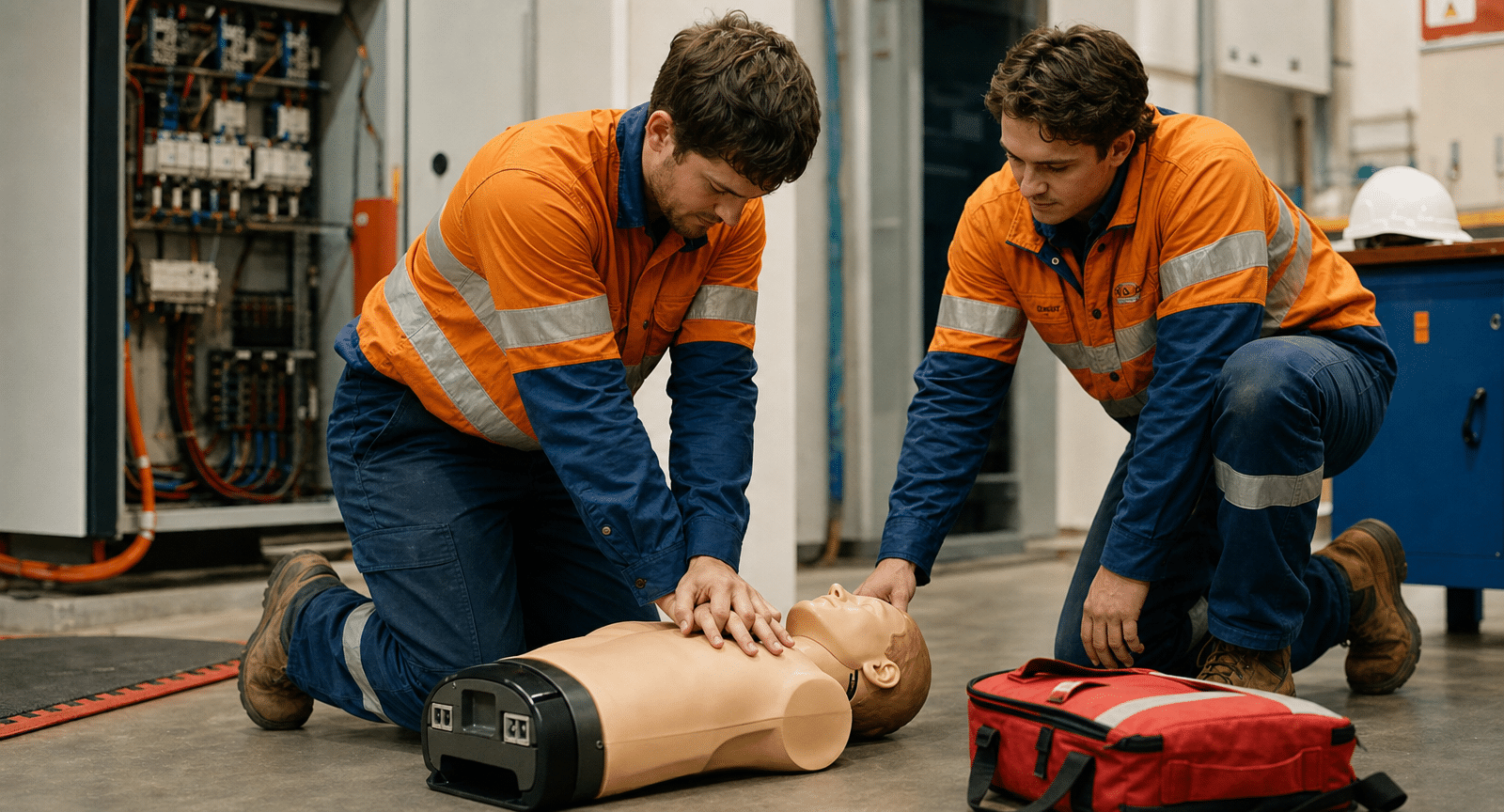
Why does that fail you? Because CPR is a physical skill, and the standards say it must be demonstrated physically. ANZCOR Guideline 10.1, approved in May 2025, states that learners must physically demonstrate CPR on a manikin, and that solely computer-based systems do not fulfil this requirement.
The accredited unit sets the same bar. According to the HLTAID009 unit on training.gov.au, you must perform at least 2 minutes of uninterrupted single-rescuer CPR on an adult manikin placed on the floor, and demonstrate compression and ventilation skills on a resuscitation manikin, following ARC guidelines for assessment. A course with no manikin, and no assessor watching, cannot meet those conditions.
ANZCOR also recommends a blended approach that includes a face-to-face component, rather than online-only or video-only training, for life support skills. That guidance points to the same conclusion: theory alone is not enough, and hands-on practice under a trainer is where competence is confirmed.
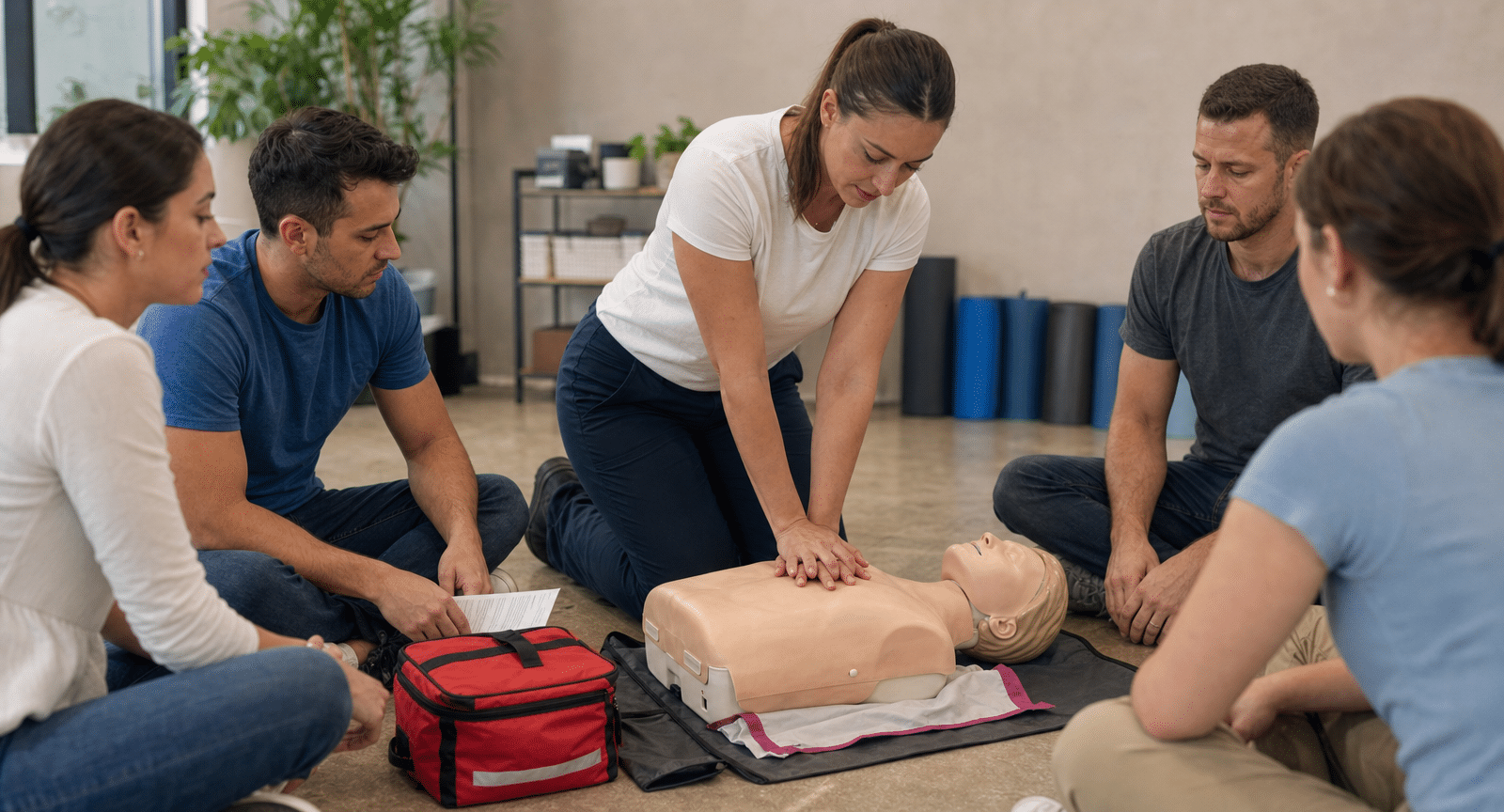
Here is the important clarification, so nobody swings too far the other way. Blended learning is fine. Online theory paired with an in-person practical session is a proper accredited pathway, and it is one of the formats we offer. The trap is not online study. The trap is no practical manikin assessment at all. If a course never puts your hands on a manikin in front of an assessor, treat that as the warning sign.

How To Verify a CPR Course Is Accredited (Step-by-Step)
You do not need to take anyone’s word for it. Work through these steps before you pay, and you will know exactly what you are buying.
- Ask for the exact unit code. A nationally recognised CPR course lists HLTAID009 (or HLTAID011 if it includes full first aid). A vague “CPR certificate” with no code is a prompt to dig deeper.
- Find the provider’s RTO number. Every genuine provider has one and will display it. No RTO number means no nationally recognised training.
- Search training.gov.au. Look up the provider by RTO number or name on the national training register and confirm the unit sits on their approved scope of registration.
- Confirm the document and USI. Check that you will receive a Statement of Attainment, not a “certificate of completion”, and that the provider requires a Unique Student Identifier. Both point to genuine accredited training.
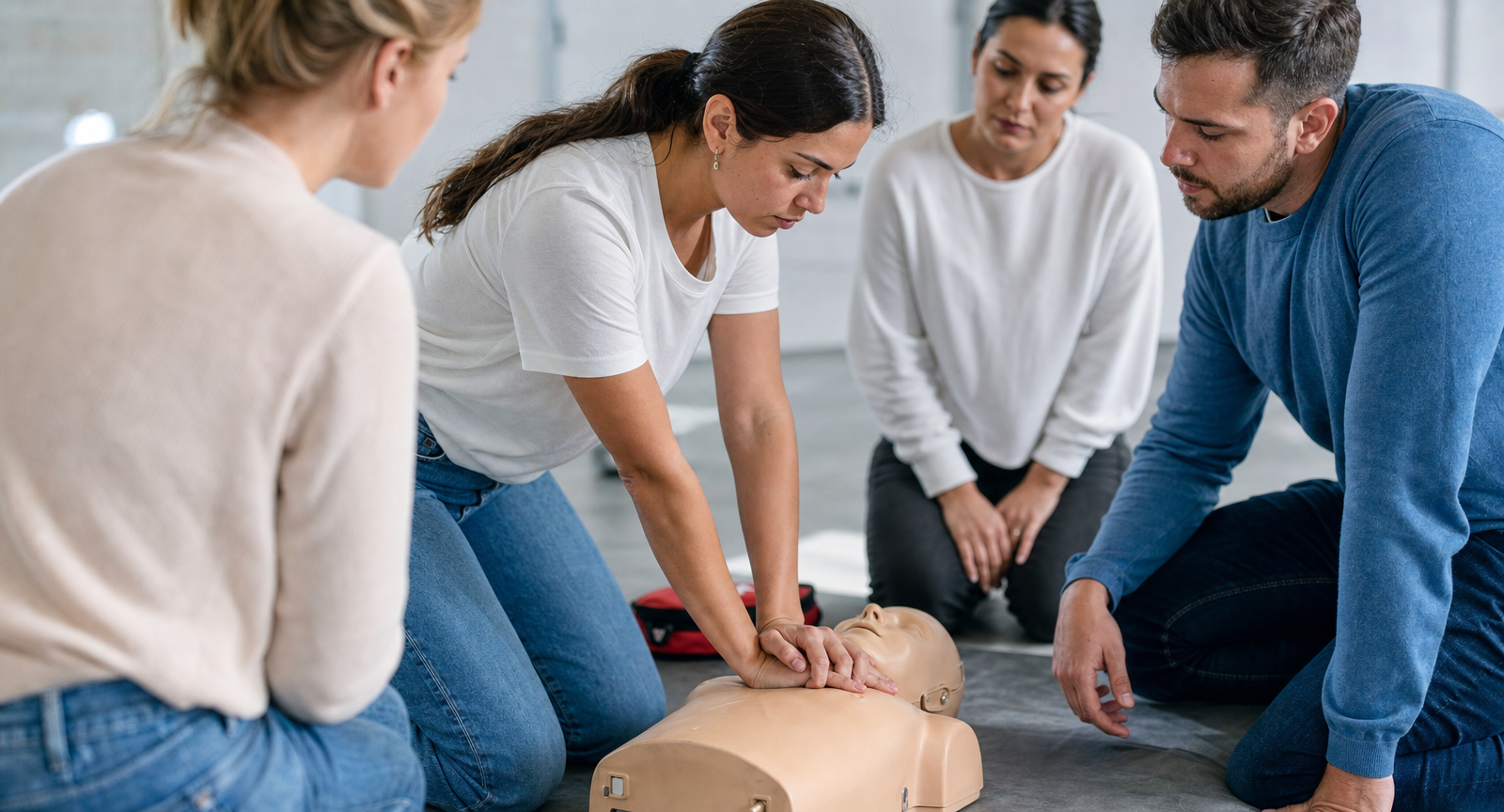
- Confirm the practical assessment. Make sure the course includes an in-person practical assessment on a manikin. This is required by the unit and cannot be skipped.
- Look for the NRT logo. The Nationally Recognised Training logo indicates training that leads to an AQF Statement of Attainment.
If a provider passes every step, you can book with confidence. If it stumbles on any of them, that is your answer. Our courses are built to satisfy each check, and you can view the details for your city on our booking pages.

Who Needs an Accredited CPR Certificate — Workplace & Childcare Rules
For most people, the reason to get this right is a workplace or a childcare role. The rules here are clearer than many people expect.
The Safe Work Australia model Code of Practice: First Aid in the Workplace states that, as a minimum, first aiders should hold nationally recognised Statement(s) of Attainment issued by an RTO. The same Code defines a “first aider” as a person who has completed a nationally accredited training course that gives them the required competencies.
A note on the word “should”. The Code uses recommended language, not a legal command. Following it is how a workplace demonstrates it is meeting its work health and safety duties. In practice, that is why employers ask for a nationally recognised Statement of Attainment rather than a completion certificate. It is the straightforward way to show compliance across workplaces Australia-wide, from Adelaide and Perth to Sydney, Melbourne and Brisbane.
Childcare and education have a firmer rule. Services regulated under the National Quality Framework must meet ACECQA requirements set out in the Education and Care Services National Regulations (regulation 136). According to ACECQA, from 1 October 2023 CPR must have been completed within the previous year to be taken as current. That is a regulatory currency rule, not just an industry preference.
So who needs an accredited CPR certificate? Workplace first aiders who want to meet the Code of Practice, and anyone in an NQF-regulated childcare or education role. If you work in early childhood or education, our childcare first aid course (HLTAID012) covers the setting-specific requirements.
How Often You Need to Refresh (and Why Annual Is the Benchmark)
CPR is a skill that fades if you do not use it, so currency matters as much as the original certificate. The Safe Work Australia model Code of Practice recommends that CPR refresher training be carried out annually, and that first aid qualifications be renewed every three years. That annual CPR benchmark is a recommendation for workplaces, and it is the standard most employers follow.
For NQF-regulated education and care services, annual currency is not optional. ACECQA regulation 136 requires CPR to have been completed within the previous year to count as current. So childcare and education staff should treat a 12-month CPR cycle as a firm requirement.
The clinical evidence lines up with the annual benchmark. ANZCOR Guideline 10.1 notes that retraining cycles of 12 to 24 months are likely insufficient to maintain high-quality basic life support, and that skill decay is a genuine concern. In other words, refreshing yearly is both the recommended workplace standard and the clinically sensible choice.
If your card is due, you do not need to sit the full course again from scratch. Book an express CPR refresher class to bring your Statement of Attainment back to current.
Book An Accredited CPR Course With First Aid Pro!
If you want a first aid or CPR certificate that employers and childcare services accept, book an accredited course and skip the trap entirely.
We are a national RTO (RTO: 31124) delivering courses Australia-wide, and our trainers deliver the HLTAID009 Provide Cardiopulmonary Resuscitation (CPR) course as nationally recognised training. Here is what you get with us:
- Nationally recognised HLTAID009 training with a Statement of Attainment
- An in-person practical assessment on a manikin, so your skills are properly checked
- Blended (online theory plus in-person practical) and face-to-face options
- Certificates Issued Same Day* (T&Cs Apply), so you are job-ready without the wait
- CPR Courses from $45, with venues Australia-wide including Adelaide, Sydney, Melbourne, Brisbane and Perth
Ready to lock it in? Find a course near you to book an accredited CPR course at a venue that suits you. If you also need full first aid, our Provide First Aid course (HLTAID011) includes CPR in the one booking.
Frequently Asked Questions
What is the difference between an accredited and non-accredited CPR course in Australia?
An accredited course is nationally recognised HLTAID009, delivered by a Registered Training Organisation and finished with a Statement of Attainment. ASQA confirms that only RTOs can issue nationally recognised outcomes. An accredited course also assesses your CPR on a resuscitation manikin, following ARC guidelines, while a non-accredited certificate typically skips that assessment.
Will a non-accredited CPR certificate be accepted by my employer?
Often it will not, because it is not nationally recognised. The Safe Work Australia model Code of Practice says first aiders should, as a minimum, hold a nationally recognised Statement of Attainment issued by an RTO. The same Code defines a first aider as someone who has completed a nationally accredited course, which a completion certificate does not satisfy.
Can I complete a nationally recognised CPR course fully online?
ANZCOR Guideline 10.1 states that learners must physically demonstrate CPR on a manikin and that solely computer-based systems do not fulfil the requirement. Check with the RTO if it supplies you with a training kit to conduct your practical assessment. Alternatively, a blended course with online theory and an in-person practical assessment is ideal. An entirely online option with no manikin assessment cannot be nationally recognised & does not supply you with an accredited CPR certificate.
How do I check if a CPR provider is a registered training organisation (RTO)?
Search the provider on training.gov.au, Australia’s national training register, using their RTO number or name. Confirm they are registered and that HLTAID009 sits on their approved scope of registration. If a provider has no RTO number and does not appear on the register, it cannot issue nationally recognised training.
How often does a CPR certificate need to be renewed in Australia?
ASQA recommends refreshing CPR annually (every 12 months), which most employers follow. For childcare and education services, ACECQA Regulation 136 requires CPR to have been completed within the previous year to be current. Annual renewal is the safe benchmark for both compliance and skill retention.
What is a Statement of Attainment — and how is it different from a completion certificate?
A Statement of Attainment is formal Australian Qualifications Framework documentation issued by an RTO after you are assessed, and it records the nationally recognised unit you completed. ASQA notes it is issued on exit from a training program and that a USI is part of the process. A “certificate of completion” carries none of that recognition and is not tied to the AQF.
Does childcare work require a specific type of CPR certificate?
Childcare educators, early learning centre staff, schools and teachers require a HLTAID009 Provide CPR certificate. Education and care services regulated under the National Quality Framework must meet ACECQA requirements, and regulation 136 sets out first aid, CPR and anaphylaxis training. From 1 October 2023, CPR must have been completed within the previous year to be taken as current, so an accredited, in-date CPR qualification is essential for these roles.