



Sharon has 21+ years of experience as a qualified Emergency Care Nurse registered with the Australian Health Practitioner Regulation Agency (APHRA) and 12+ years as a First Aid Trainer.
She takes pride in FirstAidPro making first aid training available, comprehensive and affordable to everybody.
Getting first aid certified during the week isn’t always realistic. Between work, family, and everything else competing for your time, finding a spare weekday to sit in a training room can feel impossible.
Weekend first aid classes solve that problem. Saturday and Sunday sessions deliver the same nationally accredited qualifications as weekday courses, covering everything from CPR techniques and AED use to managing burns, fractures, and medical emergencies—all without touching your annual leave.
Key Takeaways
- Weekend first aid classes are widely available across Australia through flexible blended-learning and fully face-to-face programs on Saturdays and Sundays
- Nationally accredited courses including CPR (HLTAID009), First Aid (HLTAID011), Childcare First Aid (HLTAID012), and Advanced First Aid (HLTAID014) run on weekends
- Multiple delivery formats exist: traditional face-to-face, blended online plus practical, express refresher, and live Zoom sessions
- Same-day digital certification is available upon successful completion (conditions apply)
- Weekend courses deliver the same nationally recognised Statement of Attainment as weekday sessions
- View weekend course dates and book online
What Are Weekend First Aid Classes
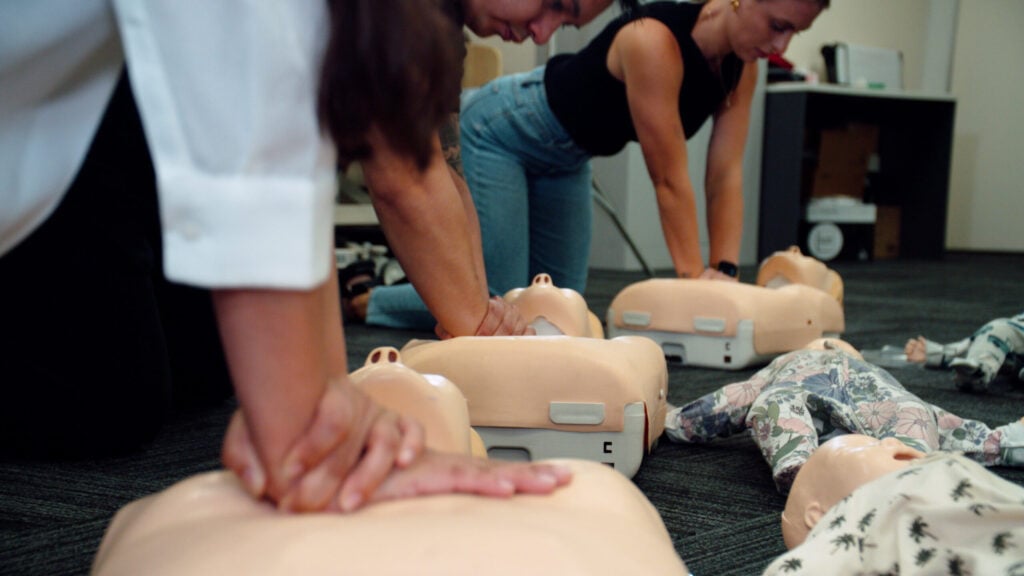
Weekend first aid classes in Australia are widely available through flexible blended-learning and fully face-to-face programs held on Saturdays and Sundays. If you work Monday to Friday or have weekday commitments, Saturday and Sunday sessions offer a practical path to certification without taking time off.
The training content is identical to weekday courses. You’ll cover the same material, complete the same practical assessments, and receive the same Statement of Attainment that employers and regulators recognise across the country.
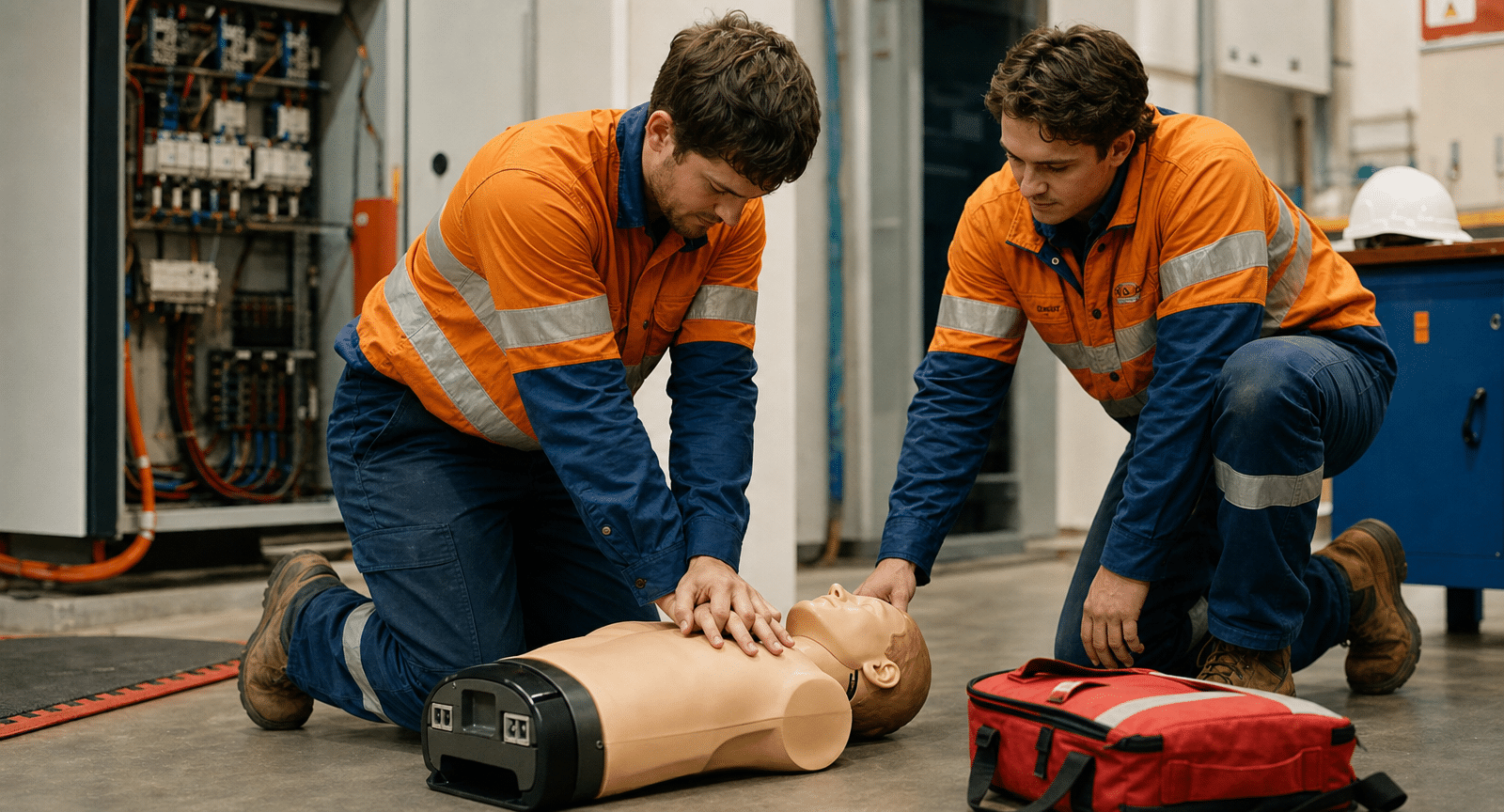
Registered Training Organisations (RTOs) run weekend sessions at public venues in major cities and regional areas. Some providers also offer onsite workplace delivery on Saturdays or Sundays for teams that operate outside standard business hours.

Types of Weekend First Aid and CPR Courses
Several nationally accredited courses are commonly available on weekends. The right one depends on your workplace requirements and how comprehensive you want your training to be.
HLTAID009 Provide CPR
This foundational CPR-only course covers adult, child, and infant resuscitation techniques. It’s the shortest weekend option, often completed in 1 to 2 hours depending on delivery format. Your certificate remains valid for 12 months, with annual renewal recommended.
HLTAID011 Provide First Aid
The most common workplace first aid qualification, HLTAID011 includes CPR (HLTAID009) and basic emergency life support (HLTAID010). You’ll learn to respond to wounds, burns, fractures, and medical conditions like asthma and anaphylaxis. This certificate is valid for 3 years.
HLTAID012 Childcare first aid
Designed specifically for education and care settings, this course is ACECQA-approved and focuses on paediatric emergencies. It covers infant and child CPR, choking management, asthma and anaphylaxis response, and common childhood injuries. Valid for 3 years.
HLTAID014 Advanced first aid
This higher-level qualification suits designated first aiders and those working in high-risk environments. It covers complex trauma, multi-casualty scenarios, and advanced casualty assessment. Expect a longer session, typically a full day for the practical component.
What You Learn in a Weekend First Aid and CPR Class
All accredited courses follow Australian Resuscitation Council (ARC) guidelines. Here’s what you’ll cover in a typical session.
DRSABCD and casualty assessment
The DRSABCD action plan is your systematic approach to every emergency:
- Danger – check for hazards to yourself and others
- Response – check if the person is conscious
- Send for help – call 000
- Airway – clear and open the airway
- Breathing – look, listen, feel for breathing
- CPR – start compressions if the person isn’t breathing normally
- Defibrillation – use an AED if available
You’ll practise this sequence until it becomes second nature.
Adult, child and infant CPR
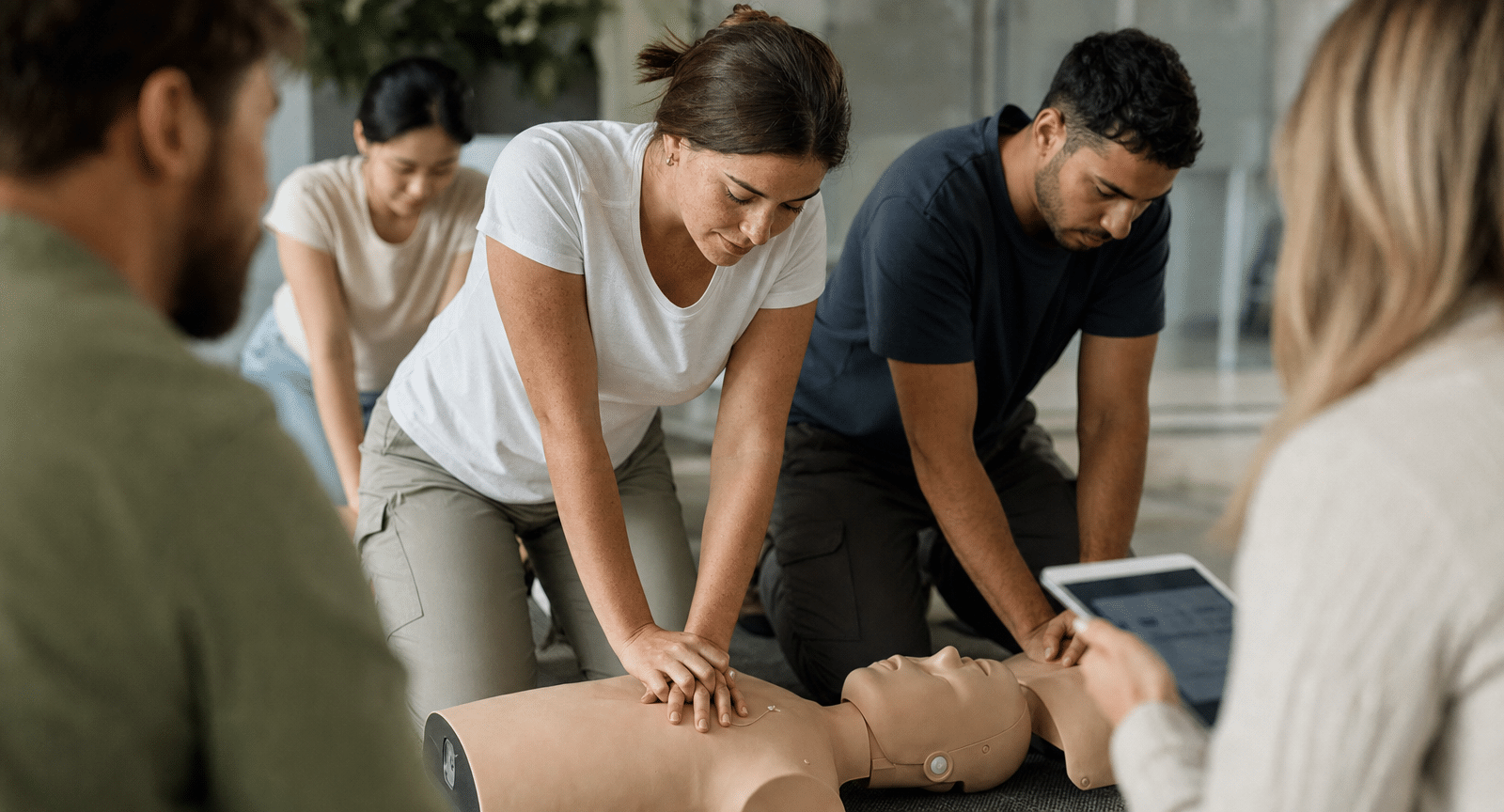
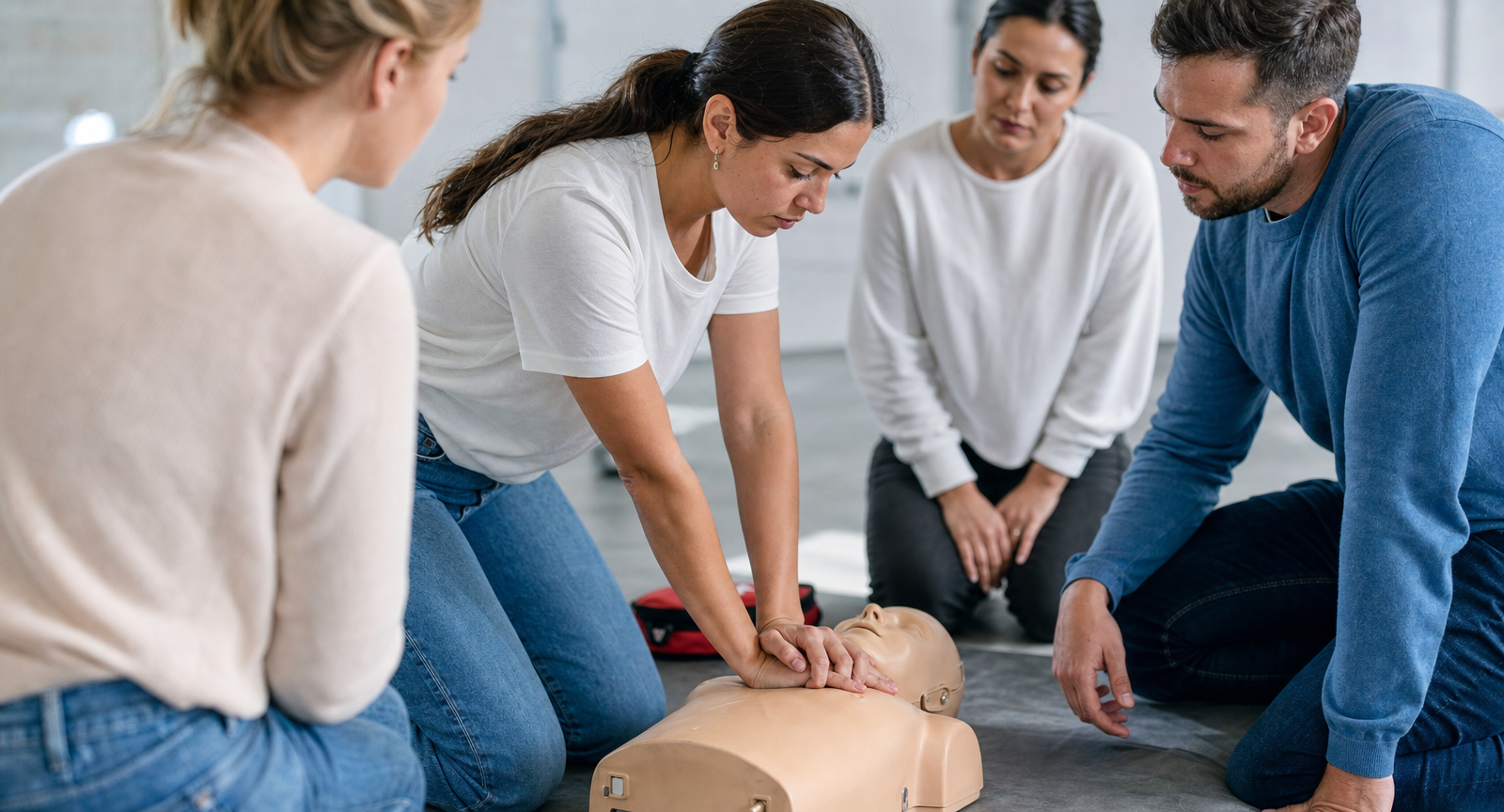
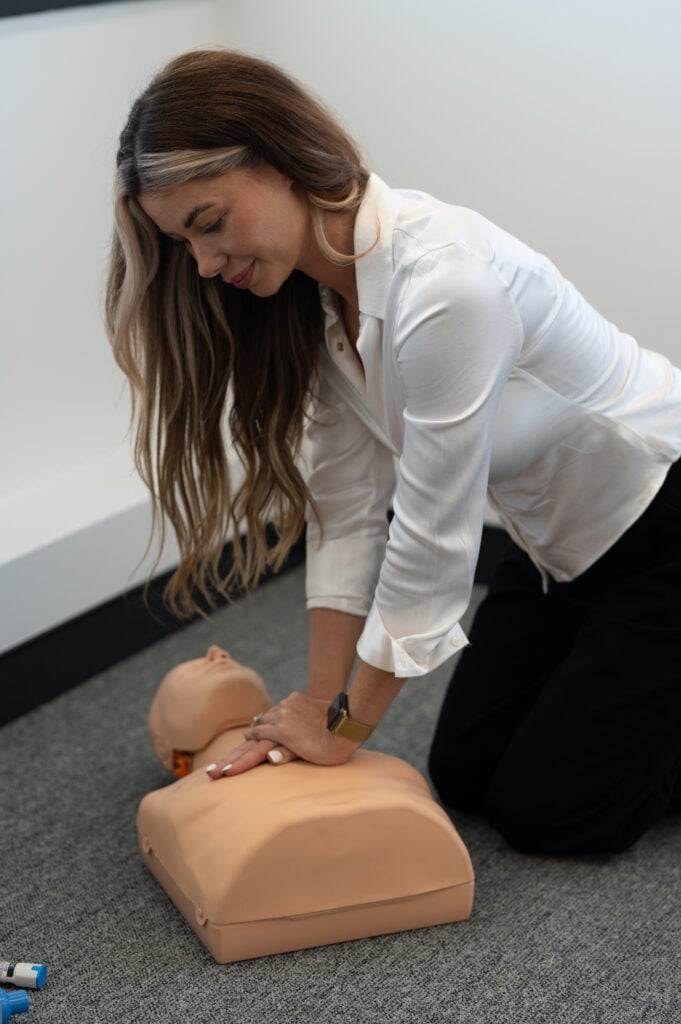
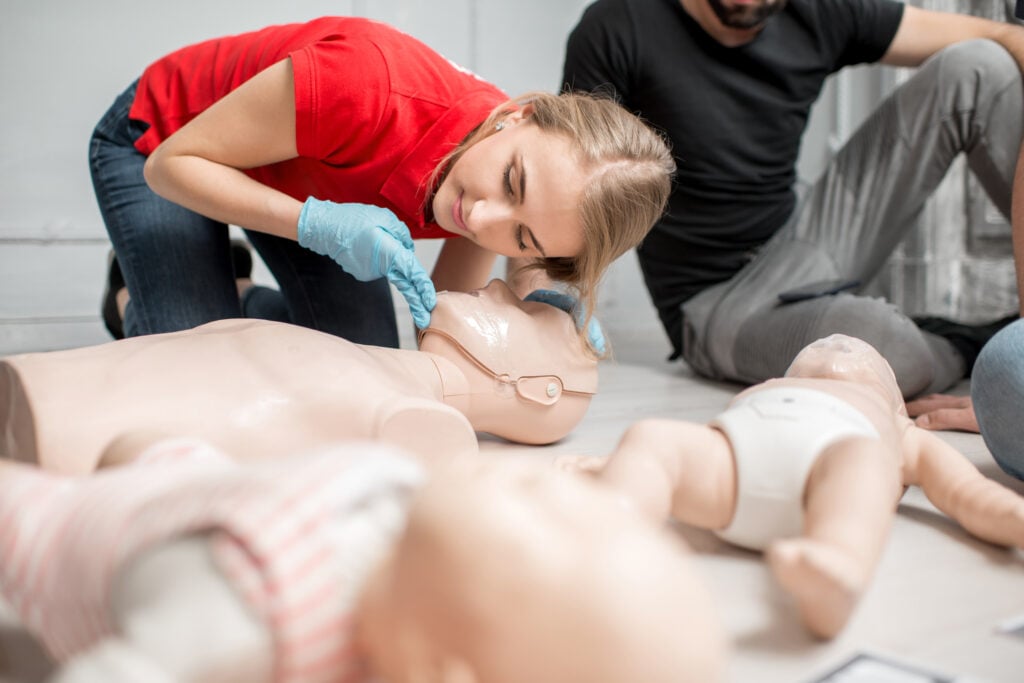
Hands-on practice forms the core of every CPR course. You’ll learn the correct compression depth and rate for adults (at least 5cm deep, 100–120 compressions per minute), plus the technique differences for children and infants.
AED and defibrillator use
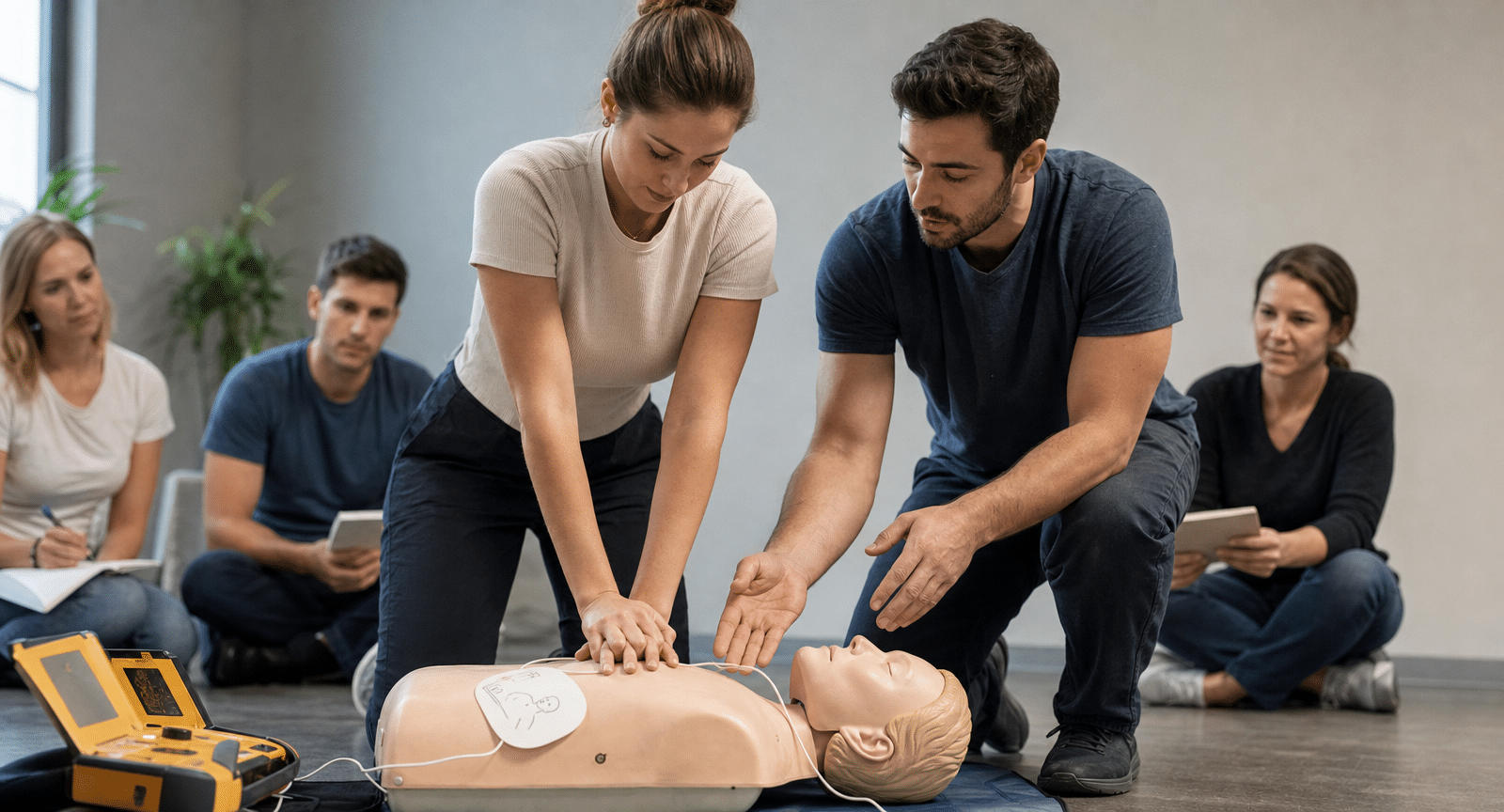
An Automated External Defibrillator (AED) is a portable device that analyses heart rhythm and delivers a shock if needed. You’ll learn safe pad placement and how to follow the device’s voice prompts — withsurvival rates reaching 60–70% when CPR and AED use are combined. Modern AEDs are designed for use by anyone, no medical background required.
Bleeding, burns, fractures and shock
Wound management includes direct pressure for bleeding control and appropriate dressing techniques. For burns, you’ll learn the 20-minute cool running water rule. Fracture immobilisation and recognising signs of shock (pale skin, rapid pulse, confusion) are also covered.
Asthma, anaphylaxis and medical emergencies
You’ll practise recognising and responding to common medical emergencies. This includes helping someone use an asthma inhaler, administering an adrenaline auto-injector for severe allergic reactions, and identifying signs of stroke and seizure.
How Long Does a Weekend First Aid Course Take
Duration varies by course type and delivery format:
Course | Traditional Face-to-Face | Blended (Online + Practical) |
CPR (HLTAID009) | Approximately 2 hours | 1–1.5 hours practical |
First Aid (HLTAID011) | Approximately 5–6 hours | 2–3 hours practical |
Childcare First Aid (HLTAID012) | Approximately 6 hours | 2–3.5 hours practical |
Advanced First Aid (HLTAID014) | Full day | 5 hours practical |
Blended courses require you to complete online theory before attending your weekend practical session. This pre-learning typically takes 1–3 hours depending on the course.
Delivery Formats for Saturday and Sunday First Aid Training
Weekend courses come in multiple formats to suit different learning preferences and time constraints.
Traditional face-to-face with no online workbook
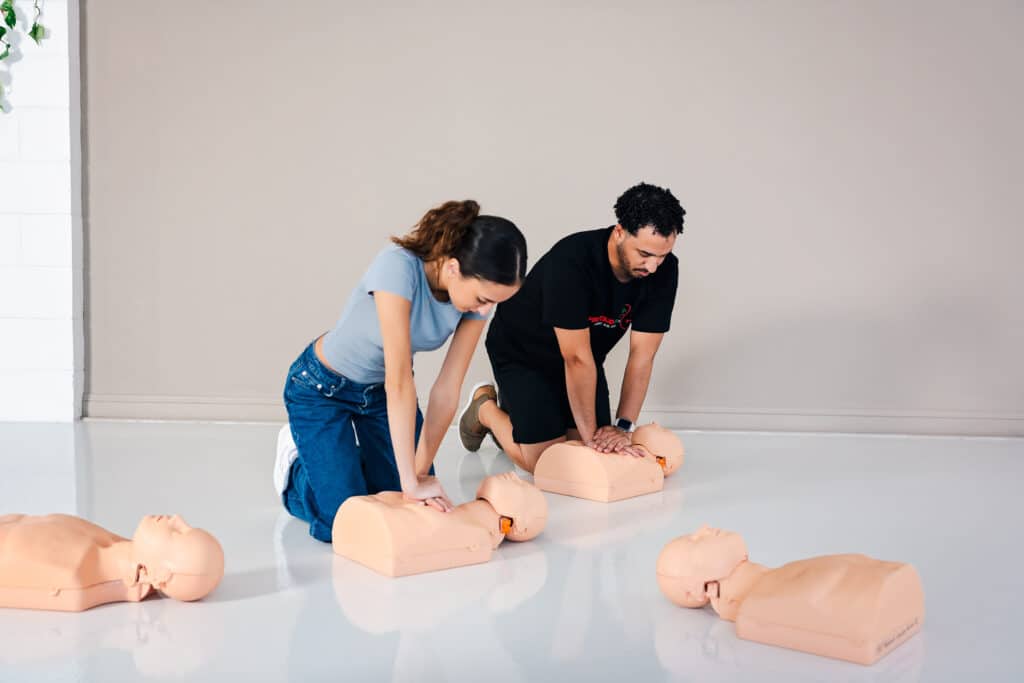
All theory and practical assessment happens on the day. There’s no pre-work. You arrive, learn, practise, and leave with your certificate. This format suits people who prefer in-person instruction without any online components.
Blended online theory and weekend practical
You complete self-paced e-learning modules at home, then attend a shorter practical session on Saturday or Sunday. This reduces your time in the classroom while still ensuring hands-on practice with manikins and equipment.
Express refresher for renewals
If you’re renewing an existing qualification, express sessions offer a fast-track option. You’ll complete online pre-learning and then attend a focused practical assessment. Typically 1–2 hours for CPR and 2–3 hours for First Aid.
Live Zoom weekend sessions
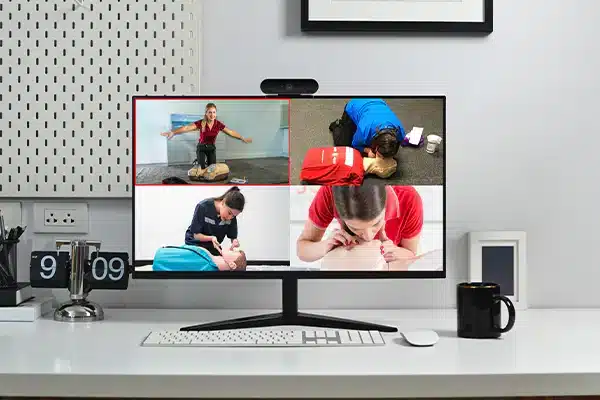
Some providers offer 100% online training via live Zoom sessions. Equipment, including a mini manikin, is mailed to you beforehand. A trainer guides you through practical demonstrations in real time.
Who Should Attend a Weekend First Aid Class
Weekend sessions suit anyone who can’t attend weekday training. Certain groups particularly benefit from Saturday and Sunday availability.
Workplace first aid officers and WHS teams
If you’re a designated first aider, weekend training allows you to upskill without taking time off work. With workplaces required to provide trained first aiders at all times, this is especially useful for small businesses where having someone away during business hours creates coverage gaps.
Childcare educators and teachers
ACECQA requires current first aid qualifications for educators in approved services, with at least one qualified educator required on-site at all times children are being educated and cared for. Weekend classes allow you to maintain compliance outside centre hours, with no need to arrange relief staff.
Healthcare and aged care workers
Shift workers often find weekday courses difficult to attend. Weekend availability means you can complete your annual CPR renewal on your days off. Many healthcare roles require CPR renewal every 12 months.
Parents, carers and community members
You don’t need a workplace requirement to attend. Many parents complete first aid training for peace of mind, knowing how to respond if a child chokes or has a severe allergic reaction.
How Much Does a Weekend First Aid Course Cost in Australia
Pricing varies by course type and provider, but weekend sessions typically cost the same as weekday equivalents. There’s no premium for Saturday or Sunday attendance.
As a general guide, CPR courses start from around $45–$80, while comprehensive First Aid courses (HLTAID011) range from approximately $97–$150. Childcare First Aid and Advanced First Aid courses sit at higher price points due to extended content.
Tip: Look for providers with transparent, all-inclusive pricing. Hidden fees for certificates, materials, or administration can add up. Same-day digital certification and all equipment are typically included in the quoted price.
Same-Day Certification and Nationally Recognised Statement of Attainment
Upon successful completion, you receive a Statement of Attainment listing your HLTAID unit codes. This is a nationally recognised qualification issued by Registered Training Organisations under the Australian Qualifications Framework.
Many providers issue digital certificates on the same day (conditions apply), so you can often email proof of completion to your employer before leaving the venue.
- CPR (HLTAID009): Valid for 12 months with annual renewal recommended
- First Aid (HLTAID011, HLTAID012): Valid for 3 years
- Advanced First Aid (HLTAID014): Valid for 3 years
Even though First Aid certificates last 3 years, the Australian Resuscitation Council recommends refreshing CPR skills annually. Guidelines and techniques do change, and regular practice helps maintain confidence.
Where to Find Weekend First Aid Classes Near You
Weekend sessions run across Australia at public training venues and through onsite workplace delivery.
Saturday and Sunday sessions in major cities
Training providers operate in CBD locations and suburban venues, typically selected for accessibility by public transport and parking availability. Sydney, Melbourne, Brisbane, Perth, Adelaide, and regional centres all have weekend options.
Onsite weekend first aid training for workplaces
If your team works weekends or you want to minimise weekday disruption, you can arrange for trainers to come to your premises on a Saturday or Sunday. Group sizes typically range from 5–24 participants.
How to Book a Weekend First Aid Class
Booking is straightforward through most providers’ online systems.
Step 1: Choose your course and delivery format
Identify which qualification you need: CPR, First Aid, Childcare First Aid, or Advanced First Aid. Then decide whether you prefer fully face-to-face, blended, express, or Zoom delivery.
Step 2: Select a Saturday or Sunday date and venue
Use the provider’s online calendar to find weekend sessions at a convenient location. Popular dates can fill quickly, so booking a week or two ahead is wise.
Step 3: Provide your USI and complete pre-class reading
A Unique Student Identifier (USI) is a 10-digit reference number required for all nationally accredited training in Australia. If you don’t have one, you can create it for free at usi.gov.au. Any pre-reading or online modules will need to be completed before you attend.
Step 4: Attend, get assessed and receive your certificate
On the day, you’ll complete practical assessments demonstrating your skills. Upon successful completion, your digital certificate is issued, often within hours.
Book Your Weekend First Aid Class with FirstAidPro
FirstAidPro is a Registered Training Organisation (RTO Code: 31124) offering nationally accredited first aid and CPR courses 7 days a week across 170+ locations Australia-wide. Whether you prefer traditional face-to-face training with no online workbook, blended learning, express refreshers, or live Zoom sessions, there’s a format to suit your schedule.
With same-day digital certification, experienced trainers, and competitive pricing, getting certified on a Saturday or Sunday is straightforward.
Lorem ipsum dolor sit amet, consectetur adipiscing elit. Ut elit tellus, luctus nec ullamcorper mattis, pulvinar dapibus leo.
Frequently Asked Questions About Weekend First Aid Classes
Yes. Most first aid courses including HLTAID011 Provide First Aid can be completed in a single Saturday or Sunday session, depending on the delivery format you choose. Blended options require online pre-learning before your practical day.
Yes. HLTAID011 Provide First Aid and HLTAID012 Childcare First Aid both include HLTAID009 CPR as a component. You receive CPR certification as part of the course without booking separately.
Yes. Weekend courses deliver the same nationally recognised Statement of Attainment as weekday sessions. Employers and regulators across Australia accept weekend-issued certificates for workplace compliance.
Yes. Renewal and refresher courses are available on weekends. Express options exist for those who have previously held the qualification, reducing practical session time.
Yes. A Unique Student Identifier is mandatory for all nationally accredited training in Australia. You can create one for free online at usi.gov.au before your course.
Availability on public holidays varies by provider and location. Check the booking calendar for specific dates in your area, as some venues do operate on selected public holidays.
The content on this website offers general insights regarding health conditions and potential treatments. It is not intended as, and should not be construed as, medical advice. If you are facing a medical emergency, dial 000 immediately and follow the guidance provided.