



Applicable to:
Construction
Warehousing

First Aid for Fractures in Australia: Open & Closed Fracture Management with DRSABCD

x-ray of hand & arm bones

Table of Contents

Sharon McCulloch

Key Takeaways

  • A fracture is a break or crack in a bone and needs prompt first aid.
  • Use the DRSABCD action plan to manage any life-threatening situation first.
  • Immobilise the injured limb with a splint or sling without moving it.
  • Call Triple Zero (000) for serious fractures, especially open or compound types.
  • First aid training helps you respond correctly and calmly in an emergency.


Knowing first aid for fractures can be the difference between a safe recovery and long-term complications. A fracture is a break or crack in a bone. It can range from a small hairline crack to a complete break.

Fractures can happen from falls, accidents, direct blows, overuse, or conditions that weaken bones such as osteoporosis. A closed fracture means the bone is broken but the skin stays intact. An open (compound) fracture means the bone breaks through the skin, which raises the infection risk.

Across 21+ years in emergency care and 12+ years training first aiders, our trainers have seen calm, correct first aid limit pain. We deliver the HLTAID011 Provide First Aid course at 170+ First Aid Pro venues Australia-wide.

This guide is for everyday Australians who want to help confidently at the scene. We explain how to spot a fracture, apply first aid for fractures step by step, and know when to get help. To build hands-on skills, enrol in a nationally recognised first aid course such as HLTAID011 Provide First Aid with our trainers.

Female doctor in a blue medical gown checking broken leg and shows the male patient lateral projection x-ray of foot and ankle.

Understanding Fractures: What You Need to Know

A fracture is a break, crack, or splintering of a bone. It can be caused by trauma, overuse, or an underlying medical condition. According to the Australian Institute of Health and Welfare (AIHW), fractures accounted for around 226,000 hospitalisations and 407,000 emergency department presentations in Australia in 2024–25.

Fractures range from minor hairline cracks to severe compound fractures where the bone pierces the skin. They can be complete, breaking into two or more pieces, or partial, where a crack does not go all the way through. A fracture can occur in any bone.

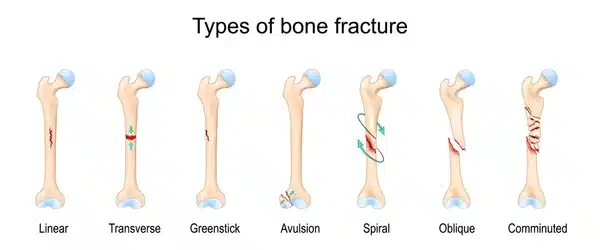
Types of Fractures

Understanding the different types of fractures helps you apply the right first aid while you wait for professional help.

Type

What it means

Closed

The skin stays intact over the break.

Open (compound)

The bone pierces the skin, raising the infection risk.

Comminuted

The bone shatters into three or more pieces.

Greenstick

The break is incomplete and common in children.

Oblique

The break follows an angled pattern.

Stress (hairline)

Small cracks form from repetitive force.

Transverse

The break runs in a straight line across the bone.

Recognising the Signs and Symptoms of a Fracture

woman with sports fracture injury treating fractures

Fractures usually follow trauma such as a fall, sports injury, or accident. Watch for these common signs:

  • Pain at the injury site that often worsens with movement or pressure.
  • Swelling and tenderness around the injury.
  • Bruising or discolouration of the skin.
  • Deformity or an unusual shape in the limb or joint.
  • Loss of movement, or an inability to move the limb normally.
  • Trouble bearing weight, or refusal to move it (especially in children).
  • A grating sensation or sound when the bone moves.
  • Numbness or tingling if nerves are affected.
  • An open wound with bone showing, in an open fracture.
  • Shallow breathing or chest pain on movement, with rib fractures.


In severe cases, the person may feel dizzy or faint, or show signs of shock, particularly with heavy blood loss. Young children may simply refuse to use the limb or cry when you touch it. If you care for children, our childcare first aid course, HLTAID012 Provide First Aid in an Education and Care Setting, teaches paediatric-specific response.

If you notice these signs, suspect a fracture and seek medical attention promptly. Urgent signs — a limb at an unusual angle, heavy bleeding, visible bone, or signs of shock — need emergency care.

First Aid for Fractures

first aid for a fracture - arm

The DRSABCD Approach

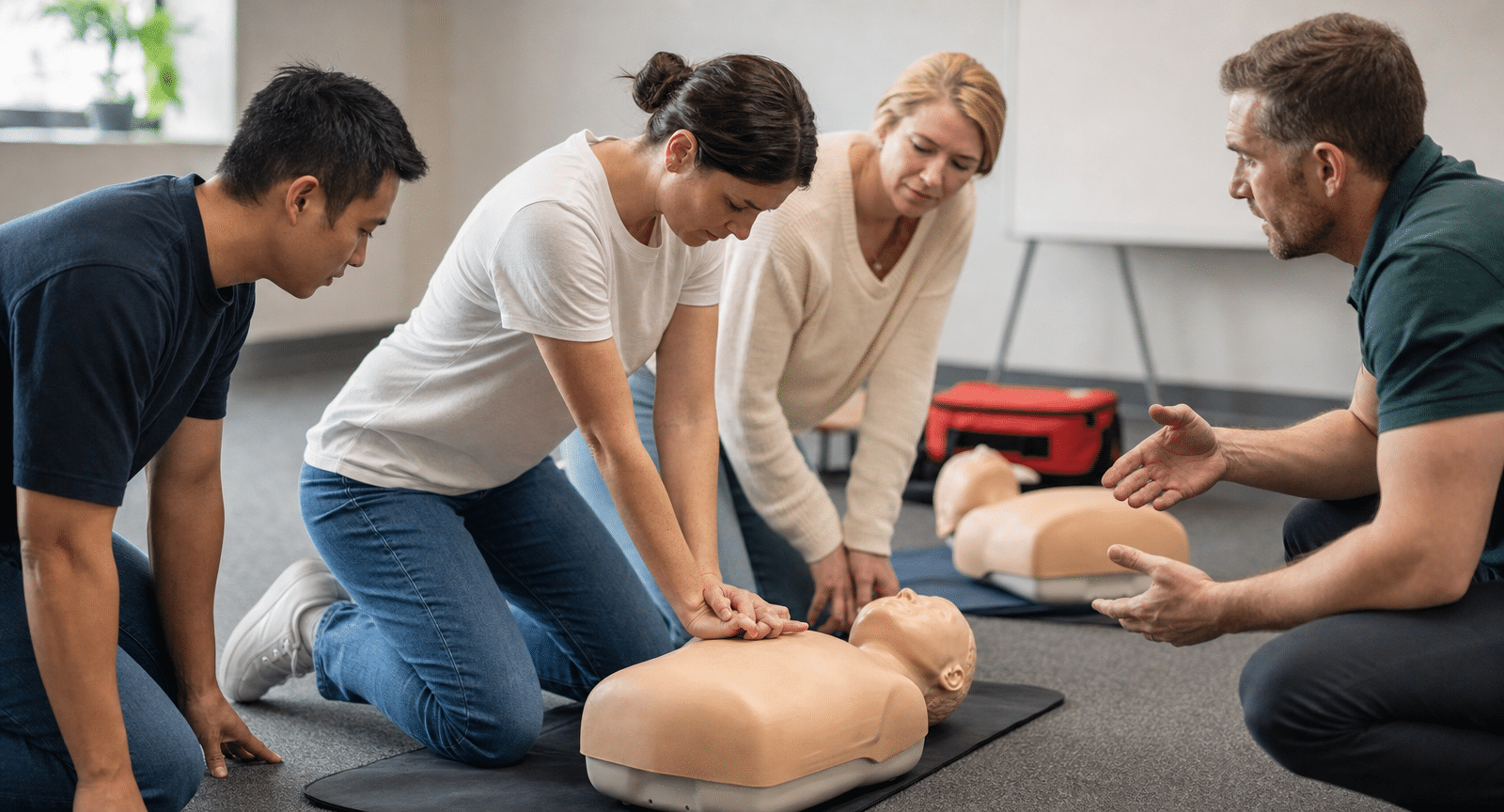
When you arrive at an emergency, follow the DRSABCD action plan, especially if the person is unresponsive or you suspect a head or spinal injury. DRSABCD is the action plan defined by the Australian and New Zealand Committee on Resuscitation (ANZCOR). The plan includes CPR and defibrillation, so hands-on CPR training in HLTAID009 Provide Cardiopulmonary Resuscitation helps you act with confidence.

Step

Action

D – Danger

Make sure the scene is safe.

R – Response

Check whether the person is conscious.

S – Send for help

Call Triple Zero (000).

A – Airway

Open and clear the airway.

B – Breathing

Look, listen and feel for breathing.

C – CPR

Start CPR if the person is not breathing.

D – Defibrillation

Apply a defibrillator if one is available.


For a suspected fracture, only move on to immobilisation once the person is conscious and breathing.

Managing Pain, Swelling, and Bleeding

Controlling Bleeding

  • Apply direct pressure with a sterile dressing or clean cloth.
  • If bone is protruding, press around the exposed bone, not over it.
  • Cover the wound to reduce the risk of infection.
  • Do not remove embedded objects — pad around them instead.
  • Secure with a bandage, but not too tight, and check circulation often.
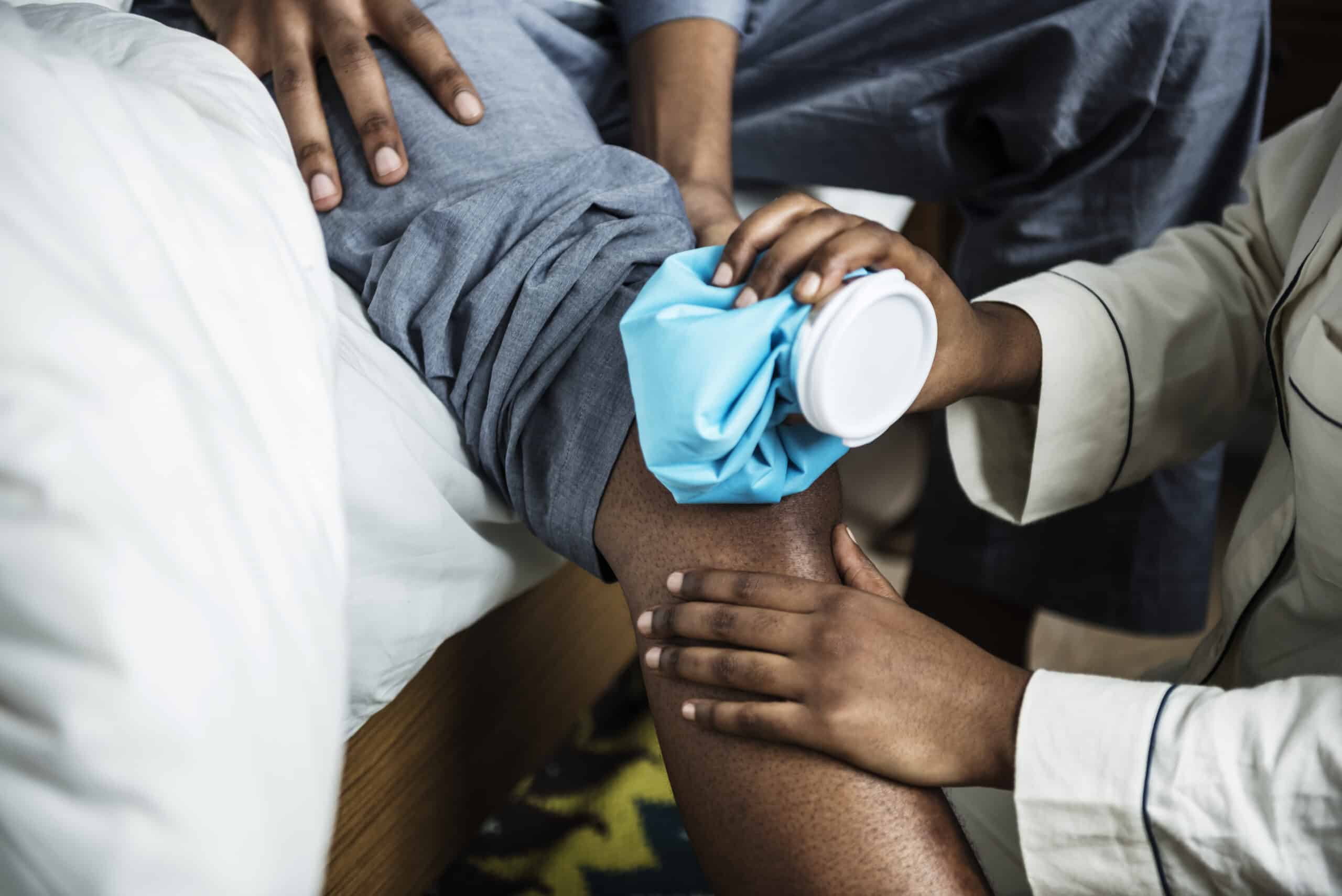
applying ice to manage swelling

Managing Swelling

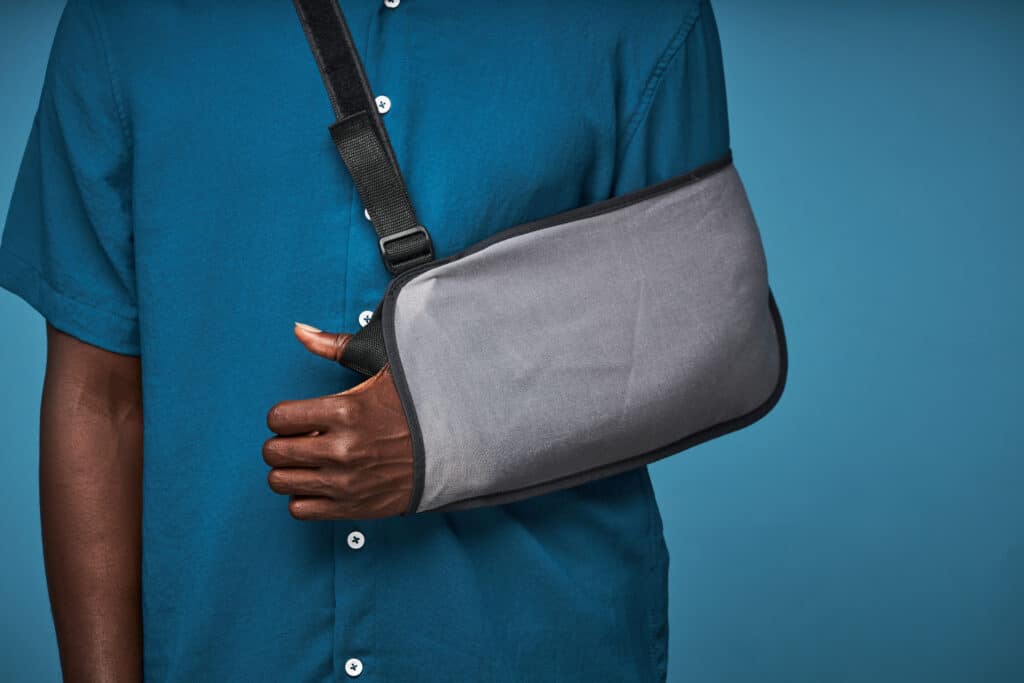
  • Immobilise the limb with a splint or sling in the position you found it.
  • Apply an ice pack wrapped in cloth for 15–20 minutes.
  • Do not apply ice directly to the skin.
  • Raise the limb above heart level if it does not cause more pain.

Managing Pain

  • Keep the person still and comfortable.
  • Offer paracetamol or ibuprofen only if it is safe and appropriate.
  • Use ice to help numb the area and reduce swelling.
  • Watch for signs of shock such as pale skin, a rapid pulse, or faintness.

Immobilising the Injured Limb: Splints and Support

  1. Do not attempt to straighten the bone.
  2. Support the limb in the position you found it.
  3. Use a rigid item such as a stick, ruler, or rolled newspaper.
  4. Pad the splint well for comfort.
  5. Wrap the splint with a bandage above and below the break.
  6. Check circulation every 15 minutes.


Keep bandages firm but not tight. Watch for pale or blue fingers or toes, numbness, or cold skin. For step-by-step visuals, see our first aid charts.

How to Apply a Splint
1 Do not attempt to straighten the bone.
2 Support the limb in the position found.
3 Use a rigid item (stick, ruler, rolled newspaper) as a splint.
4 Wrap the splint using a bandage above and below the fracture site.
5 Pad the splint well to avoid pressure points.
6 Check circulation every 15 minutes.
TIP Tip: Ensure bandages are not too tight. Watch for signs of loss of circulation: pale or blue fingers/toes, numbness, or cold skin.
Be confident in your first aid. Join a First Aid Pro course today and get hands-on training in fracture and emergency care.
Remote First Aid Course Brisbane - First Aid Pro

When to Seek Medical Assistance

Always seek urgent medical help when you see any of the following:

  • a suspected open or compound fracture
  • a limb that is deformed or cannot move
  • a fracture of the head, neck, spine, or ribs
  • bleeding you cannot control
  • severe pain that will not ease

Call Triple Zero (000) and ask for an ambulance for any serious or life-threatening injury.

applying ice pack to injured leg

Special Considerations: Sprains, Dislocations, and Rib Fractures

Sprains

Use the RICE approach: Rest, Ice, Compression, and Elevation. Remember not to put ice directly on the skin. Rest the joint, and see a doctor or physio if pain, swelling, or instability persists.

Dislocations

Do not try to put the joint back in place. Support the joint in the position you found it, using padding, a splint, or a sling. Apply a cold pack (never directly on the skin).

Call Triple Zero (000) if there is severe pain, obvious deformity, numbness, or the limb looks pale or blue.

Rib Fractures

Do not bind or strap the chest. Help the person sit in a position that eases their breathing, and encourage slow, steady breaths. Support the injured side with a soft pad or pillow.

Call Triple Zero (000) and watch for worsening breathlessness, blue lips, or drowsine

Infection Control in Open Fractures

Use sterile dressings and avoid contaminating the wound. Do not touch exposed bone. Wear disposable gloves if you have them.


Item

Use

Sterile dressing

Cover and protect the wound.

Triangular bandage

Immobilise a limb or support an arm.

Gauze and tape

Control bleeding and secure dressings.

Recovery, Monitoring, and Rehabilitation

After emergency treatment, a hospital may apply a cast or brace, or perform surgery. Recovery time depends on the type and severity of the fracture.

Physiotherapy may help you regain strength and movement. Watch for signs of infection, especially after a compound fracture.

Find a Course Near You

Confidence comes from hands-on practice. You can gain your HLTAID011 Provide First Aid skills with First Aid Pro, RTO 31124, with Certificates Issued Same Day* (T&Cs Apply). We run courses at venues Australia-wide, including Adelaide, Sydney, Melbourne, Brisbane, and Perth.

  • Learn to manage fractures, bleeding, shock, and more.
  • Choose face-to-face, blended, or online delivery.
  • Book a course at a time that suits you.
 
Find a first aid course near you and be ready to help when it counts.

Rib Fractures

  • Initial Assessment: Assess for associated injuries—such as pneumothorax, hemothorax, and pulmonary contusion—which may require urgent intervention.
  • Pain Management: Adequate analgesia is crucial to allow effective breathing and coughing, reducing the risk of pneumonia. Multimodal pain strategies (oral, localized, nerve blocks) may be needed.
  • Respiratory Support & Activity: Encourage deep breathing, coughing, and ambulation to prevent atelectasis and respiratory complications. Avoid bedrest as much as possible.
  • Red Flags for Emergency Referral: Indications include worsening shortness of breath, low oxygen saturation (<92%), intractable pain, suspected internal organ injury, or signs of shock.
  • Surgical Fixation (SSRF): Surgical stabilisation is increasingly considered, especially for chest wall instability (flail chest), three or more displaced rib fractures, and patients unable to wean from ventilation. Early operation (<72 hours) is favoured when indicated and when no contraindications exist.
  • Special Populations: Elderly and comorbid patients (e.g., COPD, obesity) are at heightened risk for complications and may need more intensive monitoring and support.
  • Follow-Up: Persistent pain, cough, fever, or breathing issues after discharge should prompt review to exclude delayed complications

Infection Control in Open Fractures

Use sterile dressings from your first aid kit and avoid contaminating the wound. Do not touch the exposed bone. Wear disposable gloves if available.

Item

Purpose

Sterile dressing

Cover and protect open wound

Triangular bandage

Immobilise limb or support arm

Gauze and tape

Control bleeding and secure dressings

First Aid for Fractures Quiz
Knowledge Check: First Aid for Fractures Quiz
1. What's the first step in DRSABCD?
a) Check breathing
b) Look for response
c) Check for danger
d) Call for help
2. What is a compound fracture?
a) Bone cracked but skin intact
b) Bone pierces through skin
c) Bone broken in multiple places
d) Bone bent without breaking
3. Should you ever straighten a fractured limb?
a) Yes, to realign it
b) Yes, before splinting
c) No, support in position found
d) Only if there's no pain
4. Why check for circulation below the bandage?
a) To see if the limb is clean
b) To ensure the bandage isn't cutting off blood supply
c) To reduce swelling
d) To see if the bone has healed
5. Which item is most useful for an open fracture?
a) Ice pack
b) Splint
c) Sterile dressing
d) Antiseptic cream

References

  1. Healthdirect Australia – Fractures — https://www.healthdirect.gov.au/fractures
  2. Better Health Channel – Bone Fractures — https://www.betterhealth.vic.gov.au/health/conditionsandtreatments/bone-fractures
  3. Safe Work Australia – Model Code of Practice: First aid in the workplace — https://www.safeworkaustralia.gov.au/doc/model-code-practice-first-aid-workplace
  4. HealthyWA (WA Department of Health) – First Aid for Fractures and Dislocations — https://www.healthywa.wa.gov.au/Articles/F_I/First-aid-for-fractures-and-dislocations
  5. Royal Children’s Hospital Melbourne – Fractures (Broken Bones) — https://www.rch.org.au/kidsinfo/fact_sheets/fractures_broken_bones/
  6. Australian Institute of Health and Welfare (AIHW) – Injury in Australia — https://www.aihw.gov.au/reports/injury/injury-in-australia/contents/summary
  7. Australian and New Zealand Committee on Resuscitation (ANZCOR) – Guideline 8: Cardiopulmonary Resuscitation (CPR) — https://www.anzcor.org/home/basic-life-support/guideline-8-cardiopulmonary-resuscitation-cpr

Frequently Asked Questions

What’s the difference between a fracture and a broken bone?

There’s no difference—‘fracture’ is the medical term for a broken bone.

Can I move someone with a suspected fracture?

Only if it’s absolutely necessary (e.g. danger present). Otherwise, immobilise and wait for help.

Do I need first aid training to help with a fracture?

While anyone can help, certified first aid training ensures correct technique and confidence during emergencies.

How long do fractures take to heal?

It depends on the severity, age, and health of the person. Most fractures heal within 6–8 weeks.

Are rib fractures treated differently?

Yes—do not bind or compress the chest. Support breathing and seek medical care.

The content on this website offers general insights regarding health conditions and potential treatments. It is not intended as, and should not be construed as, medical advice. If you are facing a medical emergency, dial 000 immediately and follow the guidance provided.

Recent Posts

North Hobart