



Sharon has 21+ years of experience as a qualified Emergency Care Nurse registered with the Australian Health Practitioner Regulation Agency (APHRA) and 12+ years as a First Aid Trainer.
She takes pride in FirstAidPro making first aid training available, comprehensive and affordable to everybody.
Bites from Australian ticks can range from a minor skin irritation to a life-threatening medical emergency — making it essential to know how to identify, remove, and treat ticks safely. Ticks are small, blood-sucking arachnids found throughout Australia, from coastal bushland to suburban backyards. They are parasites that feed on the blood of mammals, birds, and reptiles — and despite a common misconception, they are not insects. With around 70 different types of ticks recorded across the country, knowing which species you are dealing with, what it looks like, and how to respond is important for every Australian household — whether you have children, pets, or simply enjoy the outdoors.
Be prepared before the next tick season. Enrol in a Nationally Recognised First Aid Course with First Aid Pro → firstaidpro.com.au
Key Takeaways - Australian ticks
- Australian ticks range to around 70 different types, with the paralysis tick being the most dangerous
- Ticks are arachnids — not insects — and are parasites that feed on the blood of mammals, birds, and reptiles
- Tick saliva can transmit disease, inject toxins, and trigger serious allergic reactions, including anaphylaxis
- Never squeeze, burn, or forcibly remove a tick — this may cause it to inject more venom or allergens into the bloodstream
- Freeze the tick first using an ether-based spray, then brush it away once dead
- Knowing basic first aid could save a life when tick bitr reactions occur
Are Ticks an Issue in Australia?
Yes — ticks are very much an issue in Australia, particularly along the east coast. The highest concentrations of tick activity are found in Queensland, New South Wales, and Victoria, with coastal scrub and bushland presenting the greatest risk. That said, ticks are found across most states, including South Australia and Western Australia, so no part of the country is entirely free from the risk of a tick bite.
Tick season typically runs from spring through to early autumn (September to April), though in warmer parts of Queensland, ticks can remain active year-round. Anyone who spends time in bush areas, long grass, gardens, or near waterways should be tick-aware at all times.
Those most at risk include young children (who may not notice a tick has attached), bushwalkers, campers, gardeners, and pet owners. Tick paralysis is a serious concern for both humans and animals throughout Australia, and the potential for a severe allergic reaction — including anaphylaxis — means that basic first aid knowledge is not just helpful, it could be lifesaving.
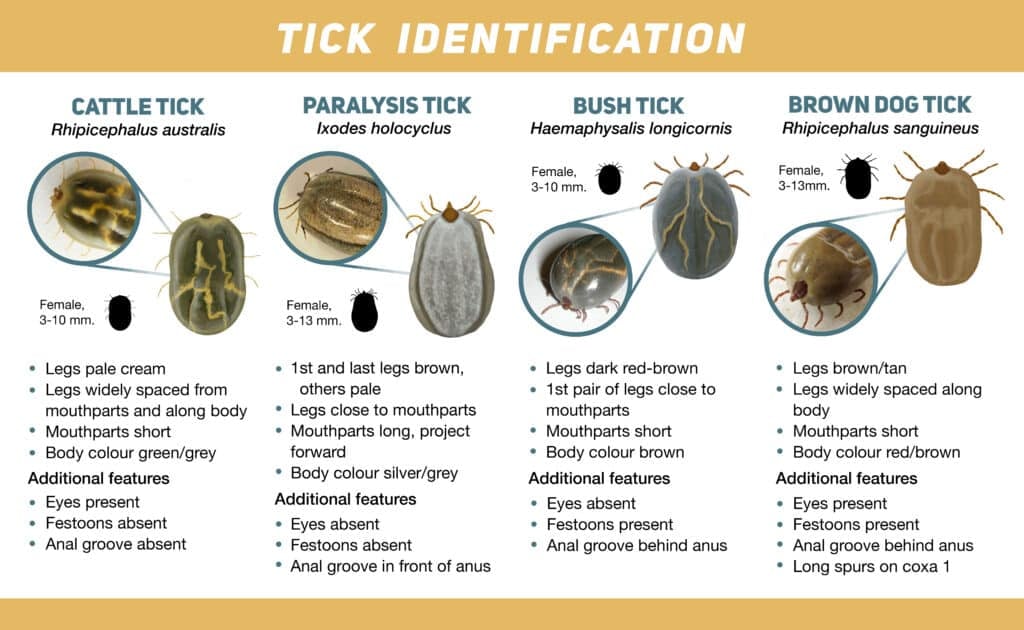
Types of Ticks in Australia: Your Tick Identification Chart
Australia is home to approximately 70 species of ticks. While most rarely come into contact with people, a handful of common ticks pose a real risk to human and animal health. Ticks range in size from a poppy seed (unfed larvae) to the size of a grape (an engorged adult tick). All adult ticks have eight legs and an oval body — confirming they are arachnids, related to spiders and mites, not insects.
Tick Species | Colour (Unfed) | Size (Unfed) | Key Location | Risk Level |
Paralysis Tick (Ixodes holocyclus) | Blue-grey body, reddish-brown legs | 2–3 mm | East coast — QLD, NSW, VIC | HIGH — neurotoxin, anaphylaxis |
Bush Tick (Haemaphysalis longicornis) | Brown, flat | 1–2 mm | Eastern & southern Australia | MODERATE — irritation, infection |
Brown Dog Tick (Rhipicephalus sanguineus) | Reddish-brown | 2–3 mm | Throughout Australia | MODERATE — disease transmission |
Grass Tick / Cattle Tick Larvae | Orange-red, in clusters | < 1 mm | QLD, grassy areas | LOW–MODERATE — intense itching |
Ornate Kangaroo Tick (Amblyomma triguttatum) | Brown with white markings | 3–4 mm | Coastal QLD, WA | MODERATE — fever, irritation |
What Does the Paralysis Tick Look Like?
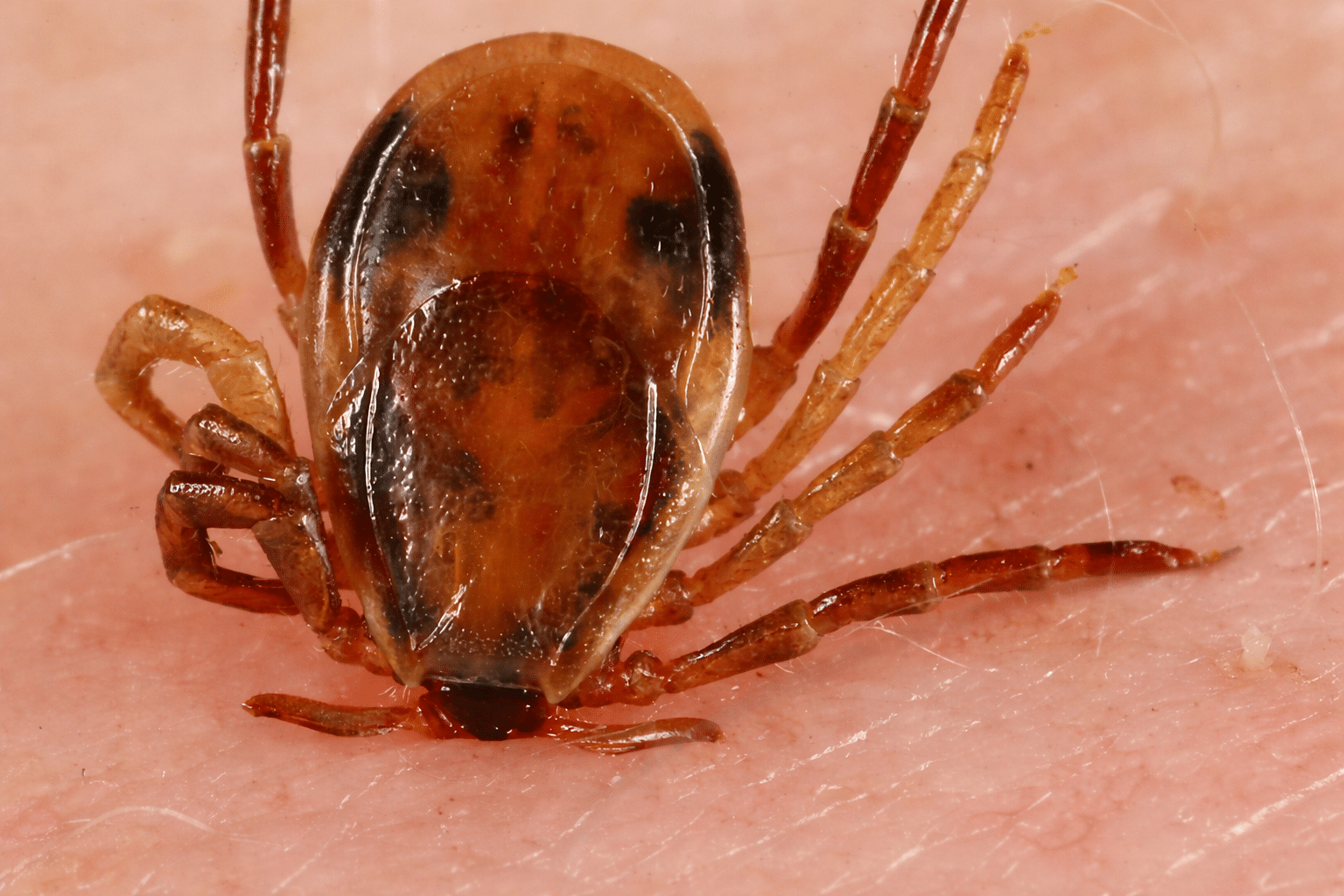
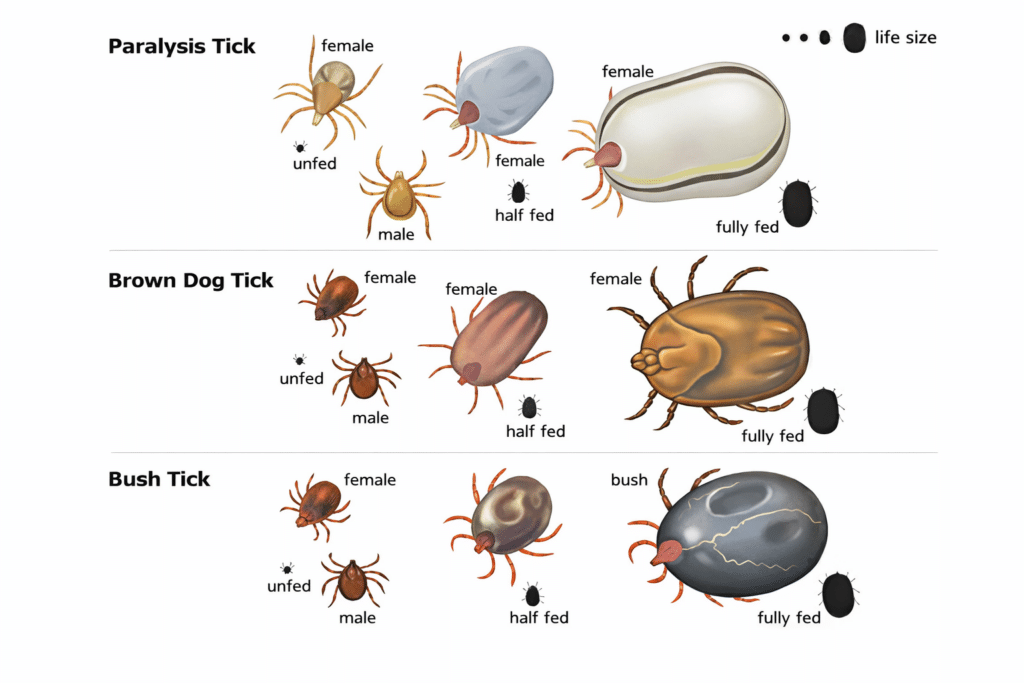
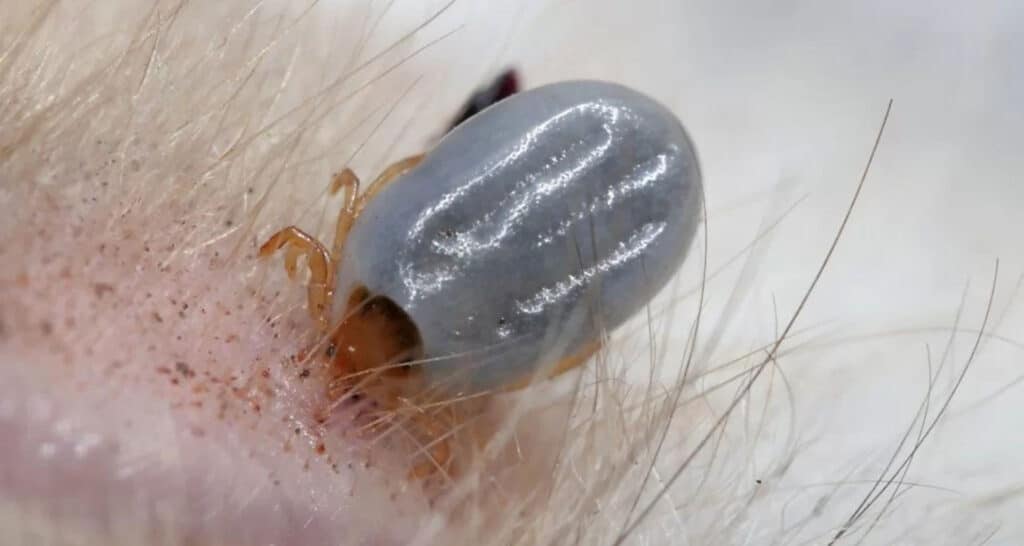
The eastern paralysis tick (Ixodes holocyclus) is the most dangerous tick in Australia and is responsible for the vast majority of serious tick-related medical events. An unfed paralysis tick is roughly 2–3 mm long — about the size of a sesame seed — with a distinctive blue-grey body and reddish-brown legs. Once it has fed and become engorged, it can swell to nearly 1 cm in diameter and take on a pale grey or bluish-green colour, which is why people sometimes describe seeing a “green tick” or “white tick” — these are typically engorged paralysis ticks rather than separate species.
Found almost exclusively along the coast of Australia — from North Queensland through New South Wales and into Victoria — this tick produces a neurotoxin through its saliva that can cause tick paralysis in both humans and animals. A tick must be attached for a period of time before enough toxin is delivered to cause serious symptoms, (typically about 3 -5 days) which is why early detection and safe removal are critical.
What Does the Bush Tick Look Like?
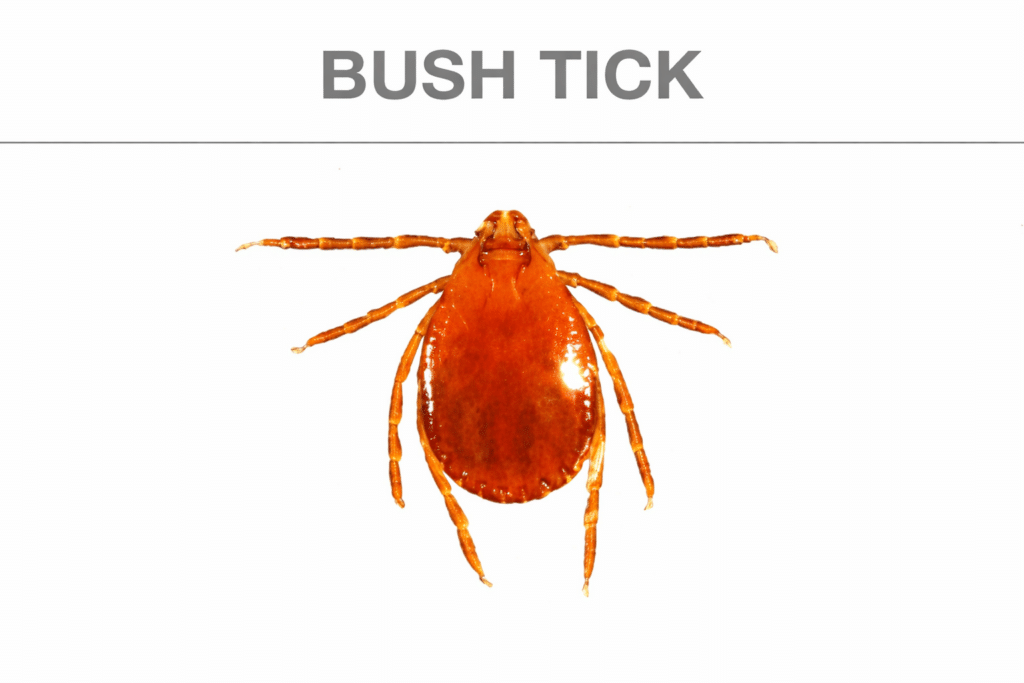
The bush tick is smaller than the paralysis tick and is brown and flat when unfed. It lacks the distinctive grey-blue colouring of the paralysis tick, making it easy to overlook against skin or animal fur. An unfed bush tick measures around 1–2 mm in length. Bush ticks are widespread throughout eastern and southern Australia and are often encountered in grassy paddocks, along fence lines, and in scrubby vegetation.
While bush ticks do not generally produce the same level of neurotoxin as the paralysis tick, they can still cause significant skin irritation at the bite site, secondary bacterial infection if the tick is removed incorrectly, and allergic reactions in sensitive individuals.
Bush Tick vs Paralysis Tick: How to Tell Them Apart
Feature | Paralysis Tick | Bush Tick |
Body colour (unfed) | Blue-grey | Brown |
Leg colour | Reddish-brown | Brown |
Size (unfed adult) | 2–3 mm | 1–2 mm |
Body shape | Oval, rounded | Oval, flatter |
Primary location | Coastal east coast of Australia | Widespread eastern/southern Australia |
Neurotoxin risk | HIGH | Low |
What Does the Brown Dog Tick Look Like?
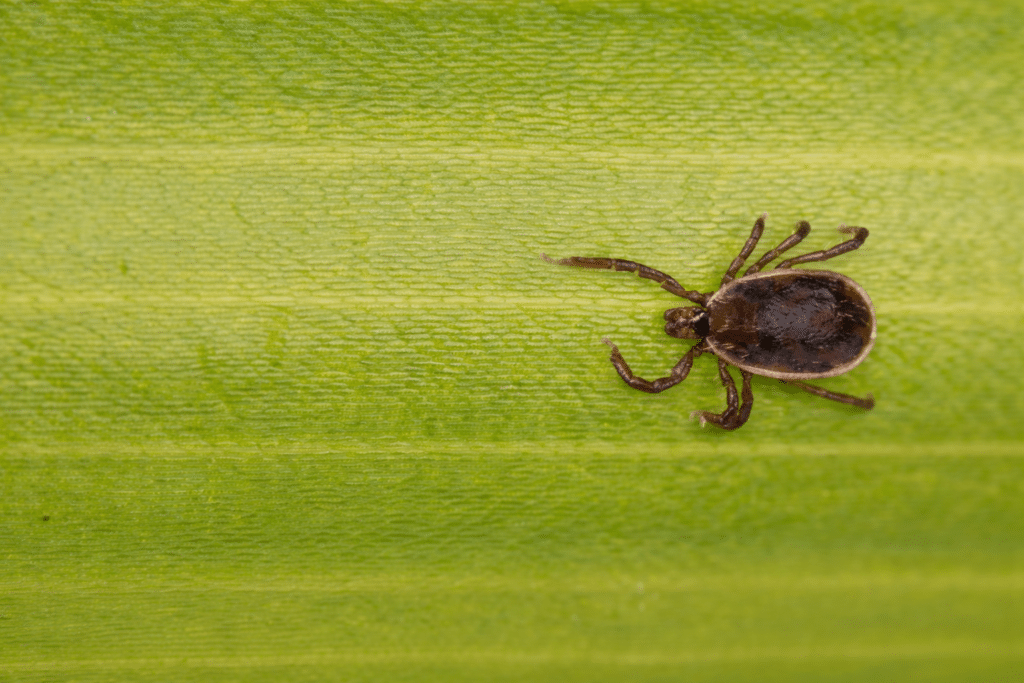
The brown dog tick (Rhipicephalus sanguineus) is a reddish-brown tick found throughout Australia, including in urban areas. It is one of the few tick species that can complete its entire life cycle indoors, making it a common cause of tick infestation in homes with dogs. Unlike the paralysis tick, the brown dog tick is primarily a veterinary concern, though it can and does bite humans. It can transmit diseases including spotted fever rickettsia and other tick-borne pathogens.
What Are Grass Ticks and What Do They Look Like?
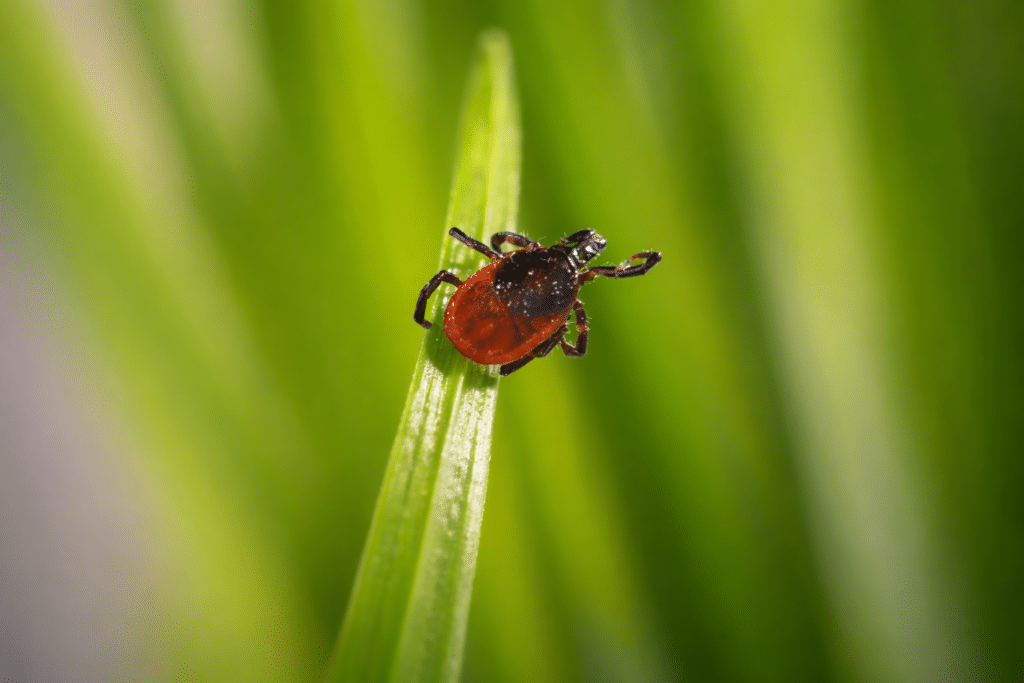
Grass ticks are the larvae of cattle ticks and related species. They are extremely small — less than 1 mm — and orange-red in colour, usually found in clusters attached to the skin. They cause intense itching and irritation but are generally less dangerous than adult ticks. Grass tick larvae are common in Queensland and other grassy, humid areas throughout Australia.
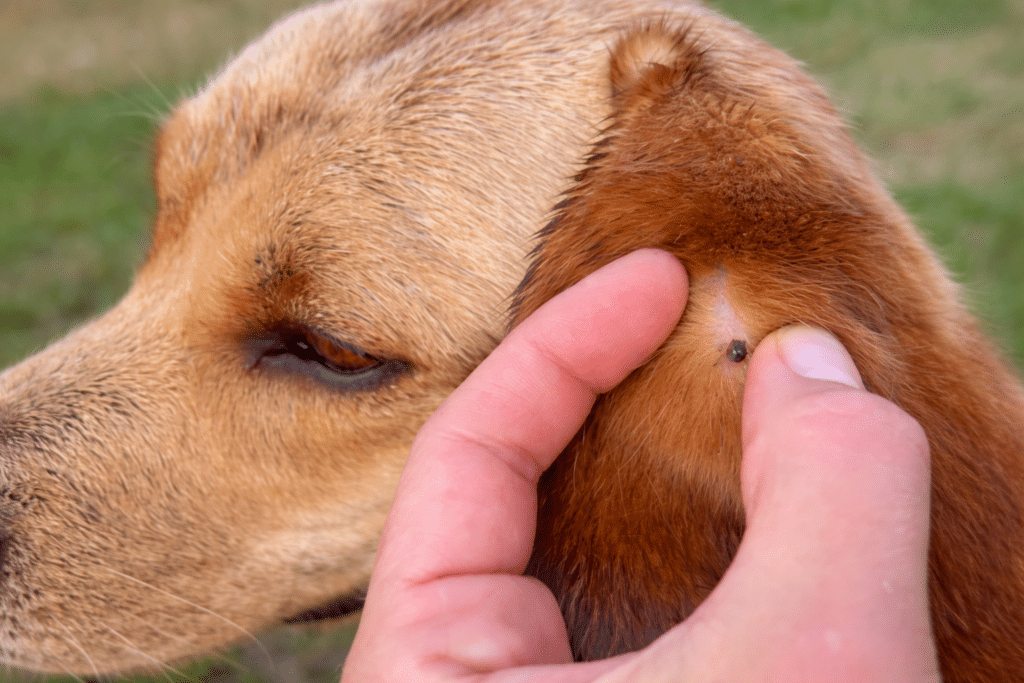
What Do Ticks Look Like on Dogs and Other Pets?
Detecting a tick on a dog, cat, or other pet can be more challenging than on a human, particularly in animals with thick or dark-coloured coats. An embedded tick initially looks like a small lump or unusual skin tag. As it feeds and engorges over several days, it becomes more obvious — swelling to the size of a pea or larger.
The areas most commonly affected include the head, neck, ears (inside and behind), under the collar, between the toes, in the armpits, and around the groin. Part the fur carefully and run your fingers slowly over the skin to feel for any small bumps.
⚠️ Warning Signs of Tick Paralysis in Dogs and Cats
- Weakness or wobbling in the hind legs
- Vomiting or retching
- Laboured or noisy breathing
- Loss of appetite or inability to swallow
- Collapse or unresponsiveness
If your pet shows any of these signs, contact your veterinarian immediately. Tick paralysis in dogs and cats can be fatal without prompt treatment — do not wait to see if symptoms resolve on their own.
First Aid for Tick Bites: A Step-by-Step Guide
Correct first aid for a tick bite begins before the tick is even removed. The most critical rule is this: do not forcibly remove the tick while it is still alive. Attempting to squeeze, twist, burn, or scratch at a live tick that is still attached to the skin may cause it to inject more toxin and allergen-containing saliva — increasing the risk of a serious allergic reaction.
How to Remove a Tick Safely: Step by Step
Follow the currently recommended Australian approach: freeze the tick first, allow it to die, then remove it gently without squeezing, twisting, or disturbing it.
Stay calm and leave the tick alone at first
Do not rub, scratch, squeeze, or press on the bite site. Disturbing a live tick may increase the risk of saliva being injected into the skin.
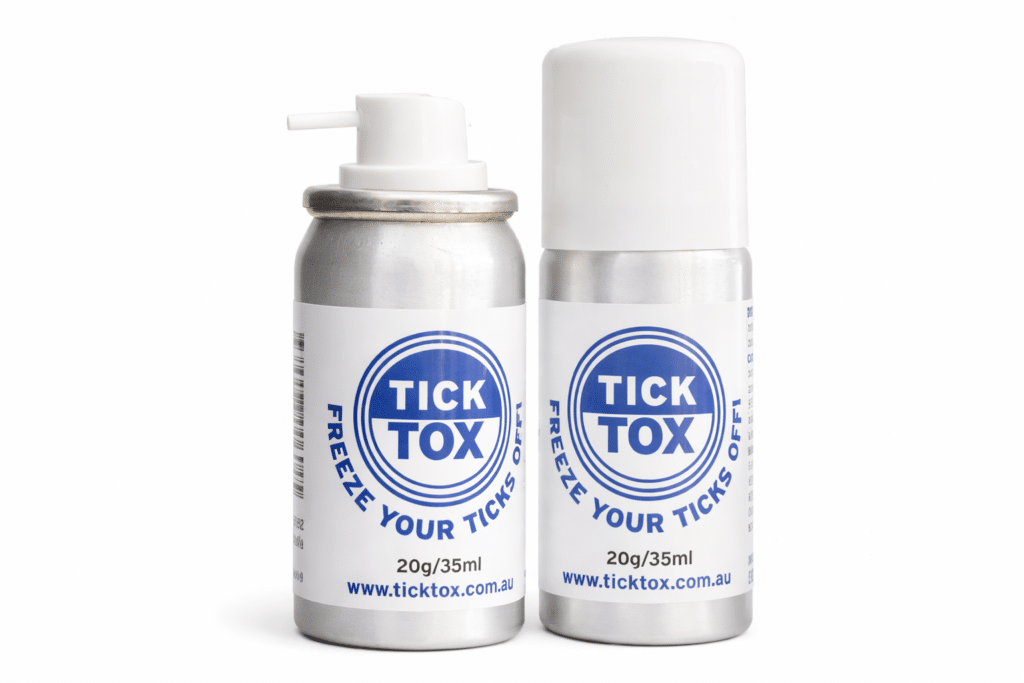
Freeze the tick with an ether-based spray
Apply a freezing product such as Wart-Off Freeze or Tick-Off directly onto the tick to kill it without mechanically compressing it.
Wait until the tick is completely dead
This usually takes a few minutes. Avoid touching or attempting to remove it before it has fully died.
Brush or flick the dead tick off
Once dead, gently brush or flick it away from the skin. Do not pull or twist, as this may leave mouth parts embedded.
Clean and soothe the area
Clean the bite site with antiseptic. Apply a cold pack if there is localised swelling, itch, pain, or irritation.
Monitor closely for the next 24–48 hours
Watch for signs of an allergic reaction, worsening swelling, rash, breathing difficulty, or illness. Seek urgent medical help if symptoms develop.
Do not use tweezers on a live tick — grabbing and squeezing it may force toxin-laden saliva into the wound.
Do not apply irritants such as methylated spirits, nail polish remover, petroleum jelly, or heat.
Do not try to burn the tick off — this can worsen the reaction and irritate the tick.
Do not forcibly remove it with your fingers — pressure can increase the risk of injection from the tick.
Important: If the person develops breathing difficulty, throat swelling, dizziness, collapse, widespread rash, or any sign of anaphylaxis, call 000 immediately and follow emergency first aid procedures.
If no freezing spray is available: use fine-tipped tweezers only. Grasp the tick as close to the skin surface as possible and apply slow, firm, upward pressure without twisting. Clean the area with antiseptic immediately after removal. Note that this method carries a higher risk of saliva injection than the freeze-and-flick method.
Want to know what to do in a tick reaction emergency? Book a Nationally Recognised First Aid Course with First Aid Pro → firstaidpro.com.au
Treating a Reaction to a Tick Bite
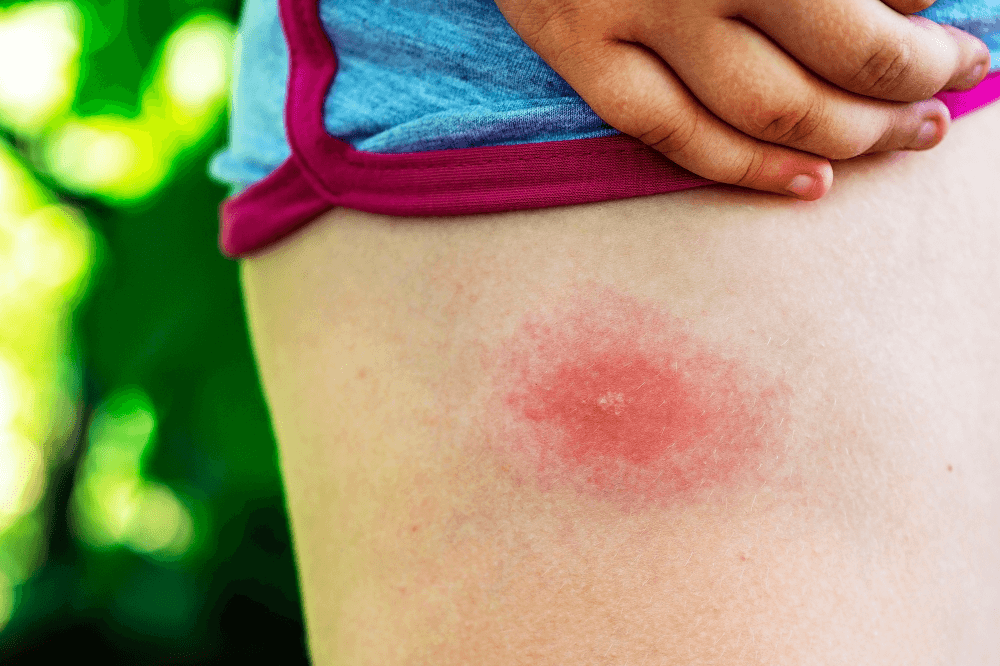
A reaction to tick bites can range from mild localised irritation to life-threatening anaphylaxis. Tick allergy is more common than many people realise, and in some individuals, tick saliva can also trigger mammalian meat allergy (alpha-gal syndrome) — a condition in which the person becomes allergic to red meat and, in some cases, also to mammalian milks and dairy products.
Reaction Type | Symptoms | Action Required |
Mild local reaction | Small lump, redness, itching around the bite site | Remove tick safely, apply antiseptic and cold pack, monitor closely |
Moderate allergic reaction | Hives, swelling, rash spreading beyond bite site | Remove tick safely, give antihistamine if available, seek medical advice |
Anaphylaxis (severe) | Difficulty breathing, throat swelling, dizziness, collapse | Call 000 immediately, use EpiPen if prescribed, begin CPR if unresponsive |
Tick paralysis | Weakness, unsteady gait, difficulty swallowing or breathing | Seek emergency care immediately — call 000 |
Tick typhus | Fever, headache, rash 1–2 weeks after bite | See a GP promptly for antibiotic treatment |
Mammalian Meat Allergy and Tick Saliva
Mammalian meat allergy (MMA) is a tick allergy increasingly recognised in Australia, particularly in areas where the paralysis tick is endemic. It is caused by a carbohydrate called alpha-gal, which is present in tick saliva. Once sensitised, a person may experience allergic reactions — sometimes anaphylaxis — hours after eating red meat. People with this condition are sometimes also allergic to mammalian milks and other animal products. If you have had multiple tick bites and noticed unexplained allergic reactions after eating meat, speak to your GP about testing.
When Should I Worry About a Tick Bite in Australia?
Most tick bites, when managed correctly and promptly, resolve without serious complications. However, there are circumstances in which a tick bite warrants urgent medical attention.
When to Seek Urgent Help After a Tick Bite
Know when symptoms require an emergency response and when a prompt medical review with a GP or medical centre is the right next step.
The person is having difficulty breathing or has throat or facial swelling.
The person is experiencing symptoms of anaphylaxis — widespread hives, rapid heartbeat, dizziness, or collapse.
A child or pet is showing signs of tick paralysis — limb weakness, loss of coordination, or difficulty swallowing.
An adrenaline auto-injector (EpiPen) has been administered.
You develop a rash or bullseye ring pattern around the bite site.
Flu-like symptoms such as fever, headache, or muscle aches appear within 1–3 weeks of a tick bite — this may indicate tick typhus.
The bite site is not healing or shows signs of infection.
You are pregnant, immunocompromised, or have a known tick allergy.
Important: After any serious allergic reaction or suspected tick paralysis, urgent assessment is needed even if symptoms begin to settle.
How to Prevent Tick Bites When Outdoors in Australia
Simple protective habits can reduce the risk of tick attachment during bushwalking, camping, gardening, and other outdoor activities in tick-prone areas.
Wear long-sleeved shirts and long pants tucked into socks in tick-prone bush areas.
Apply a DEET-based insect repellent to all exposed skin and reapply as directed.
Stick to the centre of walking tracks — ticks cling to the tips of vegetation and attach as an animal or human brushes past.
Wear light-coloured clothing so ticks are easier to spot before they attach.
Perform a full-body tick check after every outdoor activity — pay particular attention to the scalp, behind the ears, hairline, underarms, groin, and behind the knees.
Shower soon after coming indoors, as unattached ticks may still be on the body.
Check children and pets thoroughly after time outdoors.
Wash and tumble-dry clothing on a high heat setting after outdoor activities to kill any ticks present.
Tip: The sooner you spot a tick, the lower the chance of it remaining attached unnoticed. A careful check after every outdoor outing is one of the most effective protective habits.
Know what to do when it matters most. Enrol today in a Nationally Recognised First Aid Course with First Aid Pro → firstaidpro.com.au
Knowledge Test: Australian Ticks
Test your understanding with the questions below. Select your answers, then click Check Answers to see how you went and reveal the explanations.
What type of animal are ticks — insect or arachnid?
Arachnid — ticks are related to spiders and mites, not insects.
Which Australian tick is considered the most dangerous, and why?
The eastern paralysis tick (Ixodes holocyclus). Its saliva contains a neurotoxin that can cause tick paralysis and trigger serious allergic reactions, including anaphylaxis.
What is the safest method to remove a tick that is still attached to the skin?
Apply an ether-based freezing spray to kill the tick first, then brush or flick it off once dead. Do not pull or squeeze a live tick.
What is mammalian meat allergy, and how is it connected to tick bites?
Mammalian meat allergy (alpha-gal syndrome) is triggered by a substance called alpha-gal in tick saliva. After sensitisation, the person can develop allergic reactions — sometimes anaphylaxis — after eating red meat.
Name three warning signs that a dog may have tick paralysis.
Any three of: wobbling or weakness in the hind legs, vomiting, laboured breathing, loss of appetite, or collapse.
True or False: You should use tweezers to pull out a live tick as quickly as possible.
False. Pulling out a live tick with tweezers can squeeze toxin-laden saliva into the wound and increase the risk of a serious reaction.
What should you do first if you suspect a person is having an anaphylactic reaction to a tick bite?
Call 000 immediately. Administer a prescribed adrenaline auto-injector (EpiPen) if available. Lay the person flat, keep them calm, and begin CPR if they become unresponsive.
References
Australasian Society of Clinical Immunology and Allergy (ASCIA). (2023). Tick Allergy.
Queensland Health. (2022). Tick bites | Queensland Poisons Information Centre
Australian Centre for Disease Control: Tick bite–associated illnesses – Resources for the general …
Australian Centre for Disease Control: Queensland tick typhus
Pet Insurance Australia: Paralysis Tick Risk Continues Into Autumn as Pet Owners …
Healthdirect: Tick bites – symptoms, treatments and prevention
Frequently Asked Questions
What does a tick look like in Australia?
Australian ticks range from less than 1 mm (larvae) to nearly 1 cm when fully engorged. Adult ticks have eight legs and an oval body. Colour varies by species: the paralysis tick is blue-grey with reddish-brown legs; the bush tick is brown and flat; the brown dog tick is reddish-brown. Grass tick larvae are tiny and orange-red, often found in clusters.
What is the difference between the bush tick and the paralysis tick?
The paralysis tick is identified by its blue-grey body and reddish-brown legs, and it primarily inhabits coastal areas along the east coast of Australia. Its saliva contains a neurotoxin that can cause tick paralysis. The bush tick is smaller, brown, and more widely distributed. While it can cause irritation and infection at the bite site, it does not carry the same neurotoxic risk. If you are unsure which species you have found, seek veterinary or medical assessment.
When should I worry about a tick bite in Australia?
Seek emergency care (call 000) immediately if there are signs of anaphylaxis — difficulty breathing, swelling of the throat or face, dizziness, or collapse — or if a child or pet shows signs of tick paralysis. See a GP if you develop a rash, fever, or flu-like symptoms in the weeks following a tick bite, or if the bite site becomes infected.
What kills ticks immediately?
An ether-based freezing spray kills a tick quickly and safely without causing it to inject additional saliva. This is the recommended method in Australia. Do not use methylated spirits, heat, petroleum jelly, or other home remedies — these agitate the tick and increase the risk of venom or allergen injection at the site of the bite.
Can a tick bite cause a long-term allergy?
Yes. Tick bites — particularly from the paralysis tick — can sensitise a person to alpha-gal, a carbohydrate in tick saliva, resulting in mammalian meat allergy (alpha-gal syndrome). Symptoms typically appear several hours after eating red meat and can include anaphylaxis in severe cases. People with this condition may also react to mammalian milks and other animal products. If you suspect you have developed this condition, consult your GP for testing and management.