



Sharon has 21+ years of experience as a qualified Emergency Care Nurse registered with the Australian Health Practitioner Regulation Agency (APHRA) and 12+ years as a First Aid Trainer.
She takes pride in FirstAidPro making first aid training available, comprehensive and affordable to everybody.
World Health Day is an annual global health observance held every 7 April, led by the World Health Organisation (WHO) to draw attention to a specific public health priority that affects people around the world. In 2026, the theme is “Together for health. Stand with science” — a call to governments, health professionals, communities, and individuals to place science, evidence, and global collaboration at the centre of every health decision. For Australians, both World Health Day and the separate Global Wellness Day — observed on 13 June 2026 under the theme #JoyMagenta — offer a timely opportunity to reflect on personal wellbeing and the broader state of public health in this country.
Key Takeaways
Point | Detail |
World Health Day date | 7 April each year |
World Health Day 2026 theme | “Together for health. Stand with science” |
Organised by | World Health Organisation (WHO) |
Global Wellness Day date 2026 | Saturday, 13 June 2026 |
Global Wellness Day 2026 theme | #JoyMagenta — joy as a conscious wellness practice |
Founded | GWD founded 2012 by Belgin Aksoy; WHD observed since 1950 |
Australian connection | Both days align with key Australian public health priorities |
Practical action | First aid training, health checks, community events, advocacy |

What Is World Health Day and Why Does It Matter?
The History and Origins of World Health Day
World Health Day traces its origins to the founding of the World Health Organisation itself. On 7 April 1948, the WHO Constitution came into force, establishing the organisation as the directing and coordinating authority on international public health. Two years later, in 1950, the World Health Assembly formally established 7 April as World Health Day — an annual observance to commemorate the WHO’s founding and to focus global attention on a pressing health issue.
Over the seven decades since, World Health Day has grown into one of the most widely recognised health campaigns in the world. It is one of eleven official global health campaigns coordinated by the WHO, alongside events such as World Mental Health Day, World AIDS Day, and World No Tobacco Day. Each year, WHO member states — including Australia — align national campaigns, health programs, and community events with the global theme.
What Is the Purpose of World Health Day Each Year?
The purpose of World Health Day is not simply symbolic. Each year’s theme is selected by WHO to reflect an urgent, evidence-based public health priority — one that requires coordinated global action rather than isolated national responses. Past themes have driven meaningful policy change, public education campaigns, and increased investment in health systems across dozens of countries.
Recent World Health Day themes illustrate the breadth of issues the day has addressed:
Year | WHO Theme |
2021 | Building a Fairer, Healthier World |
2022 | Our Planet, Our Health |
2023 | Health For All |
2024 | My Health, My Right |
2025 | Healthy Beginnings, Hopeful Futures |
2026 | Together for health. Stand with science |
The pattern across these themes reflects a sustained focus on health equity, environmental health, and systemic access — all of which are directly relevant to Australia’s public health challenges.
How World Health Day Differs from Other Global Health Awareness Day
It is worth distinguishing World Health Day from the many other health awareness events observed throughout the year. World Health Day is unique in that it is directly organised and funded by the WHO, carries the weight of a United Nations agency, and is specifically intended to drive government-level policy action as well as community engagement.
Global Wellness Day, by contrast, is a not-for-profit, volunteer-based initiative that focuses primarily on individual lifestyle and preventive health. World Mental Health Day (10 October) concentrates on mental health specifically. World Health Day is the broadest of these campaigns — addressing systemic health equity, scientific collaboration, and the interconnected health of people, animals, and the planet.
Health awareness starts with being prepared. One of the most practical health actions any Australian can take is completing a nationally recognised first aid course. First Aid Pro offers HLTAID011, CPR training, and childcare first aid courses across Australia — with flexible scheduling and blended online options.

What Is the Theme for World Health Day 2026?
The Official WHO Theme — Together for Health. Stand with Science
The official theme for World Health Day 2026 is “Together for health. Stand with science.” This year’s observance launches a year-long campaign celebrating the power of scientific collaboration to protect the health of people, animals, plants, and the planet.
The theme emerges at a moment of global tension around science and public health. In the years following the COVID-19 pandemic, trust in scientific institutions has faced pressure in many countries, including Australia. The 2026 theme is a direct response to this challenge — a call to recommit to evidence, facts, and science-based decision-making as the foundation of public health.
Central to the 2026 campaign is the One Health approach, which recognises that the health of humans is closely and inseparably linked to the health of animals, plants, and ecosystems. Addressing future health threats requires not just medical science, but ecological, veterinary, and environmental science working in coordination.
Anchoring the 2026 campaign are two major global events: the International One Health Summit hosted by WHO and the Government of France under the French G7 Presidency, and the inaugural Global Forum of WHO Collaborating Centres, gathering nearly 800 scientific institutions from over 80 countries.

What the World Health Day 2026 Theme Means for Australia
Australia occupies a prominent position within the WHO’s global scientific network. The country hosts multiple WHO Collaborating Centres — specialised research institutions that support WHO’s work in areas including food safety, environmental health, and nursing. Australian researchers have contributed to global breakthroughs in vaccines, cancer treatment, and infectious disease management.
The “Stand with science” theme resonates strongly in the Australian context. The Australian Institute of Health and Welfare (AIHW) reports that chronic diseases — including cardiovascular disease, type 2 diabetes, and cancer — account for the majority of Australia’s disease burden, and that many of these conditions are preventable through evidence-based lifestyle interventions. Science-led public health policy has demonstrably improved Australian health outcomes over the past fifty years, through tobacco control legislation, immunisation programs, and sun safety campaigns.
The theme also speaks to health equity challenges that remain unresolved in Australia. Aboriginal and Torres Strait Islander peoples continue to experience significantly poorer health outcomes than non-Indigenous Australians across most key indicators, including life expectancy, chronic disease rates, and access to primary health care. The One Health approach — with its emphasis on environmental and social determinants of health — is directly applicable to remote and regional communities where access to safe water, nutritious food, and quality housing directly affects health.
How the 2026 Theme Connects to Global Sustainability Goals
World Health Day is linked to the United Nations Sustainable Development Goals, particularly SDG 3: Good Health and Well-Being, and SDG 1: No Poverty, as reducing financial hardship caused by medical expenses supports poverty reduction efforts. The “Stand with science” theme reinforces SDG 13 (Climate Action) and SDG 15 (Life on Land) through its One Health lens, recognising that environmental degradation directly undermines the conditions necessary for human health.

What Is Global Wellness Day and What Is the 2026 Theme?
What Is Global Wellness Day — And How Is It Different from World Health Day?
Founded in 2012, Global Wellness Day is a completely not-for-profit initiative celebrated on the second Saturday of June in tens of thousands of locations worldwide, with all activities offered entirely free of charge. It was created by Turkish wellness advocate Belgin Aksoy with a straightforward premise: one day can change your whole life.
Where World Health Day is a WHO-led policy and awareness campaign, Global Wellness Day is a grassroots, community-driven movement focused on individual lifestyle change and preventive wellbeing. It does not lobby governments or produce policy papers. Instead, it invites ordinary people — in parks, community halls, yoga studios, workplaces, and living rooms — to slow down, reconnect with their bodies and communities, and make small, sustainable changes to how they live.
The day is now observed in well over 100 countries and has become one of the most widely participated wellness events in the world.
What Is the Theme for Global Wellness Day 2026?
Global Wellness Day 2026 falls on Saturday, 13 June, marking the movement’s 15th anniversary. The 2026 theme is #JoyMagenta, which reframes joy not as a fleeting emotion, but as a conscious practice that supports emotional wellbeing, resilience, and connection.
The #JoyMagenta theme is brought to life through four guiding pillars: gratitude — cultivating appreciation for life’s simple blessings and transforming everyday moments into meaningful experiences; connection — deepening relationships and fostering belonging through shared time, empathy, and acts of kindness; mindful movement — honouring the body’s natural vitality through walking, dancing, yoga, or stretching; and creative expression — expressing imagination through art, music, cooking, writing, or play.
The colour magenta was chosen deliberately — it is vibrant, warm, and energetic, a colour associated in colour psychology with harmony between the physical and emotional. In a year when global stress, burnout, and emotional fatigue remain pressing concerns, the #JoyMagenta theme offers an accessible and uplifting counterpoint.
A Side-by-Side Comparison — World Health Day vs Global Wellness Day
Feature | World Health Day | Global Wellness Day |
Date | 7 April annually | Second Saturday of June |
2026 date | 7 April 2026 | 13 June 2026 |
Founded by | World Health Organisation | Belgin Aksoy |
First observed | 1950 | 2012 |
Focus | Global health equity, science, policy | Individual wellness and prevention |
2026 theme | Together for health. Stand with science | #JoyMagenta |
Cost to participate | Free | Free |
Australian participation | Government, health sector, NGOs | Communities, workplaces, individuals |
Primary goal | Policy change and systemic awareness | Lifestyle change and personal wellbeing |
Why Both Health Days Matter More Than Ever for Australians in 2026
Australia’s Current Public Health Landscape
Australia consistently ranks among the healthiest nations in the world by many international measures, yet significant challenges persist. The AIHW’s Australia’s Health 2024 report identifies chronic disease, mental health, and health inequity as the three most pressing long-term concerns facing the Australian health system.
Approximately half of all Australians live with at least one chronic health condition, and rates of anxiety and depression have increased markedly since 2020. Health literacy — the ability to understand and act on health information — remains uneven across the population, with older Australians, people in rural and remote areas, and those from non-English-speaking backgrounds facing the greatest barriers.
Both World Health Day and Global Wellness Day speak directly to these realities. The WHO’s call to stand with science reinforces the importance of evidence-based health messaging, particularly as the rise of AI makes self initiated health options more available. The #JoyMagenta theme addresses the emotional and social dimensions of wellbeing that clinical health systems often cannot reach.
The Link Between Individual Wellness and Global Health Equity
There is sometimes a perception that global health days are abstract — relevant to developing nations or far-removed policy discussions, but not to everyday Australian life. This is a misconception. The social determinants of health — income, housing, education, social connection, and environmental safety — shape health outcomes just as powerfully as genetics or medical care, and they operate at the local level as much as the global one.
When an Australian workplace invests in mental health support, reduces the stigma around seeking help, or ensures all staff hold current first aid certification, it contributes — in a direct and measurable way — to the same goals that the WHO articulates on World Health Day.
Turn awareness into action this World Health Day. Equip yourself and your team with the confidence to recognise, respond to, and support mental health challenges when they arise. Enrol in a nationally recognised 11379NAT Course in Initial Response to a Mental Health Crisis with First Aid Pro and take a practical step towards building a safer, healthier workplace for everyone.
How Workplaces in Australia Can Mark World Health Day and Global Wellness Day 2026
Australian employers have a genuine opportunity to use both health days as practical catalysts for stronger workplace wellbeing, prevention, and safety.
Host a Health Information Session
Bring in a guest speaker from a local health organisation or run an internal session to help staff better understand key health risks, prevention strategies, and support pathways.
Offer Health Screenings
Provide free or subsidised checks such as blood pressure monitoring, skin checks, or cholesterol testing to encourage early awareness and proactive health management.
Promote EAP and Mental Health Support
Use the occasion to remind all staff about Employee Assistance Programmes, mental health resources, and the importance of seeking help early without stigma.
Organise a Wellness Activity
Mark Global Wellness Day with a team walk, mindfulness session, stretch break, or healthy shared lunch that encourages participation and supports workplace connection.
Keep First Aid Training Current
Ensure all relevant staff hold current, nationally recognised first aid training. It is one of the most practical year-round investments an Australian workplace can make in safety, confidence, and emergency readiness.
These health days work best when they lead to real action. Even one well-planned workplace initiative can strengthen culture, improve awareness, and contribute to a healthier and safer team.
Is your workplace first aid training up to date? Under the Work Health and Safety Act 2011, businesses are required to have trained first aiders on staff. First Aid Pro provides nationally recognised workplace first aid training across Australia, including group bookings, on-site options, and flexible scheduling.

How to Get Involved in World Health Day and Global Wellness Day in Australia
Community Events and Initiatives Across Australia
For World Health Day (7 April), the WHO publishes a suite of free campaign resources — fact sheets, social media toolkits, and event guides — available at who.int. The Australian Department of Health and Aged Care typically issues statements and campaign support, and state health departments often coordinate local activities through hospitals, community health centres, and local councils.
Schools and universities are well placed to integrate the 2026 theme into science, health, and civics curricula, exploring how research, evidence, and international cooperation protect public health.
For Global Wellness Day (13 June), the globalwellnessday.org website lists registered events by country. Australian participants can search for local activities — yoga sessions, community walks, wellness workshops, and meditation events — or register their own event as a Global Wellness Day supporter.
Simple Ways to Take Action on Both Days
You do not need to attend an organised event to mark either day meaningfully. Small, practical decisions can still make a real difference to your health, wellbeing, and long-term safety.
Book a Health Check
Schedule a visit with your GP and make time for blood pressure, cholesterol, blood glucose, and skin checks. These are sensible annual health checks for many Australians.
Choose One Evidence-Based Change
Commit to one realistic behaviour change such as reducing processed food intake, moving more each day, limiting alcohol, or prioritising consistent sleep.
Share Trusted WHO Information
Use your social media platforms to share verified health information from the WHO and help amplify evidence-based messages with #StandWithScience and #WorldHealthDay.
Join a JoyMagenta Moment
On 13 June, take part in #JoyMagenta activities such as a walk in nature, a creative hobby, or simply unhurried time with people you value.
Enrol in a First Aid Course
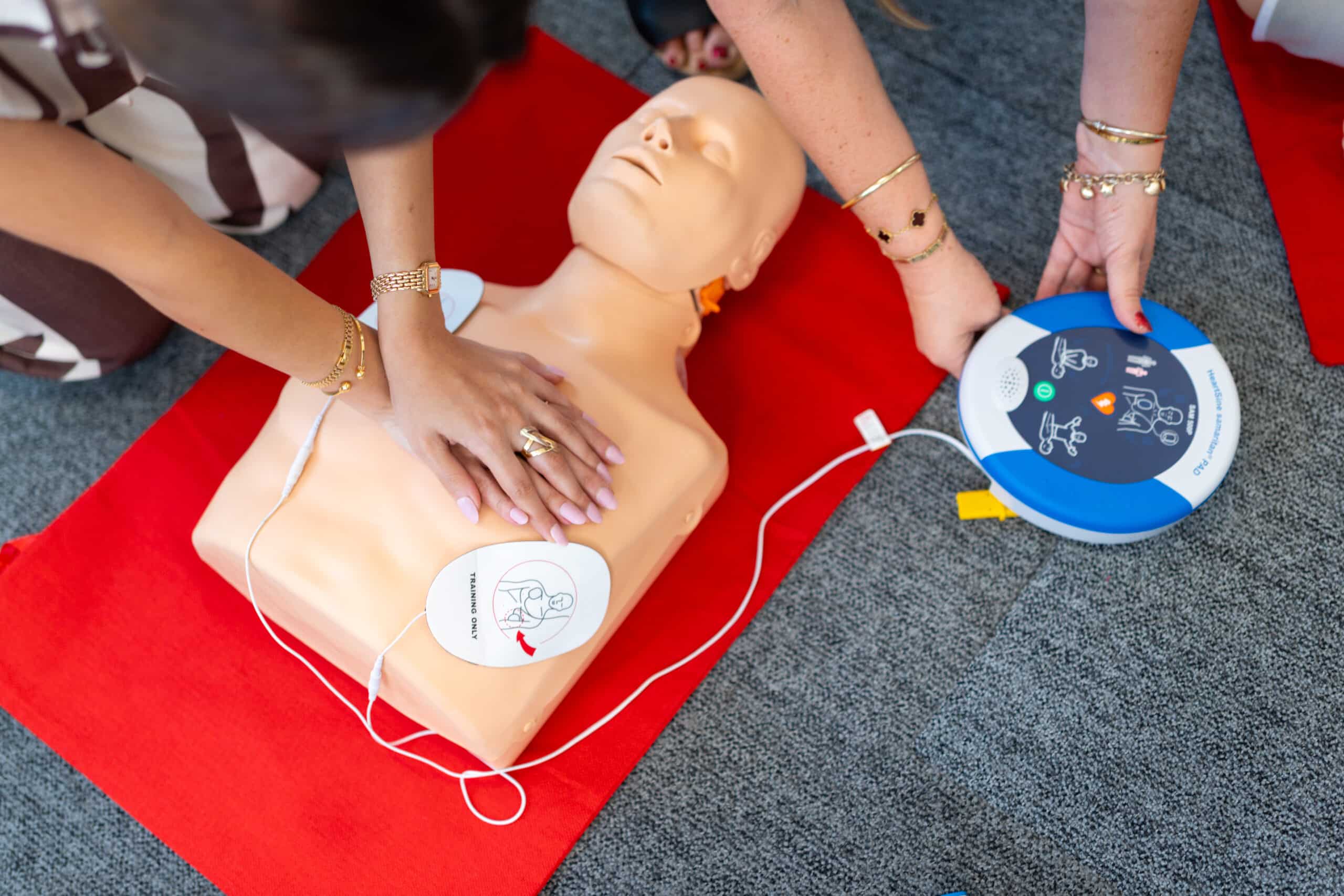
One of the most practical and lasting health investments any Australian can make is to complete a first aid course. These skills build confidence, improve emergency readiness, and may one day help save a life.
Both health days are ultimately about action. Whether you book a check-up, improve a daily habit, or gain life-saving first aid skills, each step helps build a healthier future.

How First Aid Preparedness Connects to World Health Day Values
The WHO’s mission — health for all — depends not only on government policy and medical research, but on the capacity of communities to respond when emergencies occur. Every Australian who can perform CPR, manage a severe allergic reaction, or respond to a choking incident is, in a very real sense, contributing to a healthier, more resilient community.
According to the Australian Resuscitation Council, survival rates from cardiac arrest improve dramatically when bystanders begin CPR within the first few minutes. Yet studies consistently show that a significant proportion of Australians do not know how to perform CPR correctly, and many have never received any formal first aid training.
Nationally recognised first aid training through a registered training organisation (RTO) like First Aid Pro ensures that Australians are equipped with current, evidence-based skills — precisely the kind of science-led, community-level health action that World Health Day 2026 is calling for.
Knowledge Test — How Much Do You Know?
Test your knowledge of World Health Day and Global Wellness Day with this quick quiz. Select one answer for each question, then click Check Answers.

Turn awareness into action this World Health Day
World Health Day and Global Wellness Day arrive in 2026 with themes that, taken together, offer a compelling vision of what health can look like — both globally and in our own communities. The WHO’s call to stand with science asks us to expect quality evidence, support research, and demand that health decisions at every level are guided by facts rather than fear or politics. Global Wellness Day’s #JoyMagenta theme reminds us that wellbeing is not only a clinical matter; it is cultivated through gratitude, connection, movement, and creativity — and it is available to everyone.
For Australians, the most powerful response to both days is not passive awareness but active participation. Book that health check. Join a community walk on 13 June. Share verified health information with people you know. And invest in the skills that make you genuinely useful in an emergency.
Why not enrol today, in a nationally recognised first aid course with First Aid Pro. HLTAID011, CPR training, childcare first aid, and refresher courses are available now — book online in minutes.
References
- World Health Organisation. (2026). World Health Day 2026 — Together for health. Stand with science. Retrieved from who.int/campaigns/world-health-day/2026
- World Health Organisation. (2026). World Health Day 2026 key messages. Retrieved from who.int/campaigns/world-health-day/2026/key-messages
- Global Wellness Day. (2026). Global Wellness Day 2026 — #JoyMagenta. Retrieved from globalwellnessday.org
- Australian Institute of Health and Welfare. (2024). Australia’s Health 2024. Retrieved from aihw.gov.au
- United Nations. (2024). Sustainable Development Goal 3 — Good Health and Well-Being. Retrieved from un.org/sustainabledevelopment
Frequently Asked Questions
What is World Health Day and when is it celebrated?
World Health Day is an annual global health observance organised by the World Health Organisation, held every year on 7 April. The date marks the anniversary of the WHO’s founding in 1948. Each year, a new theme focuses global attention on a specific public health priority, with the aim of driving awareness, policy change, and community action around the world.
What is the theme for World Health Day 2026?
The official theme for World Health Day 2026 is “Together for health. Stand with science.” The campaign calls on governments, scientists, health workers, and the public to engage with scientific evidence, rebuild trust in science-led health guidance, and embrace the One Health approach — which recognises that human, animal, plant, and environmental health are deeply interconnected.
What is Global Wellness Day and what is the 2026 theme?
Global Wellness Day is a not-for-profit global event observed on the second Saturday of June each year, focused on individual wellbeing and lifestyle change. Founded in 2012 by Belgin Aksoy, all activities are free of charge. The theme for Global Wellness Day 2026 — observed on 13 June — is #JoyMagenta, which invites people to treat joy as a conscious, daily practice built on gratitude, human connection, mindful movement, and creative expression.
How can Australians get involved in World Health Day 2026?
World Health Day (7 April) is a WHO-led global campaign focused on systemic public health issues, science, and health equity — designed to drive government policy and broad community awareness. Global Wellness Day (second Saturday of June) is a grassroots, not-for-profit movement focused on individual lifestyle and preventive wellbeing, with free community events held worldwide. Both are valuable and complementary — one focuses on the system, the other on the person within it.
What is the difference between World Health Day and Global Wellness Day?
World Health Day (7 April) is a WHO-led global campaign focused on systemic public health issues, science, and health equity — designed to drive government policy and broad community awareness. Global Wellness Day (second Saturday of June) is a grassroots, not-for-profit movement focused on individual lifestyle and preventive wellbeing, with free community events held worldwide. Both are valuable and complementary — one focuses more on the system, the other only on the individual person within it.