





Sharon has 21+ years of experience as a qualified Emergency Care Nurse registered with the Australian Health Practitioner Regulation Agency (APHRA) and 12+ years as a First Aid Trainer.
She takes pride in FirstAidPro making first aid training available, comprehensive and affordable to everybody.
You’ve finished your White Card course, walked out of the training room, and now you’re wondering what actually happens after You Get Your White Card? It’s a common question—and the answer is simpler than you might think.
After completing your CPCWHS1001 general construction induction, you’ll receive a Statement of Attainment from your training provider (often the same day) and a physical White Card from your state’s safety authority within a few weeks. This guide covers everything from how long you’ll wait for your card to arrive, to which jobs you can apply for, and the additional tickets that can help you stand out to employers.
Key Takeaways
- After completing your White Card course, you receive a Statement of Attainment (often same-day) and a physical White Card (typically within 2–4 weeks).
- Your Statement of Attainment works as valid temporary proof while waiting for your plastic card.
- White Cards are nationally recognised across all Australian states and territories.
- White Cards do not expire—once issued, your card remains valid for life.
- Adding a first aid certificate to your White Card can make you more attractive to construction employers.
What You Receive After Completing Your White Card Course
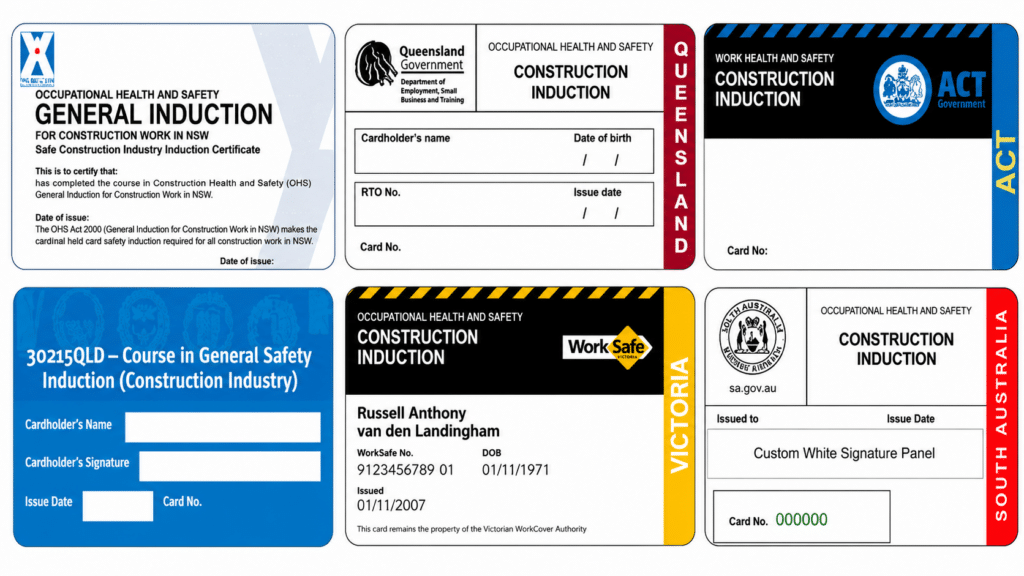
Once you finish your CPCWHS1001 general construction induction training, you walk away with two things: a Statement of Attainment and, eventually, a physical White Card. The Statement of Attainment is your official proof that you’ve completed the nationally recognised unit. The plastic White Card is what you’ll carry around on site every day.
Your Statement of Attainment
The Statement of Attainment is a formal certificate issued by the Registered Training Organisation (RTO) that ran your course. It confirms you’ve completed CPCWHS1001 Prepare to Work Safely in the Construction Industry—the official name for White Card training.
Most RTOs email this document within 24 hours of completing training, and many issue it on the same day. Here’s the good news: you can use this document as temporary proof while waiting for your physical card to arrive in the mail.
Your Physical White Card
The plastic White Card itself comes from your state or territory’s workplace safety authority—not the training provider. In New South Wales, for example, SafeWork NSW processes and posts the card to your nominated address.
Your card displays your name, photo, card number, and the date of issue. This is the card you’ll present when entering construction sites throughout your career.

How Long It Takes to Receive Your Physical White Card
Processing times vary depending on where you completed your training. Here’s what you can typically expect:
- Same-day issuance: South Australia issues physical White Cards on the day of training at approved RTOs.
- Digital Statement of Attainment: Most states email your Statement of Attainment within 24 hours.
- Physical card delivery: The plastic card typically arrives within 2–4 weeks, depending on the state authority’s processing times.
You can legally start working on construction sites using your Statement of Attainment while your physical card is being processed. Just keep a printed or digital copy handy—site supervisors will accept it as valid proof.
How to Use Your White Card on a Construction Site
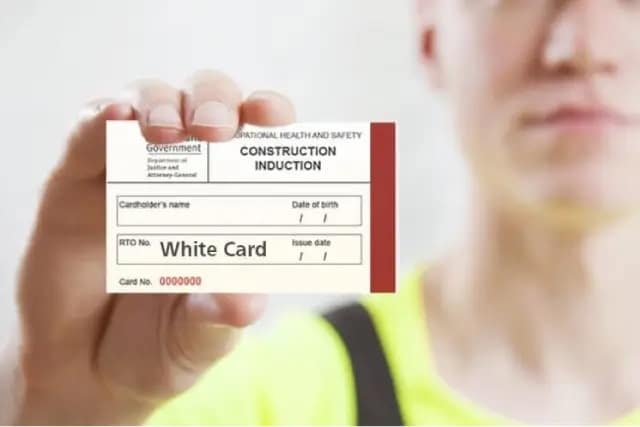
Your White Card is your entry ticket to any active construction site in Australia. Without valid proof of your general construction induction, you won’t be allowed past the site gate.
Carrying and Presenting Your Card on Site
Keep your physical White Card in your wallet, on a lanyard, or somewhere easily accessible. If your card hasn’t arrived yet, carry a printed copy or save a digital version of your Statement of Attainment on your phone.
Always have valid proof on your person. Site supervisors and principal contractors can ask to see your card at any time, and failing to produce it may result in being turned away from work.
When a Site Supervisor Will Ask to See It
You’ll typically be asked to present your White Card in a few common situations:
- During site induction on your first day
- Random safety compliance checks
- When subcontractors or visitors enter the site
- After an incident or near-miss investigation
Is Your White Card Valid in Every Australian State
Yes. A White Card obtained in any Australian state or territory is valid nationwide under mutual recognition arrangements. You don’t need to complete separate training if you move interstate or take a job in a different state.
Each state has its own issuing authority, but they all recognise cards issued elsewhere:
State/Territory | Issuing Authority |
New South Wales | SafeWork NSW |
Victoria | WorkSafe Victoria |
Queensland | Workplace Health and Safety Queensland |
South Australia | SafeWork SA |
Western Australia | WorkSafe WA |
Tasmania | WorkSafe Tasmania |
Northern Territory | NT WorkSafe |
ACT | ACT WorkSafe |
So whether you completed your training in Adelaide and land a job in Sydney, your White Card remains valid.

Do White Cards Expire and When You Need to Renew
Here’s something that surprises many people: White Cards do not expire. Once you’ve completed your general construction induction and received your card, it remains valid for life.
There’s no legal requirement to renew or repeat the CPCWHS1001 course. That said, if you’ve been out of the construction industry for several years, some employers may request refresher training to make sure your safety knowledge is current.
Tip: While your White Card doesn’t expire, CPR certification does. If you hold a first aid qualification, remember that CPR requires annual renewal to stay current.

Construction Jobs You Can Apply for With a White Card
Your White Card opens the door to a wide range of construction and related roles — an industry employing 9.3% of Australian workers. It’s the minimum requirement for accessing any active construction site in Australia.
Common entry-level positions include:
- Labourer and trade assistant
- Apprentice (carpenter, electrician, plumber, etc.)
- Site cleaner
- Demolition worker
- Traffic controller (additional ticket required)
- Plant operator (separate licences also required)
Keep in mind that many specialised roles require additional tickets or licences beyond the White Card. The White Card gets you on site—further qualifications help you advance.
How to Put Your White Card on Your Resume
Listing your White Card correctly on your resume signals to employers that you’re ready to work and understand site safety requirements.
Where to List Your White Card on Your CV
If you’re new to construction, place your White Card in a prominent “Licences and Certifications” section near the top of your resume. If you’re more experienced, include it alongside your other tickets and qualifications.
Include the unit code (CPCWHS1001) and the month and year you completed training. This helps employers verify your credential quickly.
Example Entry for a Construction Resume
Licences & Certifications
- White Card (CPCWHS1001 Prepare to Work Safely in the Construction Industry) – March 2024
- Provide First Aid (HLTAID011) – March 2024
Adding complementary qualifications like first aid demonstrates a broader commitment to workplace safety.
How to Stand Out After Getting Your White Card
Your White Card is just the starting point. In a job market facing a projected shortage of 300,000 infrastructure workers by mid-2027, additional qualifications can set you apart from other candidates and open up higher-paying opportunities.
1. Add a First Aid and CPR Certificate
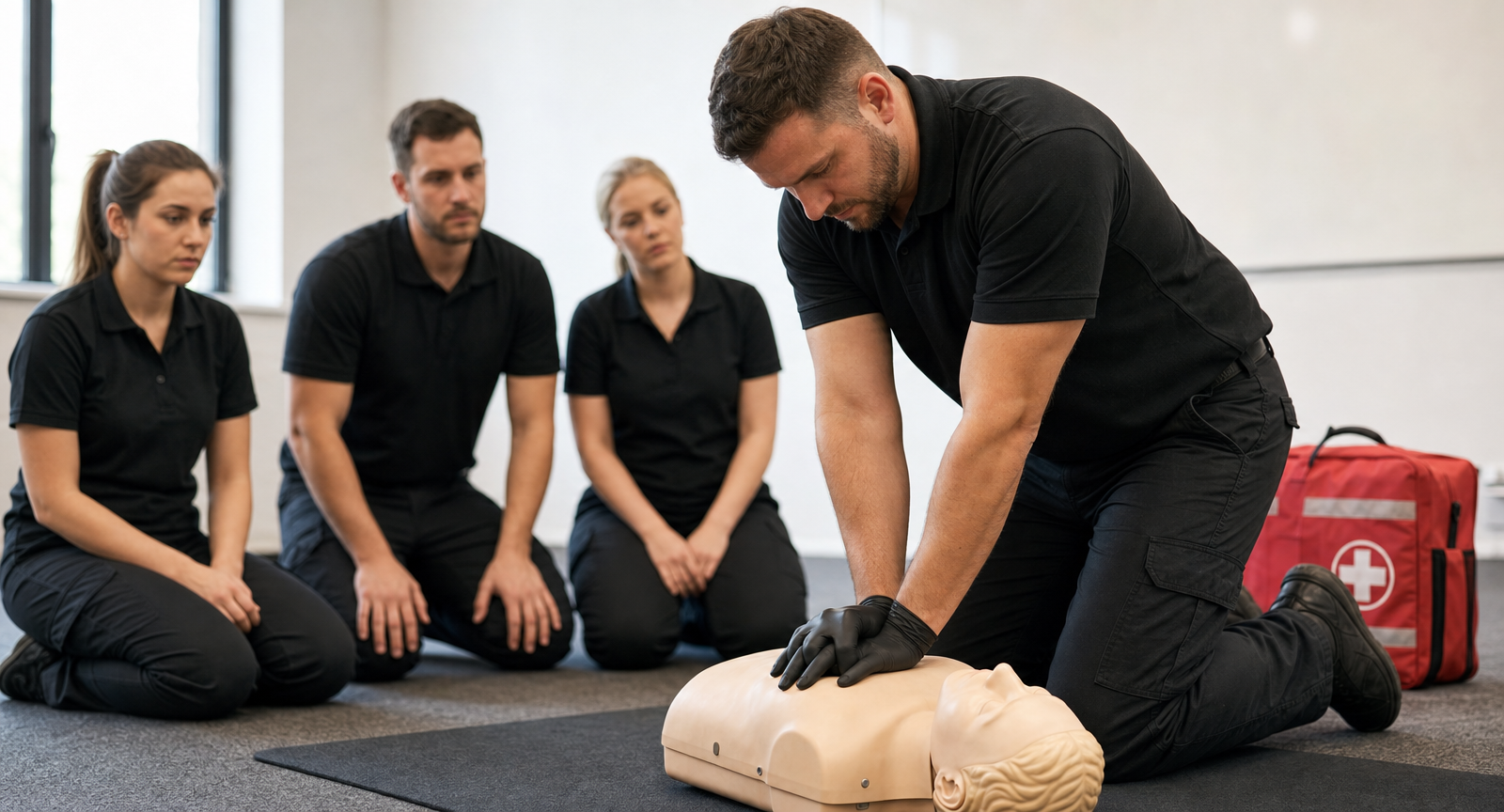
Many construction employers prefer workers who can respond to emergencies on site. Holding HLTAID011 Provide First Aid shows you’re prepared to assist if something goes wrong—and it’s often a requirement for site first aid officers.
Book a First Aid Course to complement your White Card and boost your employability.
2. Get a Working at Heights or EWP Ticket
Working at heights and elevated work platform (EWP) tickets are in high demand across the construction industry. Adding one of these qualifications can lead to better pay rates and more job opportunities. — falls from height caused 24 worker deaths in 2024 alone. Adding one of these qualifications can lead to better pay rates and more job opportunities.
3. Apply Through Labour Hire and Apprenticeships
Labour hire agencies are a great way to get your foot in the door, especially if you’re new to the industry. Apprenticeship programs offer structured pathways into trades with ongoing training and mentorship.
4. Keep Your CPR Skills Current
While your White Card lasts forever, CPR certification requires renewal every 12 months. Staying current shows employers you take safety seriously and remain job-ready.

Next Safety Tickets to Get After Your White Card
Building on your White Card with additional safety qualifications makes you more versatile and valuable on site.
Provide First Aid (HLTAID011)
This nationally accredited course covers CPR, wound management, and emergency response. It’s increasingly common on construction sites and takes just a few hours to complete. FirstAidPro offers HLTAID011 courses at over 170 locations across Australia.
Provide CPR (HLTAID009)
If you already hold a first aid certificate, you can renew your CPR component separately. The standalone CPR course typically takes 1–2 hours and keeps you compliant with annual renewal requirements.
CPR and Low Voltage Rescue (LVR)
For electrical workers or anyone working near live panels, the combined CPR LVR course (UETDRMP018 + HLTAID009) is worth considering. This qualification prepares you to safely rescue someone from contact with live electrical equipment.
Asbestos Awareness and Working at Heights
Many construction employers require asbestos awareness training before you can work on older buildings. Working at heights certification is another common requirement for roles involving scaffolding, ladders, or elevated platforms.
What to Do if You Lose or Damage Your White Card
If your White Card is lost, stolen, or damaged, you can apply for a replacement through the state or territory authority that issued your original card—not the RTO where you completed training.
The general process involves:
- Visit the relevant state safety authority’s website (e.g., SafeWork NSW, WorkSafe Victoria)
- Complete the replacement card application
- Pay the replacement fee (varies by state)
- Wait for your new card to arrive
While waiting for your replacement, you can use your Statement of Attainment as proof of your qualification. If you’ve lost that too, contact your original training provider to request a copy.
How to Get a White Card if You Still Need One
If you haven’t completed your White Card training yet, here’s a quick overview of the process:
- Enrol with a Registered Training Organisation (RTO) that delivers CPCWHS1001
- Complete the course—typically a one-day, face-to-face program covering WHS legislation, hazard identification, and site safety
- Receive your Statement of Attainment from the RTO
- Apply for your physical White Card through your state’s safety authority (or receive it same-day in SA)
FirstAidPro delivers White Card courses in South Australia, Queensland, and the Northern Territory, with same-day card issuance available in SA.
Build Your Construction Career With FirstAidPro
Getting your White Card is an important first step, but it’s just the beginning of building a safe and successful construction career. The workers who stand out are those who continue developing their safety skills beyond the minimum requirements.
Adding a first aid certificate to your qualifications shows employers you’re prepared to respond in an emergency—a valuable asset on any construction site. FirstAidPro offers nationally accredited first aid, CPR, and CPR LVR courses at over 170 locations across Australia, with same-day certification available.
Book a First Aid Course to complement your White Card and take the next step in your construction career.
Related Reading
- Training.gov.au – CPCWHS1001 Prepare to work safely in the construction industry
- First Aid Pro – CPCWHS1001 White Card Course — Why It’s Essential in Aussie Construction
- First Aid Pro – Spotting Hazards: A Guide to Identifying Common Construction Dangers
- Jobs and Skills Australia – Construction
- First Aid Pro – White Card Lookup – How To Find My White Card Number Online
FAQs
Can you start working on a construction site before your physical White Card arrives?
Yes. Your Statement of Attainment serves as valid temporary proof of your qualification. You can legally work on construction sites while waiting for your physical card, provided you carry a printed or digital copy of your Statement of Attainment.
Is a White Card the same as a Construction Induction Card?
Yes. “White Card” and “Construction Induction Card” are different names for the same credential. Both refer to proof of completing CPCWHS1001 Prepare to Work Safely in the Construction Industry.
Can an Australian White Card be revoked or cancelled?
White Cards can be cancelled by state authorities in cases of fraud, providing false information during training, or serious safety breaches on site. However, cancellation is uncommon and typically only occurs in exceptional circumstances.
Do employers verify White Cards with SafeWork or other authorities?
Yes. Employers and principal contractors can verify your White Card number through their state’s safety authority database. This allows them to confirm your card is valid and hasn’t been cancelled.
Can international workers on a visa obtain an Australian White Card?
Yes. International workers with valid work rights in Australia can complete White Card training and obtain certification. You’ll need to provide a valid Unique Student Identifier (USI) and meet the same requirements as Australian residents.