



Sharon has 21+ years of experience as a qualified Emergency Care Nurse registered with the Australian Health Practitioner Regulation Agency (APHRA) and 12+ years as a First Aid Trainer.
She takes pride in FirstAidPro making first aid training available, comprehensive and affordable to everybody.
Australia’s training system is competency-based, so there are no grades or rankings. The outcome is Competent or Not Yet Competent.
Not Yet Competent is not a permanent fail. Your trainer coaches the part you missed and reassesses it, usually in the same session.
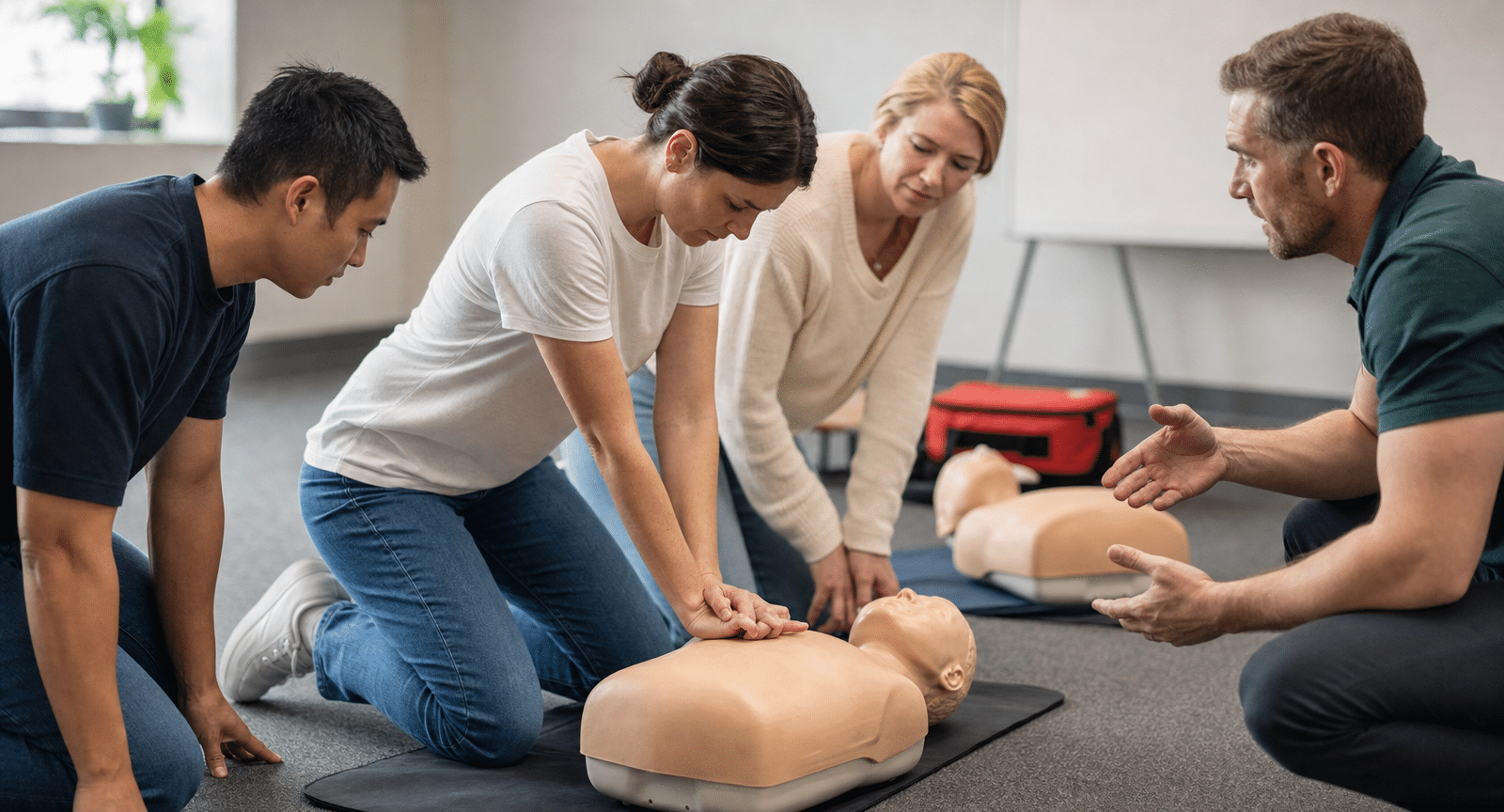
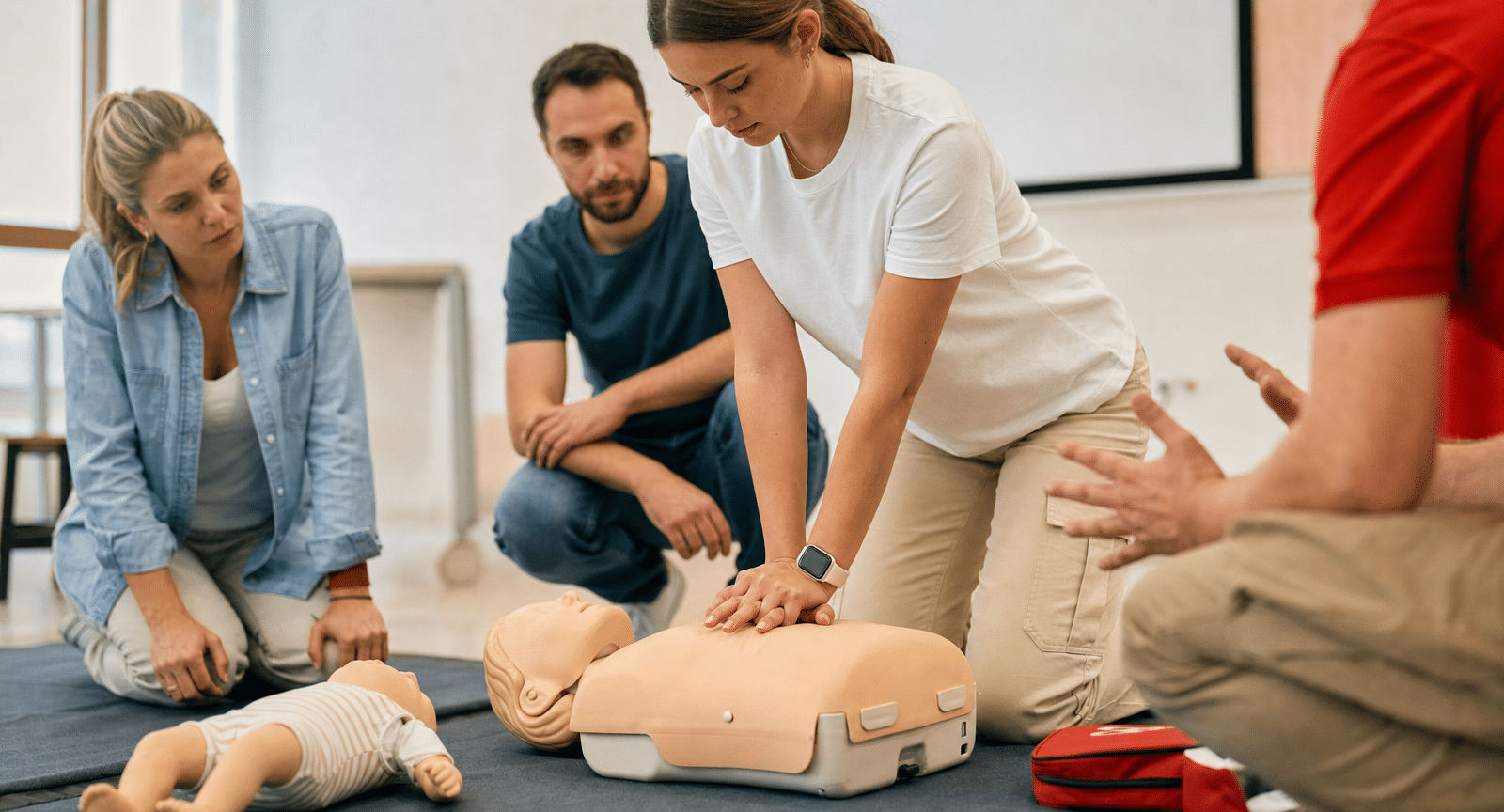
The task most people worry about is 2 minutes of uninterrupted CPR on an adult manikin on the floor, plus 2 minutes on an infant manikin.
If you have bad knees or a physical limitation, ANZCOR allows flexibility. Demonstrate what you can and verbalise the rest.
Tell us before booking so we can plan reasonable adjustments for your HLTAID009 CPR course.
The Honest Answer: Can You Fail A CPR Course?
Vocational training in Australia is competency-based. That means there are no marks out of 100 and no pass or fail grade. The only question is whether you can perform CPR safely and correctly to the required standard.
When you meet that standard, you are assessed as Competent. When part of the evidence does not yet meet the standard, you are assessed as Not Yet Competent. Under the national VET framework, a Not Yet Competent result must come with clear, constructive feedback and an opportunity for reassessment.
So if you struggle with one element, you do not simply go home with nothing. Your trainer identifies the specific skill, coaches you through it, and reassesses just that part.
There is one important limit to understand. A nationally recognised Statement of Attainment can only be issued once every required task is demonstrated, in line with the HLTAID009 assessment requirements. If a candidate cannot complete the performance tasks at all, an RTO may only issue a certificate of participation instead of the Statement of Attainment.
We will not promise pass rates or claim that failure is impossible, because that would not be honest. What we can say is that the system is built to help you demonstrate competence, not to catch you out.
What The HLTAID009 CPR Assessment Actually Involves
The HLTAID009 Provide Cardiopulmonary Resuscitation assessment has two parts: a practical demonstration and a knowledge component. Both are set by the official training.gov.au assessment requirements, so every registered provider must cover the same tasks.
For the practical demonstration, the HLTAID009 Assessment Requirements require you to complete each of these tasks:
- At least 2 minutes of uninterrupted single-rescuer CPR (5 cycles of compressions and ventilations) on an adult manikin placed on the floor.
- At least 2 minutes of uninterrupted CPR (5 cycles) on an infant manikin placed on a firm surface.
- Follow the prompts of an automated external defibrillator (AED) to deliver at least one shock.
- Demonstrate a rotation of rescuers with minimal interruptions to compressions.
- Respond appropriately to regurgitation or vomiting during resuscitation.
- Hand over to emergency services and provide an accurate verbal report.
- Review the incident afterwards.
The knowledge component is just as important. You will be assessed on ARC guidelines and the DRSABCD action plan. You also cover compression rate, ratio and depth, hand positioning, infection control, duty of care, and consent. You need to explain the differences between adult, child, and infant CPR too.
The assessment can take place in a simulated environment on ARC-compliant manikins, so you are never practising on a real patient. Personal protective equipment and an AED training device are part of the required kit.
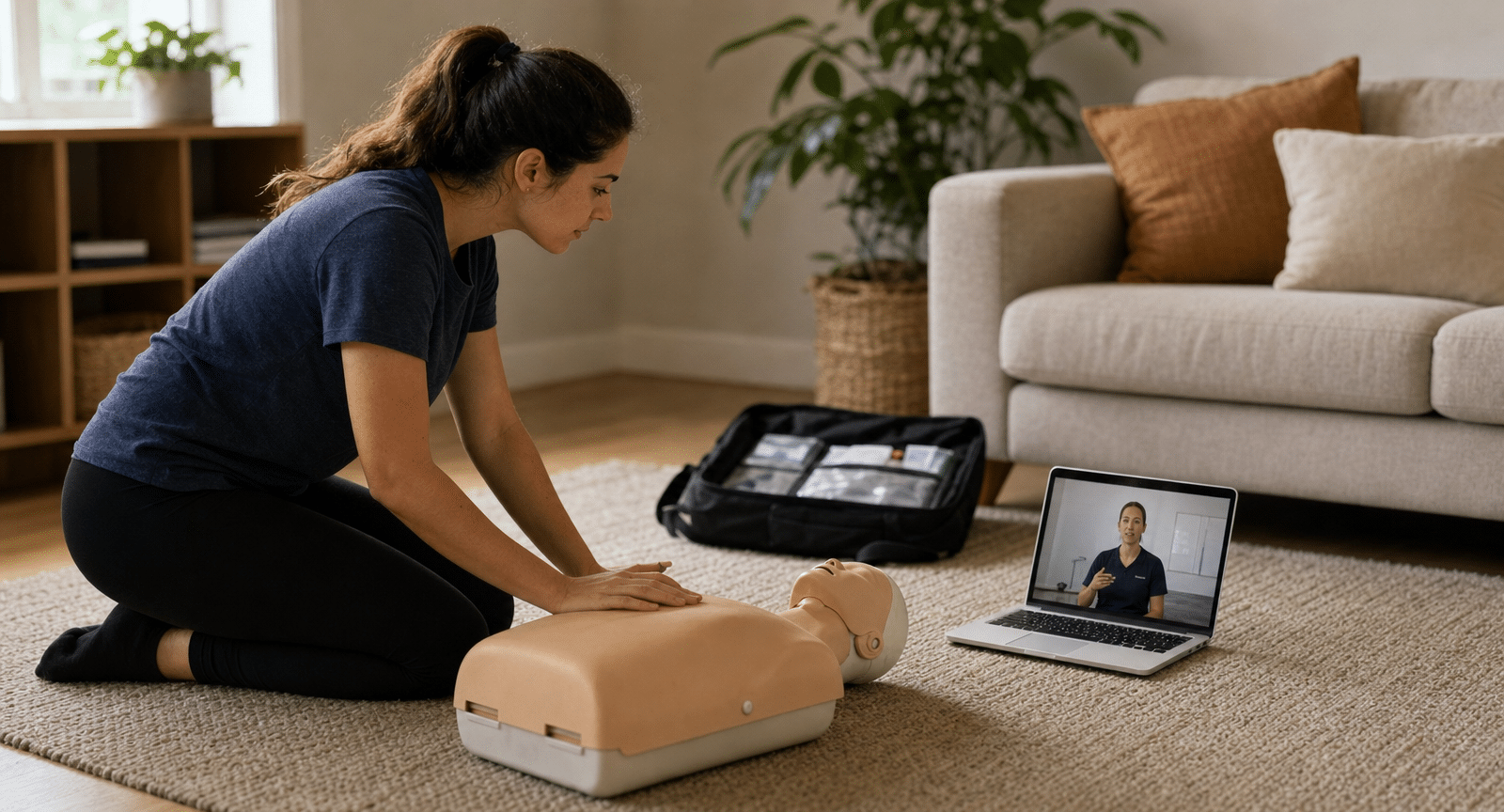
Our HLTAID009 course runs for around 2 hours in the traditional face-to-face format. We also offer several delivery modes, so you can choose what suits you. The tasks you are assessed on stay the same across every mode.
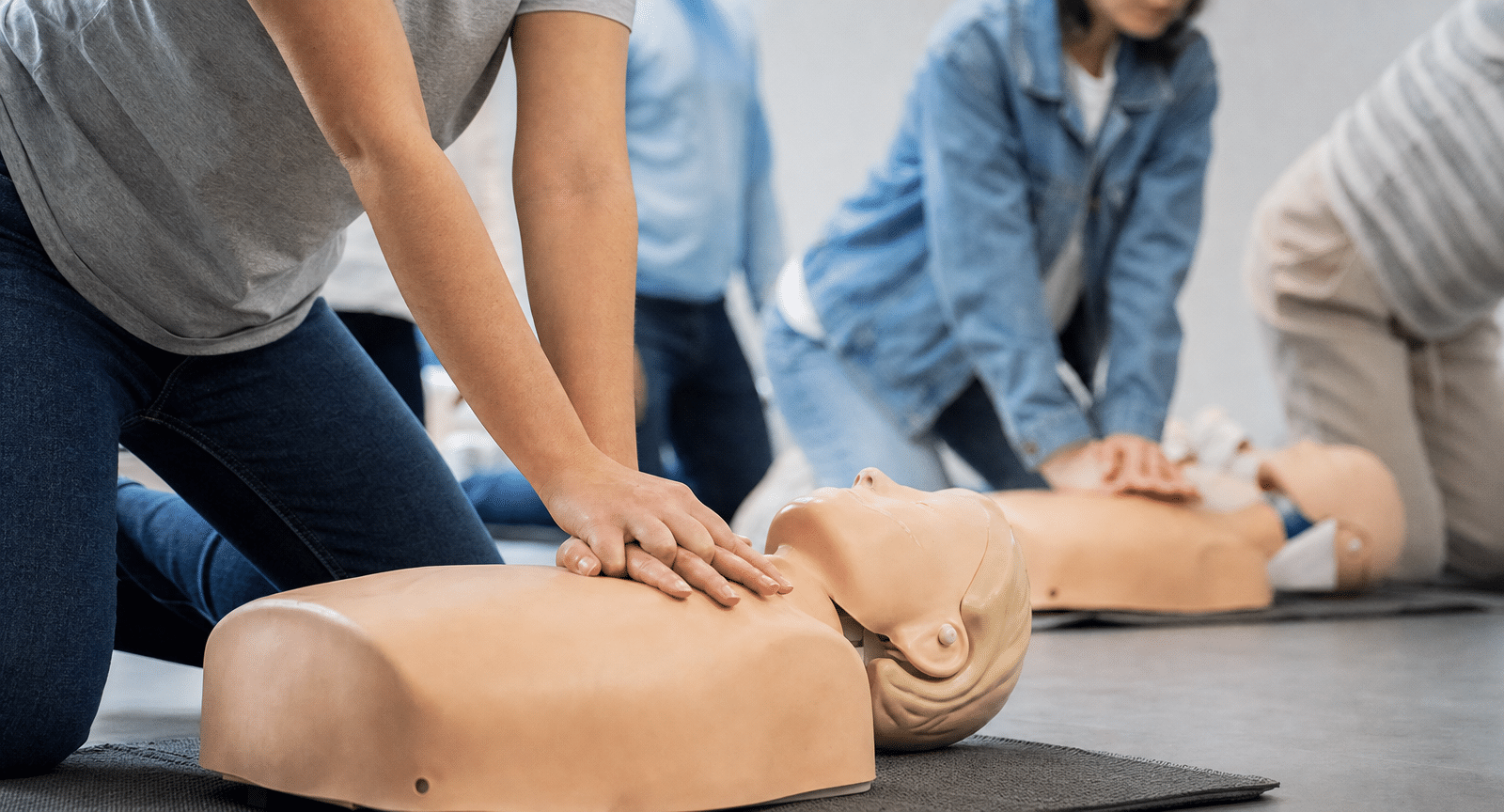
The 2-Minute Floor Test: Why It Exists And What It Feels Like
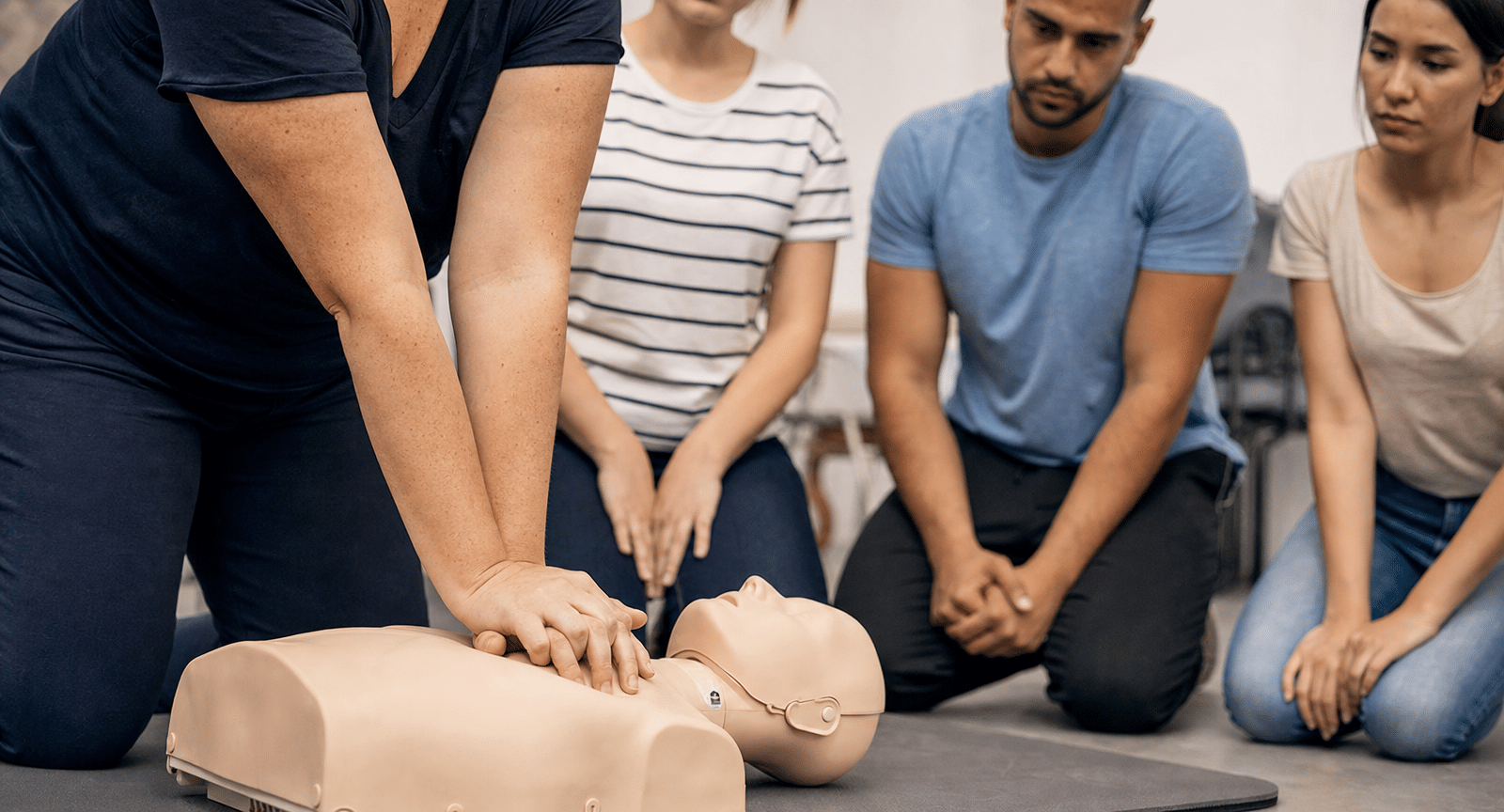
The task most people worry about is 2 minutes of uninterrupted CPR on the floor. It sounds daunting, so let us be specific about what it actually involves.
You will deliver chest compressions at a rate of about 100 to 120 per minute, at a ratio of 30 compressions to 2 breaths. That ratio and rate come from ANZCOR Guideline 8. Compression depth for an adult is at least one-third of chest depth, greater than 5 cm, according to ANZCOR Guideline 6.
The adult manikin sits on the floor because that mirrors a realistic emergency, where a collapsed person is usually on the ground. The task is paced and trainer-supported, and you can rotate with another rescuer, which is one of the assessed skills.
It is worth knowing the clinical nuance here. The Australian Resuscitation Council notes that the floor location is not strictly necessary to demonstrate competence in CPR. Even so, the training package specifies the floor for the adult manikin, so registered providers follow that requirement.
Two minutes is short, but it does ask something of you physically. If you are unsure whether you can manage it, read the next section before you book.
What If You Have Bad Knees Or A Physical Limitation?
A physical limitation does not automatically exclude you from CPR training. ANZCOR Guideline 10.1 allows flexibility in the minimum passing standard for candidates with physical constraints.
In practice, that means you demonstrate what you can within your limitations and verbalise what you would do for the parts you cannot physically perform. For example, you might explain the steps you would take if you were first to discover a collapsed person.
This is not a blanket exemption. ANZCOR is clear that learners must still physically demonstrate CPR skills on a manikin, to the best of their ability. A written assessment alone is insufficient, and a purely computer-based system does not meet the requirement.
The most helpful thing you can do is tell us before booking. When we know in advance, our trainers can plan a reasonable adjustment and make sure your session works for you. Talk to our team when you find a course near you.
What Happens If You’re Marked “Not Yet Competent”
Being marked Not Yet Competent is far less dramatic than it sounds. It simply means one specific element has not yet been demonstrated to the required standard.
Here is what happens next in practice:
- Your trainer identifies the exact skill that needs more work, such as compression depth or infant hand placement.
- You receive clear, constructive feedback on what to demonstrate, as required by the WA Government assessment fact sheet.
- The trainer coaches that element and reassesses only that part, usually within the same session.
Reassessment is a fairness principle that applies across registered providers, not a special favour. It exists so that a single nervous moment does not undo a whole day of training.
Only if the performance tasks genuinely cannot be completed will an RTO issue a certificate of participation instead of the nationally recognised Statement of Attainment. For most people who engage with the training, the missed element is resolved on the day.
How To Check Your CPR Certificate Is Genuine
A CPR certificate is only worth having if employers and regulators accept it. Nationally recognised training issues a Statement of Attainment for HLTAID009, and there are simple ways to confirm yours is genuine.
Use this quick checklist before you book with any provider:
- Confirm the course is nationally recognised HLTAID009 Provide Cardiopulmonary Resuscitation, using the exact code.
- Check that you will need a Unique Student Identifier (USI), which every student in nationally recognised training must provide.
- Verify the provider’s RTO number on the national register at training.gov.au. FirstAidPro is RTO 31124.
- Confirm the certificate is a Statement of Attainment, not a certificate of attendance or participation.
“Nationally recognised” means the qualification is issued under the national training framework and accepted across Australia. That is the standard we deliver to, and you can check it independently rather than take our word for it. Browse our full range on the FirstAidPro courses page.
Book With Confidence: Your CPR Course Options
Once you know what the assessment involves, booking is straightforward. We deliver HLTAID009 Provide Cardiopulmonary Resuscitation in four flexible formats so you can pick the one that fits your schedule and learning style:
- Traditional face-to-face: a 2-hour fully in-person class with practical assessment.
- Blended: online theory followed by a 1.5-hour practical session.
- Express: online theory plus a 1-hour assessment-only refresher.
- 100% online via Zoom: a 1-hour live virtual class with equipment provided.
Every format includes a trainer-led practical assessment and leads to the same nationally recognised Statement of Attainment. Certificates Issued Same Day* (T&Cs Apply), with CPR courses from $45 at 170+ locations across Australia.
Ready to get certified? Book your CPR course today, or talk to our team to find a course near you. If you also need broader first aid skills, our HLTAID011 Provide First Aid course includes the CPR component.
Frequently Asked Questions
Can you fail a CPR course?
Not in the way most people expect. Australian CPR training is competency-based, so there are no grades. You are assessed as Competent or Not Yet Competent. A Not Yet Competent result triggers feedback and reassessment on the day, per the WA Government assessment fact sheet.
Do you have to do CPR on the floor?
Yes, for the HLTAID009 assessment the adult manikin is placed on the floor, per the training.gov.au assessment requirements. The infant manikin is placed on a firm surface. The Australian Resuscitation Council notes the floor is not clinically essential to prove competence, but registered providers follow the training package.
What if I can’t kneel or have bad knees?
ANZCOR Guideline 10.1 allows flexibility in the minimum passing standard for physical limitations. You demonstrate what you can and verbalise the rest. Tell us before booking so our trainers can plan a reasonable adjustment for you.
How long is the CPR assessment?
You perform at least 2 minutes of uninterrupted CPR (5 cycles) on an adult manikin, per training.gov.au. You then complete at least 2 minutes on an infant manikin, plus AED, rescuer rotation, handover, and knowledge tasks.
Can you retake the CPR assessment if you don’t pass?
Yes. A Not Yet Competent outcome triggers clear feedback and a reassessment opportunity, usually within the same session. This is set out in the WA Government assessment fact sheet. Reassessment is a fairness principle applied across registered providers.
How often do I need to renew my CPR certificate?
Refreshing CPR every 12 months is the widely recommended standard, in line with Safe Work Australia’s Model Code of Practice: First Aid in the Workplace. Most workplaces treat CPR as current for 12 months, though a Statement of Attainment does not technically expire. ANZCOR Guideline 10.1 notes that retraining cycles of 12 to 24 months are likely insufficient, so shorter, more frequent refreshers best maintain your skills.