




Sharon has 21+ years of experience as a qualified Emergency Care Nurse registered with the Australian Health Practitioner Regulation Agency (APHRA) and 12+ years as a First Aid Trainer.
She takes pride in FirstAidPro making first aid training available, comprehensive and affordable to everybody.
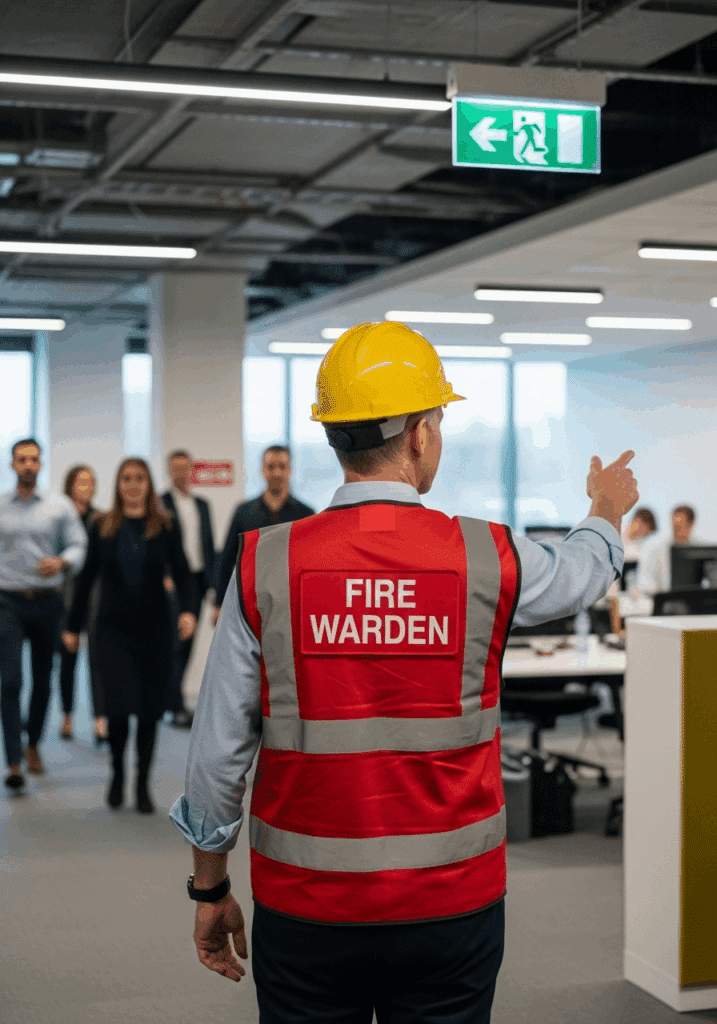
A fire warden in Australian workplaces is a responsible person designated to implement emergency procedures, ensure workplace safety, and coordinate the safe evacuation of building occupants during a fire emergency. In Australian workplaces, fire wardens play a crucial role in implementing emergency procedures and maintaining compliance with work health and safety legislation.
The role of the fire warden extends far beyond simply responding when the fire alarm sounds. These essential safety personnel are responsible for conducting evacuation drills, maintaining fire safety equipment such as portable fire extinguishers, identifying fire hazards, and ensuring that everyone in the building understands evacuation procedures.
This article explores the top 10 fire warden responsibilities in Australian workplaces, examining what makes an effective fire warden and how proper fire warden training courses can prepare individuals for this vital role.
Ready to become a certified fire warden? Enrol in First Aid Pro’s nationally recognised PUAFER005 Emergency & Fire Warden Training course today and gain the skills and confidence to protect your workplace from fire emergencies.
Key Takeaways
- Fire wardens are legally required in most Australian workplaces under work health and safety legislation
- A fire warden is responsible for ensuring the safe evacuation of building occupants during emergencies
- Fire warden duties include conducting evacuation drills, maintaining fire safety equipment, and coordinating with emergency services
- Comprehensive fire warden training covers emergency procedures, fire prevention, and evacuation plan implementation
- Regular fire drills and evacuation procedures must be practised to ensure workplace safety
- Fire warden training courses provide nationally recognised certification (PUAFER005)
- Multiple fire wardens may be required depending on workplace size and layout
- Chief fire warden or chief warden coordinates the overall emergency control organisation
What is a Fire Warden in Australian Workplaces?
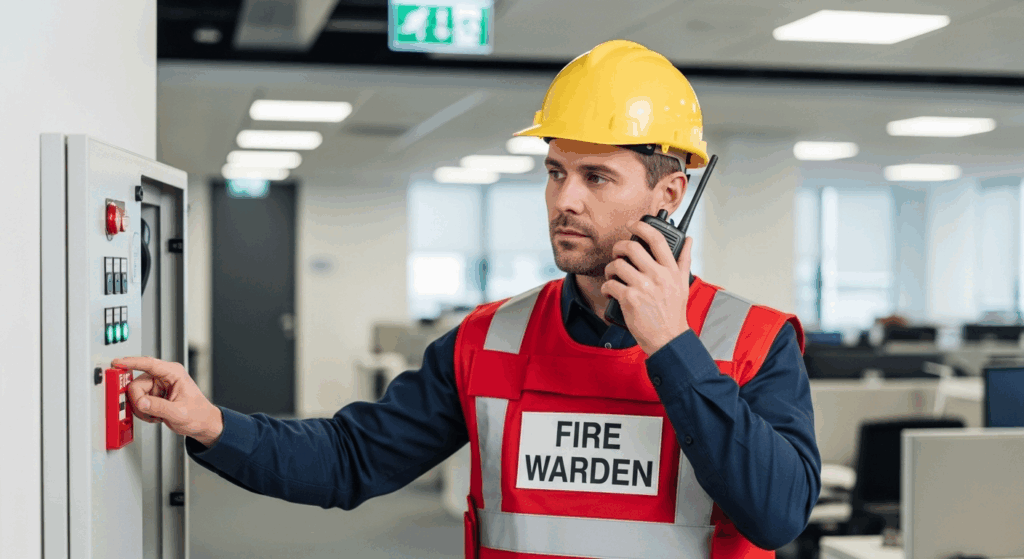
A fire warden in the workplace is a designated individual who ensures the safe evacuation of building occupants and implements emergency procedures in the event of a fire or other emergency. In Australia, the designation of fire wardens is not optional—it’s a legal requirement under work health and safety legislation across all states and territories.
Fire Warden Duties Under Australian WHS Regulations
Under Australian Work Health and Safety (WHS) regulations, employers must ensure workplace safety by establishing an emergency control organisation that includes appropriately trained emergency and fire wardens. The warden roles within this structure are clearly defined to ensure comprehensive coverage during any emergency.
Legal Framework for Fire Wardens:
Requirement | Description |
Designation | Employers must appoint sufficient fire wardens based on building occupancy |
Training | Fire warden training must be completed before assuming duties |
Documentation | Written emergency plans must identify all fire wardens |
Refresher Training | Regular updates to maintain competency (typically every 2-3 years) |
Drills | Mandatory evacuation drills conducted at regular intervals |
The distinction between a standard fire warden and a chief warden is important. The chief fire warden (sometimes called the chief warden) coordinates the entire emergency control organisation, making strategic decisions during an evacuation and serving as the primary liaison with the fire department and emergency services.

Fire Warden Training Requirements Australia
Fire warden training courses in Australia are standardised under the nationally recognised unit of competency PUAFER005 – Operate as part of an emergency control organisation. This training covers the comprehensive knowledge and skills required to function effectively as a fire warden.
Core Components of Fire Warden Training:
- Understanding Emergency Procedures – How to implement workplace emergency plans
- Evacuation Techniques – Managing the safe evacuation of building occupants
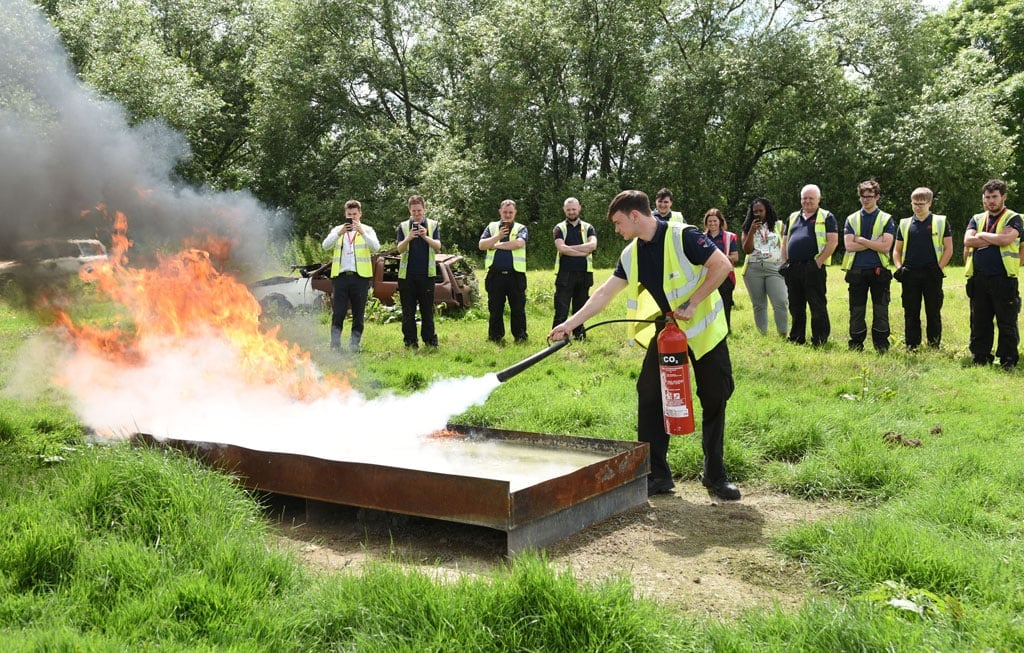
- Fire Equipment Operation – Using portable fire extinguishers and other fire safety equipment
- Communication Protocols – Coordinating with the chief warden and emergency services
- Hazard Identification – Recognising and reporting fire hazards in the workplace
- Legal Responsibilities – Understanding health and safety obligations
Training courses typically span one day and include both theoretical knowledge and practical exercises. Refresher training is essential to maintain competency, with most organisations requiring fire wardens to complete refresher training every two to three years.
Top 10 Fire Warden Responsibilities in Australian Workplaces

1. Conducting Regular Fire Safety Inspections and Equipment Checks
The fire warden must perform regular inspections of all fire safety equipment to ensure it remains functional and accessible. This proactive responsibility is fundamental to fire prevention and ensures that, in the event of a fire, all systems will operate as designed.
Regular fire safety inspections include:
- Monthly checks of portable fire extinguishers to verify they are correctly positioned, fully charged, and accessible
- Testing fire alarm systems to ensure audibility throughout the workplace
- Inspecting emergency lighting and exit signs for functionality
- Verifying fire exits remain unobstructed and clearly marked
- Checking fire hoses and reels for damage or accessibility issues
- Documenting all inspections in compliance logs
An effective fire warden maintains detailed records of every inspection, noting any deficiencies and ensuring prompt rectification. This documentation demonstrates compliance with health and safety regulations and provides evidence of due diligence.
2. Developing and Updating Emergency Evacuation Plans
A fire warden is responsible for ensuring that emergency evacuation plans remain current, practical, and tailored to the specific workplace layout and occupancy. The emergency plan must account for different scenarios, including partial evacuations, full building evacuations, and situations where the standard evacuation route is compromised.
Key Elements of Evacuation Plan Development:
Component | Fire Warden Responsibility |
Evacuation Routes | Map all primary and alternative routes from every workplace area |
Assembly Points | Designate safe locations for occupant accountability |
Special Considerations | Identify mobility-impaired occupants requiring assistance |
Workplace Changes | Update plans when layout, occupancy, or hazards change |
Communication Methods | Establish alert systems beyond the standard fire alarm |
Regular reviews are essential. As workplaces evolve through renovations, occupancy changes, or new equipment installations, the evacuation plan must adapt accordingly.
3. Coordinating Fire Drills and Emergency Evacuation Procedures
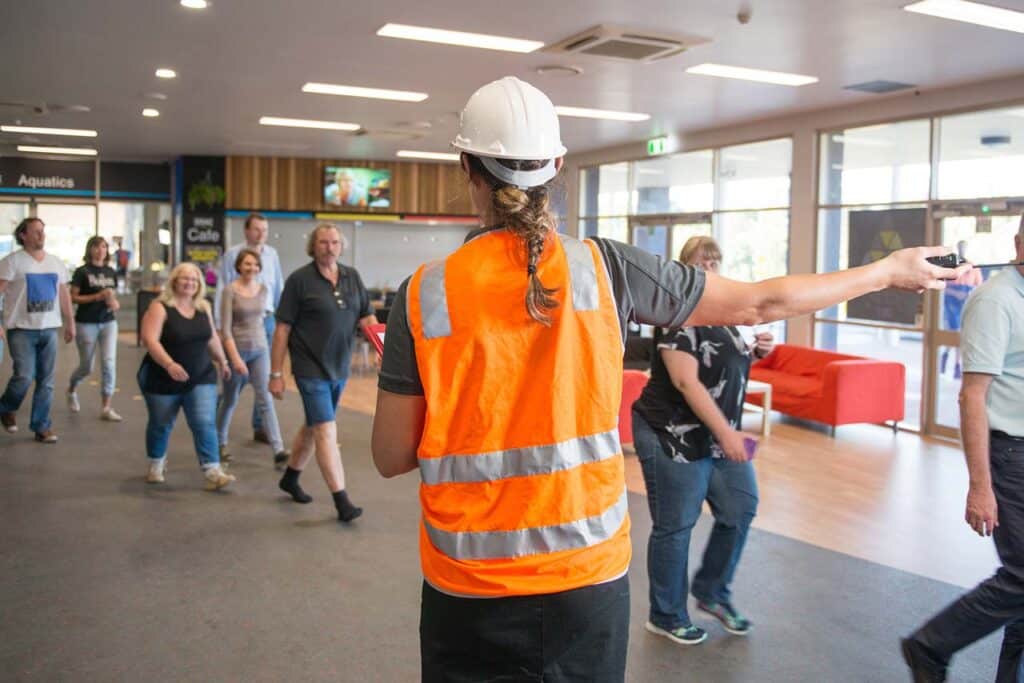
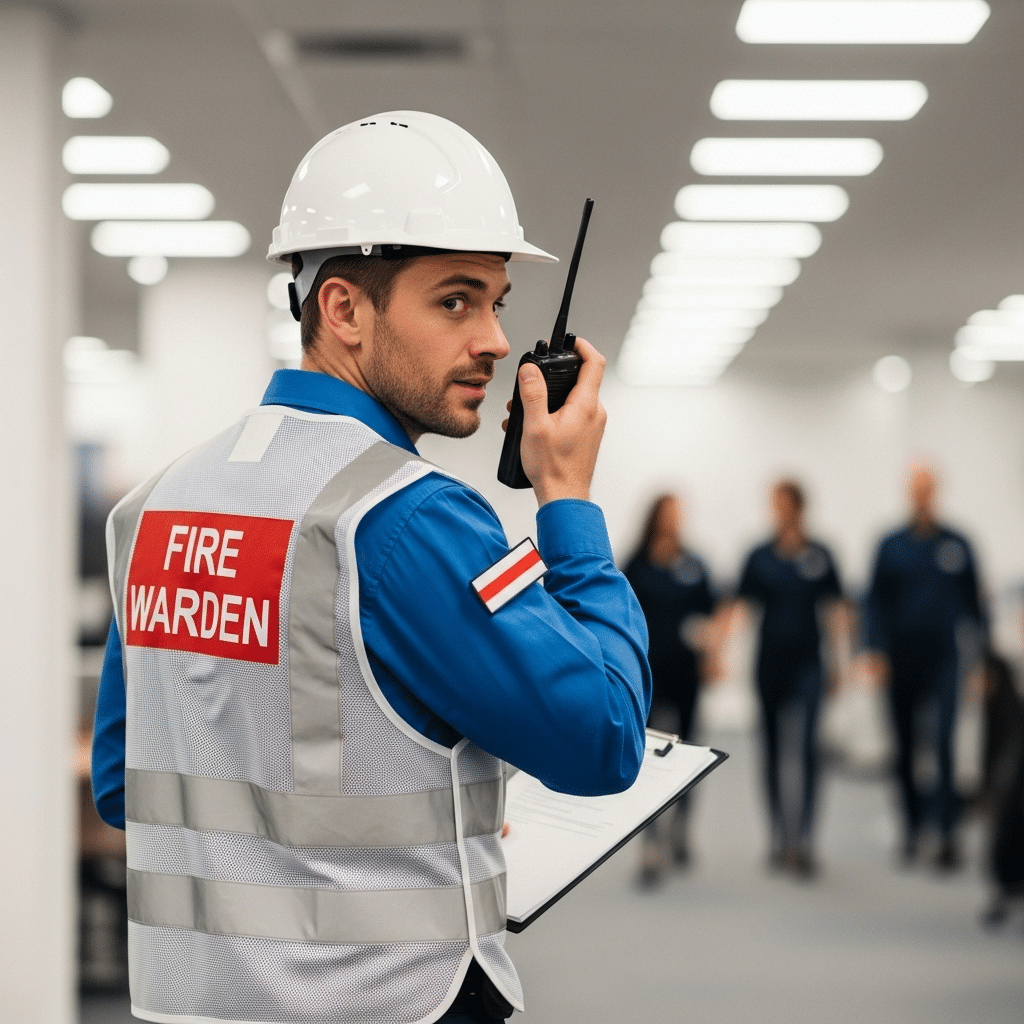
Conducting evacuation drills is one of the most visible fire warden duties. These drills familiarise people in the building with evacuation procedures, test the effectiveness of the emergency plan, and identify areas requiring improvement.
Australian regulations generally require evacuation drills at least annually, though many organisations conduct them more frequently. High-risk workplaces may need to conduct evacuation drills more frequently—potentially quarterly or even monthly.
Evacuation Drill Process:
- Pre-Drill Planning – Notify relevant stakeholders whilst maintaining some element of surprise
- Drill Initiation – Activate the fire alarm at varied times to test different scenarios
- Warden Coordination – Fire wardens take positions along evacuation routes to guide occupants
- Timing and Observation – Record evacuation time and note any issues or delays
- Assembly Point Management – Conduct headcounts and account for all occupants
- Debriefing – Review drill performance and identify improvements
4. Training Staff on Fire Safety and Emergency Response Protocols
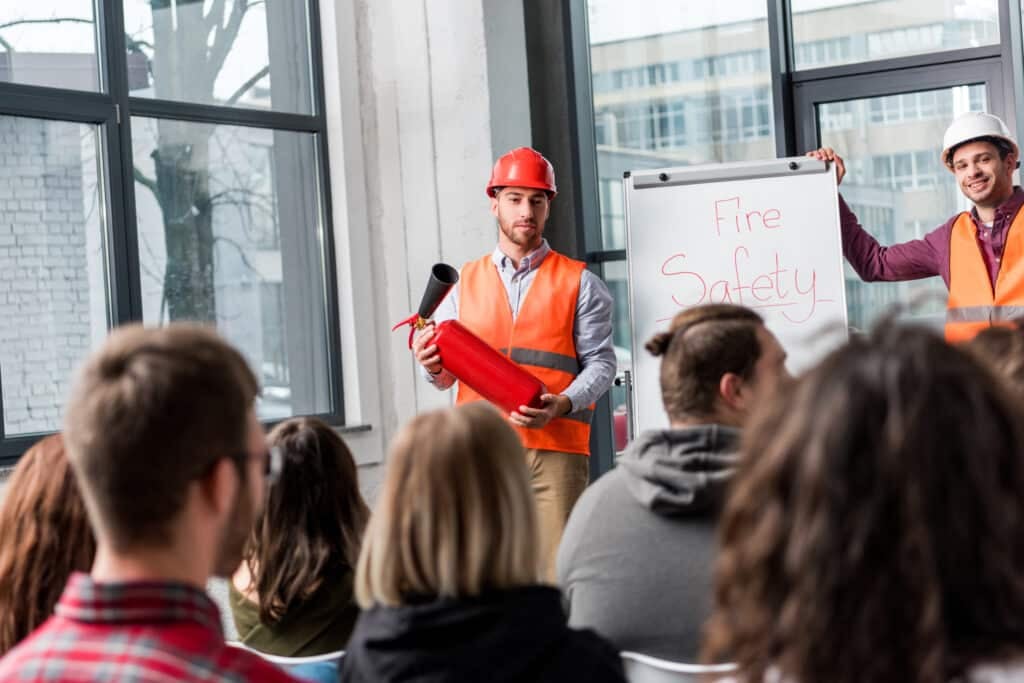
Fire wardens play a crucial role in educating colleagues about fire safety, emergency procedures, and their individual responsibilities during an evacuation. Staff education covers evacuation routes, assembly points, fire alarm recognition, equipment operation basics, reporting procedures, and special assistance protocols.
Effective fire wardens deliver this training during workplace inductions for new employees and through regular refresher sessions for existing staff. Including fire safety in regular workplace communications keeps these topics at the forefront of organisational awareness.

5. Maintaining Fire Safety Equipment and Emergency Exits
Beyond conducting inspections, fire wardens ensure that identified maintenance issues are promptly addressed and that fire safety equipment remains in optimal condition. This responsibility involves coordinating with facilities management, external contractors, and suppliers.
The fire warden must ensure portable fire extinguishers are serviced according to manufacturer specifications (typically annually), fire exits remain unlocked during occupied hours and free from obstructions, emergency lighting batteries are tested and replaced as needed, and fire doors close properly and aren’t propped open.
Enhance your workplace safety culture. First Aid Pro’s PUAFER005 Emergency & Fire Warden Training course equips you with the knowledge and practical skills to train colleagues and lead effective emergency responses. Enrol today and become a confident safety leader in your organisation.

6. Identifying and Managing Fire Hazards in the Workplace
Fire prevention is fundamentally about hazard identification and control. Fire wardens are trained to recognise potential fire hazards and take appropriate action to eliminate or minimise risks.
Common Fire Hazards to Monitor:
Hazard Category | Examples | Fire Warden Action |
Ignition Sources | Faulty electrical equipment, hot work activities | Report for repair; monitor hot work permits |
Fuel Sources | Flammable liquids, combustible materials, paper storage | Ensure proper storage and separation |
Oxygen Sources | Compressed gas cylinders, oxidising chemicals | Verify proper storage and ventilation |
Housekeeping | Waste accumulation, cluttered storage areas | Coordinate regular cleaning schedules |
Human Behaviour | Smoking in prohibited areas, improper equipment use | Educate staff and enforce policies |
Regular workplace inspections with a specific focus on fire hazards help maintain awareness. Fire wardens should familiarise themselves with the specific risks associated with their industry or workplace.

7. Leading Evacuation During Fire Emergencies
When the fire alarm sounds, the fire warden’s training and preparation are put to the ultimate test. Leading an evacuation requires calm authority, clear communication, and decisive action.
Evacuation Leadership Responsibilities:
- Immediate Assessment – Quickly determine if the alarm indicates a real emergency
- Direct Occupants – Instruct people in the workplace to evacuate via designated routes
- Sweep Assigned Areas – Systematically check all rooms and spaces for remaining occupants
- Assist Vulnerable Individuals – Help those with mobility limitations or special needs
- Close Doors – Shut doors to contain smoke and fire spread
- Maintain Calm – Project confidence and control to prevent panic
- Report to Chief Warden – Communicate sweep results and any issues encountered
The fire warden must balance urgency with safety. In the event of a fire, fire wardens should never place themselves at undue risk. If smoke or flames block access to an area during a sweep, the warden should note this and report it to emergency services.

8. Liaising with Emergency Services and Fire Brigades
When emergency services arrive, the fire warden becomes a critical information source. The fire department needs specific, accurate information to respond effectively.
Information Fire Wardens Provide to Emergency Services:
- Building Layout – Number of floors, access points, and internal configuration
- Occupancy Status – How many people were in the building and whether everyone is accounted for
- Fire Location – Specific area where fire or smoke was detected
- Hazardous Materials – Location of any dangerous goods or special risks
- Building Systems – Status of sprinklers or fire suppression systems
- Access Issues – Any obstacles emergency responders should know about
The chief fire warden typically serves as the primary contact with the fire department, but all fire wardens should be prepared to provide information if required.
9. Conducting Post-Emergency Headcounts at Assembly Points
Accounting for all building occupants is one of the most critical fire warden responsibilities. At designated assembly points, fire wardens conduct systematic headcounts to verify that everyone has evacuated safely.
Assembly Point Management Process:
Stage | Action |
Assembly | Direct evacuees to designated assembly points away from the building |
Organisation | Arrange people by department, floor, or team for easier counting |
Headcount | Use visitor logs, swipe card data, or team lists to account for occupants |
Communication | Report results to chief warden immediately |
Missing Persons | Provide specific information about anyone unaccounted for |
Control | Prevent people from re-entering the building |
The information gathered at assembly points directly influences emergency response priorities. If everyone is accounted for, firefighters can focus on fire suppression. If individuals are missing, search and rescue becomes paramount.

10. Keeping Accurate Fire Safety Records and Documentation
Comprehensive documentation is essential for legal compliance, continuous improvement, and emergency preparedness. Fire wardens maintain detailed records of all fire safety activities.
Essential Fire Safety Documentation:
- Training Records – Certificates and attendance for all fire warden training courses
- Drill Reports – Dates, times, outcomes, and improvement recommendations
- Inspection Logs – Regular equipment checks with dates, findings, and corrective actions
- Maintenance Records – Service dates for all fire safety equipment
- Incident Reports – Details of any fire emergencies or false alarms
- Hazard Registers – Identified fire hazards and risk mitigation measures
- Emergency Plans – Current evacuation plans with review dates
This documentation demonstrates regulatory compliance, provides evidence of due diligence, identifies trends requiring attention, and supports continuous improvement initiatives.
Fire Warden Certification and Training in Australia
How to Become a Certified Fire Warden
Becoming a certified fire warden requires completion of nationally recognised training aligned with PUAFER005 – Operate as part of an emergency control organisation.
Pathway to Certification:
- Employer Nomination – Employers designate employees to undertake the fire warden role
- Course Selection – Choose a registered training organisation offering PUAFER005
- Training Completion – Attend full-day training covering theory and practical components
- Assessment – Demonstrate competency through written and practical evaluation
- Certification – Receive Statement of Attainment upon successful completion
Quality fire warden training courses include realistic scenario-based exercises that simulate actual emergencies, helping participants develop the confidence and decision-making skills required when the fire alarm sounds for real.

Fire Warden Refresher Training Requirements
Fire warden responsibilities require ongoing competency maintenance through regular refresher training. Skills can deteriorate over time, regulations evolve, and new equipment or procedures may be introduced.
Refresher Training Schedule:
Workplace Type | Recommended Frequency |
Standard Office/Retail | Every 2-3 years |
High-Risk Industries | Annually |
Following Incidents | Within 3 months |
After Major Changes | Before resuming duties |
Refresher training typically covers updates to legislation, review of evacuation procedures, practical exercises with fire safety equipment, and scenario-based decision-making exercises.
Fire Warden Duties Checklist
Clear, practical responsibilities to maintain workplace fire safety compliance
📅 Monthly Responsibilities
- ☐Conduct formal inspection of all portable fire extinguishers
- ☐Test fire alarm audibility throughout the workplace
- ☐Check all exit signage for visibility and illumination
- ☐Review and update emergency contact lists
- ☐Document all inspections in compliance logs
🗓️ Annual Responsibilities
- ☐Conduct mandatory workplace evacuation drill
- ☐Complete refresher fire warden training (if due)
- ☐Carry out a comprehensive review of emergency procedures
- ☐Update and maintain fire warden training records

Fire Warden Knowledge Test Quiz
Answer the questions, then click Check Answers to see your score and explanations.
Question 1: How often must evacuation drills be conducted at minimum in most Australian workplaces?
Question 2: Who should be the primary contact with emergency services when they arrive at an incident?
Question 3: What is the primary purpose of conducting sweep searches during an evacuation?
Question 4: What should a fire warden do if smoke or flames block access during a sweep search?
Question 5: How frequently should portable fire extinguishers typically be serviced?
Note: Requirements can vary by risk level and site policy. Always follow your workplace emergency plan.
The Responsibilities Of a Fire Warden in Australian Workplaces
Fire wardens play a crucial role in implementing emergency procedures, maintaining fire safety equipment, conducting evacuation drills, and promoting a culture of workplace safety. These trained individuals form the backbone of every organisation’s emergency control organisation.
From conducting regular inspections of portable fire extinguishers to leading calm, organised evacuations, fire warden duties encompass both proactive prevention and reactive response. An effective fire warden understands that their role is fundamentally about protecting lives.
The legal requirements for fire wardens across Australian workplaces are clear and non-negotiable. Employers must designate sufficient fire wardens, provide appropriate fire warden training courses, maintain fire safety equipment, and conduct regular evacuation drills.
Remember that being a fire warden is not just about responding to emergencies—it’s about preventing them through vigilant hazard identification, maintaining readiness through regular drills, and fostering a safety-conscious culture.
Protect your workplace and advance your career. Enrol in First Aid Pro’s nationally recognised PUAFER005 Emergency & Fire Warden Training course today. Gain the confidence, skills, and certification to become an effective fire warden who can lead evacuations, maintain safety standards, and potentially save lives.
References
- Safe Work Australia. (2024). Model Work Health and Safety Regulations. Commonwealth of Australia.
- Fire Protection Association Australia. Good Practice Guides.
- Australian Building Codes Board. (2024). National Construction Code Volume One.
- Australian Skills Quality Authority. (2024). PUAFER005 – Operate as part of an emergency control organisation.
Frequently Asked Questions
How many fire wardens are required in an Australian workplace?
The number of fire wardens depends on workplace size, layout, occupancy, and risk level. As a general guide, many workplaces appoint one fire warden per 50 occupants, with additional wardens for multi-storey buildings or higher-risk environments. Final numbers should always be confirmed through a workplace risk assessment.
Is fire warden training mandatory in Australia?
Yes, fire warden training is mandatory under Australian work health and safety laws. Employers must ensure designated fire wardens are trained before performing the role, typically through nationally recognised training such as PUAFER005, with refresher training required every two to three years. Some high-risk workplaces may require more frequent refreshers.
What is the difference between a fire warden and an emergency warden?
Though these roles overlap, a fire warden focuses specifically on fire prevention, evacuation, and fire-related emergencies. An emergency warden has a broader role and may coordinate responses to other incidents such as medical emergencies or severe weather. In practice, the terms are often used interchangeably, with training covering multiple emergency scenarios.
Can you refuse to be a fire warden?
In most cases, employees can decline the fire warden role if it is not part of their original job description. However, refusal may be more complex if the role is specified in an employment contract. Employers should not pressure staff into the role without proper training, support, and suitability.
What fire warden equipment is required in Australian workplaces?
Fire wardens are typically provided with high-visibility vests, communication devices, and basic tools such as torches or checklists to support evacuations. Additional items may be required depending on the workplace layout and risk profile. Fire safety equipment such as extinguishers, alarms, and exit signage must also be maintained separately by the workplace.