




Sharon has 21+ years of experience as a qualified Emergency Care Nurse registered with the Australian Health Practitioner Regulation Agency (APHRA) and 12+ years as a First Aid Trainer.
She takes pride in FirstAidPro making first aid training available, comprehensive and affordable to everybody.
A tiger shark is one of the world’s most distinctive and powerful marine predators, and in Australian waters, it is sometimes involved in serious shark bite incidents. This article explains how to identify a tiger shark, whether they are dangerous, what increases the risk of a shark encounter, and what you should do during and after a shark attack. It also provides accurate first aid steps for shark attack first aid and emergency response in an Australian context.
If you want to feel confident responding to a shark bite or any other emergency, you can enrol in a nationally recognised advanced first aid course with First Aid Pro.

Key Takeaways
- Tiger sharks are one of the most recognisable and powerful predatory shark species found in Australian waters.
- They are involved in a small but significant share of serious shark bite incidents each year, although such events remain rare overall
- Understanding tiger shark behaviour, avoiding high-risk locations, and knowing correct shark attack first aid can significantly improve survival outcomes.
- The Australian Government, Surf Life Saving, and state-based shark mitigation programs use tagging, surveillance, and education to reduce the risk of a shark encounter along the coastline.
- Immediate response, particularly bleeding control, is essential when someone is bitten by a shark.

Tiger Shark Identification in Australian Waters: How to Recognise This Apex Predator
The Tiger shark (Galeocerdo cuvier) is among the most visually distinctive species of shark in the world. Their appearance makes them relatively easy to identify compared with other common shark species such as the bull shark or great white shark. Despite being one of the most dangerous sharks to humans, they play a vital role in maintaining balance in marine life ecosystems.
Tiger sharks have a broad, square-shaped head, a large mouth with deeply serrated teeth, and a stout yet flexible body capable of powerful lateral movement. While adult tiger sharks display faint stripes along the body, juvenile tiger sharks have bold, dark vertical bars resembling a tiger — hence their name. These markings fade as the shark ages, but the body shape remains unmistakable.

Distinctive Features That Set Tiger Sharks Apart
Young tiger sharks are especially striking, with high-contrast stripes that gradually soften with maturity. Adult tiger sharks can reach sizes of 3.5 to 5 metres, though larger individuals are occasionally recorded, especially in Western Australian waters where prey availability is high.
Tiger sharks also have unusually large, triangular teeth that function like serrated blades, enabling them to slice through flesh, bone, and shell. These teeth are often used as forensic indicators in shark attack investigations when identifying which species was involved.

Where Tiger Sharks Live in Australia
This shark species favour warm coastal and shelf waters and in Australia are recorded from south‑western WA around the tropical north and down the east coast to about southern NSW, including Queensland waters used by swimmers, surfers and divers
They can be found in:
- Coral reefs
- Lagoons
- Continental shelf drop-offs
- River mouths and estuaries
- Surf zones
- Open ocean migratory pathways
They are highly mobile, covering large distances. Many tiger sharks in Australian waters are tagged, allowing researchers to monitor shark movements and understand seasonal shark activity.
(Above Map: Australian shark bites by species & location)
Tiger Shark Behaviour and Attack Patterns Explained

Sharks are opportunistic predators, feeding on fish, seals, turtles, birds, rays, dolphins, crustaceans, and even inanimate objects. Sharks often investigate unfamiliar items using their mouths, which partly explains why humans may be bitten by a shark even when sharks don’t intend to prey on humans.
Although tiger sharks are frequently involved in serious shark attacks, it is important to note that shark attacks are rare considering the millions of Australians and tourists who enter the ocean each year. The Australian Shark Incident Database consistently shows that unprovoked shark incidents remain low.
Why Tiger Sharks Are Opportunistic Predators
Sharks use a combination of electroreception, smell, movement detection, and low-light vision to locate prey. Because they often feed at night or in murky conditions, mistaken identity is a recognised factor in shark attacks in Australian waters.
Factors influencing tiger shark behaviour include:
- Tidal shifts
- Seasonal prey movements
- Water temperature
- Human activity (surfing, spearfishing, boating)
- Environmental changes

Are Tiger Sharks Aggressive to Humans?
Like all sharks, Tigers are not motivated to attack humans as prey. However, they are large, powerful, and curious. Their behaviour means they may investigate swimmers or surfers, especially when visibility is poor or when prey such as seals or schools of fish are present.
Although tiger sharks are frequently involved in serious shark bite incidents, they do not actively hunt humans. Most attacks involve a single bite followed by the shark swimming away.
When and Where Shark Encounters Are Most Likely
Shark encounters are more likely:
- Around river mouths
- During dawn or dusk
- When surf conditions reduce visibility
- When baitfish schools or seals are active
- Near fishing activity
After storms, when carcasses or runoff may attract sharks

Are Tiger Sharks Dangerous? Understanding Their Reputation
The tiger shark is regularly listed among the top three shark species most frequently implicated in serious attacks on humans, alongside the bull shark and great white shark. Their danger primarily comes from three factors:
- Size and strength – large adults can exceed 5 metres.
- Serrated teeth – capable of causing severe tissue damage.
- Opportunistic behaviour – they investigate objects using their mouth.
Although fatal shark attacks are extremely rare, when they do happen, the tiger shark is often one of the shark species involved.
Why Tiger Sharks Are Considered High-Risk
This sharks’ tooth design is particularly significant. Unlike the great white shark, whose conical teeth puncture and grip, a tiger’s teeth shear and slice. This sawing action explains the deep lacerations common in shark bite injuries.
Common Misconceptions About Tiger Sharks
- Myth: They actively target humans.
Fact: They do not intentionally attack humans. Most bites happen due to mistaken identity. - Myth: Shark nets stop sharks.
Fact: Shark nets used in New South Wales and Queensland are not full enclosures and do not prevent shark entry. They are mitigation tools, not physical barriers.

How to Avoid Shark Attacks in Australia
Avoiding a shark encounter is far more effective than responding to one. Most Australians who surf, dive, swim, or fish never experience a shark attack, but sensible precautions can reduce already low risks even further.
Evidence-Based Safety Tips
Stay safe by following proven strategies:
- Avoid water at dawn, dusk, and night.
- Stay out of murky water where visibility is poor.
- Do not swim near fishing activity, surf gutters, or seal colonies.
- Avoid wearing shiny jewellery.
- Swim at patrolled beaches where shark spotters, drones, and surf lifesavers may operate.
Why Sharks Approach People
Sudden movement can mimic distressed prey, triggering investigation from passing sharks.
Tiger sharks are naturally curious and may approach unfamiliar shapes, lights, or silhouettes.
Schools of fish, seals, or baitfish movements can attract predatory sharks closer to shore.
Silhouettes on surfboards can resemble seals, especially in murky or low-light conditions.
Note: These interactions are rare, but they can occur anywhere humans and sharks share the coastline.

What To Do If You See a Shark: Safety and Survival Tips
Seeing a shark can be frightening, but calm and controlled behaviour significantly reduces risk for you and those around you.
How to Respond Safely
If you see a shark:
Remain calm. Sudden panic can increase splashing and attract unwanted attention.
Maintain eye contact with the shark. Keeping it in sight helps you track its movements.
Back away slowly towards shore or your exit point, without turning your back if possible.
Avoid splashing or sudden movements. Smooth, controlled strokes are safer than frantic kicking.
Keep your group close together. A tight group appears larger and can discourage an approach.
How to Defend Yourself in a Worst-Case Scenario
If contact becomes unavoidable, aim for the shark’s most sensitive areas:
Direct strikes may cause the shark to release or retreat.
Gills are highly sensitive and critical for breathing.
A firm strike to the snout may startle the shark and create an escape opportunity.
Important: These actions are last-resort survival measures and should only be attempted when absolutely necessary.
Shark Bite First Aid in Australia: Essential Emergency Response
Shark attack first aid is crucial because shark bites can cause massive bleeding. Correct first aid can be lifesaving before emergency services arrive.
To learn practical skills for responding to a shark bite, you can enrol in a nationally recognised advanced first aid course with First Aid Pro.
Step-by-Step First Aid Response for Shark Bites
Remove the Casualty From the Water
Ensure your own safety first. Move the casualty carefully to the beach, boat, jetty, or another firm, stable surface before starting first aid.
Call Triple Zero (000) Immediately
Shark bites are life-threatening emergencies. Call 000 as soon as possible so paramedics and other first responders can be dispatched while you provide first aid.
Control Life-Threatening Bleeding
Focus first on any heavy, life-threatening bleeding. Use:
- Firm, direct pressure over the wound
- Trauma dressings or bulky pads if available
- A tourniquet if bleeding is severe and uncontrolled
Modern first aid guidelines support tourniquet use for catastrophic limb bleeding when other methods are not enough.
Manage Airway, Breathing, and Circulation (DRSABCD)
Continue your assessment using the DRSABCD action plan:
Prevent Shock
Lay the casualty flat (unless breathing is easier in another position), keep them warm, reassure them, and continue monitoring until help arrives.
When CPR Is Needed
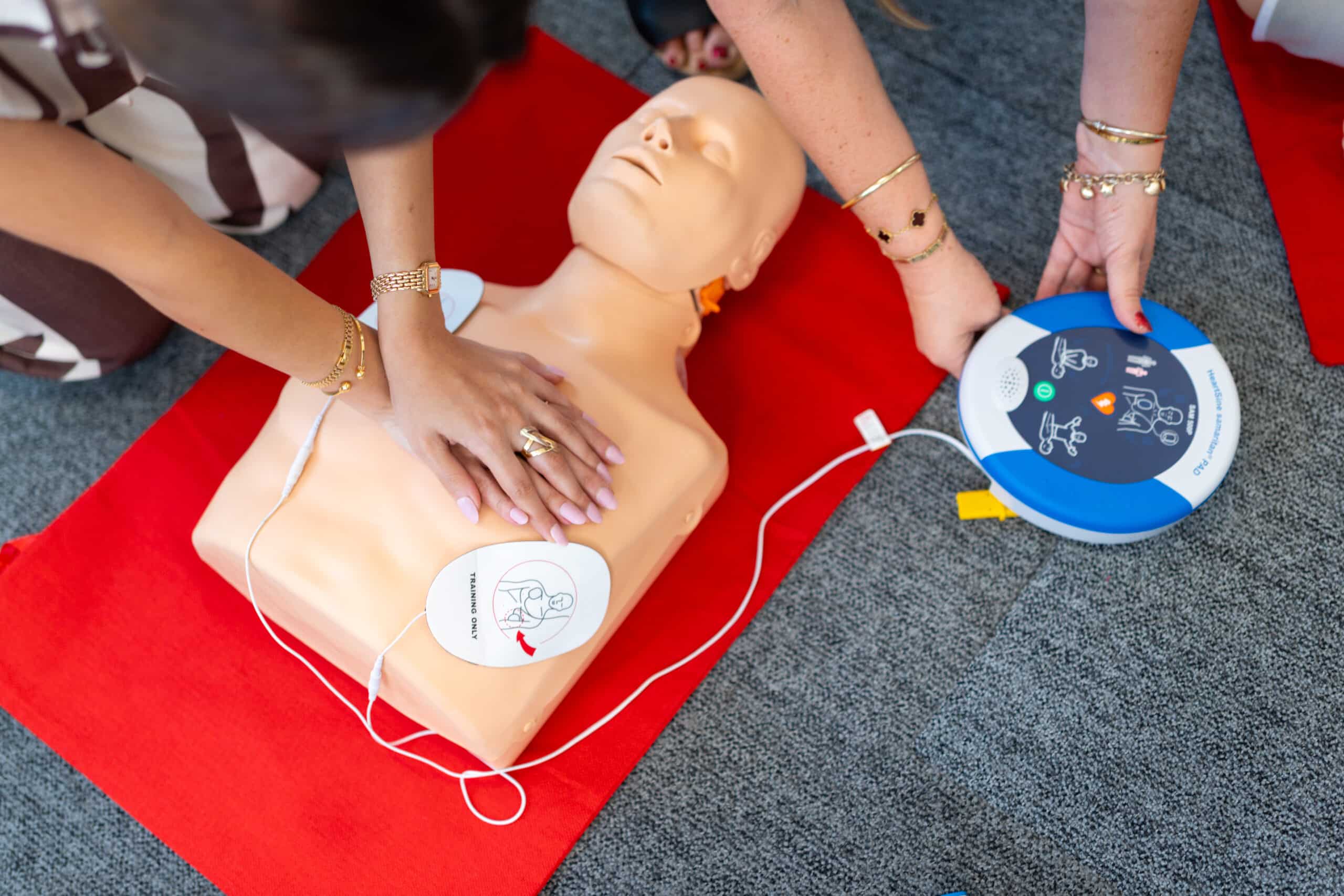
If the casualty does not respond and is not breathing normally, call 000 immediately and begin CPR.
CPR Steps
-
Position the casualty
Lay them on their back on a firm surface. -
Start chest compressions
Press at 100–120 compressions per minute in the centre of the chest, allowing full recoil. -
Add rescue breaths (if trained)
After 30 compressions, give 2 breaths, watching for chest rise.
Continue cycles of 30 compressions and 2 breaths until help arrives or normal breathing returns.

Why First Aid Training Is Essential for Marine Emergencies
Shark attacks are rare, but when they happen, they require fast and skilled response. Whether at the beach, on a boat, or during a surf session, knowing first aid gives you the confidence to support someone until paramedics arrive.
Develop these lifesaving skills by enrolling in an advanced first aid course with First Aid Pro.

Warning Signs of Shark Activity
Be alert for these common environmental and behavioural indicators that may signal increased shark presence in the area.
Large baitfish gatherings can attract predatory sharks following feeding opportunities.
Run-off reduces visibility and may carry food scents into near-shore areas.
Surf Life Saving and government warnings should always be taken seriously.
Carcasses may draw scavenging sharks closer to beaches or surf zones.
Rapid changes in movement or sudden dispersal can indicate predator presence below.

Knowledge Test: Tiger Shark Safety Quiz
Test your understanding of tiger shark safety and shark attack first aid.
1. What is the most important first step in shark attack first aid?
2. Where are tiger sharks most commonly found in Australian waters?
3. Which behaviour increases risk during a shark encounter?
4. What makes tiger shark bites particularly severe?
5. How can shark encounters be reduced at beaches?
Staying Safe Around Sharks in Australia
Sharks are powerful predators, but they are also vital to healthy marine ecosystems along the Australian coastline. While shark attacks are rare, understanding shark behaviour, avoiding high-risk conditions, and knowing correct first aid dramatically improves safety for swimmers, surfers, and divers. We hope that this article shows that humans and sharks can coexist when people remain informed, observant, and prepared.
If you want to build confidence and learn practical emergency response skills, enrolling in a nationally recognised first aid course with First Aid Pro is one of the most valuable steps you can take.
References
- Australian Shark‑Incident Database (ASID) – (Taronga Conservation Society)
- Surf Life Saving QLD – Sharks
- Shark Smart NSW: Staying Safe
- Surf Lifesaving WA: Shark Safety
- CSIRO Marine Research – Shark Research
Frequently Asked Tiger Shark Questions
Yes. Tiger sharks are one of the world’s most dangerous shark species due to their size, strength, and investigative behaviour, though shark attacks remain rare overall.
No. Sharks do not hunt humans, but they may mistake a person for prey or investigate out of curiosity.
Queensland, Western Australia, and the Northern Territory record the majority of tiger shark incidents due to warmer waters and active marine ecosystems.
Poor visibility, the presence of baitfish, dawn or dusk swimming, and areas with active surf or seal activity increase risk.
Exit the water, apply firm pressure to control bleeding, call 000, and be prepared to start CPR if needed.