


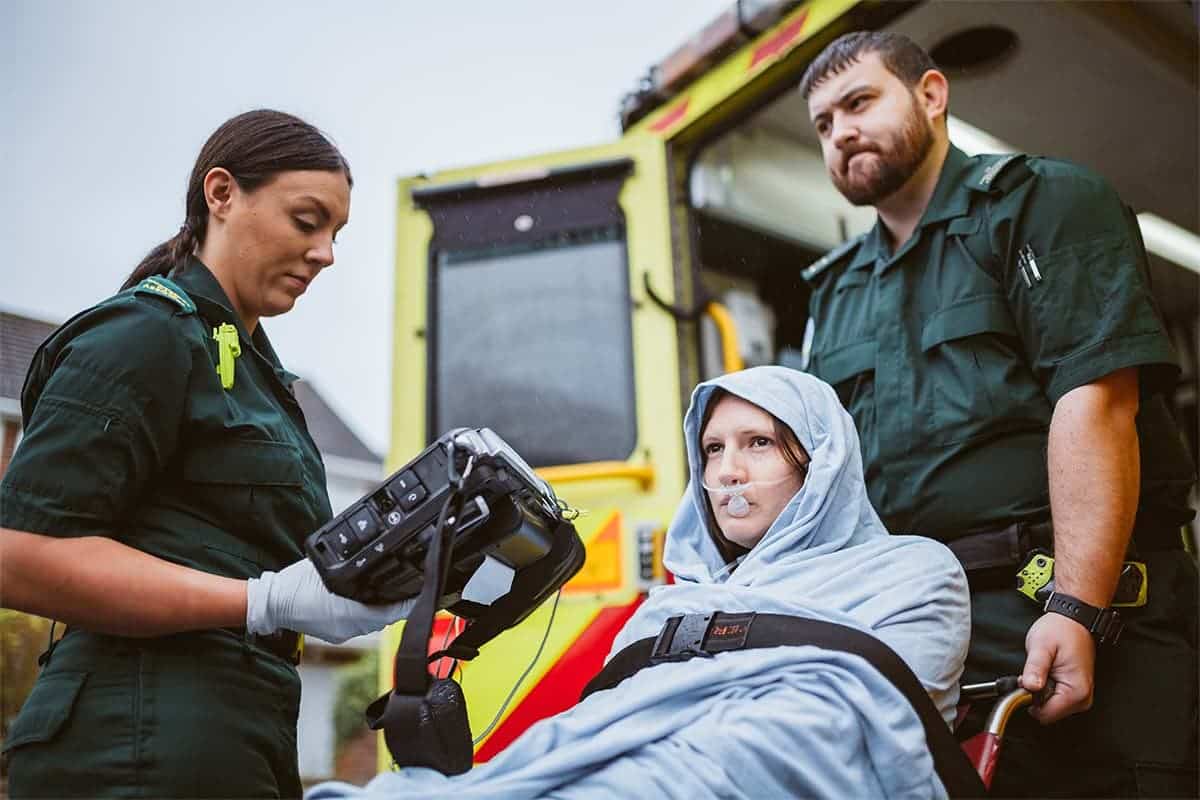

Sharon has 21+ years of experience as a qualified Emergency Care Nurse registered with the Australian Health Practitioner Regulation Agency (APHRA) and 12+ years as a First Aid Trainer.
She takes pride in FirstAidPro making first aid training available, comprehensive and affordable to everybody.
Hypovolemia is a dangerous drop in blood volume that can rapidly lead to hypovolaemic shock. It’s caused by severe bleeding, burns, vomiting, diarrhoea or dehydration. Early signs include dizziness, rapid heartbeat and cold, clammy skin. Without fast action, it becomes life-threatening. This guide covers how to recognise hypovolemia, the right first aid steps, and when to call 000.
Every second counts when someone’s blood volume drops dangerously low. Hypovolemia sounds clinical — but what it means in practice is that the body is running out of the fluid it needs to keep vital organs working. Left untreated, it progresses to hypovolaemic shock, which can be fatal. Yet many Australians wouldn’t recognise the early warning signs if they saw them. That’s a problem worth fixing. Whether it happens on a worksite, at home, or in a remote location, knowing how to respond to hypovolemia can be the difference between a person recovering or deteriorating rapidly.
Be ready to act when seconds matter. Enrol in a nationally recognised first aid course with First Aid Pro today and learn the skills that save lives.

Key Takeaways
Hypovolaemia (hypovolemia) is a condition where the body does not have enough circulating blood or fluid, which can quickly lead to hypovolaemic shock, a life-threatening medical emergency.
Causes include severe bleeding (haemorrhagic shock), fluid loss from diarrhoea, vomiting, dehydration, or burns, and certain medical conditions.
Symptoms of hypovolaemic shock range from thirst, weakness, and rapid heartbeat in early stages, to confusion, low blood pressure, and collapse in severe cases.
First aid for shock in Australia follows DRSABCD: call 000, control bleeding, lay the person flat, elevate legs if safe, keep them warm, and monitor until paramedics arrive.
Medical treatment requires urgent care in hospital, with IV fluids, blood transfusions, and sometimes surgery to stop internal bleeding.
Prevention includes staying hydrated, using safety measures to avoid trauma, and ensuring workplaces and communities have trained first aiders.

What is Hypovolemia?
Hypovolemia is a state of abnormally low blood or fluid volume in the body. It occurs when the body loses more fluid than it takes in, reducing the amount of blood available for the heart to pump. This puts every organ under stress.
It can develop from blood loss (haemorrhagic hypovolemia) or from fluid loss through other pathways like severe vomiting, burns, or profuse sweating. Healthdirect Australia classifies shock — the most severe form — as a medical emergency requiring immediate triple zero response.
There are four recognised stages, ranging from mild (under 15% blood volume loss) through to severe (over 40% loss), at which point the patient is in irreversible shock without immediate medical intervention.
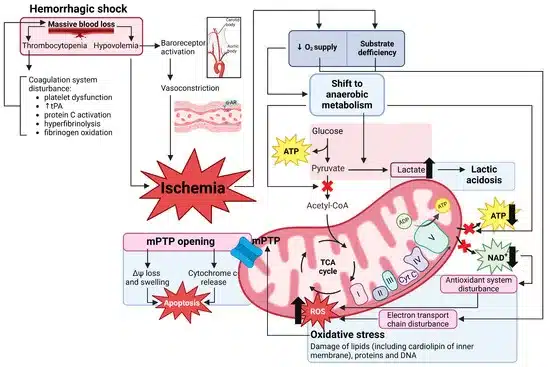
Pathophysiology of Hypovolemic Shock

What Are the Symptoms of Hypovolemia?
Hypovolemia symptoms develop in stages, starting mild and escalating fast. Catching it early gives you time to act.
Early-stage symptoms (mild to moderate blood volume loss):
- Excessive thirst
- Dizziness or light-headedness, especially when standing
- Rapid heart rate (the heart works harder to compensate)
- Weakness and fatigue
- Headache
- Reduced urine output (dark yellow or no urine)
Moderate-stage symptoms:
- Pale, cold, clammy skin
- Rapid, shallow breathing
- Confusion or anxiety
- Nausea
Severe-stage symptoms (hypovolaemic shock):
- Very low blood pressure
- Loss of consciousness
- Rapid, weak pulse that may be difficult to detect
- Bluish tinge to lips or fingertips (cyanosis)
- Unconsciousness or unresponsiveness
According to StatPearls via NCBI, hypovolaemic shock can develop rapidly — sometimes within minutes of significant blood loss. Do not wait for severe symptoms before calling for help.
Symptoms and Causes of Hypovolemia
What Causes Hypovolemia?
Hypovolemia has two main categories: blood loss and fluid loss.
Blood loss causes (haemorrhagic hypovolemia):
- Traumatic injury (workplace accidents, motor vehicle crashes)
- Internal bleeding (ruptured organs, gastrointestinal bleeding)
- Severe cuts or lacerations
- Post-surgical bleeding
Fluid loss causes:
- Severe vomiting or diarrhoea (gastroenteritis is a common trigger)
- Burns covering large body surface areas
- Profuse sweating in extreme heat or during intense exercise
- Diabetic complications causing excessive urination
Understanding the cause matters because it shapes your first aid response. Visible external bleeding is more straightforward to manage. Internal bleeding or fluid loss from vomiting requires urgent medical attention since there’s no direct external intervention available.
Signs and Symptoms Associated with Hypovolemic Shock
Early / Compensated Stage
- Rapid heart rate (the heart compensates for fluid loss)
- Thirst and weakness (classic early symptoms of hypovolaemia)
Progressive Stage
- Low blood pressure (not enough fluid to circulate)
- Cold, clammy skin (blood vessels constrict)
- Confusion or agitation (brain not getting oxygen)
Severe / Decompensated Stage
- Reduced urine output
- Blue lips or fingertips (poor oxygen circulation)
- Collapse or loss of consciousness
How Do You Treat Hypovolemia? First Aid Steps
If you suspect someone has hypovolemia or is in hypovolaemic shock, act immediately using the DRSABCD framework.
Step 1: Call 000 — Do not delay calling triple zero. Hypovolaemic shock requires paramedic intervention and hospital treatment including IV fluids and, in many cases, blood transfusion.
Step 2: Control external bleeding — If there is an obvious wound, apply firm, direct pressure using a clean cloth or bandage. Maintain pressure continuously. Do not remove the cloth if it becomes soaked — add more material on top and press harder. Learn more about correct technique in our guide to controlling severe bleeding.
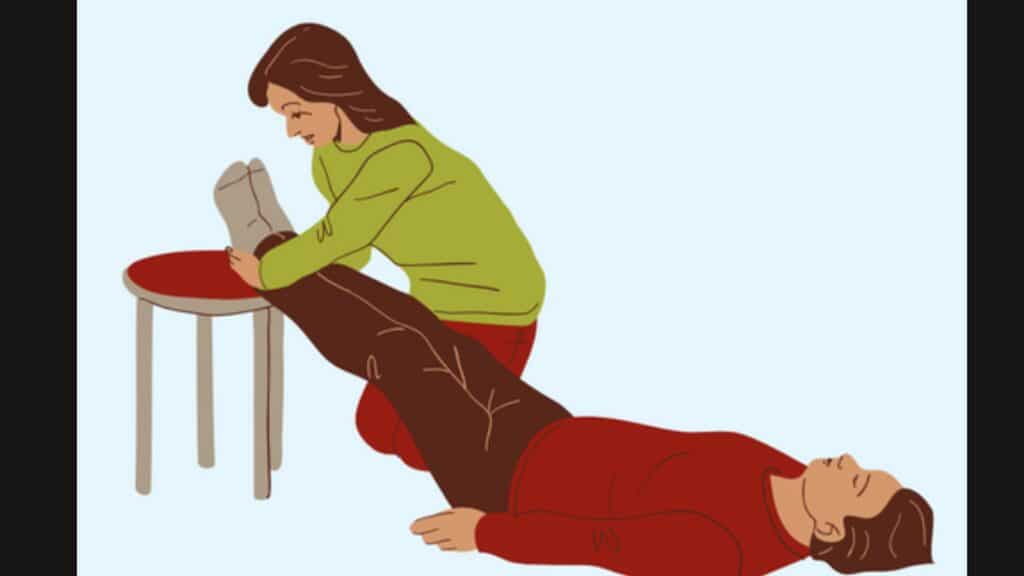
Step 3: Position the person correctly — Lay the person flat on their back. If safe to do so, elevate the legs slightly (approximately 30 cm) to help blood flow back toward vital organs. Do not elevate legs if there is a suspected spinal, head, chest, or leg injury.
Step 4: Keep them warm — Cover with a blanket or jacket to prevent heat loss. Do not apply direct heat (such as a hot water bottle). The body is already under significant stress and temperature regulation is compromised.
Step 5: Do not give food or fluids — Even though the person may feel thirsty, giving oral fluids is not appropriate in a shock state and can complicate medical treatment.
Step 6: Monitor and reassure — Stay with the person, monitor their breathing and responsiveness, and keep them as calm and still as possible until paramedics arrive. Movement increases the rate at which venom or toxins spread through the lymphatic system if injury is combined with another emergency.
Healthdirect Australia recommends these exact steps as the standard Australian first aid protocol for shock states.
When Is It a Medical Emergency?
Call 000 immediately for any of the following:
- Visible severe or uncontrolled bleeding
- The person is unconscious or unresponsive
- Breathing is rapid, shallow, or absent
- The person becomes confused or agitated suddenly
- You know or suspect internal bleeding (abdominal pain, distension)
- Burns covering more than 10% of the body
- Symptoms appear after a traumatic injury, regardless of severity
Do not attempt to drive a person in suspected shock to hospital yourself. Paramedics can begin life-saving IV fluid replacement en route, which is not possible in a private vehicle.
Be prepared for real emergencies. Join a First Aid Pro course to learn how to provide lifesaving first aid care for shock and hypovolemia.
Medical Management and Treatment
Once in the emergency department, treatment for hypovolemia depends on the cause:
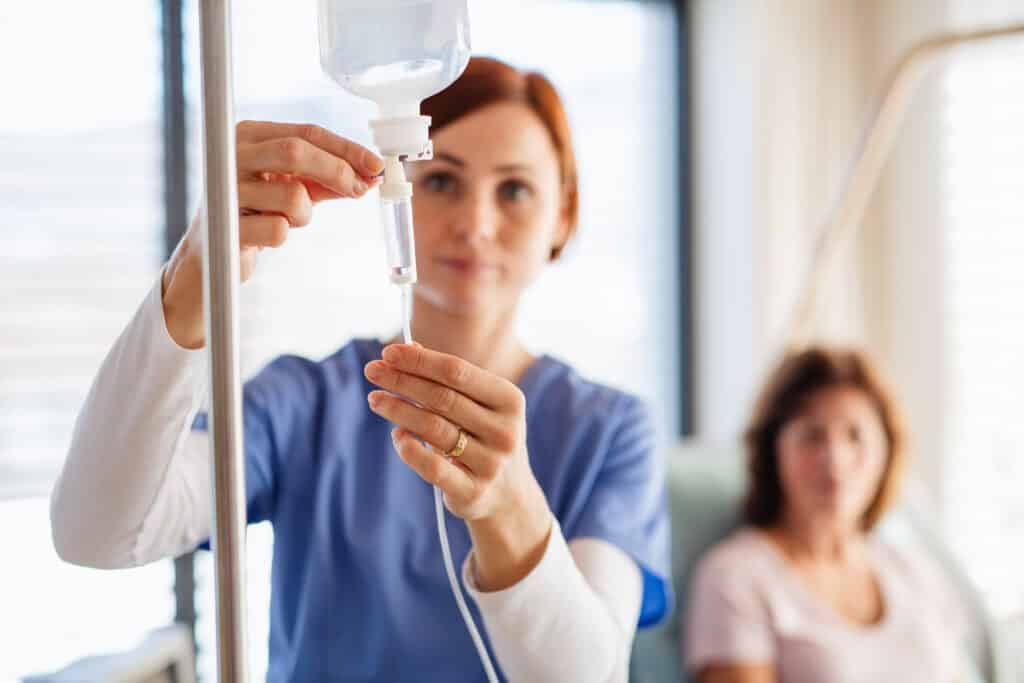
- IV fluids (intravenous fluids): Saline or Ringer’s lactate to restore circulating volume.
- Blood transfusions: For major haemorrhage or trauma.
- Surgical intervention: To stop internal bleeding.
- Oxygen therapy and monitoring: In an intensive care unit if severe.
Hypovolaemic shock is a life-threatening condition. Prompt treatment in hospital is essential to prevent organ damage and death.
How Is Hypovolemia Treated in Hospital?
Hospital treatment focuses on restoring blood volume and identifying the underlying cause. UpToDate outlines the primary interventions:
- IV fluids: Saline or Ringer’s lactate are administered rapidly to restore circulating volume
- Blood transfusion: Required for significant haemorrhage or trauma
- Surgical intervention: To locate and stop internal bleeding
- Vasopressors: Medications to help maintain blood pressure in severe cases
- Oxygen supplementation: To support organ function during recovery
Recovery time depends on the cause and severity. Mild hypovolemia from dehydration resolves quickly with oral rehydration. Severe haemorrhagic shock may require surgery, ICU care, and extended recovery.
Knowledge Test Quiz: Hypovolaemia & Shock
Test your understanding of hypovolaemia and shock.
Conclusion
Hypovolemia is not a condition most people expect to deal with — but workplace injuries, accidents, and sudden illness mean it can happen anywhere. Knowing the warning signs and acting fast with the right first aid steps gives the person the best possible chance of a good outcome. Call 000, control the bleeding, keep them warm and still, and wait for paramedics.
The most powerful thing you can do for yourself and everyone around you is to get first aid certified with First Aid Pro. Our nationally recognised courses cover shock management, bleeding control, and real emergency scenarios — so when it matters, you’re ready to act. Get In. Get Trained. Get Going.
References
Cleveland Clinic. Hypovolemia and Hypovolemic Shock.
Better Health Channel (Vic Govt). Shock – Causes, Symptoms and Treatment.
Healthdirect Australia. Shock – Symptoms and First Aid.
Frequently Asked Questions
Hypovolemia refers to low blood or fluid volume in the body. Hypovolaemic shock is the severe progression of this condition, where blood volume is critically low and organs begin to fail due to insufficient oxygen delivery. Shock is a medical emergency requiring immediate 000 response and hospital treatment.
Yes. Hypovolemia can result from any significant fluid loss, including severe vomiting, diarrhoea, burns, or excessive sweating. These non-haemorrhagic causes are just as dangerous as visible blood loss and require the same urgent medical attention.
It depends on the rate of fluid or blood loss. Severe arterial bleeding can cause life-threatening shock within minutes. More gradual causes like dehydration or vomiting may take hours or days to reach dangerous levels. According to StatPearls, the speed of deterioration is a key factor in determining patient outcomes.
No. Do not give oral fluids to someone showing signs of hypovolaemic shock. The stomach cannot absorb fluids effectively in a shock state, and giving liquids can complicate airway management and any subsequent surgery. IV fluids administered by paramedics are the appropriate treatment.
Yes. HLTAID011 Provide First Aid — the standard nationally recognised first aid certification in Australia — covers shock recognition, bleeding control, and emergency response protocols including when and how to call 000. Book a course with First Aid Pro to get trained.