




Sharon has 21+ years of experience as a qualified Emergency Care Nurse registered with the Australian Health Practitioner Regulation Agency (APHRA) and 12+ years as a First Aid Trainer.
She takes pride in FirstAidPro making first aid training available, comprehensive and affordable to everybody.
Can you actually get a nationally recognised first aid certificate fast? A first aid certificate only counts if employers and regulators actually accept it—and in Australia, that comes down to one thing: whether a Registered Training Organisation (RTO) issued it under the national vocational education framework.
The difference between a recognised qualification and a worthless piece of paper often isn’t obvious until you’re asked to prove your credentials. This guide covers exactly what makes a certificate legitimate, which HLTAID units apply to your situation, and how to get certified quickly through an accredited provider.
Key takeaways
- A nationally recognised first aid certificate in Australia comes only from a Registered Training Organisation (RTO) approved by the Australian Skills Quality Authority (ASQA).
- Your certificate will show an HLTAID unit code and the provider’s RTO number—employers and regulators look for both.
- CPR certificates (HLTAID009) stay valid for 12 months, while first aid certificates (HLTAID011, HLTAID012, HLTAID013, HLTAID014) last 3 years.
- FirstAidPro (RTO 31124) offers same-day certification at 170+ locations across Australia, with face-to-face, blended, and live Zoom options.
- Book your first aid course today to get certified quickly.
What makes a nationally recognised first aid certificate in Australia
In Australia, a first aid certificate counts as nationally recognised when a Registered Training Organisation (RTO) issues it under the authority of the Australian Skills Quality Authority (ASQA). This distinction separates qualifications that employers and regulators accept from certificates that may not meet compliance requirements.
When you finish a nationally recognised course, you receive a Statement of Attainment—the official document proving your competency. This certificate always displays specific HLTAID unit codes (like HLTAID009 or HLTAID011) along with the training provider’s RTO registration number.
Here’s what appears on a legitimate certificate:
- Registered Training Organisation (RTO): A provider approved by ASQA to deliver accredited training. You can verify any RTO on the national register at training.gov.au.
- HLTAID unit codes: Standardised codes identifying exactly which competencies you’ve achieved. Employers recognise these codes across all states and territories.
- Statement of Attainment: The formal certificate document issued upon successful completion—different from a “certificate of attendance” or “participation certificate.”
- Australian Skills Quality Authority (ASQA): The national regulator responsible for approving and auditing RTOs.
Without these elements, a certificate may not satisfy workplace health and safety requirements.
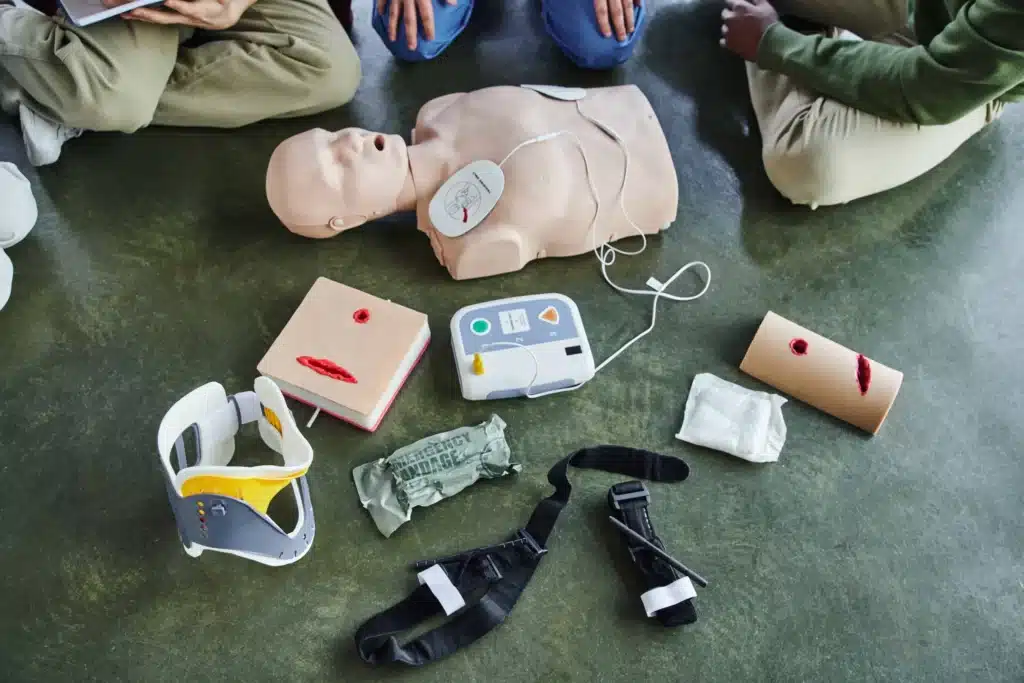
Nationally recognised first aid certificates issued by FirstAidPro
FirstAidPro (RTO Code: 31124) delivers all major HLTAID qualifications across Australia. The right unit code for you depends on your workplace, industry, or personal circumstances.
HLTAID009 Provide CPR
This unit covers adult, child, and infant cardiopulmonary resuscitation (CPR) along with safe use of an Automated External Defibrillator (AED).
HLTAID011 Provide First Aid
The standard workplace first aid certificate includes CPR (HLTAID009) and basic emergency life support (HLTAID010). When employers ask for a “first aid certificate,” this is typically what they mean. It’s accepted across all industries.
HLTAID012 Provide First Aid in an Education and Care Setting
Childcare workers, early childhood educators, and OSHC staff require this childcare first aid qualification. The Australian Children’s Education & Care Quality Authority (ACECQA) approves it, and the curriculum covers paediatric-specific emergencies like infant choking and childhood illnesses.
HLTAID013 Provide First Aid in a Remote or Isolated Site
Workers in mining, agriculture, or outdoor industries—where emergency services may be hours away—benefit from this unit. The HLTAID013 curriculum covers prolonged casualty care, improvisation with limited resources, and evacuation coordination.
HLTAID014 Provide Advanced First Aid
Designated first aid officers, supervisors, and emergency response team leaders often complete this advanced first aid qualification. It includes multi-casualty triage, complex trauma management, and coordination of emergency responses.
HLTAID015 Provide Advanced Resuscitation and Oxygen Therapy
Healthcare workers and those in high-risk industries complete this unit. The HLTAID015 curriculum covers oxygen administration, advanced airway management, and two-rescuer CPR coordination.
Unit Code | Certificate Name | Recommended For | Validity |
HLTAID009 | CPR | All workers | 12 months |
HLTAID011 | Provide First Aid | Workplace first aiders | 3 years |
HLTAID012 | Childcare First Aid | Educators, childcare workers | 3 years |
HLTAID013 | Remote First Aid | Mining, outdoor, rural workers | 3 years |
HLTAID014 | Advanced First Aid | First aid officers, supervisors | 3 years |
HLTAID015 | Advanced Resuscitation | Healthcare, high-risk industries | 12 months |

How to get a recognised first aid certificate fast
Getting certified doesn’t have to take days or disrupt your schedule. With the right approach, you can complete training and receive your Statement of Attainment on the same day.
Step 1: Choose the right HLTAID unit for your role
Start by matching your industry or employer requirements to the correct unit code from the table above. If you’re unsure, check with your workplace—most employers specify exactly which HLTAID code they require.
Step 2: Pick a delivery format that fits your schedule
Different learning styles and time constraints call for different approaches:
- Traditional face-to-face: All learning and assessment completed in person, with no online component beforehand.
- Blended learning: Complete theory modules online at your own pace, then attend a shorter practical session.
- Express assessment: For experienced first aiders renewing their certification—online theory plus an assessment-only practical.
- Online Zoom: A live trainer-led session conducted virtually, with equipment mailed to you beforehand.
Step 3: Complete pre-class theory and provide your USI
A Unique Student Identifier (USI) is a 10-digit code required for all nationally recognised training in Australia. If you don’t already have one, you can create it for free at usi.gov.au—it takes just a few minutes.
For blended or express formats, you’ll also complete pre-reading or online modules before attending your practical session.
Step 4: Attend the practical session and receive your same-day Statement of Attainment
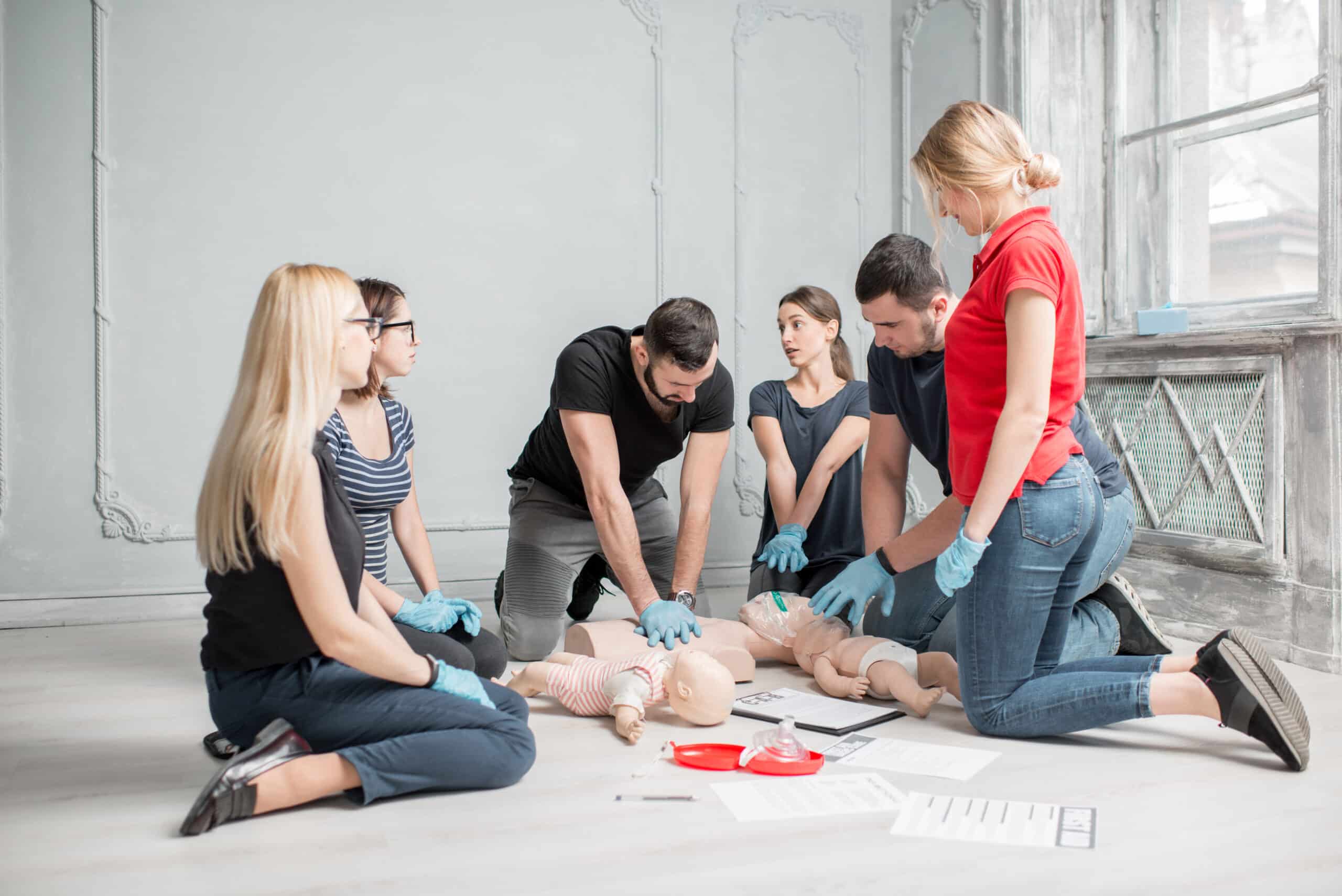
During the practical component, you demonstrate competency through hands-on scenarios—performing CPR on manikins, using an AED, and managing simulated casualties. Upon successful completion, your digital Statement of Attainment is issued the same day (conditions apply).
What is included in a nationally recognised first aid course
All HLTAID courses follow guidelines set by the Australian Resuscitation Council (ARC). While specific content varies by unit, certain core competencies appear across most qualifications.
DRSABCD and casualty assessment
The DRSABCD action plan forms the foundation of all first aid response: Danger, Response, Send for help, Airway, Breathing, CPR, Defibrillation. This systematic approach helps you assess any emergency situation calmly and effectively.
Adult, child, and infant CPR with AED use
You’ll learn different compression depths and techniques for each age group. An AED (Automated External Defibrillator) is a portable device that analyses heart rhythm and delivers an electrical shock if needed—you’ll practise using one safely during your course.
Bleeding, burns, fractures, and wound care
Wound management principles include applying direct pressure to control bleeding, immobilising suspected fractures, and cooling burns with running water for 20 minutes.
Asthma, anaphylaxis, and medical emergencies
You’ll learn to recognise signs of severe allergic reactions and how to assist someone using an adrenaline autoinjector (commonly known as an EpiPen). Asthma first aid—including the 4x4x4 technique—is also covered.
Legal responsibilities and incident reporting
First aid training includes duty of care, obtaining consent before providing assistance, infection control procedures, and how to document incidents correctly.
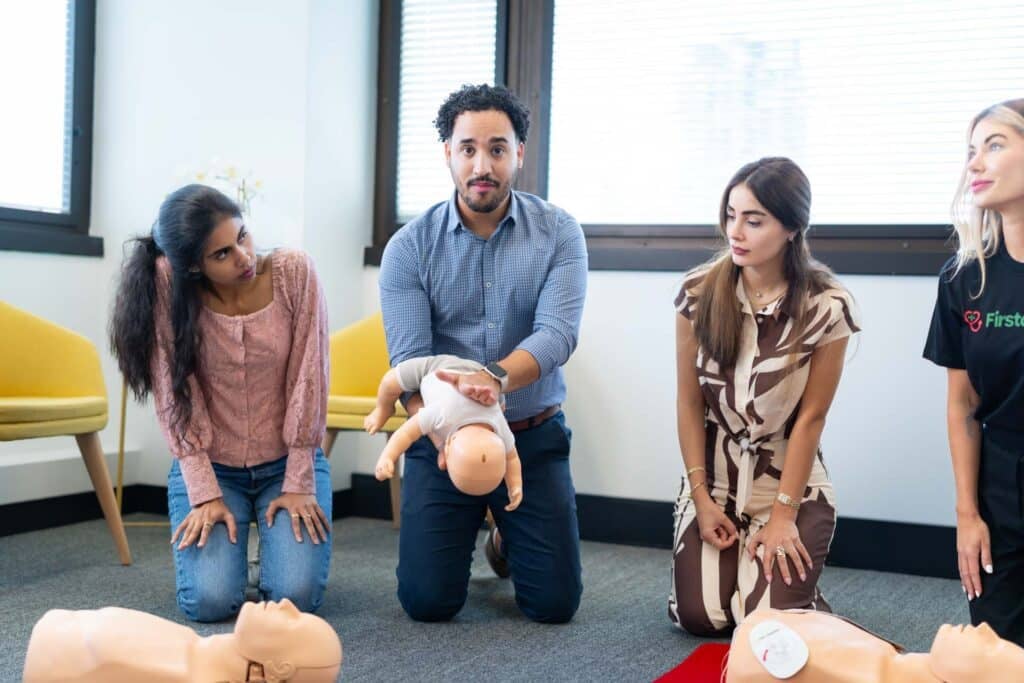
How long a recognised first aid certificate is valid for
Certificate validity depends on the specific unit code. CPR units (HLTAID009 and HLTAID015) stay valid for 12 months. First aid units (HLTAID011, HLTAID012, HLTAID013, HLTAID014) remain valid for 3 years.
However, your employer or industry regulator may require more frequent refreshers. The Australian Resuscitation Council recommends annual CPR practice to maintain skill retention, even if your certificate hasn’t expired yet—research from Monash University shows bystander CPR doubles cardiac arrest survival.
How to renew or recertify a recognised first aid certificate
There’s no “recertification exam only” option for nationally recognised qualifications in Australia. To renew, you complete the course again—though the process can be faster if you choose an Express assessment format designed for experienced first aiders.
The practical component is shorter because you’re demonstrating existing competency rather than learning from scratch. Booking your renewal before your certificate expires ensures continuous compliance—Safe Work Australia requires trained first aiders accessible at all times, so employers won’t accept a gap in certification.
How much a recognised first aid certificate costs in Australia
Pricing varies by course type and provider. FirstAidPro offers competitive entry-level pricing with all-inclusive fees—no hidden costs for materials, certificates, or equipment use.
Workplace group bookings often attract discounts, and onsite training eliminates travel time for your team. For current pricing and availability, check the booking calendar directly.

How to verify a first aid certificate is genuine
With Safe Work Australia recording 146,700 serious claims in 2023–24, employers have a clear responsibility to confirm that staff hold valid qualifications. If you’re checking your own certificate—or verifying someone else’s—follow three steps.
1. Check the RTO code on training.gov.au
Visit training.gov.au and enter the RTO code shown on the certificate. This confirms the provider is currently registered and authorised to issue the qualification.
2. Confirm the HLTAID unit code on your Statement of Attainment
Your certificate will display the unit code(s) and unit title(s) you’ve achieved. A certificate without unit codes—or with generic wording like “First Aid Training”—is not nationally recognised.
3. Match the USI on your certificate to your records
Log in to your USI account at usi.gov.au to view your complete training transcript. Every nationally recognised qualification you’ve completed appears there, providing independent verification.
Where to get a recognised first aid certificate across Australia
FirstAidPro operates at 170+ locations across Australia, with courses available 7 days a week. Major cities including Sydney, Melbourne, Brisbane, Perth, Adelaide, Darwin, Hobart, and Canberra all have regular sessions.
For workplaces wanting to train multiple staff members, onsite training brings the course to you—minimising disruption and allowing training on familiar equipment in familiar surroundings.
Book your recognised first aid certificate today with FirstAidPro
FirstAidPro (RTO 31124) makes getting certified straightforward:
- Nationally accredited certification recognised by employers across all industries
- Same-day digital Statements of Attainment (conditions apply)
- Flexible delivery formats including face-to-face, blended, and live Zoom
- Experienced trainers with real-world emergency response backgrounds
- 170+ locations with courses running 7 days a week
Ready to get certified? Book your first aid course now
Related Reading
- Australian Skills Quality Authority (ASQA) – Choosing a Training Provider
Explains how nationally recognised training works, what a Registered Training Organisation (RTO) is, and how to choose a legitimate provider.
https://www.asqa.gov.au - training.gov.au – National Register of Vocational Education and Training
Search accredited HLTAID units, Statements of Attainment and verify an RTO’s registration status.
https://training.gov.au - Australian Resuscitation Council (ARC) – Guidelines
Australia’s evidence-based guidelines for CPR, AED use and first aid that underpin nationally recognised HLTAID courses.
https://resus.org.au - Safe Work Australia – First Aid in the Workplace
National guidance for employers on first aid requirements, risk assessments and workplace compliance.
https://www.safeworkaustralia.gov.au - Unique Student Identifier (USI)
Official Australian Government information about obtaining a USI and accessing your nationally recognised training records.
Frequently asked questions about recognised first aid certificates
Is an online first aid certificate recognised in Australia?
A fully online certificate with no practical assessment is not nationally recognised. All HLTAID qualifications require a face-to-face or live Zoom practical component where a qualified trainer assesses your hands-on competency. Be cautious of providers offering instant certificates without any practical demonstration.
Do I need a USI to get a nationally recognised first aid certificate?
Yes. A Unique Student Identifier (USI) is mandatory for all nationally recognised training in Australia. You can create one for free at usi.gov.au before your course—it takes just a few minutes and you’ll use the same USI for any future accredited training.
Is a first aid certificate from overseas valid in Australia?
Overseas first aid certificates are generally not recognised by Australian employers or regulators. To meet workplace compliance requirements, you’ll complete an Australian HLTAID course through a registered RTO. Some providers offer express pathways for experienced first aiders.
What happens if my recognised first aid certificate expires?
You’ll complete the full course again to regain certification—there’s no grace period or automatic extension. Booking your renewal before expiry ensures continuous compliance and avoids any gap that could affect your employment.
Which recognised first aid certificate do childcare workers need?
Childcare workers, educators, and early childhood staff require HLTAID012 Provide First Aid in an Education and Care Setting. The ACECQA approves this qualification, and the curriculum covers paediatric emergencies specific to education and care environments, including infant CPR and childhood illness management.