




Applicable to:
Construction
Warehousing

Dehydration Symptoms – 10 Critical Things You Need to Know

Dehydration symptoms

Table of Contents

Sharon McCulloch

Dehydration occurs when the body loses more fluids than you take in, leading to an imbalance that affects every system in the body. Recognising the early dehydration symptoms and responding quickly is vital, especially in Australia’s hot climate where the risk of dehydration is high. This guide will help you learn about dehydration, find out what the dehydration symptoms are, understand the causes, and know when to seek medical help.

Ready to gain life-saving skills? Enrol in a nationally recognised First Aid course with First Aid Pro and learn how to identify and manage dehydration and other emergencies.

Key Takeaways

  • Dehydration happens when the body loses more fluid than it replaces, affecting normal function.
  • Early dehydration symptoms include thirst, dark urine, fatigue, and dizziness.
  • Severe dehydration can be life-threatening and requires immediate medical attention.
  • Babies, young children, older adults, and outdoor workers are at higher risk.
  • Prevention is key: drink enough water, especially in hot weather, during exercise, and when unwell.

1. What is Dehydration?

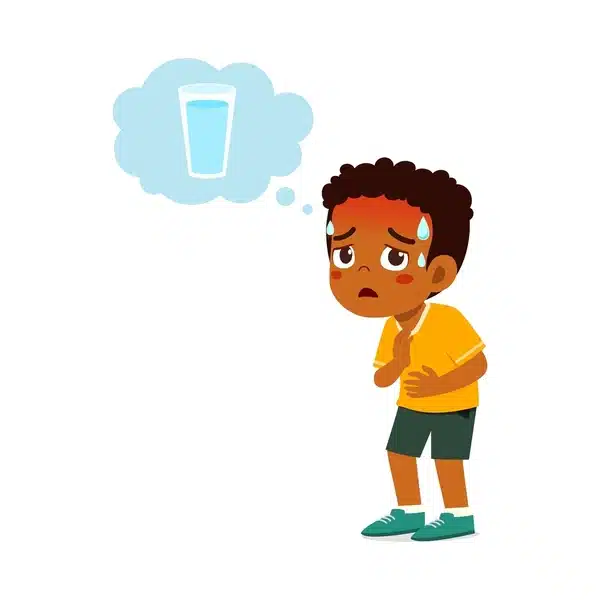
Dehydration occurs when the body loses more fluids than it takes in. Water makes up about 60% of an adult’s body weight, and it is essential for regulating body temperature, transporting nutrients, and flushing waste. Even mild dehydration can impact mood, concentration, and physical performance.

How the Body Loses Fluids

Common Cause

How Fluid is Lost

Sweating

Regulates body temperature but can lead to fluid loss, especially in hot weather or during exercise.

Breathing

Small amounts of fluid are lost through each breath.

Urination

Removes waste and balances electrolytes.

Vomiting and diarrhoea

Can cause rapid fluid and electrolyte loss.

Fever

Increases fluid loss through sweat and respiration.

When fluid loss is not replaced, the body’s electrolyte balance (including sodium and potassium) becomes disrupted, affecting nerve and muscle function.

2. Dehydration Symptoms

The symptoms of dehydration vary depending on age, health status, and severity. They can be grouped into early, moderate, and severe signs.

Urine colour chart for dehydration symptoms
Dehydration Signs Infographic

Recognising Dehydration Symptoms

Know the warning signs and act quickly

Early (Mild) Signs
Monitor Closely
  • Thirsty or dry mouth
  • Slightly darker urine
  • Fatigue or reduced concentration
  • Mild headache
  • Feeling light-headed
Moderate Signs
Urgent Action
  • Very dark urine and reduced urination
  • Muscle cramps
  • Irritability or mood changes
  • Rapid heartbeat
Severe Dehydration
Medical Emergency
  • Extreme thirst or inability to drink
  • Very little or no urine
  • Rapid breathing and heartbeat
  • Confusion, drowsiness, or fainting
  • Cold hands and feet

3. Causes of Dehydration

Dehydration happens when the body loses more fluids than it takes in.
Common factors that cause dehydration include:

  • Hot weather – Heatwaves increase sweat loss.
  • Exercise – Intense activity without rehydration.
  • Vomiting and diarrhoea – Especially dangerous in children and older adults.
  • Fever – Higher body temperature increases fluid needs.
  • Certain medications – Diuretics cause you to urinate more.
  • Medical conditions – Diabetes, kidney disease, or infections can increase fluid loss.

4. Mild Dehydration Symptoms

Mild dehydration may seem harmless but can progress quickly.
Signs of mild dehydration include:

If these symptoms are present, drink fluids immediately—preferably water or an oral rehydration solution if illness is involved.

5. Risk of Dehydration in Vulnerable Groups

dehydration symptoms
High-Risk Groups Dehydration Infographic

High-Risk Groups for Dehydration

Special considerations for vulnerable populations

Babies and Young Children
Highest Risk
Why They're at Higher Risk:
Higher water content in their bodies means they can become severely dehydrated quickly.
Warning Signs to Watch For:
Fewer wet nappies, sunken soft spots (fontanelle), no tears when crying, and unusual drowsiness.
Critical Action:
Keeping your child hydrated during illness is critical.
Older Adults
High Risk
Reduced Thirst Response:
May not feel thirsty until significantly dehydrated.
Additional Risk Factors:
Health conditions and medications increase the risk.
Key Warning Signs:
Look for confusion, dizziness, and dark urine.
Outdoor Workers & Athletes
Activity Risk
Primary Risk Factor:
Lose large amounts of fluid through sweating.
Environmental Dangers:
Risk rises in hot weather and humid conditions.
Prevention Strategy:
Regular fluid replacement before, during, and after activity is essential.

6. Hydration and Prevention

Preventing dehydration is often as simple as ensuring you drink enough water throughout the day.
General recommendations:

  • Adults: Aim for at least 8–10 cups of water daily, more in hot weather.
  • Children: Adjust for age and activity level.
  • Drink before, during, and after exercise.
  • Avoid excess caffeine and alcohol, which can increase fluid loss.

Keep your workplace safe and healthy – Book group first aid training with First Aid Pro and learn how handle emergencies with confidence.

7. How to Treat Dehydration

Dehydration Treatment Infographic

Dehydration Treatment Guide

Know when to treat at home and when to seek emergency help

Mild to Moderate Dehydration
Home Treatment
Primary Treatment:
Drink water or diluted fruit juice.
For Illness-Related Dehydration:
Use oral rehydration solutions (ORS) for dehydration from vomiting or diarrhoea.
Important: Avoid These Drinks
Avoid sugary and caffeinated drinks as they can worsen dehydration.
Severe Dehydration
Medical Emergency
Call Emergency Services
000
If symptoms include confusion, fainting, rapid heartbeat, or inability to keep fluids down
Hospital Treatment May Include:
IV fluids and electrolyte replacement administered by medical professionals.
Do Not Delay:
Severe dehydration can be life-threatening and requires immediate professional medical intervention.

Home vs Medical Treatment

Severity

Action

Mild

Drink fluids, rest, avoid heat

Moderate

ORS, monitor closely

Severe

Seek immediate medical attention

8. Complications of Dehydration

If left untreated, dehydration can lead to serious complications:

  • Heat exhaustion or heatstroke
  • Kidney stones or kidney failure
  • Seizures due to electrolyte imbalance
  • Low blood volume shock (hypovolaemic shock)

9. Symptoms and Causes in Children

Children are more susceptible to rapid fluid loss due to:

  • Higher metabolic rate
  • Smaller fluid reserves
  • Illness-related vomiting and diarrhoea

Tips for keeping your child hydrated:

  • Offer small, frequent sips of water or ORS.
  • Encourage fluids during play and sports.
  • Monitor nappy output and alertness.

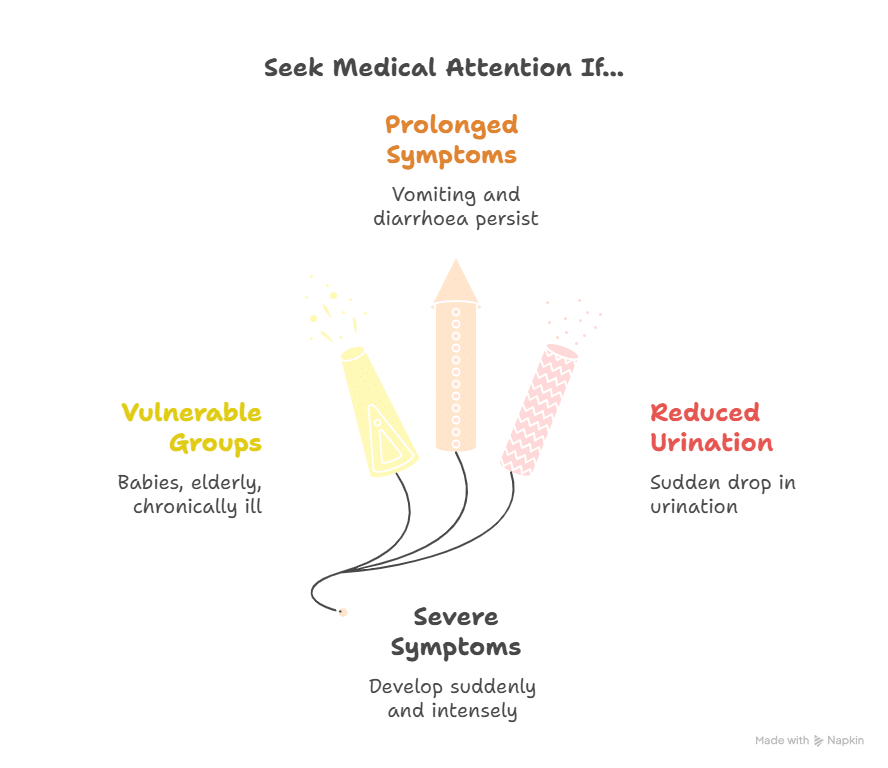
10. When to Get Medical Help

References

Frequently Asked Questions

What is the first dehydration symptom?

Often, the first sign is dark urine or a dry mouth, but thirst may also appear early.

How can I tell if I’m dehydrated quickly?

Check urine colour, notice if you feel light-headed, and assess whether your mouth feels dry.

Can dehydration cause headaches?

Yes, dehydration can reduce blood flow and oxygen to the brain, triggering headaches.

How much water should I drink a day?

Most adults need about 8–10 cups, more in hot weather or during exercise.

Is dehydration dangerous for babies?

Yes, babies can become seriously ill quickly if dehydrated—seek immediate help if concerned.

What are the severe dehydration symptoms?

The symptoms of severe dehydration typically include:

  • Extreme thirst

  • Very little or no urination, or very dark yellow/amber urine

  • Dry, shriveled skin and poor skin turgor (skin doesn’t spring back quickly after being pinched)

  • Rapid heartbeat and rapid breathing

  • Low blood pressure

  • Confusion, irritability, tiredness, or delirium

  • Dizziness or fainting

  • Sunken eyes

  • Cold, pale hands and feet

  • Lack of sweating or tears

  • Unconsciousness or shock in the most severe cases

What immediate treatments are needed for severe dehydration symptoms?

Immediate treatments for severe dehydration symptoms require urgent medical attention. The key interventions include:

  • Administering intravenous (IV) fluids: This is the primary and fastest way to restore fluids and electrolyte balance in the body. IV fluids typically involve isotonic saline solutions and are given in hospital or emergency settings to quickly treat severe fluid loss and prevent complications.

  • Monitoring vital signs and urine output: Medical professionals will closely monitor vital signs (such as heart rate, blood pressure, and breathing), as well as urine output, to assess recovery and ensure fluid resuscitation is effective.

  • Addressing electrolyte imbalances: Additional treatments may be required to correct any disturbances in sodium, potassium, or acid-base balance, depending on laboratory findings and symptoms.

What are the key signs indicating severe dehydration symptoms require urgent IV fluids

Key signs that indicate severe dehydration symptoms require urgent IV fluids include:

  • Very little or no urination or very dark urine

  • Confusion, delirium, fainting, or unresponsiveness

  • Rapid heartbeat (tachycardia) and/or rapid breathing

  • Low blood pressure, especially if accompanied by dizziness or lightheadedness

  • Sunken eyes

  • Dry, tented skin (skin stays elevated when pinched, doesn’t bounce back)

  • Cold, clammy, or mottled skin, especially on hands and feet

  • Unable to keep fluids down due to persistent vomiting

  • Signs of shock: pale skin, weak or thready pulse, profound weakness, or collapse

The content on this website offers general insights regarding health conditions and potential treatments. It is not intended as, and should not be construed as, medical advice. If you are facing a medical emergency, dial 000 immediately and follow the guidance provided.

Recent Posts
North Hobart