



Sharon has 21+ years of experience as a qualified Emergency Care Nurse registered with the Australian Health Practitioner Regulation Agency (APHRA) and 12+ years as a First Aid Trainer.
She takes pride in FirstAidPro making first aid training available, comprehensive and affordable to everybody.
World Patient Safety Day 2026, observed on 17 September, focuses on making care safer for people living with noncommunicable diseases. This year’s theme, “Safe care for noncommunicable diseases”, recognises that patient safety is not confined to hospitals or medical procedures. Safe care also depends on the people who assist with medications, provide disability support, perform manual handling tasks and help people manage complex health needs in homes and community settings. (World Health Organization)
For Australian healthcare, disability and community support organisations, that makes World Patient Safety Day a useful reminder of something very practical: good intentions are not enough. Workers need the right knowledge, training, procedures and supervision for the tasks they perform.
Courses such as HLTWHS005 Conduct manual tasks safely, HLTHPS006 Assist clients with medication and NDIS High Intensity Support Skills training can contribute to that safer care environment by developing skills for situations workers may encounter every day.
Key Takeaways
- World Patient Safety Day is held on 17 September, with the 2026 campaign focused on safe care for noncommunicable diseases.
- Patient safety extends beyond hospitals, including disability services, community care and support delivered in people’s homes.
- Manual handling training can help workers identify hazardous manual tasks and use safer work practices.
- Medication assistance requires clear boundaries and procedures, including correct medication checks, observation, documentation and escalation.
- NDIS High Intensity Support Skills require specialised knowledge and, importantly, training relevant to the individual participant’s support needs.

What Is World Patient Safety Day 2026?
World Patient Safety Day was established by the World Health Organization (WHO) as a global public health day and is observed annually on 17 September.
The theme for 2026 is “Safe care for noncommunicable diseases”, supported by the slogan “Safe care for life!” (World Health Organization)
Noncommunicable diseases, or NCDs, include long-term conditions such as cardiovascular disease, cancer, diabetes and chronic respiratory diseases. People living with these conditions can require treatment and support over many years and may interact frequently with different parts of the health and care system.
That repeated contact creates more opportunities for something to go wrong.
WHO points out that safety risks can arise throughout the continuum of care, from prevention and diagnosis through to treatment and long-term management. Crucially, that care can occur across healthcare facilities, homes and communities.
This makes the 2026 campaign particularly relevant to Australia’s disability, aged care and community support workforce.
A person receiving support at home may not think of themselves as a “patient”. Yet the quality of the support they receive can have a direct bearing on their health, safety, independence and quality of life.
Patient Safety Is Also About Everyday Care
When people hear the words patient safety, they may picture surgeons, doctors, nurses and hospital wards.
Those settings are obviously important, but modern care extends much further.
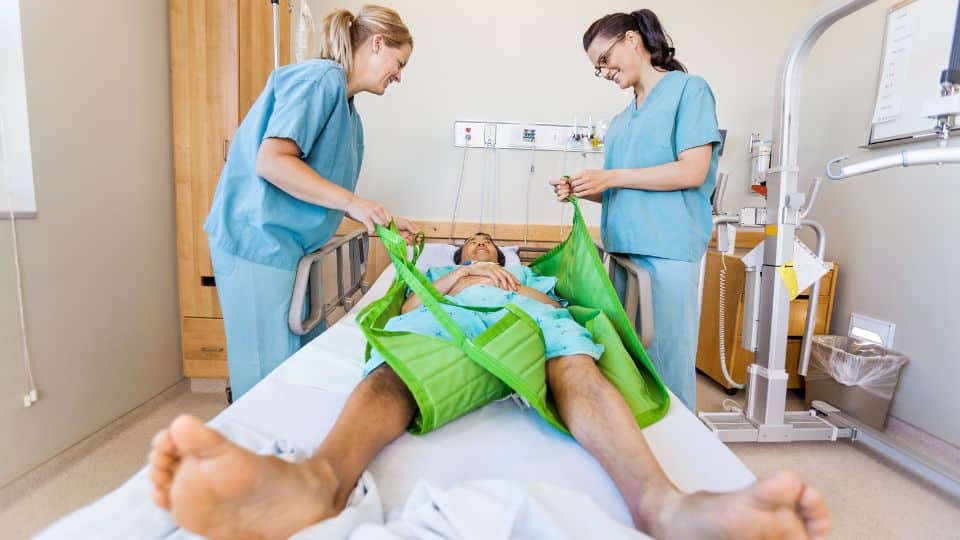
Consider a disability support worker helping someone transfer from a bed to a wheelchair. A community worker may be assisting a client with their medication. Another worker might support an NDIS participant who relies on enteral feeding, catheter care or another high-intensity support.
None of those tasks should be treated as routine simply because they happen every day.
The more familiar a task becomes, the easier it can be to underestimate what could happen if a step is missed, a change in a person’s condition goes unnoticed, equipment is used incorrectly or a worker acts outside their role.
Training cannot remove every risk from care. What it can do is give workers a stronger foundation for recognising hazards, following procedures and understanding when something needs to be reported or escalated.

Safer Manual Handling Protects Workers and the People They Support
Manual handling is an everyday part of many healthcare, disability and community services.
Workers may assist people with mobility, reposition someone, move equipment or complete other physical tasks as part of their role. These activities can expose workers to musculoskeletal injury when risks are not adequately controlled.
Safe manual handling is not simply about remembering to “lift with your knees”.
The nationally recognised unit HLTWHS005 Conduct manual tasks safely addresses the skills and knowledge required to recognise potentially hazardous manual tasks and then prepare for and complete those tasks safely. Assessment requirements include following legally compliant workplace procedures while completing different manual tasks relevant to the worker’s role.
That matters in care environments because a poorly managed transfer or movement can potentially place two people at risk: the worker and the person receiving support.
Workers need to consider the task before beginning it. What movement is required? What are the risks? Is equipment available? Does the person have particular mobility requirements? Is another worker required? Has something changed since the task was last performed?
The safest technique is not necessarily the same for every person or every environment.
Completing HLTWHS005 Conduct manual tasks safely with First Aid Pro can help workers develop a more systematic approach to manual tasks rather than relying on habit, strength or improvised techniques. First Aid Pro is currently registered to deliver and assess HLTWHS005 nationally.

Medication Safety Begins Before the Medication Is Taken
Medication is another area where seemingly small mistakes can have serious consequences.
A medication error might involve the wrong person, wrong medication, incorrect amount, incorrect time or incorrect route. Problems can also arise when changes in a client’s condition are overlooked or when documentation is incomplete.
The WHO’s World Patient Safety Day 2026 campaign specifically identifies medication safety as an important patient safety practice for health workers.
For Australian workers whose role includes assisting clients with medication, HLTHPS006 Assist clients with medication provides nationally recognised training directly relevant to this responsibility.
The unit requires workers to establish the scope of their ability to provide medication assistance according to organisational guidelines and jurisdictional requirements. Workers must also confirm their authority to proceed and follow appropriate infection prevention and control procedures.
This is an important distinction.
Completing medication training does not mean a worker can simply administer any medication to anyone. Assistance must remain within the worker’s role and applicable regulatory, organisational and care-plan requirements.

The Checks That Help Make Medication Assistance Safer
HLTHPS006 teaches workers to check that medication is given to the right person, at the right time, in the right amount, via the right route and that it is the right medication.
But medication safety does not finish once those checks have been completed.
Workers also need to observe the client, recognise circumstances in which medication assistance should not proceed, and seek advice from a supervisor or health professional where required.
After medication is taken, observation and documentation continue to matter. The unit includes requirements relating to medication administration records, reporting changes in the client’s condition, responding to inconsistencies and dealing with reactions or other medication contingencies according to workplace procedures.
These are not bureaucratic extras.
Documentation can provide continuity when several workers support the same person. Observation can identify that something has changed. Escalation can ensure a situation is considered by somebody with the appropriate clinical authority.
For workers who assist people with medications as part of their role, enrolling in HLTHPS006 Assist clients with medication through First Aid Pro provides structured training in these responsibilities. First Aid Pro is currently registered to deliver and assess this unit nationally.
High Intensity Support Requires More Than General Care Skills
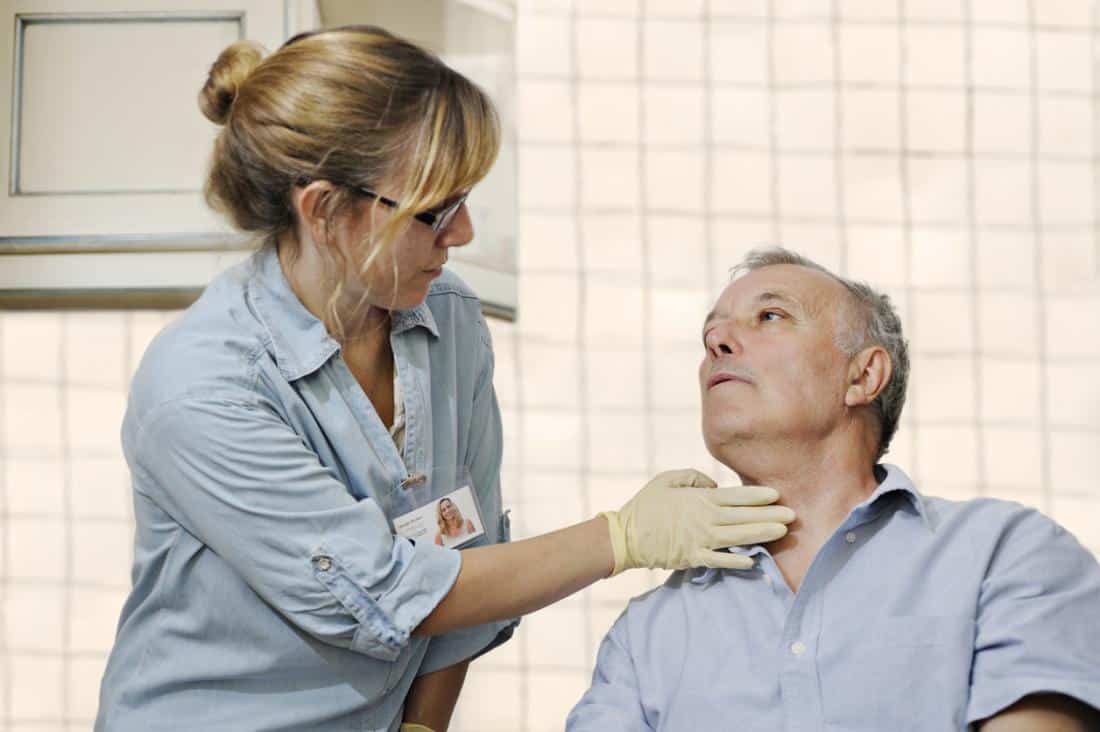
Some NDIS participants have health-related support needs that involve a greater level of complexity and risk.
The NDIS Quality and Safeguards Commission identifies eight High Intensity Daily Personal Activities:
- complex bowel care
- enteral feeding and management
- severe dysphagia management
- tracheostomy management
- urinary catheter management
- ventilator management
- subcutaneous injections
- complex wound management. (NDIS Quality and Safeguards Commission)
These supports demonstrate particularly clearly why patient safety needs to extend into homes and community settings.
The NDIS Commission states that providers supporting participants who rely on high-intensity daily personal activities need to ensure their workers have the skills and knowledge described in the relevant High Intensity Support Skills Descriptors.
Importantly, high-intensity support is not just about learning a generic procedure.
The participant matters.
For example, the NDIS skills descriptor for complex bowel care states that a support plan should be developed and overseen by a relevant health practitioner. Workers need to understand that participant’s specific requirements, risks and the actions required in response to incidents or emergencies. Training should also cover the specific needs of each participant being supported.
That individualised approach runs through the NDIS High Intensity Support Skills framework.

Training Must Match the Person and the Support
A worker might understand the general principles behind a high-intensity support and still need participant-specific instruction before delivering it.
The NDIS Practice Standards require relevant workers to receive training relating specifically to the participant’s needs and the type of high-intensity support being provided. The Commission also specifies requirements around who should deliver training for particular supports. For severe dysphagia management, for example, training must be delivered by an appropriately qualified health practitioner.
This is why employers and workers need to avoid treating a certificate as a blanket authorisation to perform every procedure.
Training is part of a broader safety system that includes support plans, appropriate health-practitioner involvement, worker competency, supervision, policies, procedures and escalation arrangements.
First Aid Pro offers High Intensity Support Skills training covering a range of specialised support areas, with options for workers and organisations seeking training aligned with the NDIS High Intensity Support Skills Descriptors.
For providers, arranging appropriate training before a worker is expected to deliver a complex support is much safer than discovering gaps in knowledge during an incident.
Safe Care Includes Knowing When to Stop and Ask
Competence does not mean doing everything yourself. Sometimes the safest decision is recognising that a task should not continue.
There is a common thread running through manual handling, medication assistance and high-intensity support: workers need to recognise when something is no longer routine and take the appropriate next step.
Medication Assistance
A worker notices that a client's physical or behavioural condition has changed.
Manual Handling
A support worker preparing a transfer discovers that the equipment normally used is unavailable or damaged.
High-Intensity Support
A worker observes something outside the participant's normal presentation or support plan.
Knowing when to stop, report, seek advice or escalate is part of safe care — not a sign of uncertainty or failure.
Good Training Builds Judgement, Not Just Technique
Workers need more than procedural knowledge. They also need to understand the boundaries of their role, recognise when circumstances have changed and know what action to take next.
Safe care means knowing how to perform a task — and when not to continue.

Safer Care Depends on the System Around the Worker
World Patient Safety Day should not become an exercise in placing all responsibility on individual workers.
WHO’s 2026 campaign emphasises that strong, integrated health systems and a supported health workforce are essential to safer care.
Employers and providers have an important role in creating that environment.
Workers need appropriate training, but they also need access to current procedures, suitable equipment, accurate support plans, effective supervision and clear reporting pathways. Skills need to be maintained, and training may need to be refreshed when support requirements change.
The NDIS High Intensity Support Skills Descriptors, for example, recommend regular review of worker competency and recognise circumstances in which reassessment or refresher training may be appropriate. (NDIS Quality and Safeguards Commission)
A safe workplace therefore does more than ask, “Has this worker done the course?”
It asks whether the worker remains competent, understands the person they are supporting, has the right information and equipment, and knows what to do when circumstances change.

Training for Safer Care
World Patient Safety Day 2026 carries the slogan “Safe care for life!”
For people living with long-term health conditions, those words are particularly appropriate. Care may continue for years and move between hospitals, clinics, disability services, community organisations and the person’s own home.
Every setting creates another opportunity to get care right.
For Australian organisations, 17 September is an opportunity to look closely at the practical skills behind safe support. Are workers undertaking manual tasks trained to recognise and control the risks involved? Are staff assisting with medication working within clear procedures and their scope of responsibility? Are workers delivering high-intensity NDIS supports appropriately trained for the support and the individual participant?
Training alone cannot guarantee that an incident will never happen. It can, however, give workers better tools for recognising risk, following established procedures and responding appropriately when something changes.
First Aid Pro provides HLTWHS005 Conduct manual tasks safely, HLTHPS006 Assist clients with medication and a range of NDIS High Intensity Support Skills courses for workers and organisations looking to strengthen practical care skills.
Because safer care is not simply something to talk about on World Patient Safety Day – It is something workers need to deliver every day.
Related Reading
- NDIS Quality and Safeguards Commission – NDIS Practice Standards
- NDIS Quality and Safeguards Commission – NDIS Practice Standards: High intensity support skills descriptors
NDIS Quality and Safeguards Commission – Supplementary module: High intensity daily personal activities
- World Health Organization – World Patient Safety Day 2026
FAQs
When is World Patient Safety Day 2026?
World Patient Safety Day is held annually on 17 September. In 2026, the WHO theme is “Safe care for noncommunicable diseases”, with the slogan “Safe care for life!” The campaign focuses on reducing avoidable harm for people living with long-term conditions throughout the continuum of care. (World Health Organization)
Why is manual handling training important in healthcare and disability support?
Healthcare and disability workers can perform manual tasks involving people, equipment and other loads. HLTWHS005 Conduct manual tasks safely develops skills for identifying potentially hazardous manual tasks and preparing for and completing manual tasks safely in accordance with workplace procedures.
What does HLTHPS006 Assist clients with medication cover?
HLTHPS006 Assist clients with medication covers preparing to assist with medication, preparing the client, supporting medication administration, responding to medication contingencies and completing relevant documentation and medication procedures. It also addresses the worker’s scope of responsibility and circumstances where medication assistance should not proceed.
What are NDIS High Intensity Support Skills?
NDIS High Intensity Support Skills relate to complex supports including complex bowel care, enteral feeding and management, severe dysphagia management, tracheostomy management, urinary catheter management, ventilator management, subcutaneous injections and complex wound management. Providers delivering relevant supports need to ensure workers have the skills and knowledge required by the applicable NDIS Practice Standards and skills descriptors. (NDIS Quality and Safeguards Commission)
Does completing a High Intensity Support Skills course mean a worker can provide any high-intensity support?
No. Training should not be treated as blanket authorisation to provide every type of high-intensity support. The relevant NDIS Practice Standards and skills descriptors place importance on the participant’s individual support plan, participant-specific training, appropriate health-practitioner involvement, worker competency and the provider’s policies and procedures. Workers and providers should ensure the training and competency requirements relevant to the particular participant and support are met. (NDIS Quality and Safeguards Commission)