



Sharon has 21+ years of experience as a qualified Emergency Care Nurse registered with the Australian Health Practitioner Regulation Agency (APHRA) and 12+ years as a First Aid Trainer.
She takes pride in FirstAidPro making first aid training available, comprehensive and affordable to everybody.
Key Takeaways
- Yes, genuinely free CPR training programs exist in Australia, run by trusted names like the Sydney Children’s Hospitals Network, Royal Life Saving, the Heart Foundation and Restart a Heart Day.
- These are awareness sessions. They build real confidence, but they do not issue a nationally accredited HLTAID009 Statement of Attainment.
- Employers and regulators require the accredited certificate. Safe Work Australia expects workplace first aiders to hold a nationally recognised Statement of Attainment from an RTO.
- Accredited CPR (HLTAID009) typically costs about $39 to $75, and Provide First Aid (HLTAID011) about $95 to $180.
- We offer a genuinely free accredited option through our HLTAID009 CPR course charity pathway, so free and accredited can finally meet.
The Quick Answer: Free vs Accredited CPR at a Glance
Choose by purpose. A free awareness course gives you confidence and skills to act in an emergency. An accredited CPR course (HLTAID009) gives you a nationally recognised certificate that employers and regulators accept.
Here is a simple test. If nobody is going to ask you for a certificate, a free awareness session is perfect. If your job, your registration or your regulator needs proof of training, you need accredited HLTAID009 from a Registered Training Organisation.
| Feature | Free Awareness | Accredited HLTAID009 |
|---|---|---|
| Typical cost | Free | ~$39 to $75 |
| Format | Often online or a short community session | Face-to-face manikin assessment required |
| Certificate | No Statement of Attainment | Nationally recognised Statement of Attainment |
| Accepted for work | No | Yes |
| Issued by | Health services, charities, community groups | Registered Training Organisation (RTO) |
| Best for | Confidence to help family and community | Meeting workplace and regulator requirements |
Both are valuable. They just do different jobs, so match the option to your reason for training.
Genuinely Free CPR Programs in Australia
Several respected organisations run free CPR programs right now. They are aimed at parents, carers and community members who want confidence, not compliance. Each one below is awareness training and does not issue an accredited certificate.
- Sydney Children’s Hospitals Network (SCHN) “CPR Training for Parents”. A free, roughly 1.5-hour online program for parents and carers of babies and children, with content based on Australian Resuscitation Council (ARC) guidelines. SCHN is clear that its material does not replace accredited CPR or first aid training. Best for new and expecting parents.
- Royal Life Saving Infant CPR Awareness. Royal Life Saving ACT runs free, non-accredited infant CPR awareness, covering infant CPR, choking and basic water safety, and Royal Life Saving Queensland runs community CPR and defibrillator awareness sessions. Best for new parents and local community groups.
- Heart Beat Club (Royal Life Saving WA and Kids Alive). A community education program covering infant and child CPR and first aid for parents and carers of children under five. It is free during promotions or through grant funding, and otherwise low cost. Best for young families in Western Australia.
- Heart Foundation “Heart of the Nation”. Free one-hour community CPR and AED awareness sessions, running in 2025 across four pilot local government areas in New South Wales. See the Heart Foundation for current locations. Best for local residents in those areas (do not assume national coverage yet).
- Restart a Heart Day (16 October). Free community CPR and AED awareness events held each year, with sessions confirmed in Victoria and New South Wales. Best for anyone who wants a quick, hands-on refresher once a year.
- Local councils, libraries and ambulance service community events. Many run occasional free awareness sessions. Availability changes often, so check locally with your council, library or state ambulance service.
Every one of these is worth your time if confidence is your goal. Just remember what they are, and what they are not.
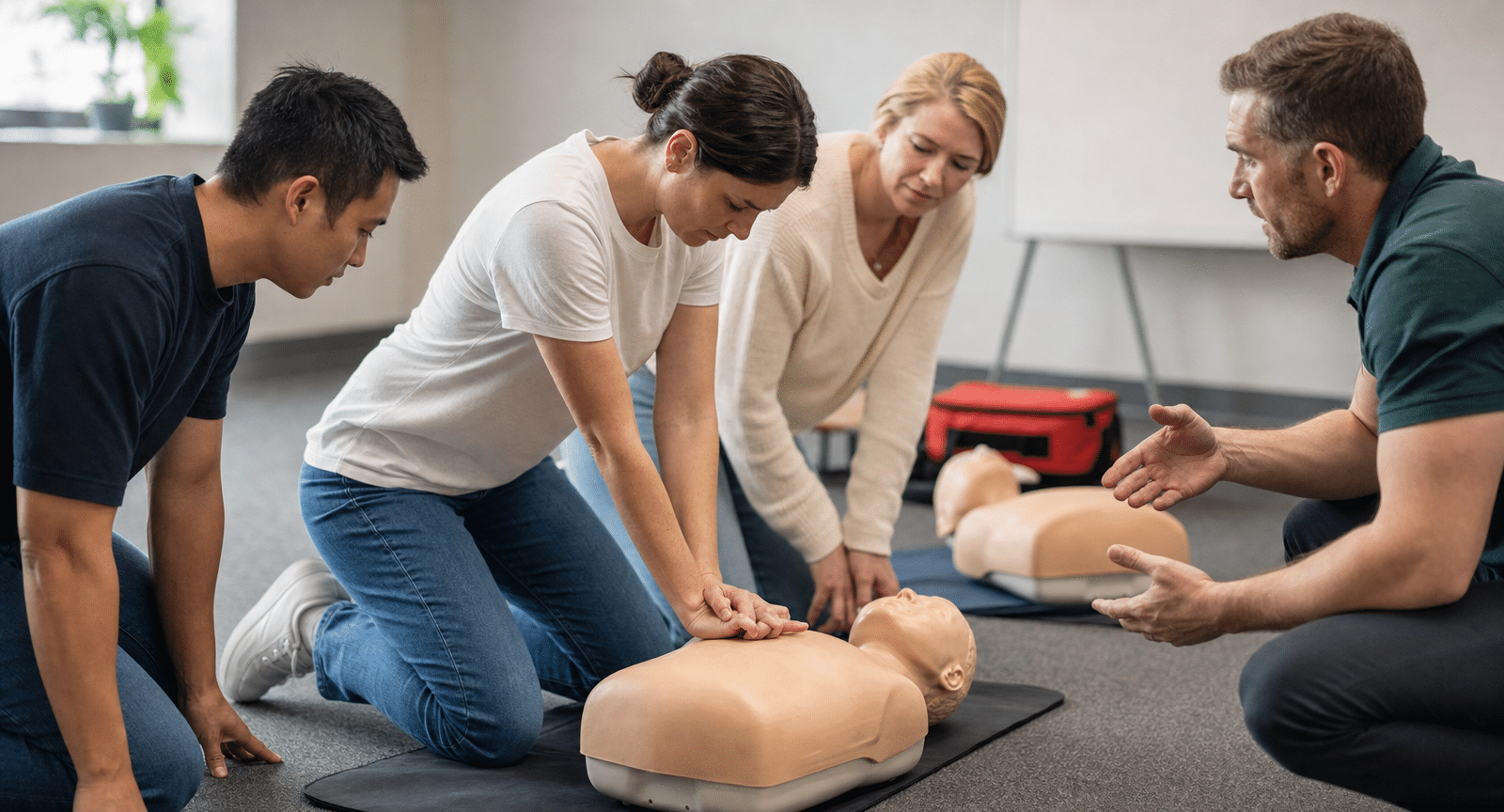
What’s the Catch? Awareness Is Not an Accredited Certificate
The catch is simple: awareness training issues no Statement of Attainment. It builds skill and confidence, which matters enormously in a real emergency. It does not meet a workplace or regulatory requirement.
For work, the standard is clear. Under the Safe Work Australia model Code of Practice, a workplace first aider should hold a nationally recognised Statement of Attainment from a Registered Training Organisation and refresh their training regularly. Only an RTO can issue the accredited HLTAID009 unit. A council session, a charity awareness class or a hospital factsheet, however good, cannot.
This is where “free online certificate” claims cause the most confusion. A valid HLTAID009 cannot be completed online only. According to training.gov.au, the unit requires a face-to-face practical assessment on a manikin, including at least two minutes of uninterrupted single-rescuer CPR on an infant manikin. Online theory can prepare you, but a real assessor has to watch you perform CPR before a Statement of Attainment can be issued.
So when you see a “free online CPR certificate”, read carefully. If there is no face-to-face assessment and no RTO behind it, it is awareness rather than accreditation. That is no criticism of these programs. It simply means they cannot do the one job an employer is asking for.
What About Subsidised CPR Training?
Subsidised accredited CPR exists, but it is inconsistent and eligibility-based. There is no blanket national scheme that gives everyone free accredited CPR, so treat any “government funded” claim with healthy scepticism until you confirm it.
A few honest avenues are worth checking. Some state-subsidised vocational training (for example through TAFE or state funding programs) can reduce the cost of a first aid course for eligible learners, though this varies by state and changes over time. Check your state government and local council for what applies to you.
Workplaces are the other common source. Safe Work Australia expects a person conducting a business or undertaking (a PCBU) to ensure first aiders are properly trained, so many employers fund staff training directly. And, as covered below, some accredited courses are charity-funded and genuinely free. If you need accredited CPR at low or no cost, your employer and a charity course are usually the most reliable places to look.
What Accredited CPR Actually Costs in Australia
Accredited CPR is more affordable than most people expect. Across Australian RTOs, published 2025 to 2026 prices put HLTAID009 Provide CPR at roughly $39 to $75 per person, and HLTAID011 Provide First Aid at roughly $95 to $180 per person. Prices vary by location and format.
At First Aid Pro, our entry points are CPR from $45 and First Aid from $97, with Certificates Issued Same Day* (T&Cs Apply). We also offer four delivery modes so you can pick what fits your schedule and physical ability:
- Traditional: a 2-hour, fully face-to-face class with no online component.
- Blended: online theory plus a 1.5-hour practical assessment.
- Express: online theory plus a 1-hour assessment-only refresher.
- 100% Zoom: a 1-hour live virtual class with equipment provided.
| Course | Code | Typical Range | Validity |
|---|---|---|---|
| Provide CPR | HLTAID009 | ~$39 to $75 | 12 months |
| Provide First Aid | HLTAID011 | ~$95 to $180 | 3 years |
Before you chase the lowest price, check what a legitimate low-cost or free accredited course must include: current RTO registration, a face-to-face practical assessment, a nationally recognised Statement of Attainment, and your 10-digit Unique Student Identifier (USI). If all four are present, a low price is simply good value.
The Best of Both: A Genuinely Free, Accredited Option
Here is the one place where free and accredited genuinely meet. Through our partnership with the LIVIN charity, we run a free accredited CPR and first aid course that issues the same nationally recognised HLTAID009 or HLTAID011 Statement of Attainment as our paid courses.
The details matter, so here they are plainly. The cost is $0, and a donation is optional, not required. Delivery is blended: online theory plus a 1.5-hour face-to-face practical, with your certificate issued same day* (T&Cs Apply). It is available across all states.
That means you get a certificate your employer and regulator will accept, at no cost, from a Registered Training Organisation. If you have been searching for accredited CPR for free, this is the option that actually counts. You can read the full details on our charity free CPR and first aid course page.
How Often You Need to Renew
Plan your budget around two timeframes: CPR every year, first aid every three years. Getting this right stops you paying for a full first aid course when a shorter CPR refresh is all you need.
The renewal standard has clear backing. ACECQA requires annual CPR renewal and has made this binding for the childcare and education sector from 1 October 2023. More broadly, the Safe Work Australia model Code of Practice recommends first aiders refresh their training regularly, with CPR the more frequent of the two. First aid qualifications (HLTAID011) are generally valid for three years, while CPR (HLTAID009) is valid for 12 months.
The budgeting takeaway is simple. Book your annual CPR on time, and line up your three-yearly first aid renewal so the two stay in sync where possible.
Disclaimer
This article is general information only and is not medical advice. Program availability, pricing and funding change over time, so confirm details with each provider. For your legal obligations, check the requirements of your state or territory work health and safety regulator.
Recent Posts
HLTAID011 Charity First Aid Course
Frequently Asked Questions
Is there any free CPR course I can do in Australia?
Yes. The Sydney Children’s Hospitals Network, Royal Life Saving, the Heart Foundation and Restart a Heart Day all run free CPR awareness sessions for parents and community members. We also offer a free accredited CPR course through our LIVIN charity partnership, which issues a nationally recognised Statement of Attainment.
Does a free CPR course count for work?
Only if it is nationally accredited. A free awareness session does not issue a Statement of Attainment, so it will not meet a workplace requirement. Under the Safe Work Australia model Code of Practice, workplace first aiders should hold a nationally recognised Statement of Attainment (HLTAID009) from a Registered Training Organisation.
Can I do a free online CPR course and get a certificate?
No online-only course can issue a valid HLTAID009 Statement of Attainment. According to training.gov.au, the unit requires a face-to-face practical assessment on a manikin, including uninterrupted single-rescuer CPR. Online theory can prepare you, but an assessor must observe your practical skills in person.
How much does an accredited CPR course cost in Australia?
Published RTO prices for 2025 to 2026 put HLTAID009 Provide CPR at roughly $39 to $75 per person. Provide First Aid (HLTAID011) generally runs about $95 to $180. Prices vary by location and delivery format. At First Aid Pro, CPR starts from $45 and First Aid from $97.
What is the difference between a CPR awareness course and an accredited CPR certificate?
An awareness course builds your confidence and skills but issues no certificate. An accredited HLTAID009 course is delivered by a Registered Training Organisation, includes a face-to-face practical assessment, and issues a nationally recognised Statement of Attainment that employers and regulators accept.
How often do I need to renew my CPR certificate?
CPR should be renewed every 12 months, and first aid every three years. ACECQA requires annual CPR renewal and made this binding for the childcare and education sector from 1 October 2023. The Safe Work Australia model Code of Practice also recommends regular refresher training.